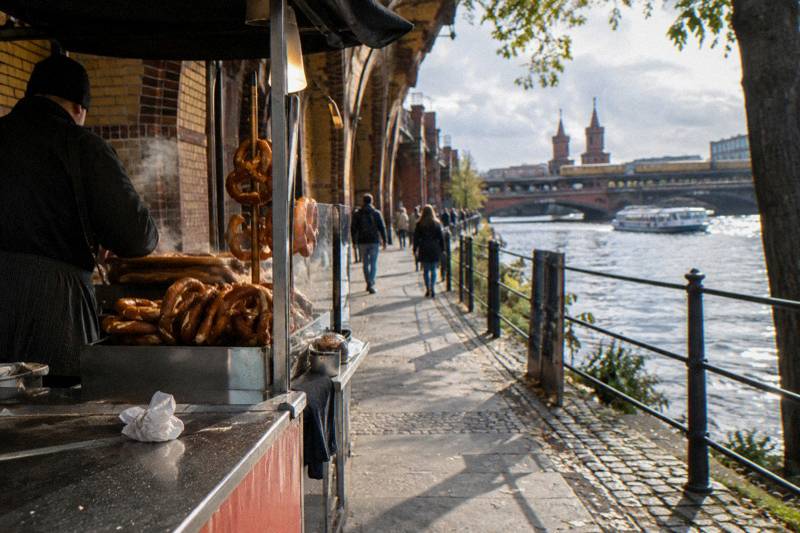
Currywurst In Berlin: History, Sauce And Where To Eat It
Currywurst is Berlin's most argued-about snack: chopped sausage, tomato sauce, curry powder, and seventy years of competing origin claims. Here is what is actually known, how the city orders it, and how to eat your way across several stands in a single afternoon.
Short answer
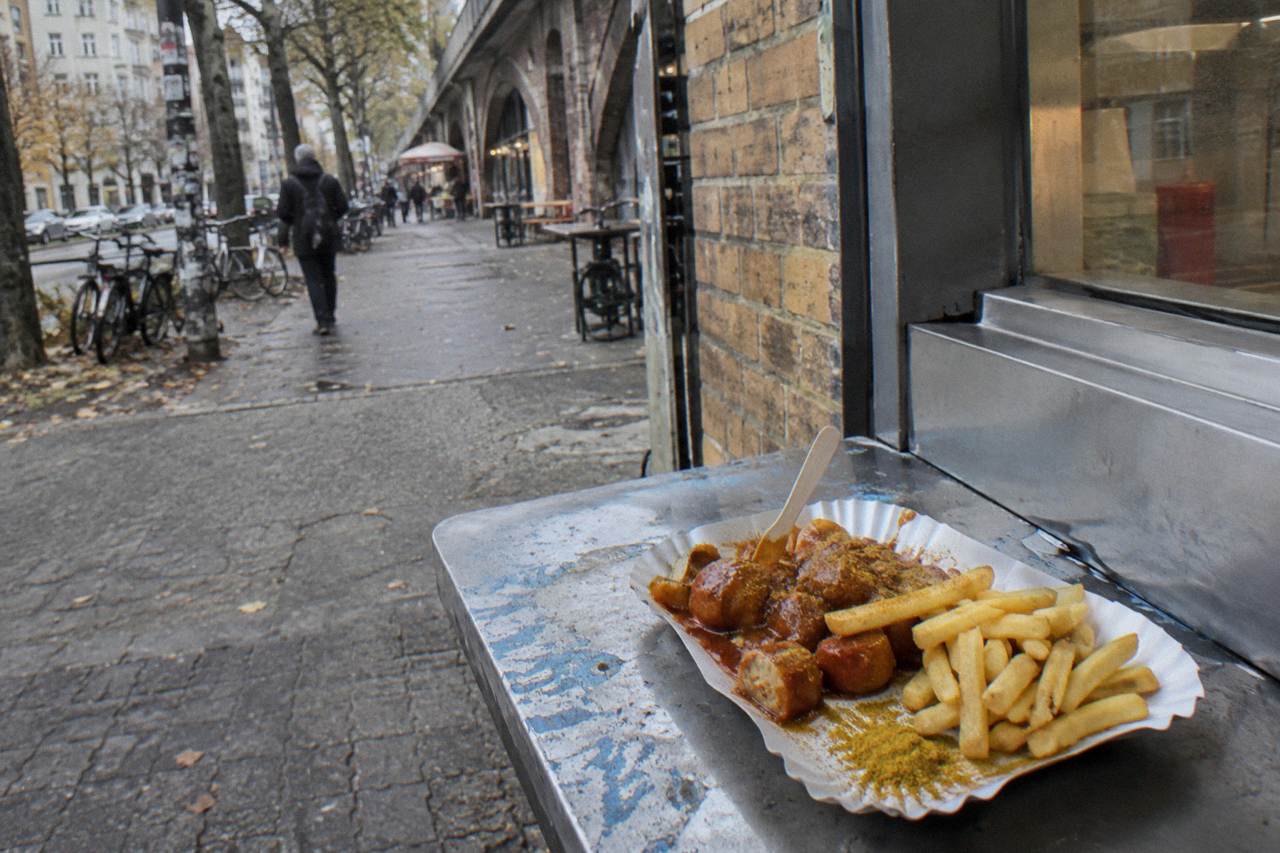
Currywurst is credited to Herta Heuwer in Berlin in 1949 and is served chopped, with a tomato based sauce dusted in curry powder, ordered with or without casing and with fries or a roll. A guided street food walk in Berlin runs about 3 hours and starts from $75, and pairs well with a Kreuzberg market stop.
Where Did Currywurst In Berlin Come From?
The dish is credited to Herta Heuwer, who is said to have run a food stand in Charlottenburg and mixed the first curry sauce there in 1949, using ketchup or tomato paste, curry powder and Worcestershire sauce brought by British soldiers. The claim is widely repeated but cannot be fully documented, so every serious account of the dish hedges it with the word credited rather than stating it as settled fact.
The story goes that Heuwer traded spirits for spices with stationed troops, then poured her mixture over grilled sausage. Whether or not every detail survives scrutiny, the date stuck: 1949 is the year Berlin attaches to the dish, and a commemorative plaque in Charlottenburg marks the spot where her stand is said to have stood. Heuwer later patented her sauce under the name Chillup, which is one of the few verifiable paper trails the origin story has.
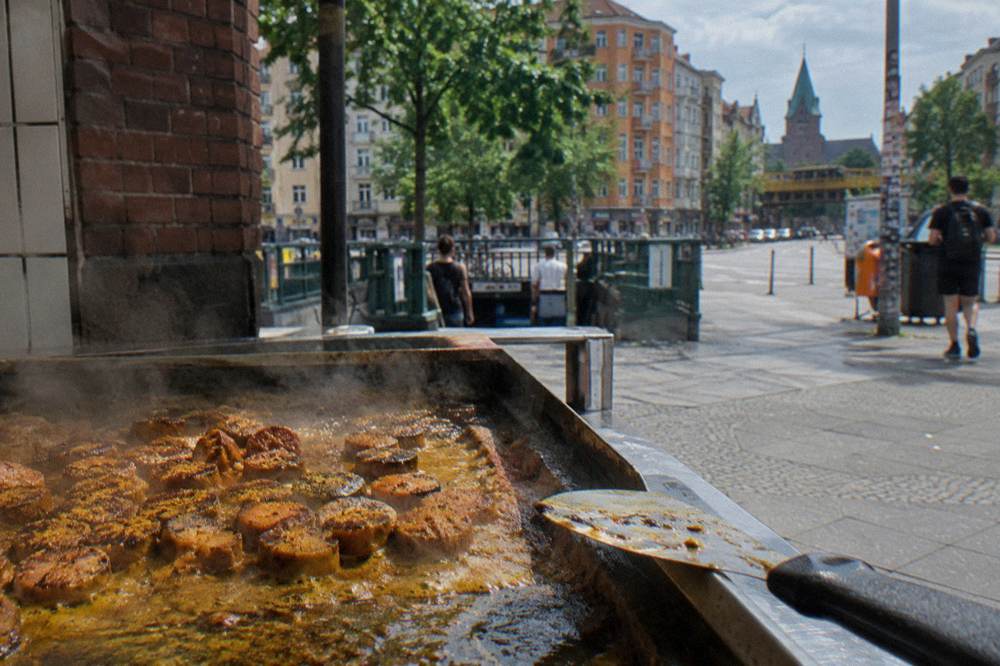
What is not disputed is why the dish spread. Postwar Berlin had sausage, it had improvisation, and it had hungry people eating standing up. Currywurst needed no cutlery, no table and no money for a restaurant, which made it the snack of construction workers, taxi drivers and night shift crowds. The Imbiss, the small street kitchen with a counter and a griddle, became its natural habitat, and the Imbiss never left the city.
Berlin is not alone in claiming the dish. Hamburg has long argued that its own sausage sellers were earlier, and the dispute flares up in German newspapers every few years. The Deutsches Currywurst Museum, which stood in Mitte for years, firmly took Berlin's side until it closed. For a visitor the argument is almost beside the point: in Berlin the dish is treated as local heritage, argued over in terms of sauce thickness and sausage casing rather than ownership.
The deeper history of the sausage itself is covered in detail elsewhere on this site, including the piece on how the currywurst story began in 1949, and the guide to Currywurst stands, sauce and history across Berlin traces the same stops as a walking route. Those pages go deeper on individual stands than this one.
Who Invented The Currywurst Sauce Berlin Loves?
Herta Heuwer is the name on the sauce, and her Chillup patent is the only documented link between one person and the recipe, but no original formula survives in public. Modern Berlin stands use house sauces that range from smooth and sweet to coarse, spiced and faintly smoky, and each Imbiss guards its mixture the way a brewery guards a recipe. Nobody in the city agrees on a single correct version.
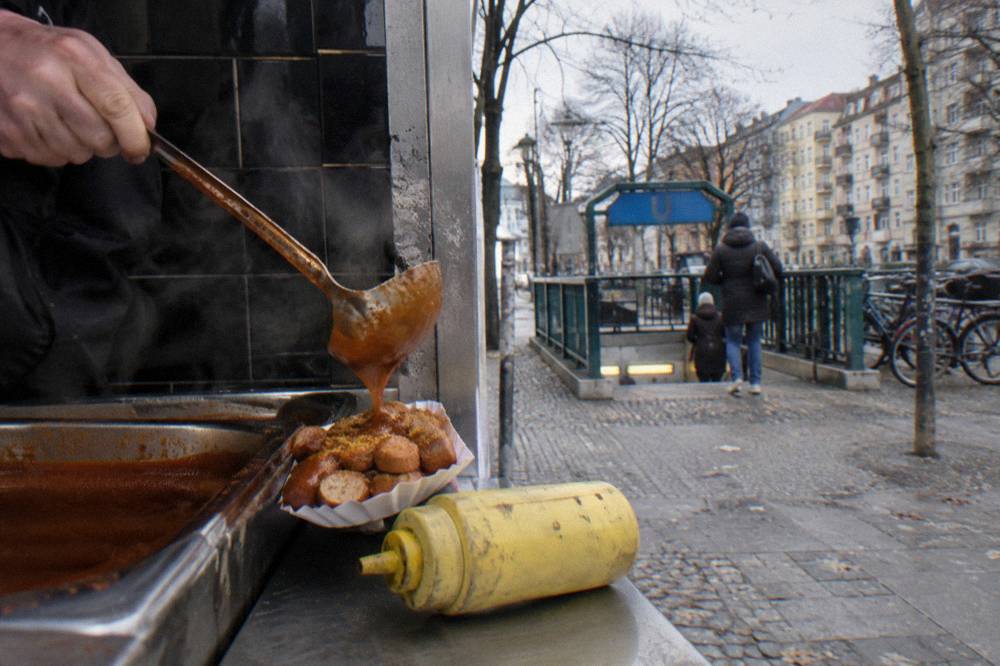
The sauce base is tomato, almost always, but beyond that the field opens. Some stands puree it completely so it pours like ketchup, others leave texture from onion or pulp. Curry powder is the constant, though its heat and provenance vary, and the powder is dusted on top rather than cooked in, which is why a fresh tray arrives with an orange crust that sinks into the sauce as you eat. Sugar, paprika, vinegar and sometimes a sharp mustard note complete the range of house styles.
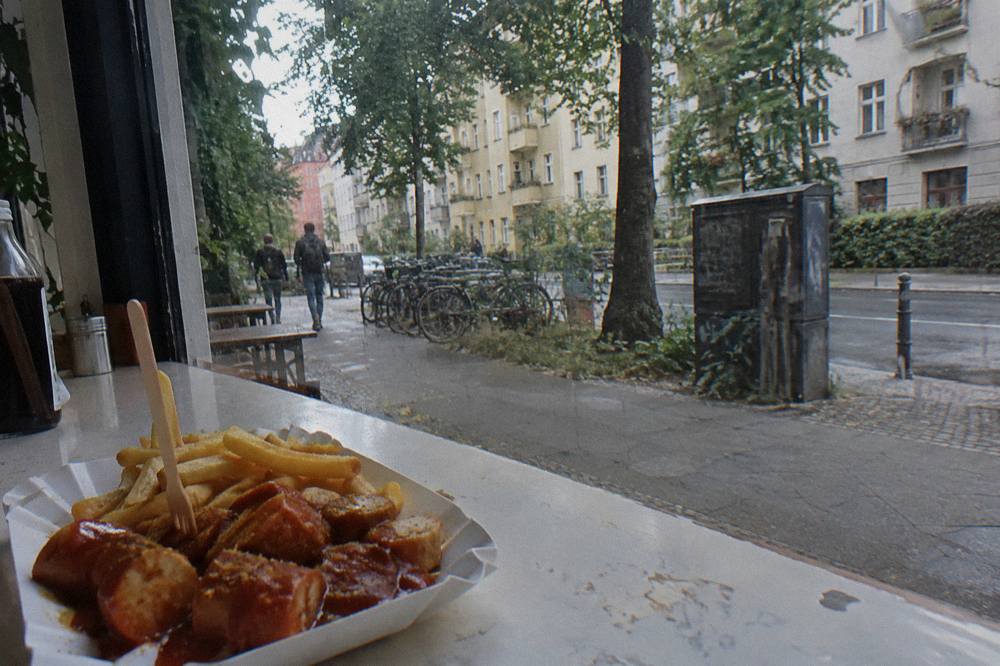
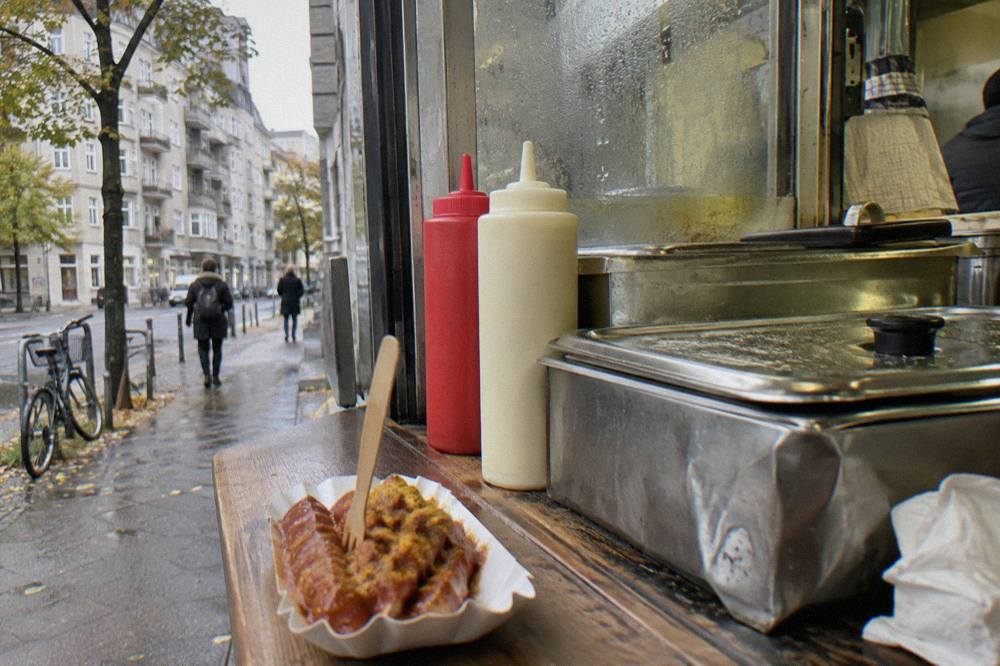
The sausage matters as much as the sauce. Most stands serve a brühwurst, a boiled then grilled sausage, and the first decision at the counter is casing or no casing. Without casing, called ohne Darm, the sausage is softer and the texture is uniform. With casing, mit Darm, you get the snap that many Berliners consider the whole point of the dish. The sausage is typically sliced into rounds before saucing, though some stands serve it whole with a wooden fork.
Vegan versions have spread quickly. Soy and wheat based sausages now appear at stands that would have refused the idea a decade ago, and several vegan Imbisse in Kreuzberg and Neukölln serve the dish with the same powder and sauce treatment. The site's guide to vegan, vegetarian and halal eating in Berlin covers where those versions cluster.
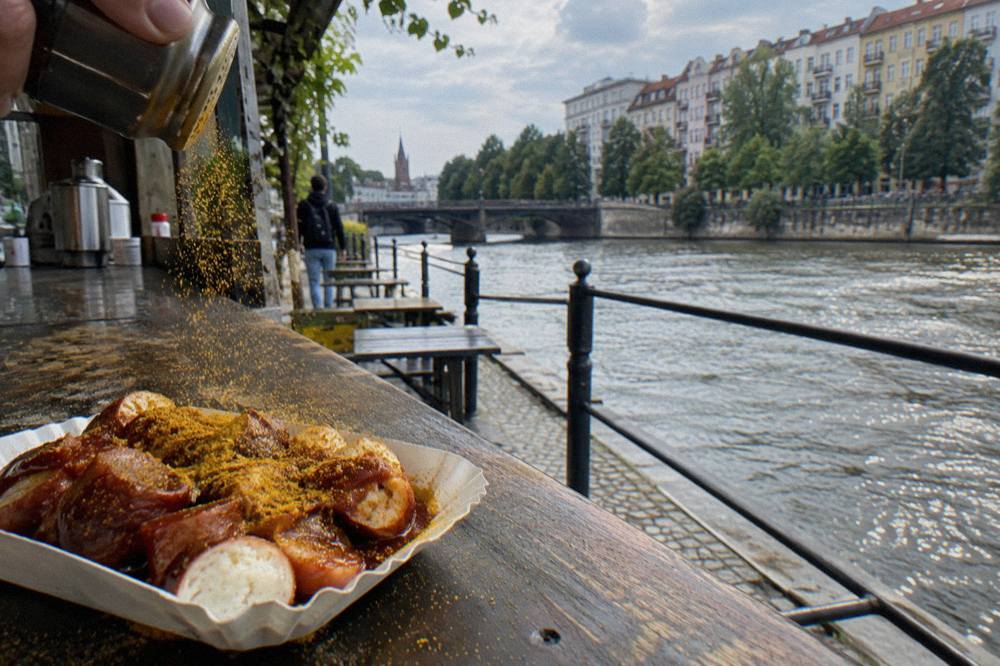
If you want the sauce question answered by tasting rather than reading, a guided walk does the comparison work for you. The tours below cover multiple stands and street kitchens in one outing.
Which Berlin Stands Serve The Classic Currywurst?
Curry 36 on Mehringdamm in Kreuzberg and Konnopke's Imbiss in Prenzlauer Berg are the two stands most often named as the classic addresses, and both are frequently described as well known in current coverage of the city, though neither's hours, prices or queues can be verified here. Beyond them, the honest answer is that hundreds of Imbisse across the city serve the dish, and quality does not reliably follow fame.
Curry 36 sits on Mehringdamm and gets called the most famous currywurst address in Berlin, a reputation built on decades of steady output rather than any official title. Konnopke's Imbiss, under the U-Bahn arches on Schönhauser Allee, is a long established, family run sausage stand with an East Berlin history attached. Both names come up in nearly every article about the dish, which is exactly why they are named here with a hedge: their current opening hours and prices are not published in verified form on this site, so check before crossing the city for either.
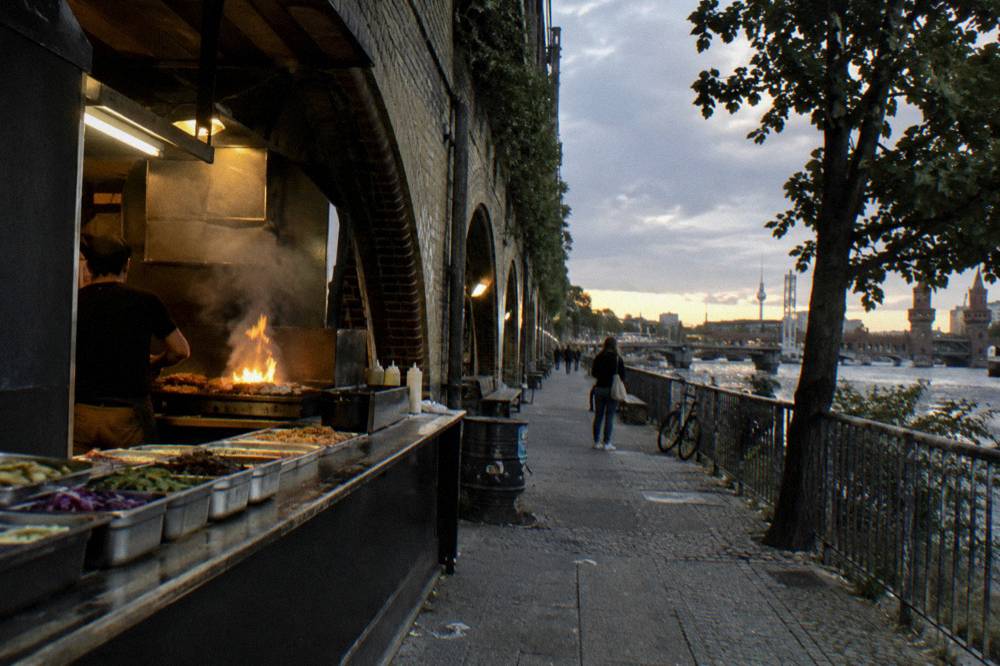
The stands Berliners actually defend are often the unglamorous ones near their Kiez. A counter outside a U-Bahn station, a kiosk by a construction site, a snack wagon outside a nightclub at 3am. The dish was born at that level and mostly still lives there. A useful strategy is to pick two or three stands in adjacent neighborhoods and compare sauce, sausage and powder in one afternoon, which is exactly what the tasting routes on this site are built around.
Two neighborhoods concentrate the stand density worth walking. Kreuzberg pairs Turkish street food culture with classic Imbisse, and the Kreuzberg food walk guide lays out a route with doner stops included. Prenzlauer Berg skews toward bakeries and old East Berlin snack counters, covered in the Prenzlauer Berg bakery and market walk.
| Stand | Area | What it is known for | Notes for visitors |
|---|---|---|---|
| Curry 36 | Kreuzberg, Mehringdamm | Long running address for the classic version | Often described as well known; hours and queues not verifiable here |
| Konnopke's Imbiss | Prenzlauer Berg, Schönhauser Allee | Family run sausage stand under U-Bahn arches | East Berlin history; check current hours before visiting |
| Neighbourhood Imbisse | Citywide | Sauce and casing arguments without the fame | Best compared two or three in one walk |
How Do Locals Order Currywurst In Berlin?
Locals order by two decisions: casing or no casing, and fries or a roll. The standard phrase is mit oder ohne Darm, with or without casing, and the side choice is Pommes or Brötchen. Ordering is fast and counter based, and the whole transaction takes seconds because the menu has not changed in decades.
The casing question splits the city. The snap of a cased sausage is what many older Berliners grew up on, while the softer uncased version suits those who treat the dish as sauce delivery. There is no wrong answer, but ordering without knowing the choice exists marks you as a tourist faster than any accent. Say the sausage decision first, the side second, and pay at the same window.
Fries come with a sprinkle of powder or salt, sometimes with ketchup or mayonnaise as an extra. The roll is the old school option, the way construction workers ate it at lunch for generations, and it survives at stands that predate the fries era. Some visitors order both, which nobody objects to. What locals rarely do is sit down: the dish is eaten standing, at the counter, with a small wooden or plastic fork, in the time it takes a tram to pass.
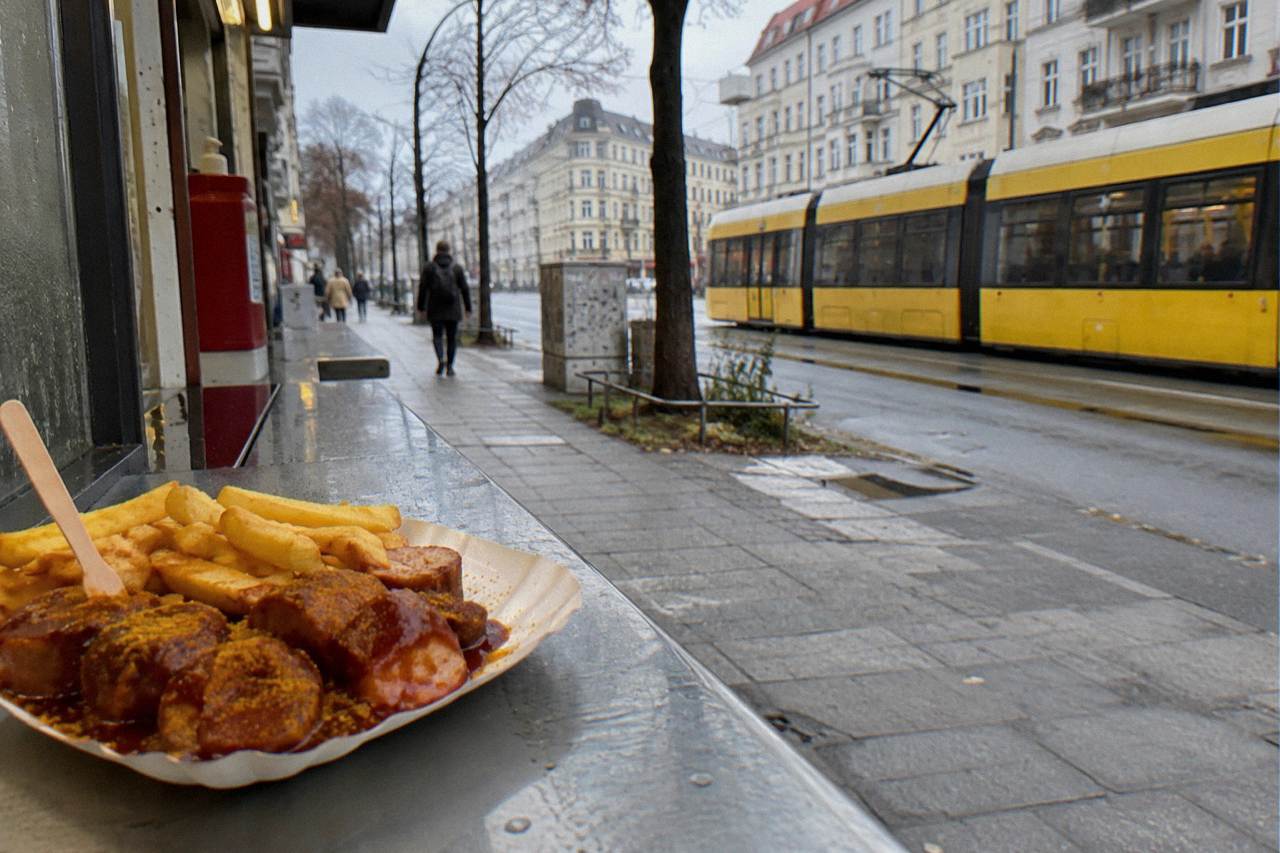
The etiquette around paying is simple. Do not hold up the queue deciding, and expect the counter staff to be brisk rather than warm. That briskness is not rudeness, it is the tempo of a place designed to feed a night shift in ninety seconds. The blog piece on how to eat currywurst without looking lost covers the vocabulary phrase by phrase.
A guided walk can build counter confidence without rehearsing it alone. The Berlin guided street food tour with tastings runs about 3 hours, is rated 4.8 across 403 reviews, and starts from $75 per person, with kebab, tacos and a pastry named among its stops. The guide places the orders and explains the vocabulary as you go.
Can You Eat Vegan Currywurst In Berlin?
Yes, and easily. Vegan sausage versions of the dish are now standard at dedicated vegan Imbisse in Kreuzberg, Neukölln and Mitte, and some mixed stands keep a vegan option on the griddle.
The vegan currywurst scene grew out of the city's broader plant based food culture, which is large enough that Berlin is regularly described in international coverage as a vegan capital. Dedicated snack shops serve soy and seitan sausages sliced and sauced exactly like the original, sometimes with a smokier sausage in imitation of the cased snap. Quality varies more than with the pork original, because there is no seventy year old formula to copy.
The site's guide to the vegan food walk in Berlin covers which neighborhoods hold the best plant based stops and what a dedicated vegan tasting tour includes, and the wider piece on whether Berlin really is the vegan capital of the world looks at the claim with numbers. For currywurst specifically, treat the vegan version as its own dish rather than an imitation, and judge each stand on its sauce.
What Goes With Currywurst: Fries, Roll Or Bread?
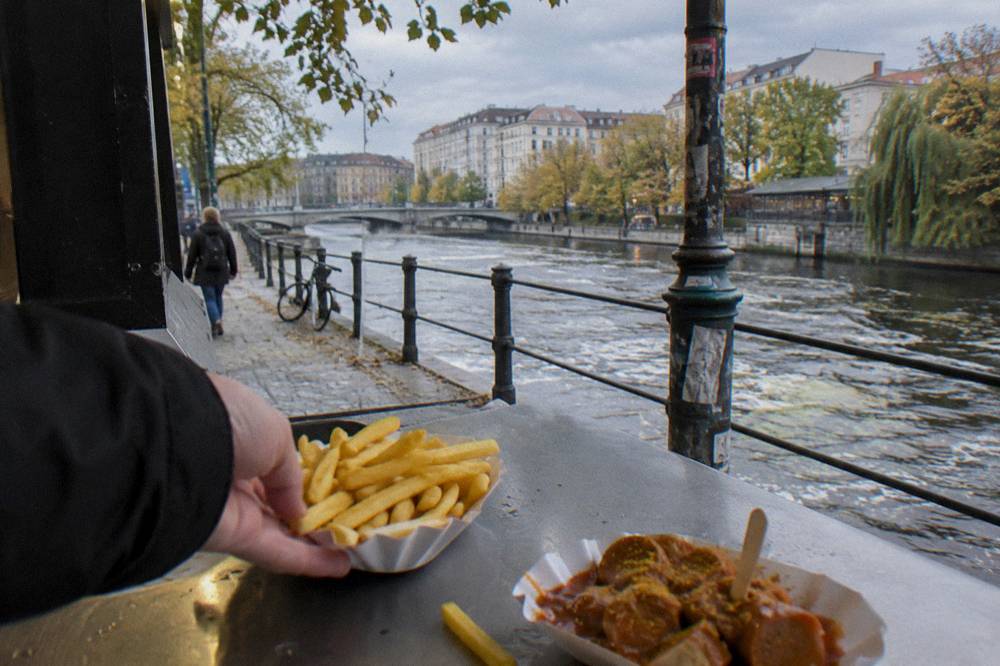
Fries are the default side in modern Berlin, the roll is the older working lunch version, and bread is what you get if the stand has run out of rolls or you order it deliberately. Mayonnaise with fries is common, ketchup is an extra at many counters.
The roll era matters to the history. In the dish's early decades it was handheld food for people with no break and no seat, and a Brötchen soaked up the sauce while you walked. Fries arrived as Imbisse installed fryers and as standing counters with small shelf ledges became normal. Today the fries version dominates, but old stands in the eastern districts often still ask which you want before they have finished slicing the sausage.
What to drink is its own small decision. Sparkling water, a soft drink, or at traditional stands a small beer poured from the bottle are all normal. The site's piece on what Berlin drinks with its street food covers the Berliner Weisse and beer culture that grew up beside the Imbiss counters, including the syrup question that divides locals the way casing does for sausage. And once the sausage and beer have you thinking about the rest of the city's table, the guide to the dishes you should not miss in Berlin pairs currywurst with doner kebab, Pfannkuchen, and Berliner Weisse.
| Side or drink | What it is | When locals choose it |
|---|---|---|
| Pommes | Fries, salted or powdered, mayo optional | The default at most stands today |
| Brötchen | Soft white roll for soaking sauce | Old school choice, still common in the east |
| Mayo with fries | Squeezed or dunked, sometimes an extra charge | Standard at northern German influenced stands |
| Small beer | Bottled, poured at the counter | Evening and night shift orders |
How Do You Taste Several Currywurst Stands In One Berlin Day?
Pick two or three stands within walking or short U-Bahn distance of each other, order the small portion at each, and walk between them: Kreuzberg to Neukölln, or Mitte to Prenzlauer Berg both work as lines. A single BVG AB ticket costs 4,00 EUR and is valid for 120 minutes, which is enough to link three stands with changes, and self guiding keeps the day under the price of any tour.
The transport arithmetic matters because the stands worth comparing are rarely in one district. A route that starts at a Mehringdamm stand in Kreuzberg, continues to a Kreuzberg Imbiss and finishes at a market hall covers three sauce styles in an afternoon. The BVG single ticket price table confirms the AB fare and validity, and children 6 to 14 pay a reduced 2,50 EUR. Note that from 1 January 2027 the AB single stays at 4,00 EUR while the four trip ticket rises to 13,20 EUR, so a multi stand day costs the same next year.
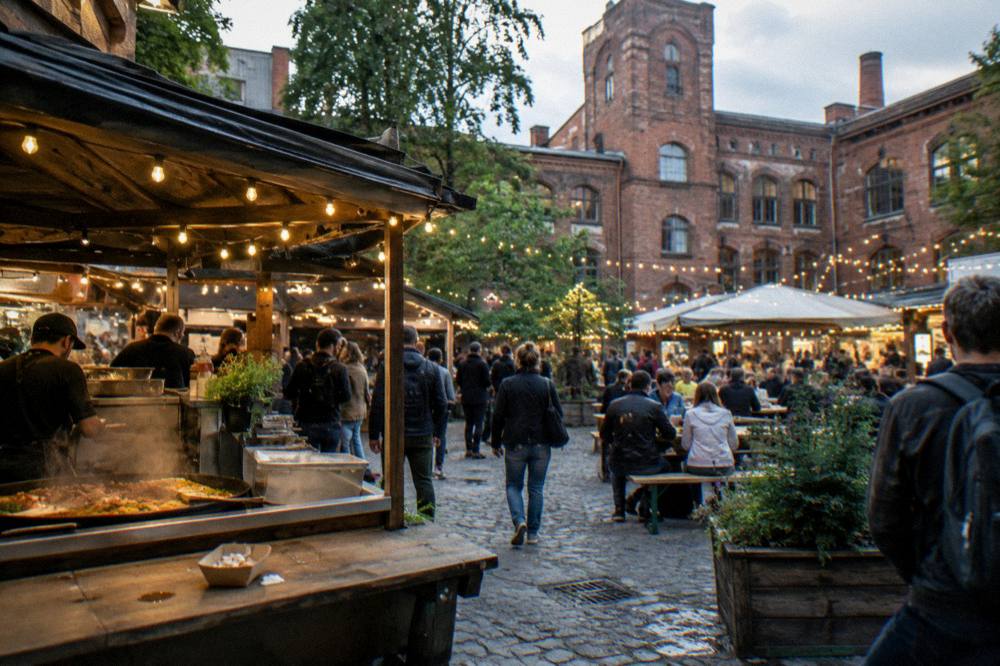
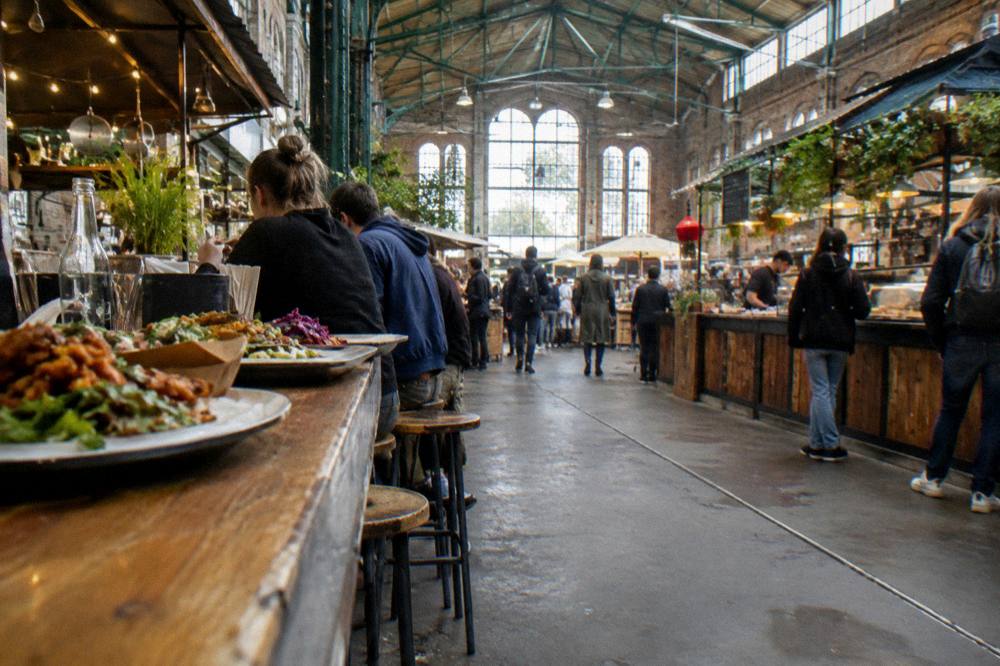
The alternative is a guided tasting walk, which trades control for coverage. The Mitte walk with 7 tastings runs 3 hours, is rated 4.9 across 1,583 reviews, starts from $90.01 per person, and currywurst is named in its listing alongside beer and wine. For a market hall version, the Markthalle Neun guided food tour with craft beer runs about 2.5 hours from $97 per person; it has no reviews yet on its booking page, so there is no rating to report, and it pairs the hall's traders with a beer stop.
The comparison below shows what the three closest guided options cost and cover, using only the figures on their booking pages.
| Tour | Duration | Rating | Price from |
|---|---|---|---|
| No Diet Club Street Food Walk | ~3 hours | 4.8 across 403 reviews | $75 per person |
| Markthalle Neun, Craft Beer | ~2.5 hours | No reviews yet on the booking page | $97 per person |
| KERB Food Hall, Drinks | Not stated as hours on the page | 12 reviews, too few for a rating | $34 per person |
What Does A Berlin Street Food Tour Add To A Currywurst Crawl?
A guided tour adds ordering help, a route that skips weak stands, and context on the dish's history at each stop, at a cost of roughly $34 to $97 per person depending on format. It does not add food you could not buy yourself, and it removes the freedom to linger. Visitors short on time or nervous at German counters gain the most; confident eaters with a full day gain the least.
The cheapest guided entry point is the KERB food hall experience at from $34 per person, which concentrates several street food vendors under one roof so the walking is minimal and the comparing is easy. It has 12 reviews, too few for a star rating, so judge it on format rather than score. At the other end of the scale, the private food walks listed on the private food walk guide let you set the stops yourself, and the site's own homepage at Berlin Food Tours collects every category in one place.
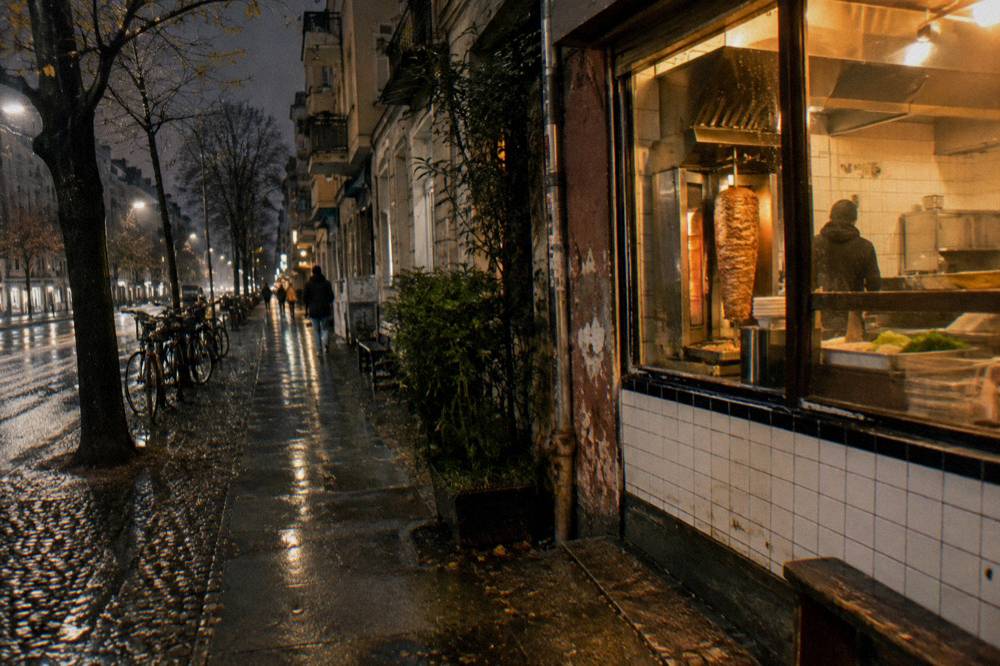
For currywurst adjacent tasting, the doner side of the family matters too, since the two dishes share street kitchen culture. The Berlin doner kebab tour with sightseeing runs about 3 hours, is rated 4.9 across 57 reviews, and starts from $51 per person, which makes it a mid priced way to cover the other half of Berlin's counter food history alongside the sausage stands.
When Is The Best Time To Eat Currywurst In Berlin?
Any time the stands are open, which in practice means lunch through late night, with the caveat that Berlin's Sunday trading rules close most supermarkets while bakeries and station shops keep limited hours. Evenings suit the dish's night shift heritage, Thursday evenings add the Street Food Thursday option at Markthalle Neun from 17:00 to 22:00, and winter markets from late November add a seasonal version of the counter culture. If currywurst turns out to be just the start, the guide to Berlin's signature foods shows how doner, Bouletten, and a Berliner Pfannkuchen can fit into the same afternoon.
Sunday planning needs the legal context. Under the Berliner Ladenöffnungsgesetz, described by the Senatsverwaltung shop opening hours page, most shops close on Sundays, with exceptions for tourist need shops from 13:00 to 20:00 and bakery and confectionery sellers from 07:00 to 16:00. Imbisse are food sellers and keep serving, so a Sunday currywurst walk works, but building a route around shop bought extras does not.
Season matters less than people assume, since the dish is hot and eaten standing in all weathers. Winter has a specific advantage: the Christmas market cluster, including the free entry Alexanderplatz market from 23 November to 26 December 2026, puts sausage counters and Glühwein in the same square. The street food hall option runs indoors, which the Markthalle Neun Street Food Thursday page lists with its current Thursday dates.
For timing a full currywurst focused trip, the site's guide on the best time to visit Berlin for food weighs market calendars against crowd levels, and the Christmas market food and Glühwein guide covers the winter version of the stand crawl in detail.
Whichever day you pick, the guided options below bundle several street food stops into one outing.
Common Questions About Currywurst In Berlin
Where Did Currywurst In Berlin Come From?
The dish is credited to Herta Heuwer, who is said to have mixed the first sauce at a Charlottenburg stand in 1949 from ingredients obtained from British soldiers. The claim is widely repeated but not fully documented, so it is always stated with the word credited.
How Do Locals Order Currywurst In Berlin?
Two decisions: casing or no casing, mit oder ohne Darm, then fries or a roll, Pommes oder Brötchen. The order is placed at the counter in seconds, and the dish is eaten standing with a small wooden fork.
Which Berlin Stands Are The Classic Currywurst Addresses?
Curry 36 on Mehringdamm in Kreuzberg and Konnopke's Imbiss in Prenzlauer Berg are the two names most often repeated, described here as well known stands with no verifiable hours or prices. Many Berliners prefer unglamorous neighborhood Imbisse.
Can You Eat Vegan Currywurst In Berlin?
Yes. Vegan sausage versions are standard at dedicated plant based Imbisse in Kreuzberg, Neukölln and Mitte, served sliced and sauced the same way as the pork original.
What Goes With Currywurst In Berlin?
Fries are the modern default, the roll is the older working lunch version, and mayonnaise or ketchup with fries is optional. A small bottled beer at the counter is the traditional evening drink.
Is A Currywurst Tour In Berlin Worth It?
The Mitte walk with 7 tastings runs 3 hours from $90.01 per person, rated 4.9 across 1,583 reviews, and currywurst is named in its listing along with ordering help and history along the way. Self guiding with a 4,00 EUR AB ticket is cheaper if you have the time and confidence.