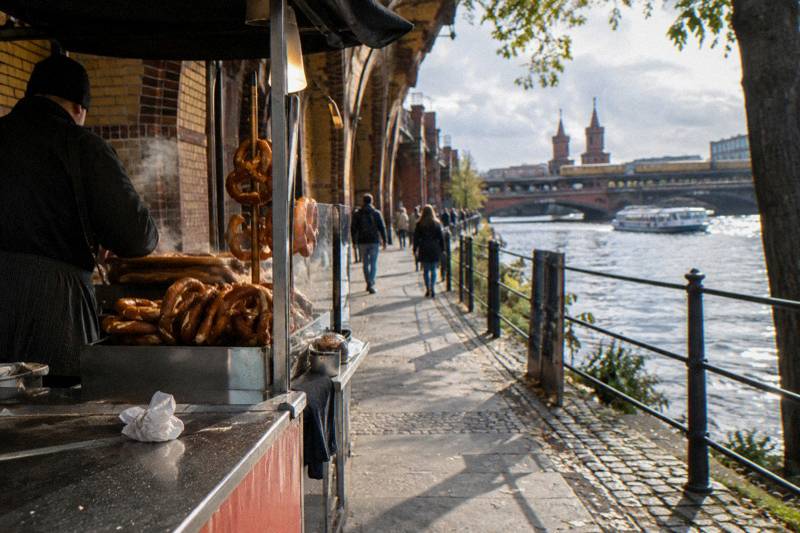
Berlin Currywurst Tour: Stands, Sauce And History
Currywurst is Berlin's most argued-about snack, and a guided tasting walk is one of the fastest ways to understand why. Here is how the tours work, what they cost, and when going with a guide beats hopping stands on your own.
Short answer
A Berlin currywurst tour is a guided walk of roughly 3 hours that stops at several street food stands, with tastings included. The Mitte walk with 7 tastings runs from $90.01 per person and is rated 4.9 across 1,583 reviews; the Downtown tour with 8 tastings runs from $115.
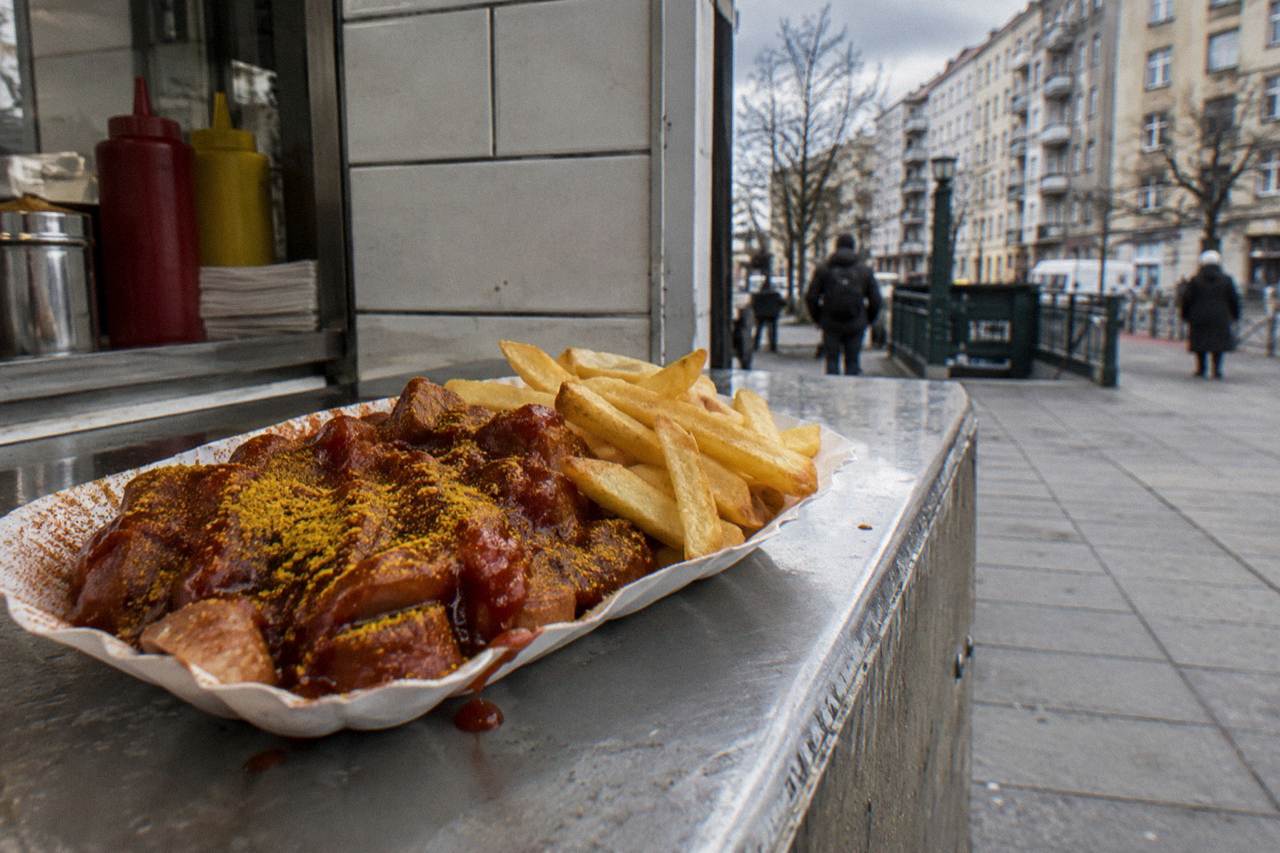
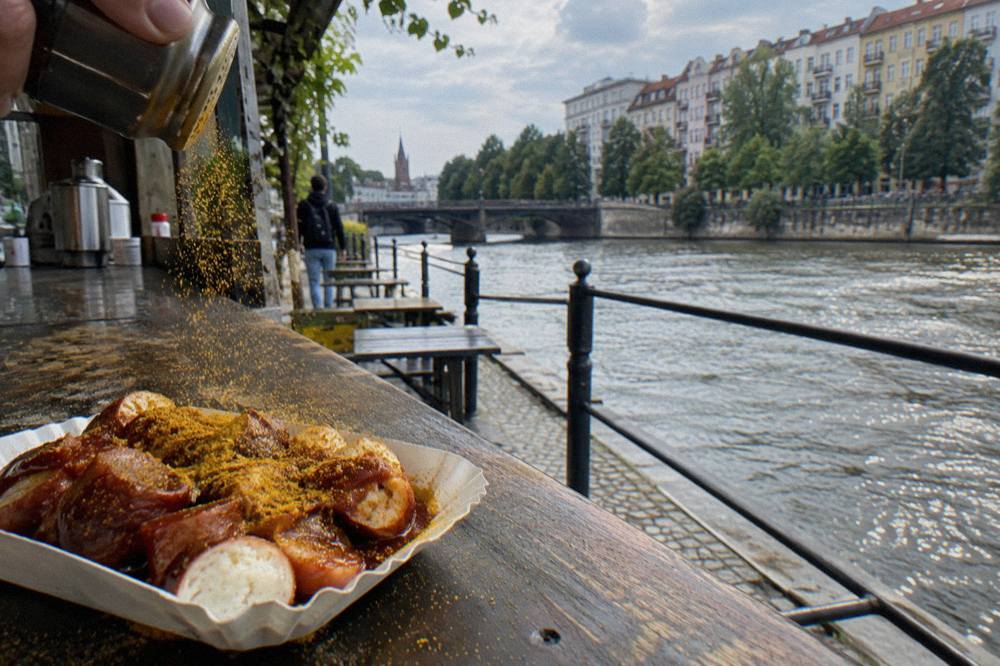
Currywurst sits at the center of Berlin's food identity: sliced pork sausage under a spiced tomato sauce, dusted with curry powder, served in a paper tray with a wooden fork. The dish is credited to Herta Heuwer, who is said to have mixed the first sauce in Berlin's Charlottenburg district in 1949, and it has been a city staple ever since. A guided currywurst tour bundles that history with the stands themselves, and this page explains what the tours actually include, what they cost, and when a guide earns the ticket price. If currywurst is new to you, our beginner's guide to ordering currywurst in Berlin covers the vocabulary, the classic sides, and the stands locals queue for.
What Is A Berlin Currywurst Tour And How Does It Work?
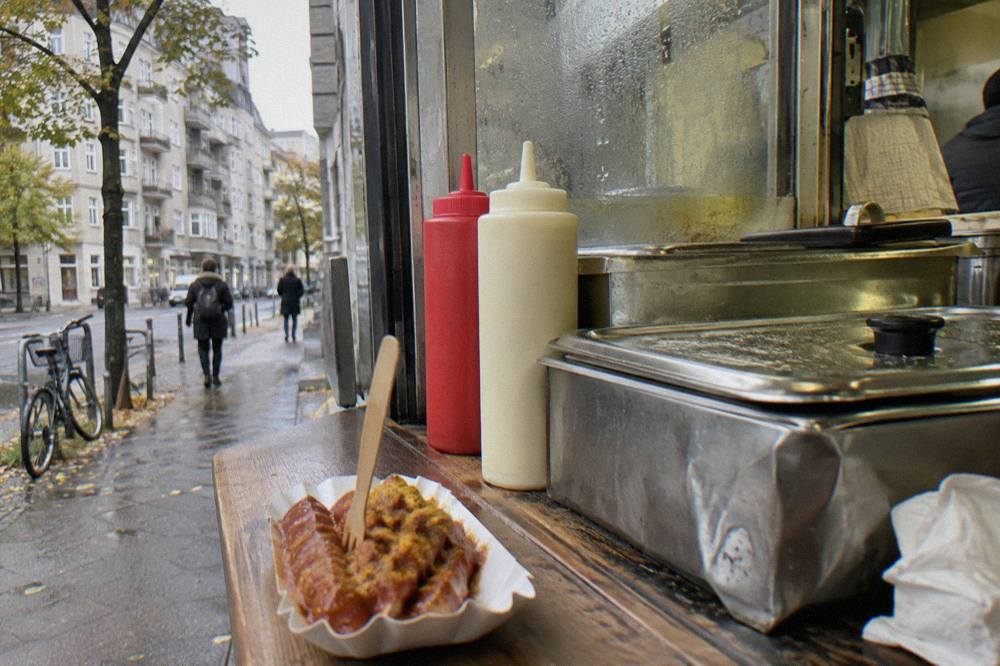
A Berlin currywurst tour is a guided walking experience of roughly 3 hours in which a local guide leads a small group between street food stands, with several tastings included in the ticket. The format is simple: you meet at a set point in a central district, walk between stops, eat at each one, and hear the story of the dish and the neighborhood between bites. Durations, meeting points and inclusions all come from each tour's booking page.
Most walks follow the same rhythm. The guide sets the pace and explains what makes each version of the dish different: the sausage, the sauce, the casing, the powder. Between stands you get the neighborhood's history, which in Berlin usually means Cold War division, immigration, and the slow reinvention of whole streets.
The stops themselves vary by tour. Some walks center on a single district such as Mitte or Kreuzberg; others range wider and pair the sausage with doner kebab, craft beer or market snacks. The number of tastings is printed on each booking page, so check it before you decide that a ticket is expensive or cheap. A walk with fewer, larger stops can feed you more than one with many small ones.
Group size matters as much as the route. A tour with ten people moves differently than one with twenty-five, and stand owners treat the two groups differently too. If a booking page does not state a cap, assume the group can be large and weigh whether that suits you. For a deeper look at the dish's background before you book, read the companion piece on currywurst history, sauce and where to eat it.
Which Berlin Tours Include Currywurst Tastings?
Three options covered here name currywurst in their listings: the Mitte walk with 7 tastings from $90.01, rated 4.9 across 1,583 reviews; the Downtown walk with 8 tastings from $115, rated 4.9 across 407 reviews; and the Hidden Kreuzberg and Neukölln walk from $118, which lists iconic Berlin currywurst among its stops. Each is a guided walk of about 3 hours, and each is booked through the operator's page. The Mitte walk is the strongest match if currywurst is the reason you are reading this, because it pairs the sausage with doner kebab and beer across central Berlin.
The Mitte walk is the full experience: 3 hours, multiple stops, a guide who talks. The Downtown walk covers similar ground with eight tastings and a large review pool behind it. The Hidden Kreuzberg and Neukölln walk starts at Kottbusser Tor and moves between local restaurants and a bakery; its review pool is still small, so judge it by what it covers rather than by ratings. If you would rather taste inside a market hall, Markthalle Neun hosts Street Food Thursday from 17:00 to 22:00 every week, and the hall's own page lists its next dates.
| Tour | Duration | Rating | Price from |
|---|---|---|---|
| Mitte walk with 7 tastings | 3 hours | 4.9, 1,583 reviews | $90.01 |
| Downtown walk with 8 tastings | 3 hours | 4.9, 407 reviews | $115 |
| Hidden Kreuzberg and Neukölln walk | 3 hours | 9 reviews, too few for a star claim | $118 |
If a broader tasting walk appeals more than a street food focus, the Berlin: Downtown Food Tour with 8 Authentic Local Tastings covers more stops over about 3 hours, is rated 4.9 across 407 reviews and runs from $115. It leans on classic Berlin snacks, of which currywurst is usually one, and its large review pool makes it one of the safest bookings on the site.
Is A Guided Currywurst Tasting Better Than Hopping Stands Alone?
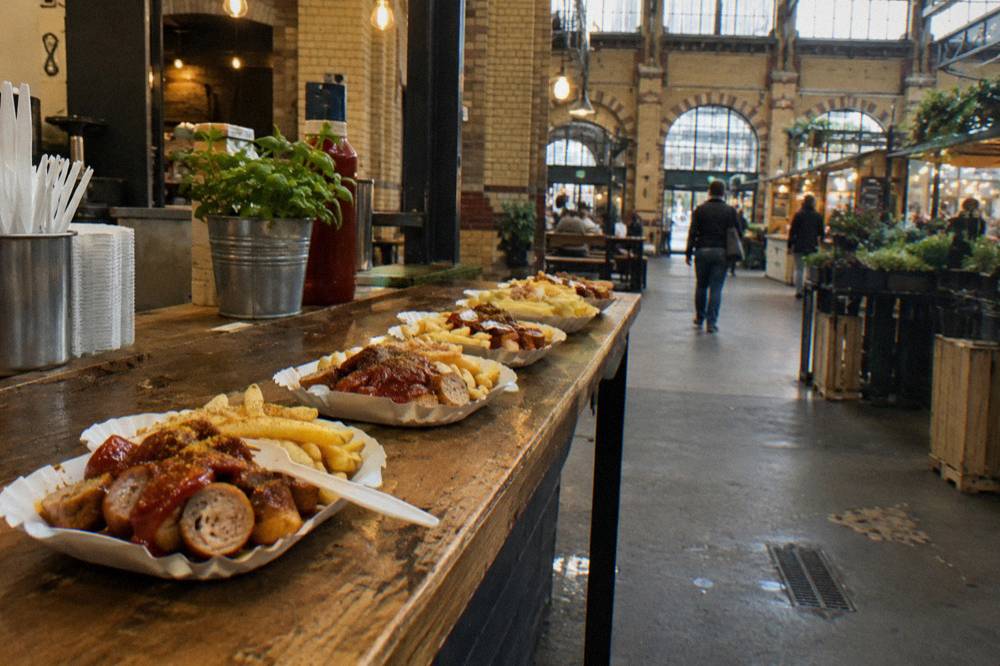
A guided tasting is better when you want the history, the ordering conventions and a set route done for you; a solo stand hop is better when you want to control the pace, spend less and linger. A guide does not change the sausage. What changes is the context: who invented the dish and why, why two stands ten minutes apart taste entirely different, and how to order without hesitation at a counter that moves fast.
The price difference is real but narrower than it looks. A tour ticket from $67 covers several tastings, a route and a guide. Doing it alone costs less per tray, but you pay separately at each stand, you lose the stories, and you spend your own time working out which counters are worth the walk. For a visitor with one or two evenings in the city, that trade often favors the guide.
There is a middle path worth naming. Book the Mitte walk with 7 tastings for the guided evening, Check availability, then repeat your favorite stand alone the next day. The tour works as a tasting menu; the return visit is when you order like a local.
Guides also handle the practical frictions. They pace the walk so nobody eats everything in the first hour, and they can answer the questions a stand owner is too busy to entertain. If your interest runs wider than one dish, the Kreuzberg walk covers doner and the Turkish market alongside the classics; the Kreuzberg food walk guide breaks down what that district offers.
Where Is Currywurst Credited To Have Been Invented In Berlin?
The dish is credited to Herta Heuwer, said to have created the sauce in Charlottenburg in 1949, in the British sector of the then-divided city. The story, repeated widely but impossible to verify fully, holds that she obtained ketchup or a similar base, mixed it with curry powder and other spices, and poured it over grilled sausage. Her stall grew busy, the sauce was trademarked, and imitators spread across both halves of the city.
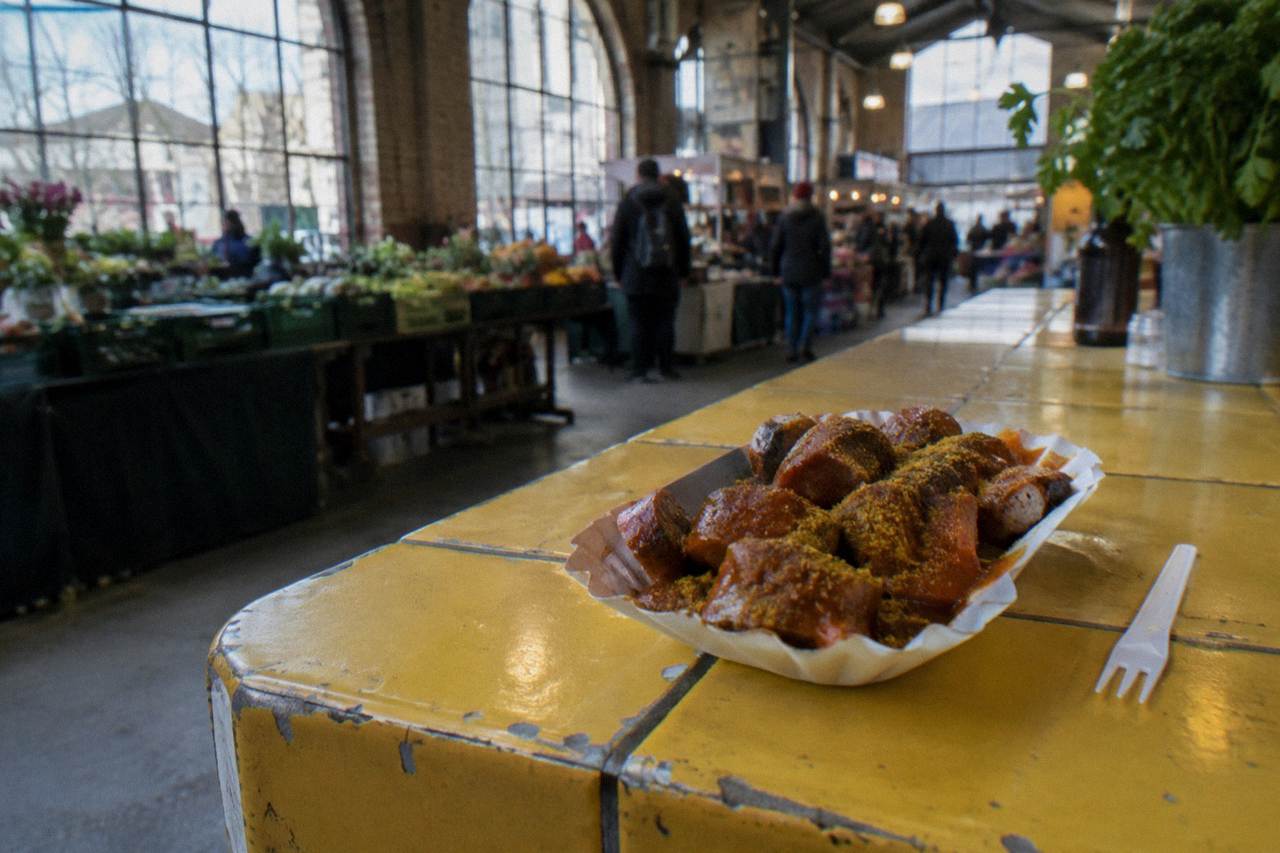
That origin matters for a tour choice more than you might expect. Charlottenburg, in the former West, and the eastern districts tell different currywurst stories, because the snack developed separately on either side of the Wall. West Berlin stands refined the takeaway format; East Berlin versions worked with the sausages and supply chains available to the East. A guide who lived through any part of that, or who knows the stands' histories, turns a paper tray into a small history lesson.
The machine-cut versus hand-cut question comes from the same split. Some stands slice with a special machine that snips the sausage into rough chunks, others cut by hand, and regulars argue about which holds sauce better. It is the kind of detail a guide points out unprompted and that a solo visitor walks straight past. For the full background on the dish, see the currywurst history page.
How Do You Order Currywurst Like A Berliner?
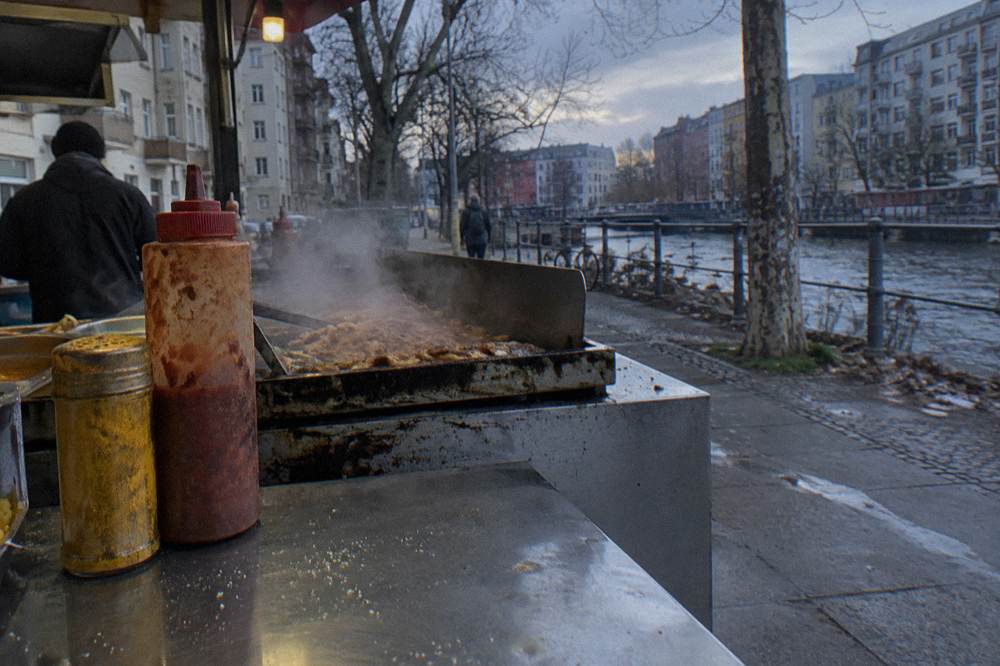
You order currywurst by two main choices: with or without casing, and with fries or a bread roll on the side. The sausage without casing is softer and soaks up sauce; with casing it stays snappy and grilled. Regulars often order by the shorthand rather than the full sentence, and any counter will understand a simple point-and-ask, but knowing the options speeds things up at busy stands.
The choices sound small until you taste the difference. Casing on gives you texture and char; casing off gives you sauce in every bite. Fries are the standard pairing, and the tray usually arrives with a small wooden or plastic fork, since fingers and hot sauce mix badly. Sauce heat varies: some stands keep the spice mild as default, others ask, and it never hurts to say your preference when you order.
| Choice | What it means | Why pick it |
|---|---|---|
| With casing | Sausage grilled in its skin | Snappier bite, more char |
| Without casing | Skin removed before grilling | Softer, absorbs more sauce |
| With fries | Served alongside in the tray | Classic pairing, sauce-friendly |
| With roll | Bread on the side | Cheaper-feeling, hand-held option |
A tour covers this for you, which is part of what you are paying for. The guide orders, translates the shorthand if your German is thin, and flags which stands do things differently. On the best currywurst and ordering page the same options are covered in more depth, including how the ordering vocabulary shifts from stand to stand.
Which Currywurst Stands Should You Know Before You Go?
Two names come up in nearly every currywurst conversation: Curry 36 and Konnopke's Imbiss, both widely described as well-known Berlin stands. Neither should be treated as a guarantee of a short wait or a particular standard; they are simply the reference points locals and guides use, the way a city talks about its famous institutions. Tours that pass through their neighborhoods may stop nearby, but the exact stops are set by each operator.
Curry 36 is associated with the western side of the city, and Konnopke's with the east, under the elevated railway in Prenzlauer Berg, which makes the pair a neat illustration of the divided history described above. Beyond those two, Berlin has hundreds of stands, and the "best" one is a permanent argument. Guides tend to favor stands with a story or a distinctive sauce over the famous names, partly because queues at famous names eat tour time.
That is an argument for a tour in itself: the operator has already chosen stops, tested them repeatedly, and built a route that connects them on foot or with a short transit hop. Getting between districts is cheap either way. A single BVG AB ticket costs 4,00 EUR and is valid for 120 minutes, per BVG's single-ticket price table, and from 1 January 2027 that AB fare stays at 4,00 EUR while the four-trip ticket rises to 13,20 EUR.
If doner interests you as much as currywurst, the Berlin: Döner Kebab Tour & Sightseeing pairs the city's other signature street food with sightseeing stops over about 3 hours, rated 4.9 across 57 reviews and from $51, and the doner kebab tour guide covers that route in detail.
How Much Does A Currywurst Tour In Berlin Cost?
Guided options that name currywurst in their listings run from $67 to $118 per person, depending on format and length: the Wall History walk with a Konnopke's Imbiss lunch stop from $67, Berlin's Greatest Hits with a currywurst tasting from $79.21, the Mitte walk with 7 tastings from $90.01, the Downtown tour with 8 tastings from $115, and the Hidden Kreuzberg and Neukölln walk from $118. Private formats cost more; the figures below come from each tour's listed price, per person.
The spread reflects what is included, not quality. A food hall visit is short and contained; a 3-hour neighborhood walk with a guide, multiple tastings and history costs several times more; a private walk, where the guide is yours alone, sits at the top. Private options such as the Private Food Tour Experience with a born and bred Berliner, from $338.67, price the guide rather than the food, and the total depends on group size, so treat private figures as starting points and confirm on the booking page.
| Tour | Length | Rating | From (per person) |
|---|---|---|---|
| Wall History walk with street food | 4 hours | 4 reviews, too few for a star claim | $67 |
| Hidden Kreuzberg and Neukölln walk | 3 hours | 9 reviews, too few for a star claim | $118 |
| Downtown Walk, 8 Tastings | ~3 hours | 4.9, 407 reviews | $115 |
| Berlin's Greatest Hits: Food, Beer & History Tour | ~2 hours | 4.9, 84 reviews | $79.21 |
Berlin Food Tours With Currywurst Tastings, By Price
Starting prices from the five tours listed in this article
For a wider view across formats and neighborhoods, the guide to what a Berlin food walk costs breaks down inclusions, group-size pricing and what is usually extra.
When Is The Best Time For A Currywurst Crawl In Berlin?
Late spring through early autumn is the most comfortable window: Deutscher Wetterdienst 1991 to 2020 normals for Alexanderplatz put July at a mean of 20.4 C, and even October averages 10.4 C. But currywurst is an all-year dish, eaten standing at outdoor counters in January as readily as July, and winter adds the Christmas market season, when the Alexanderplatz market runs 23 November to 26 December 2026 with free admission.
Winter crawls work with a plan. Mean temperatures sit at 1.5 C in January and 2.5 C in December, so an evening that hops between stands needs warm layers and preferably indoor or heated stops, which is another point in favor of a guided walk in the cold months. Sunday planning matters too: under Berlin's shop opening law most shops close on Sundays, with limited exceptions for bakeries and station shops, so a self-built Sunday route should lean on stands and markets rather than supermarkets.
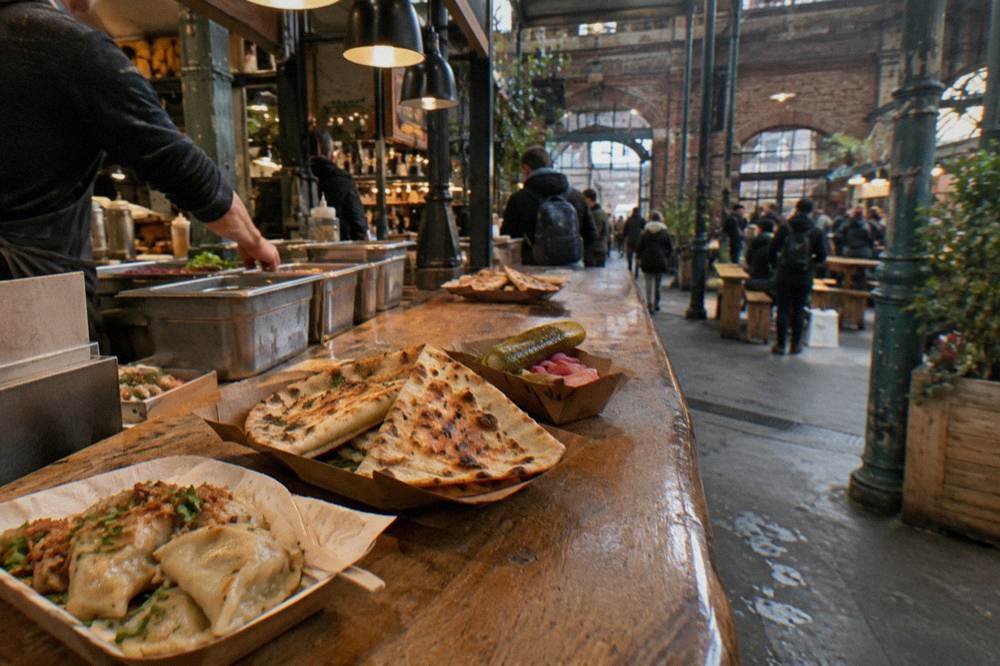
Market timing changes the options as well. Street Food Thursday at Markthalle Neun runs 17:00 to 22:00, with the hall's page listing its confirmed dates, and the Winterfeldtmarkt on Winterfeldtplatz runs Wednesday mornings and Saturdays until 16:00 per visitBerlin's market page. If a market day anchors your visit, the Markthalle Neun guide covers the hall and its surroundings stop by stop.
For a compact, well-reviewed evening option that pairs food with beer and history over about 2 hours, rated 4.9 across 84 reviews and from $79.21, Berlin's Greatest Hits fits between a longer walk and a solo hop.
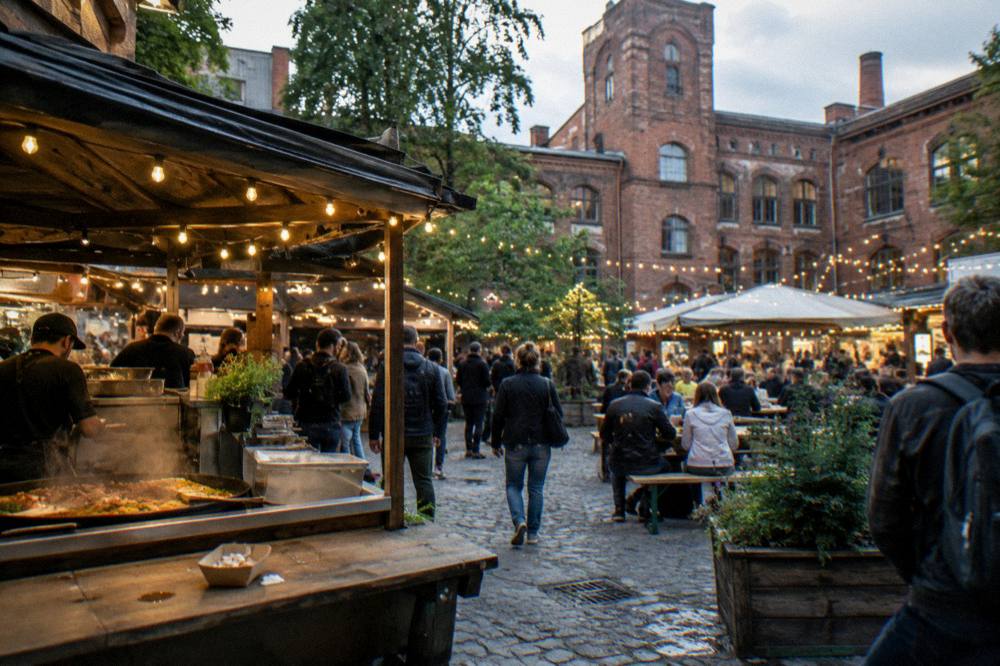
Deciding between a tour and a solo route comes down to time. One evening favors a guide, who compresses the history and the best stands into a single walk. Several days let you take the tour first, then return to whatever the group stopped at, as Berlin Food Tours suggests in its neighborhood breakdowns. Either way the dish costs the same at the counter; the guide changes what you understand while eating it.
Common Questions About Berlin Currywurst Tours
What Is A Berlin Currywurst Tour?
A guided walking tour of roughly 3 hours that stops at several street food stands, with tastings and the dish's history included. Options run from $67 for a 4-hour walk with a Konnopke's Imbiss lunch stop to $118 for a neighborhood walk, per person.
Where Is Currywurst Credited To Have Been Invented?
The dish is credited to Herta Heuwer, said to have created the sauce in Berlin's Charlottenburg district in 1949. The story is widely repeated but cannot be fully verified, so treat it as the accepted origin rather than documented fact.
How Do You Order Currywurst Like A Local?
Choose with or without casing and pick fries or a roll on the side. Casing on gives a snappier bite, casing off absorbs more sauce. Any counter will understand a simple request, and guides on the tours order for the group.
Is A Currywurst Tour Worth It Compared To Visiting Stands Alone?
If you want the history, the ordering conventions and a tested route, yes: guided options start at $67 for a 4-hour walk with tastings included. If you prefer to set your own pace and spend less, a solo stand hop works well, especially with a BVG AB ticket at 4,00 EUR.
When Is The Best Time Of Year For A Currywurst Crawl In Berlin?
May through September is warmest, with July averaging 20.4 C per the Deutscher Wetterdienst 1991 to 2020 normals. Winter works too, but plan for a guided walk or heated stops, since January averages 1.5 C.
Which Berlin Currywurst Stands Are Famous?
Curry 36 and Konnopke's Imbiss are the two names that come up most, one associated with the west of the city and one with the east. Both are widely described as well-known stands; expect possible waits and no guaranteed experience.