What Is Berlin's Famous Food?
Berlin's most famous foods explained: currywurst, doner kebab, Bouletten, Berliner Pfannkuchen and the markets where locals eat them, plus how to taste several in one afternoon.
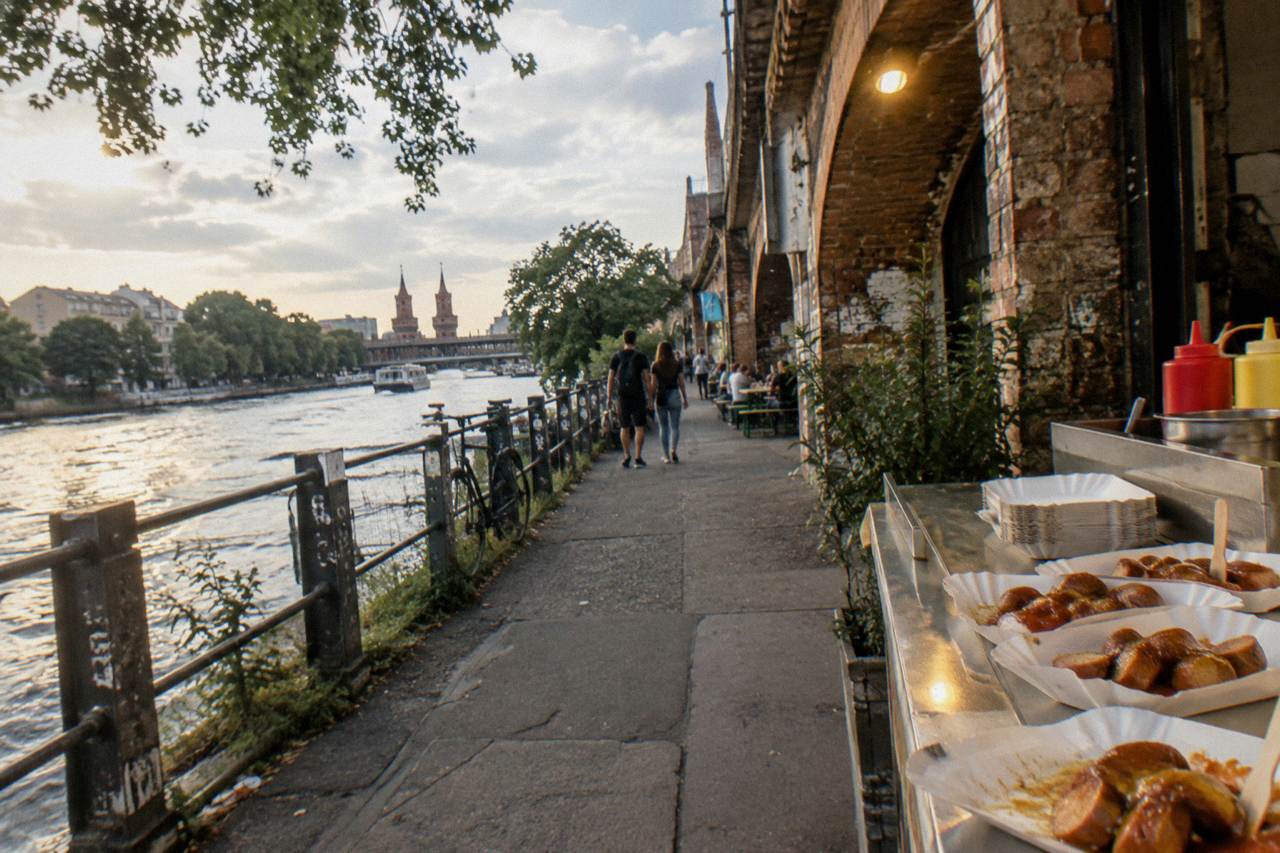
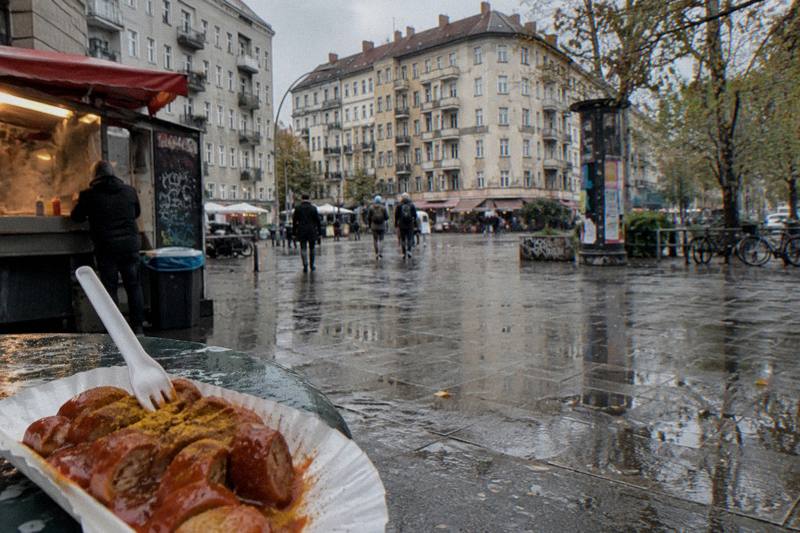
Berlin's most famous food is currywurst, a sliced pork sausage drowned in spiced ketchup and curry powder, and it is inseparable from the city's identity. Right behind it stands doner kebab, which spread worldwide from Berlin's snack counters. Add Bouletten, Berliner Pfannkuchen, Eisbein and a weekly market culture, and you have a city that eats standing up more than almost any other in Europe.
Nobody comes to Berlin for white tablecloth tradition. The dishes that made the city's name are worker food, postwar food, immigrant food: things invented to be eaten quickly, cheaply and leaning against a counter. Currywurst was born in the rubble years after the war and stayed. Doner arrived with Turkish guest workers and was reshaped in Berlin into the handheld form the whole world now recognizes. Both are claimable as Berlin inventions, and both are defended with the seriousness other cities reserve for cathedrals.
Around those two anchors sits a wider repertoire. Bouletten, fried hand-sized meatballs sold by the half dozen at market stalls, are the old Prussian snack that predates both. Berliner Pfannkuchen, the jam filled doughnut that the rest of Germany confusingly calls a Berliner, belongs to the city's bakeries, especially on New Year's Eve. Eisbein, pickled pork knuckle with mushy peas, survives on traditional menus for visitors who want the prewar version of the city on a plate.
The question is not really whether Berlin has famous food but how to eat it well while you are here. A guided walk solves the logistics, because the best stands are scattered across Mitte, Kreuzberg and Neukölln rather than gathered in one place.
The Berlin guided street food tour with tastings is the natural fit for this exact question: about 3 hours, from $75 per person, rated 4.8 across 403 reviews, moving between stands so you taste several of the city's signatures in one afternoon. For a structured overview of the same dishes, see the companion page What To Eat In Berlin: Traditional Dishes And Local Staples.
Where Did Currywurst And Doner Kebab Come From?
Both of Berlin's headline foods are modern inventions. Currywurst is credited to Herta Heuwer, a Charlottenburg snack stall operator who is said to have mixed ketchup, curry powder and other spices in the postwar years and poured the result over grilled sausage. Doner's handheld form is credited to Turkish immigrants in Berlin who put rotating spit meat into bread so workers could eat it walking.
The currywurst story is unusually well documented for a snack. Heuwer is said to have traded spirits for spices with British soldiers after the war, then created her sauce at a stall in Charlottenburg. The combination caught on across both halves of the divided city, and before long it was a factory canteen and late night standard on either side of the Wall. Today the currywurst needs no museum: it is sold at a huge number of stands, with the curry powder shaken over the top through a shaker and the sausage pre-sliced so you can spear pieces with a wooden fork.
Doner's origin is claimed by several people, but the version most often repeated credits a Turkish immigrant in postwar Berlin who served spit roasted meat in flat bread to workers. Whether he was strictly first, the format exploded from Berlin outward, and the city now has a huge number of doner shops, from corner Spatis with a grill in the window to gourmet operations doing everything in house. Vegetables, sauce choice and bread quality are the local battlegrounds.
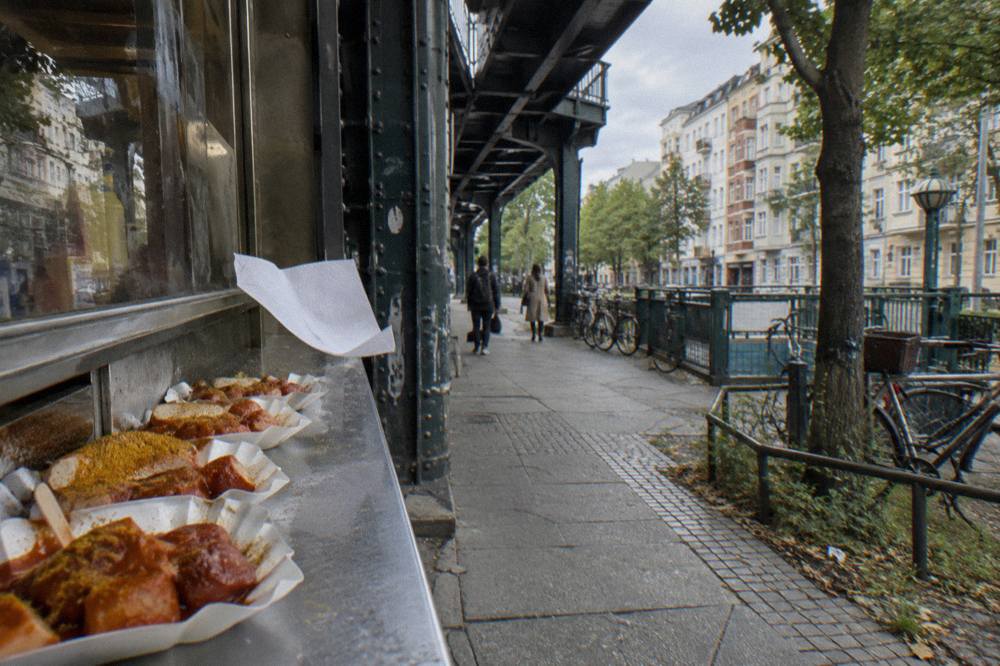
The practical difference for a visitor is that currywurst is a five minute experience at a counter, while a good doner is a full meal for the price of a sandwich elsewhere. If you want the full backstory on both, the dedicated pages go deeper: Currywurst In Berlin: History, Sauce And Where To Eat It and Doner Kebab History In Berlin: German Or Turkish.
A doner focused walk is one way to skip the trial and error entirely. The Berlin Doner Kebab Tour and Sightseeing pairs gourmet kebab with stops at historical sites, runs about 3 hours, from $51 per person, and is rated 4.9 across 57 reviews.
For currywurst specifically, the question of which stand is best is genuinely contested, and the honest answer is that sauce recipes differ more than sausages do. Sauce recipes differ from stand to stand, and locals argue about which camp is which.
Which Market Should You Eat At In Berlin?
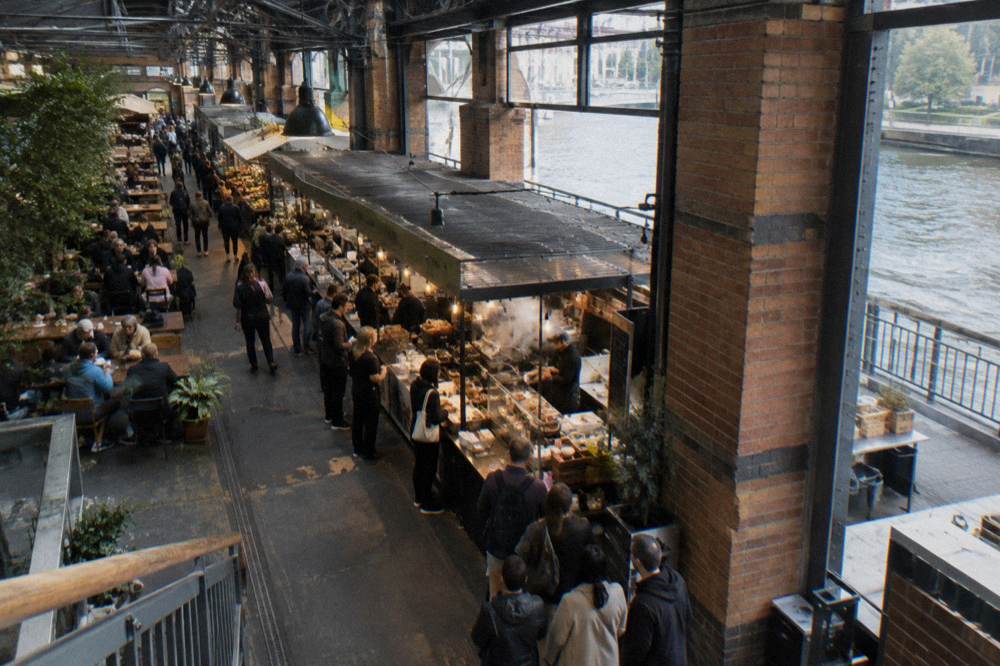
Markthalle Neun in Kreuzberg is Berlin's best known food market, famous for Street Food Thursday, held every Thursday from 17:00 to 22:00. The hall's own page lists 5, 19 and 26 November 2026 as running dates, with 12 November not listed. For a daytime alternative, Winterfeldtmarkt on Winterfeldtplatz runs Wednesday mornings and Saturday until 16:00.
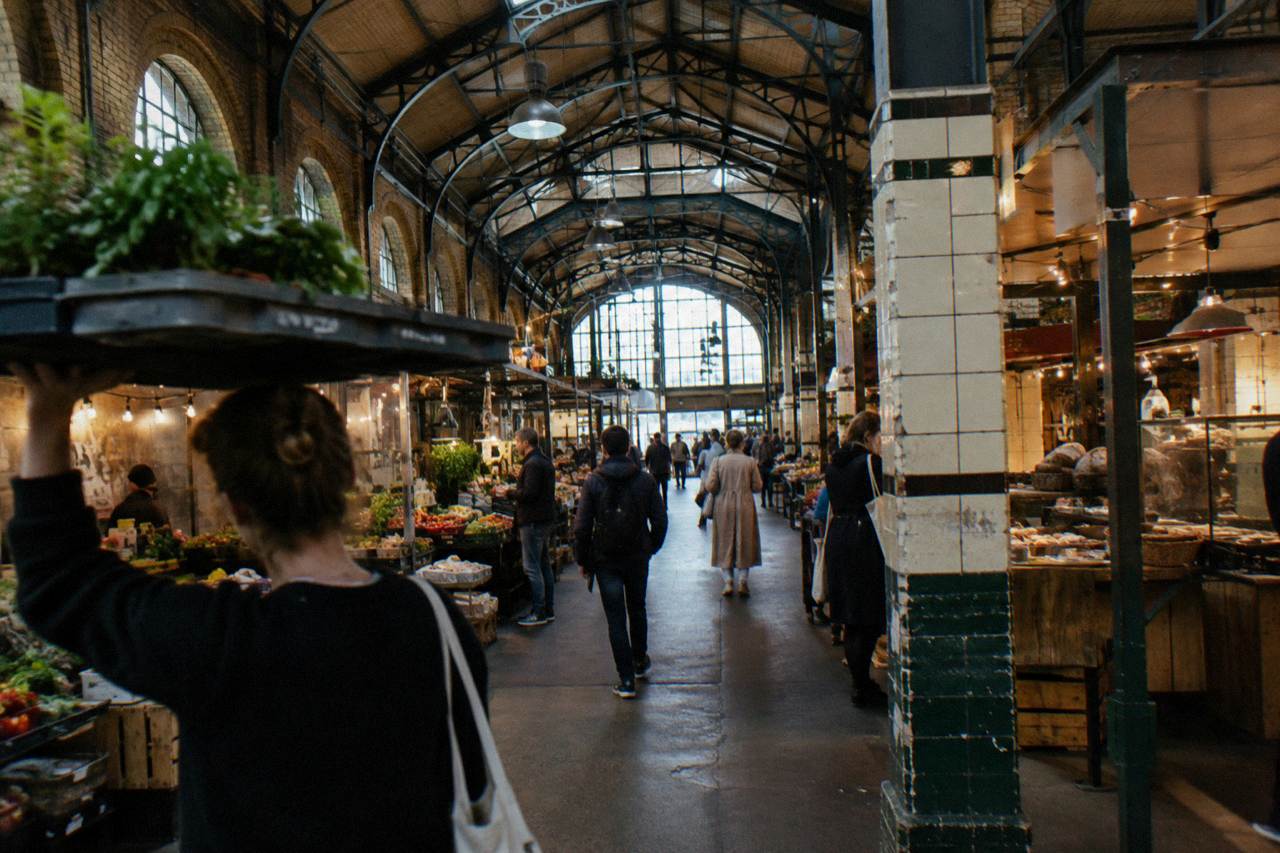
Street Food Thursday started in 2013 inside a restored historic market hall on Eisenbahnstrasse, and it turned a neighborhood institution into a citywide event. On those evenings the hall fills with independent cooks selling small portions, which makes it the single best place to sample many things: you are not choosing one dinner, you are choosing a sequence. The schedule is published on the Markthalle Neun Street Food Thursday page, and because individual vendors vary by week, checking it before you go saves a wasted trip.
The daytime circuit is different in character. Winterfeldtmarkt in Schöneberg, listed by visitBerlin's Winterfeldtplatz market page as running Wednesday mornings and Saturday until 16:00, is a classic weekly market with produce, cheese, flowers and ready to eat stalls where locals do their shopping. Maybachufer's Turkish market in Neukölln, the Türkenmarkt, runs Tuesday and Friday 11:00 to 18:30 according to local reporting, and it is the closest thing Berlin has to a bazaar: olives, breads, herbs and home style dishes along the canal. The Maybachufer Turkish Market Guide covers it in detail.
One planning note that surprises visitors: German shop closing law applies. Supermarkets are closed on Sundays except at stations, while bakeries and confectionery shops may open 07:00 to 16:00 and tourist need shops 13:00 to 20:00, per the city's Senatsverwaltung shop opening hours rules. Market days matter more here than in most capitals.
If you would rather have a guide structure the hall for you, there is a tour built exactly for it.
Should You Book A Guided Market Walk?
A guided walk is worth it when your time is short or you want context with your calories. The Markthalle Neun guided food tour with craft beer runs about 2.5 hours from $97 per person, and that tour has no reviews yet, so judge it on its description rather than a rating. The street food tour from $75 and the Mitte tastings walk from $90.01 are the reviewed alternatives.
Guides solve two real problems at markets: knowing which stall is worth the queue this month, and translating the dishes that have no English name. They also tend to secure standing space at counters that fill fast on Thursday evenings.
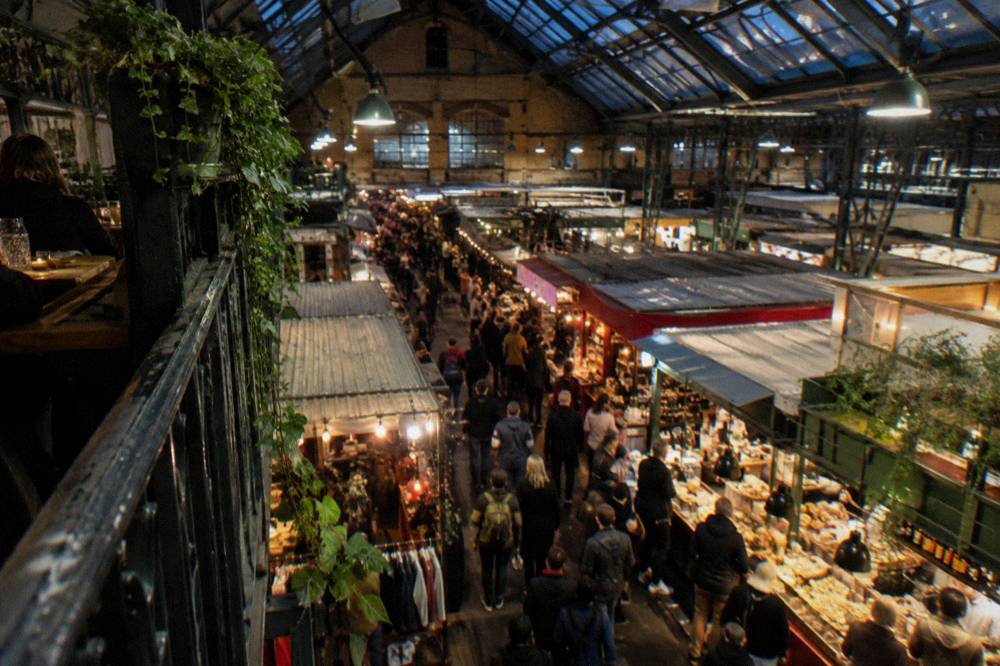
Sequencing the week is the easiest way to eat across all three. Tuesday or Friday from 11:00 puts you at the canal with the Turkish vendors, Wednesday morning or Saturday works for Winterfeldtmarkt, and Thursday evening from 17:00 belongs to the hall in Kreuzberg. If your week includes 12 November 2026, the date is not on the published list, so check before going, and consider a Saturday at Winterfeldtplatz, which runs until 16:00.
Sundays deserve their own plan. With supermarkets shut except at stations, the Alexanderplatz Christmas market, open daily 11:00 to 22:00 with free admission from 23 November to 26 December 2026, becomes a dependable Sunday option in that window, and entry costs nothing, so you pay only for what you eat. Grüne Woche, listed for 15 to 24 January 2027, plays a similar role in deep winter.
Costs work differently across the two scenes. Vendors at Street Food Thursday sell in small portions, so a run of tastes is paid as you go, while the tours fix the price up front: the 2.5 hour craft beer food tour from $97 per person, the street food tour from $75, and the Mitte tastings walk from $90.01. If a guide is not for you, that same budget can go straight into food.
What Sweets And Baked Goods Is Berlin Known For?
Berlin's signature sweet is the Berliner Pfannkuchen, a jam filled doughnut that Berliners simply call Pfannkuchen, while everyone else in Germany calls it a Berliner. Around it sit a strong bakery culture with Sunday morning rolls, plum cake in late summer, and Baumkuchen, the layered ring cake of the region, in winter.
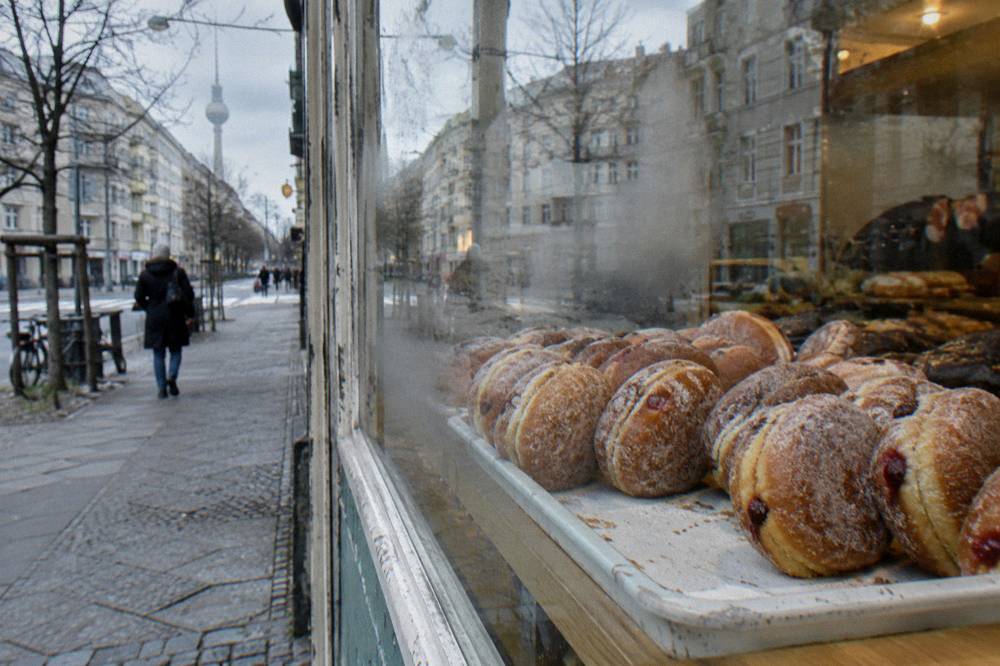
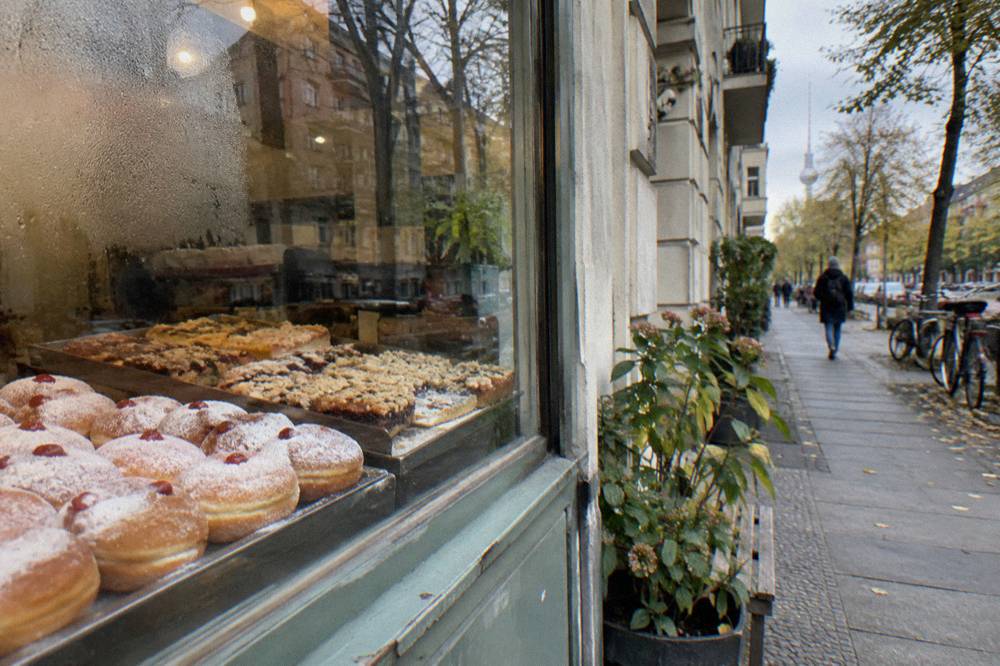
The Pfannkuchen naming quirk is a reliable way to spot a local: order a Berliner in Berlin and you are ordering nothing in particular. The doughnuts are filled with raspberry, strawberry, plum or eggnog cream depending on season, and they appear in serious volume around New Year's Eve and Carnival. The rest of the year they sit in bakery windows next to Streuselkuchen and buttery plaits.
Berlin bakery culture runs on breakfast. Weekend brunch is close to a civic institution, with tables of breads, cold cuts, cheese, boiled eggs and coffee stretched across a late morning, and Prenzlauer Berg is the neighborhood most associated with it. Weekday breakfast is simpler: a fresh roll, butter, cheese or jam, eaten fast. The Berlin Breakfast Culture Guide and the Prenzlauer Berg Food Walk Guide both dig into where this happens.
A quick summary of where each famous food fits:
| Famous Berlin Food | What It Is | Where To Eat It |
|---|---|---|
| Currywurst | Sliced pork sausage with spiced ketchup and curry powder | Counter stands citywide, strongest in Mitte and Kreuzberg |
| Doner kebab | Rotisserie meat in bread with vegetables and sauce | Doner shops across Kreuzberg, Neukölln and Mitte |
| Bouletten | Fried hand sized meatballs, often with mustard | Weekly markets and old style Imbiss stalls |
| Berliner Pfannkuchen | Jam filled doughnut, called Pfannkuchen locally | Bakeries, especially around New Year's Eve |
| Eisbein | Pickled pork knuckle with pea puree | Traditional German restaurants |
Is Berlin Good For Vegan And Vegetarian Food?
Berlin is widely treated as Europe's vegan capital, and the reputation is earned: fully plant based restaurants, vegan doner and vegan currywurst all exist here as normal options rather than novelties. A dedicated vegan food tour in Mitte runs about 2.5 hours from $98 per person, rated 4.8 across 31 reviews, which tells you the demand is real.
The plant based scene grew out of the city's cheap rent era, when squats and collectives opened kitchens that later professionalized. Today the range runs from vegan fine dining to a vegan doner counter, and many traditional stands offer a meat free currywurst sauce option. For depth, the Vegan Food Walk Guide and the wider page on Vegetarian, Vegan, Halal And Gluten Free Food In Berlin cover what to expect.
This matters for the famous food question because two of the city's headline dishes are pork based. A vegetarian visitor is not excluded from Berlin food culture; they are routed to a parallel version of it that the city has built deliberately over the past couple of decades.
How Do You Try Berlin's Famous Food In One Day?
Pick one neighborhood, walk it, and let a guide handle the standing and queuing. In Mitte, a district food tour with 7 tastings runs about 3 hours from $90.01 per person, rated 4.9 across 1,583 reviews. In Mitte, the street food tour from $75 covers the counter classics. Booking both in one day is possible but leaves little room for anything else.
The one day strategy works because Berlin's food geography is clustered. Mitte holds the historic center and a dense strip of snack counters and traditional restaurants. Kreuzberg and Neukölln hold the Turkish market, the doner shops and Markthalle Neun. Prenzlauer Berg holds the bakeries and brunch tables. Choosing two adjacent neighborhoods, or one tour plus one self guided market visit, beats a frantic dash across the whole city.
Timing matters more than distance. Street Food Thursday runs only on Thursday evenings, Winterfeldtmarkt only Wednesday and Saturday mornings, Maybachufer only Tuesday and Friday. A visitor who arrives Saturday can hit a market in the morning and a tour in the afternoon. A visitor who arrives Sunday faces closed supermarkets and limited shops, so a booked tour does more work for you that day.
For comparing the walks that fit this mission:
| Tour | Duration | Price Per Person | Rating |
|---|---|---|---|
| No Diet Club Street Food Walk | ~3 hours | from $75 | 4.8 across 403 reviews |
| Markthalle Neun, Craft Beer | ~2.5 hours | from $97 | no reviews yet |
| Mitte district food tour, 7 tastings | ~3 hours | from $90.01 | 4.9 across 1,583 reviews |
| Berlin Doner Kebab Tour and Sightseeing | ~3 hours | from $51 | 4.9 across 57 reviews |
The pages linked above go deeper on every dish mentioned here.
The Mitte walk earns its place in a one day plan on volume alone: seven tastings in three hours, in the neighborhood where most visitors are staying anyway. It is the most reviewed food walk on these pages, and the review pool is large enough that the 4.9 means something.
Common Questions About Berlin's Famous Food
What Is Berlin's Famous Food?
Currywurst is the single most famous food of Berlin, followed closely by doner kebab, which took its handheld form in the city before spreading worldwide. Bouletten, Berliner Pfannkuchen, Eisbein and the Street Food Thursday market at Markthalle Neun complete the picture.
Is Doner Kebab Really From Berlin?
The rotating spit meat is Turkish in origin, but the sandwich format served in bread is widely credited to Turkish immigrants in postwar Berlin, most often to a vendor in postwar Berlin. Berlin then exported the format worldwide.
What Is The Difference Between A Berliner And A Pfannkuchen?
Nothing except geography. The jam filled doughnut is called a Berliner across most of Germany, but inside Berlin itself it is called a Pfannkuchen, which elsewhere in the country means a pancake.
Can You Eat Vegetarian Versions Of Berlin Street Food?
Yes. Vegan and vegetarian currywurst and doner exist at dedicated counters around the city, and a vegan food tour in Mitte runs about 2.5 hours from $98 per person, rated 4.8 across 31 reviews.
When Is Street Food Thursday Held?
Every Thursday from 17:00 to 22:00 at Markthalle Neun in Kreuzberg. The hall's page lists 5, 19 and 26 November 2026 as dates, with 12 November not listed, so check the schedule before going.