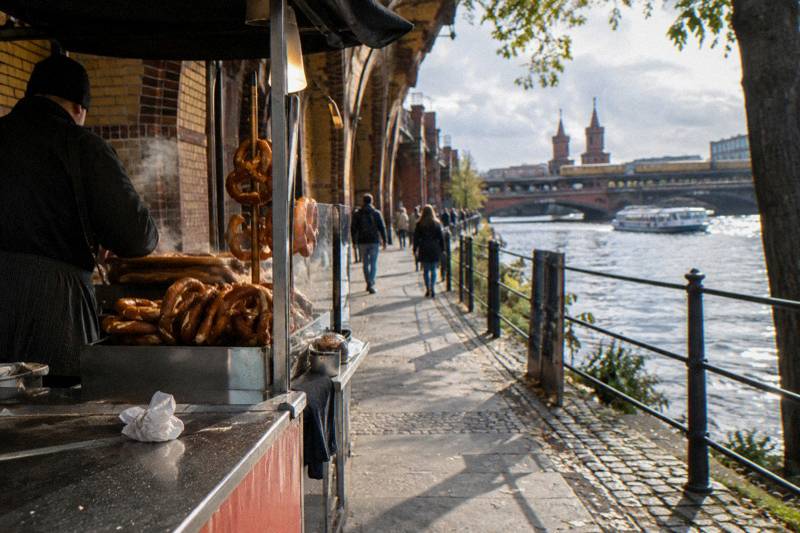
What Is A Must Eat In Berlin?
The must-eat foods of Berlin, from doner kebab and currywurst to Pfannkuchen and Berliner Weisse, plus the food walks that let you taste several in one afternoon.
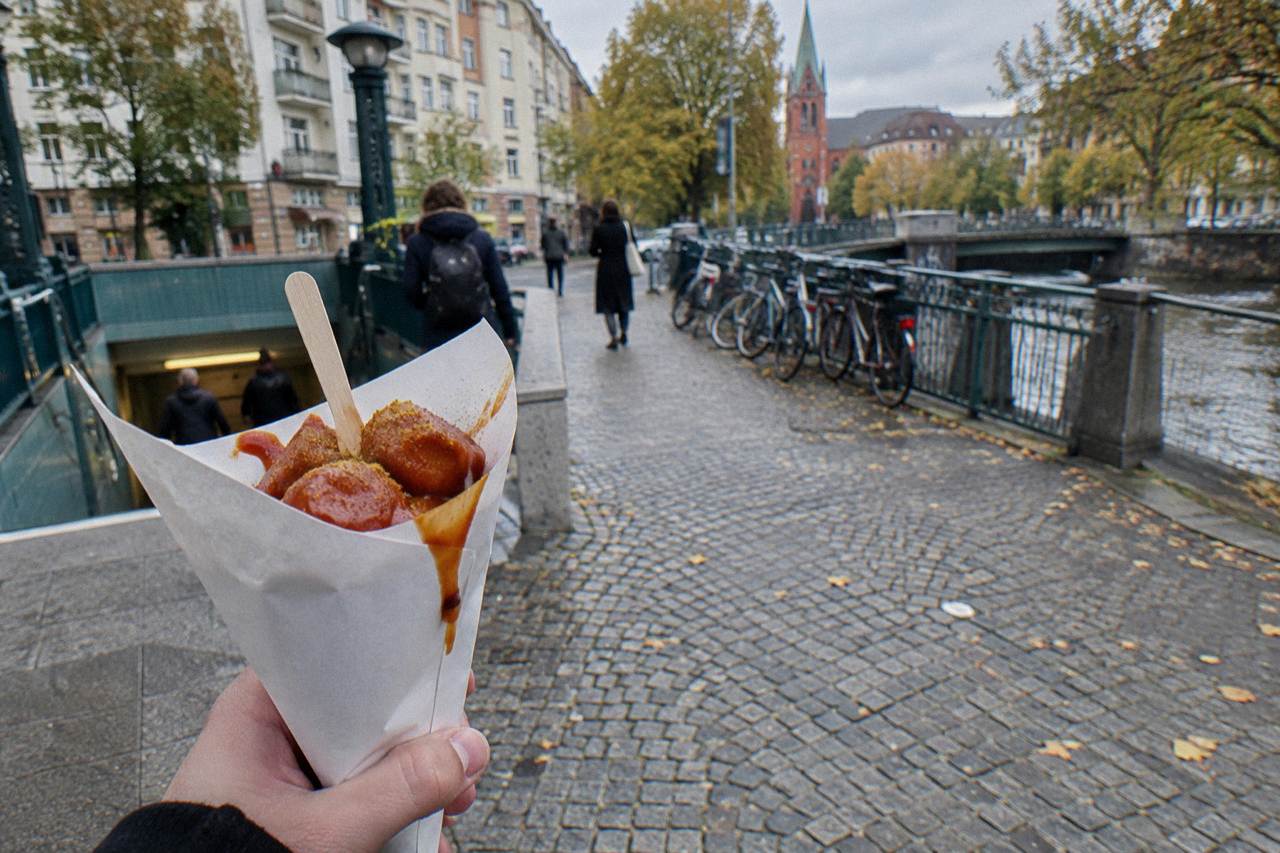
The five foods Berlin locals and guides agree on are doner kebab, currywurst, bouletten, Pfannkuchen (the Berliner doughnut) and Berliner Weisse beer with syrup. Doner and currywurst are street foods born in the city itself; bouletten and Pfannkuchen are old Berlin staples; Berliner Weisse is the local drink that goes with all of them. To taste your way through all of them, the guide to Berlin's famous foods and the markets where locals eat lays out an easy afternoon route.
Doner kebab in its pita-bread form was popularised in Berlin by Turkish immigrant grill masters in the postwar decades, and the city has spent a long time refining it since. Currywurst has an equally strong claim to local invention, with Berlin and Hamburg arguing over who first poured curry sauce over fried sausage. Both stories matter because both foods are genuinely of this city, not imports that happened to catch on here. A visitor who eats only one thing in Berlin almost always eats one of these two.
Behind them sit the quieter classics. Bouletten are hand-formed minced meat patties, served with potato salad or mustard, the kind of thing market halls have sold for generations. Pfannkuchen is what Berliners call the jam-filled doughnut the rest of Germany calls a Berliner, and locals are quick to correct anyone who gets that backwards. Berliner Weisse, the tart, low-alcohol wheat beer served with red or green syrup, rounds out the list as the drink most tied to the city's name. The deeper background on all of these dishes, including how to order them without confusing the counter staff, is in the traditional Berlin dishes guide.
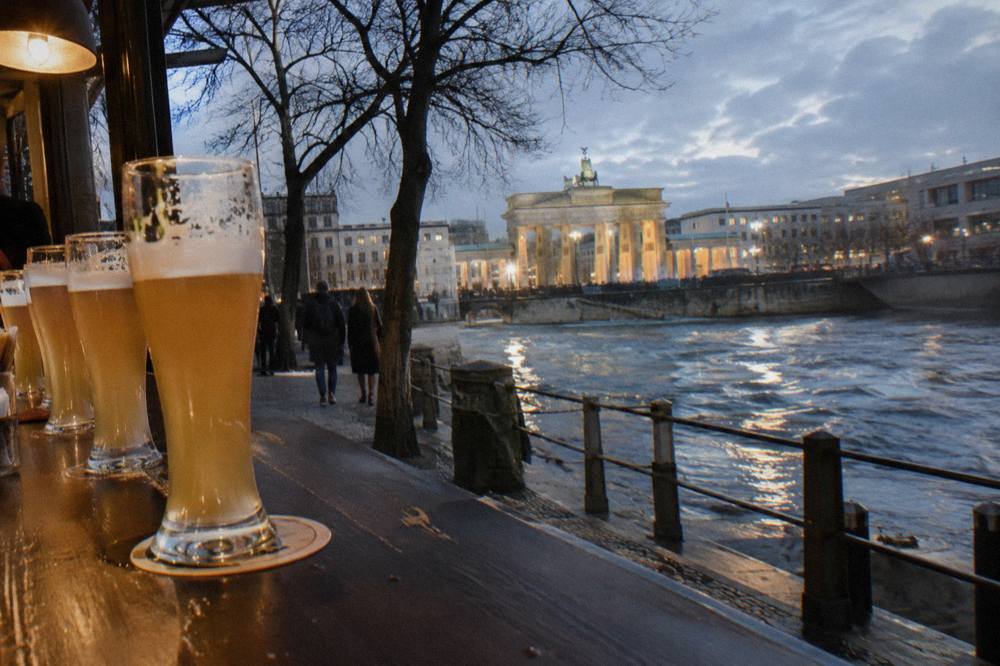
If you would rather taste several of these in one afternoon than research them one by one, a guided walk does that work for you.
Why Doner Kebab Belongs On Any Berlin Shortlist?
Doner is the single food most identified with Berlin, because the modern sandwich version was developed here by Turkish restaurateurs in the postwar decades. Thin slices of spit-roasted meat, flatbread, salad and sauce combine into a full meal you eat standing up, and the best stands are treated as institutions rather than fast food.
The bread is where quality shows. A serious doner stand in Berlin bakes or sources bread with a crisp crust and a soft interior that holds up under juice and sauce; a stale pita ruins everything above it. Veal and chicken are the standard meats, and the counter usually offers garlic or herb sauce, sometimes a spicier option, plus a pile of chopped salad that doubles as the vegetable course of the day. Ordering is simple: name the meat, name the sauce, decide whether you want it small or large. The etiquette, the meat grades and the sauce debate are covered in detail in the doner bread, meat and sauces guide.
What makes doner a must-eat rather than just a convenient meal is the city's density of serious stands. Berlin has a large Turkish-origin community, concentrated in Kreuzberg and Neukölln, and the competition keeps standards high across the city's many grills. A doner eaten within sight of the spit it was carved from tastes noticeably different from one that sat under a heat lamp.
For visitors who want the doner story with the food, the Berlin: Doner Kebab Tour and Sightseeing walk runs about 3 hours, is rated 4.9 across 57 reviews and costs from $51 per person, pairing gourmet kebab stops with historical sites.
What Makes Currywurst A Berlin Original?
Currywurst is fried pork sausage cut into slices and drowned in a spiced tomato-curry sauce, usually served with a bread roll or fries and a small wooden fork. It is credited to a Berlin woman who obtained ketchup and curry powder from British soldiers after the war, making it a postwar Berlin invention, though Hamburg disputes the honour.
The dish lives at counter service stands, often little more than a grill, a folding table and a queue. The sauce is the dividing line: every stand keeps its own recipe, ranging from mild and sweet to sharply spiced, and regulars are loyal to their version. Order it "mit Darm" if you want the sausage in its natural casing for a firmer bite, or "ohne Darm" for the softer skinless style, and expect to be asked whether you want it with fries or a roll. The full ordering ritual, and how the stands differ, is covered in the best currywurst guide.
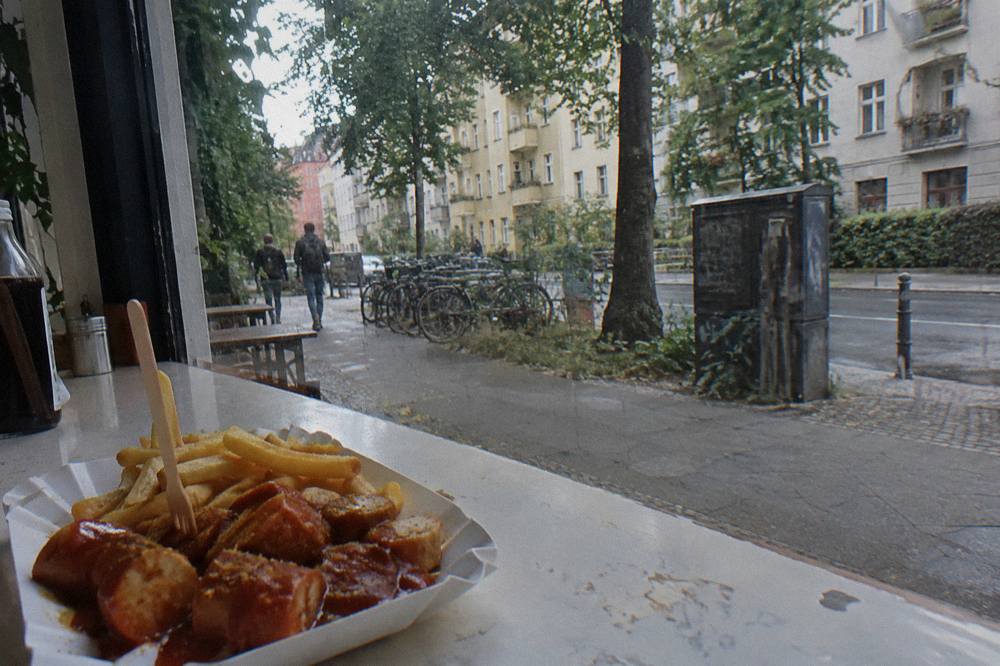
Currywurst matters to Berlin beyond taste. It fed reconstruction-era workers, it appears in films and novels set in the city, and there is a whole museum-grade debate about its exact birthplace. Eating it standing at a counter, wooden fork in hand, is one of the more Berlin things a visitor can do at any hour the stands are open.
Where Do The Best Street Eats Gather In Berlin?
Markthalle Neun in Kreuzberg is the single best address for street food in Berlin, especially on Street Food Thursday, when the historic market hall fills with independent kitchens every Thursday from 17:00 to 22:00. The hall's own event page lists the November 2026 dates as the 5th, 19th and 26th, with the 12th not listed.
The hall on Eisenbahnstrasse has run the Thursday event since 2013, and it works as a tasting floor: you buy small portions from several vendors, sit at communal tables and compare. The mix changes with the vendors, but the format means a visitor can sample four or five different cuisines in a single evening without planning a route. The Markthalle Neun guide covers what to expect and how the evening flows. The event's own page confirms the weekly Thursday schedule from 5 p.m. to 10 p.m.
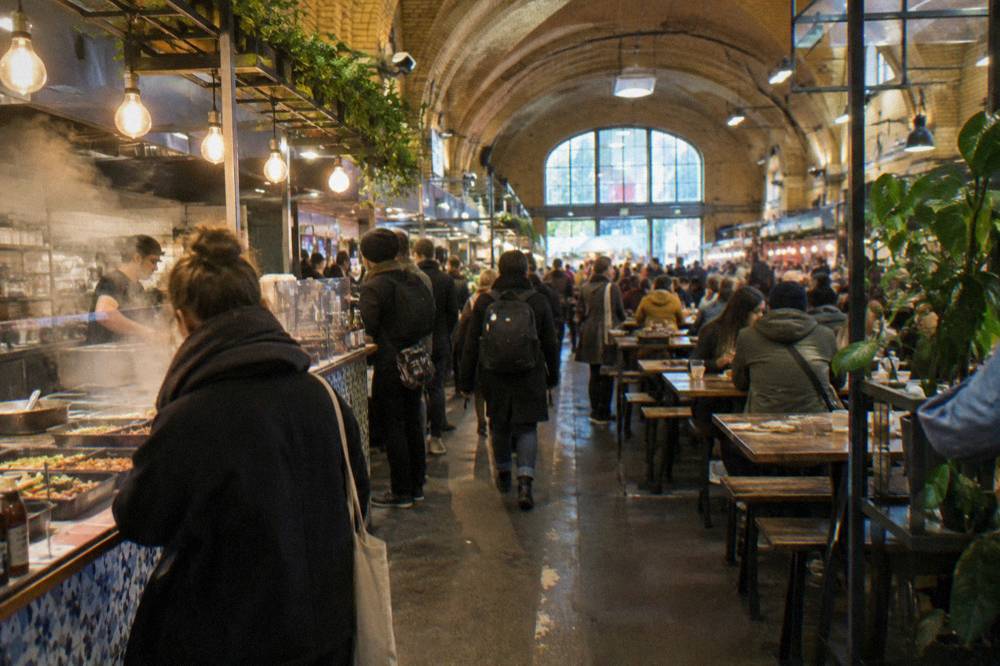
Beyond the hall, weekly markets spread street food across the week. Winterfeldtmarkt on Winterfeldtplatz in Schöneberg runs Wednesday mornings and Saturday until 16:00, per visitBerlin's official market page, and the Turkish market at Maybachufer in Neukölln trades Tuesdays and Fridays from 11:00 to 18:30. The Maybachufer stalls sell olives, cheeses, breads and grilled foods that feed directly into the doner-and-mezze side of Berlin eating.
There is a guided way to do this. A dedicated food walk through the Markthalle Neun hall with craft beer runs about 2.5 hours and costs from $97 per person.
Which Sit-Down Classics Should A First Timer Order?
Order bouletten with potato salad, Königsberger Klopse, schnitzel and a plate of Eisbein if the restaurant offers it. These are the old Berlin table dishes that predate the street foods, served in traditional pubs called Gasthäuser where the menu changes little from decade to decade and the portions assume you walked here.
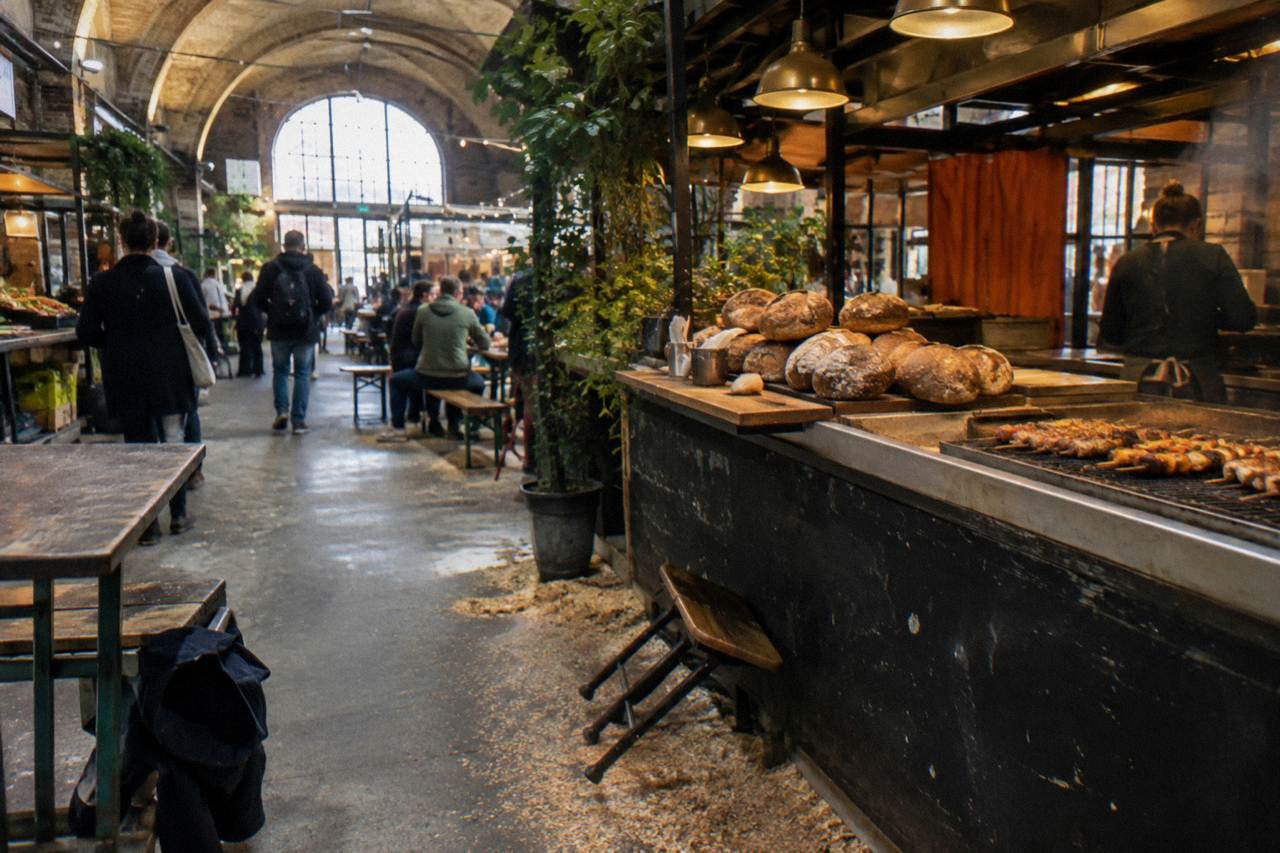
Bouletten, the minced meat patties, are the most approachable: plain, well seasoned and cheap, a legacy of market-hall cooking. Königsberger Klopse, meatballs in a creamy caper sauce, is the dish most likely to surprise visitors who expected only sausage, because it shows the old Prussian side of the city's cooking. Schnitzel sits on nearly every traditional menu, and Eisbein, braised pork knuckle with sauerkraut and mashed peas, is the commitment order, best shared. A new hotel restaurant in Charlottenburg opened in late October 2026 with modern German classics.
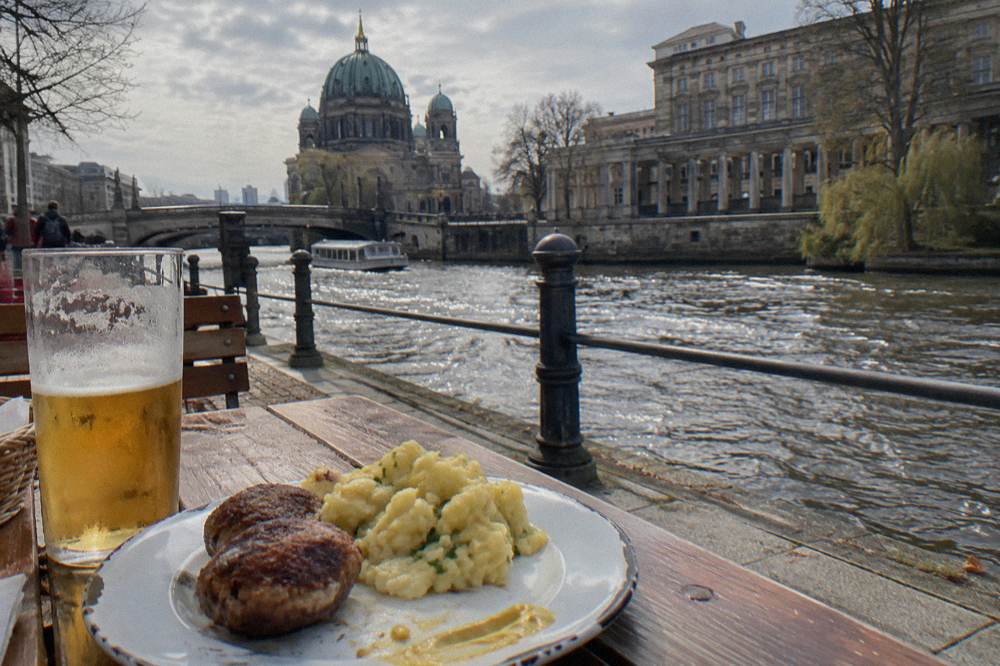
Timing matters more than location. Sunday restaurant crowds are heavier partly because, as the Berlin shop opening rules state, ordinary shops must close on Sundays, with only bakery, confectionery and tourist-need exceptions, so eating out becomes the default Sunday activity. Booking a table for Sunday midday is wise in the traditional pubs of Mitte and Prenzlauer Berg.
| Dish | What it is | Where it sits on a menu |
|---|---|---|
| Bouletten | Minced meat patties with mustard and potato salad | Starter or main, market halls and pubs |
| Königsberger Klopse | Meatballs in creamy caper sauce | Main, traditional restaurants |
| Schnitzel | Breaded and fried cutlet, often with parsley potatoes | Main, everywhere |
| Eisbein | Braised pork knuckle with sauerkraut and pea puree | Main, large portion, traditional pubs |
What Sweet Things And Drinks Finish The List?
Finish with a Pfannkuchen, the jam-filled Berlin doughnut that locals insist on calling by that name, and a Berliner Weisse, the tart wheat beer served with red raspberry or green woodruff syrup. Both are tied to the city's name and history more tightly than anything else on the dessert card.
The Pfannkuchen naming quirk is a genuine local shibboleth: order a "Berliner" in a Berlin bakery and you are marking yourself as an outsider, because in this city "Pfannkuchen" is the doughnut and "Berliner" means nothing of the sort. They appear in bakery windows in force around New Year, when fried yeast dough and a glass of sekt is a traditional combination. The wider world of Berlin pastries, from Streuselschnecke to Franzbrötchen, is laid out in the Berlin bakeries and pastries guide.
Berliner Weisse is the other local signature, a pale, sharply sour wheat beer at low alcohol, served in a wide goblet with a shot of syrup and a straw. Red syrup and green syrup are the two orders, and the drink has moved in and out of fashion in Berlin for a very long time. The current craft beer scene embraces it again, with several Berlin breweries including it among their taps; the whole landscape is covered in the Berlin beer tour guide. For the drinks side of the must-eat list handled by a guide, the Berlin Craft Beer and Cultural Tour runs about 3 hours, is rated 5.0 across 364 reviews and costs from $125.14 per person.
Which Berlin Food Walk Fits A Must-Eat Mission?
For a first visit built around the must-eat list, the Mitte District Food Tour with 7 tastings fits best: its listing names currywurst and doner, about 3 hours, rated 4.9 across 1,583 reviews, from $90.01 per person. The Berlin: Guided Street Food Tour with Tastings, about 3 hours, rated 4.8 across 403 reviews, from $75 per person, instead pairs kebab with tacos and a pastry.
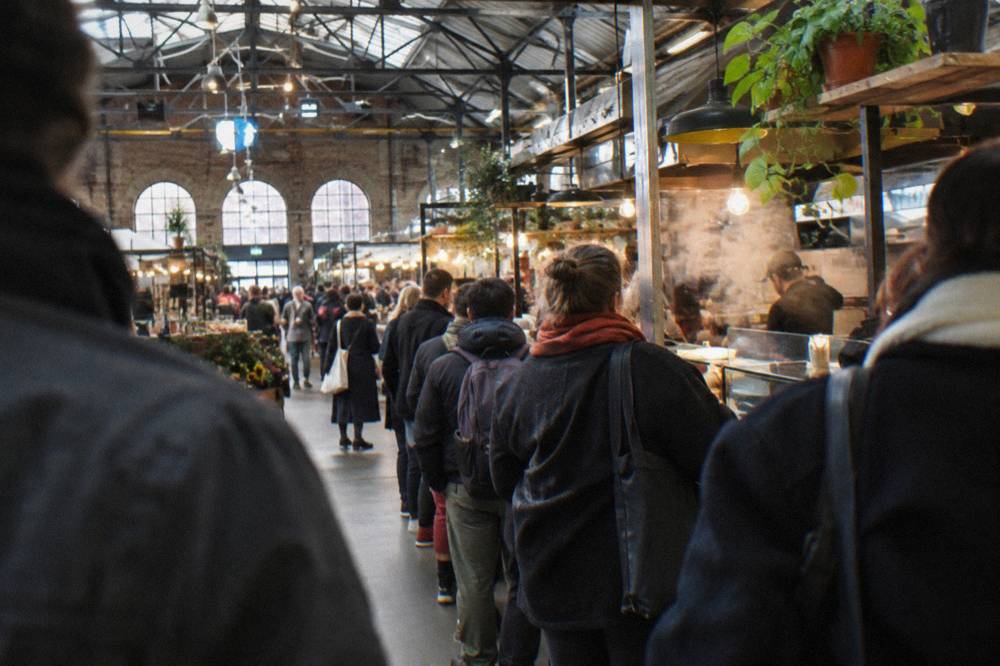
The two walks do different jobs. The street food tour stops for kebab, tacos and a pastry, standing-up eating at a price that leaves room in the budget for a second evening. The Mitte walk is the more thorough option by review volume, with seven tastings strung through the central district, and it suits visitors who want one longer walk that doubles as dinner and orientation. A third style exists for the self-guided: buy a BVG AB single ticket at 4,00 EUR, follow the market days above, and eat your way down the list over a weekend.
| Walk | Duration | Rating | Price per person |
|---|---|---|---|
| No Diet Club Street Food Walk | ~3 hours | 4.8 across 403 reviews | From $75 |
| Mitte District Food Tour, 7 tastings | ~3 hours | 4.9 across 1,583 reviews | From $90.01 |
| Berlin Food Tour with Full Meal and Drinks | ~3 hours 30 minutes | 4.9 across 144 reviews | From $86.10 |
The must-eat list works as a checklist or as a route, but either way the foods themselves are cheap, local and everywhere once you know the names. Book the walk for the first evening, use the list for everything after, and check availability before you commit, since schedules shift with the seasons and the market calendar.
If the standing-up classics appeal more than a seated dinner, these walks cover the must-eat ground from three different angles and price points.
Common Questions About Must Eat In Berlin
What Is A Must Eat In Berlin?
Doner kebab, currywurst, bouletten, Pfannkuchen and Berliner Weisse are the five foods most tied to the city. Doner and currywurst are street foods with Berlin origin stories, bouletten and Pfannkuchen are old local staples, and Berliner Weisse is the drink that carries the city's name.
Where Did Currywurst Come From?
It is generally credited to a Berlin cook who mixed ketchup and curry powder obtained from British soldiers after the war and served it over fried sausage. Hamburg disputes the claim, but Berlin's stands and the dish's cultural weight here are unmatched.
Why Do Berliners Call A Doughnut A Pfannkuchen?
Regional naming: in Berlin the jam-filled doughnut is a Pfannkuchen, while the word Berliner is not used locally for it. Ordering a Berliner in a Berlin bakery marks you as a visitor, and staff will usually understand what you meant anyway.
When Is Street Food Thursday At Markthalle Neun?
Every Thursday from 17:00 to 22:00. The hall's own page lists November 2026 dates on the 5th, 19th and 26th, with the 12th not listed, so it is worth checking the hall's page before planning a visit around it.
Can You Cover Several Must-Eat Foods In One Walk?
Yes. Guided street food walks run about 3 hours and visit several stops; the Berlin: Guided Street Food Tour with Tastings is rated 4.8 across 403 reviews and costs from $75 per person, and the Mitte District Food Tour with 7 tastings runs from $90.01.
Is Berlin Good For Vegetarians On A Must-Eat Trip?
Yes. Many stands sell falafel and mezze from the same Turkish market tradition as doner, and the city has a large vegan scene. There is a dedicated vegan food walk in Mitte with four or more tastings, about 2.5 hours, rated 4.8 across 31 reviews, from $98 per person.