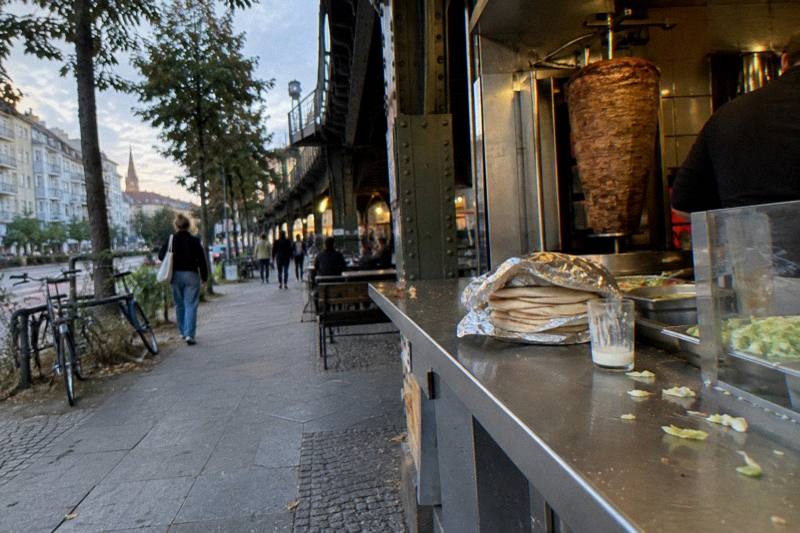
Berlin Doner Kebab Tour: Where It Began And What To Order
The doner kebab sandwich is Berlin's most recognizable street food, and a guided walk built around it turns a quick snack into a story with stops, sauces and history attached.
Short answer
A Berlin doner tour pairs tastings at several stands with the history of Turkish food in the city. The featured walk runs about 3 hours, is rated 4.9 across 57 reviews, and costs from $51 per person. It includes a gourmet doner stop plus sightseeing along the route.
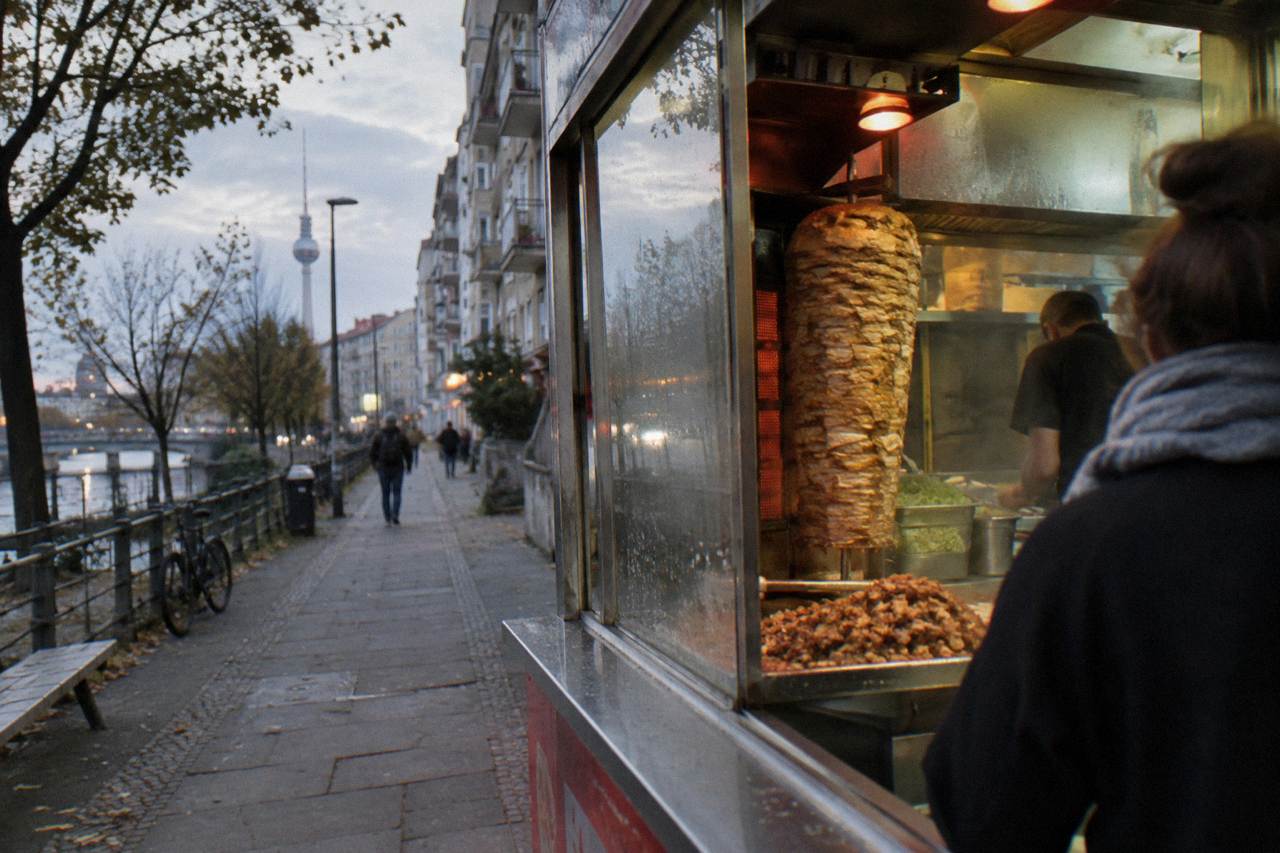
Few foods say Berlin as loudly as doner kebab. Meat stacked on a vertical spit, shaved into bread, dressed with sauce and vegetables, sold from windows all over the city at almost any hour. A guided doner walk takes that experience and adds the part most visitors miss: the story of how the sandwich became Berlin's own, which stands matter, and how to order like someone who lives here. This guide covers the history, the tour options, the ordering etiquette and the practical details of getting to the right neighborhoods. Once you can order doner like a Berliner, the next step is eating everything else the way locals do, and our guide to where Berliners actually eat covers the markets, neighborhoods and everyday dishes worth adding to your list.
Where Did The Doner Kebab Sandwich Begin?
The doner kebab served in bread, as a portable sandwich rather than a plated dish, is widely credited to Turkish guest workers who opened food businesses in West Berlin in the early 1970s. No single named inventor can be stated as fact, but the sandwich's rise is unmistakably tied to Berlin's Turkish community. If that origin story leaves you wondering which country's version wins, this German versus Turkish döner comparison settles the debate and points you to Berlin spots where you can taste both styles in a single afternoon.
Roasted meat on a rotating spit existed in Turkish cuisine long before it reached Germany. What changed in Berlin was the format: the shift from a sit-down plate with rice to bread you could carry back to a factory shift or a bus stop. That adaptation met a real need in a working city, and it spread from Kreuzberg and Neukölln outward until doner stands became as common in Berlin as currywurst stalls.
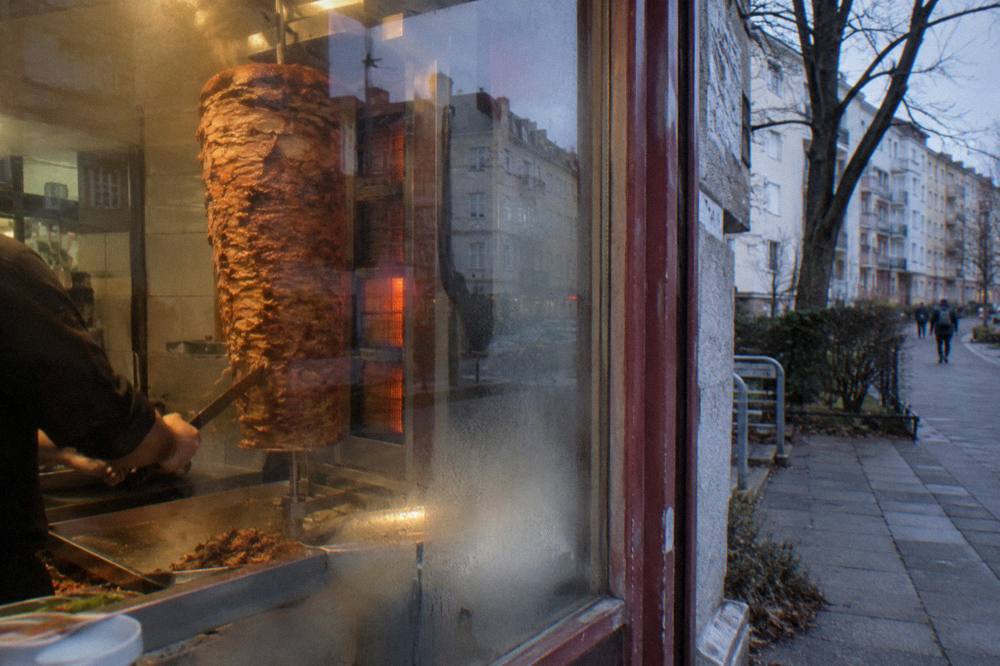
The community behind it grew large. Kreuzberg's Turkish quarter around Oranienstrasse and the Maybachufer market area became known informally as Little Istanbul, a label that stuck because the density of bakeries, grills and grocery shops genuinely resembled a district of Istanbul itself. The broader story of that neighborhood, its market days and its food culture is covered in the Kreuzberg doner and Turkish market walk guide, which goes deeper into the stalls and the streets.
One stand deserves a special mention. Mustafa's Gemüse Kebap on Mehringdamm is a famous kebab stand whose long queue has been reported in the press repeatedly.
What Does A Berlin Doner Tour Include?
A typical doner walk lasts around 3 hours and visits several stands in sequence, with tastings included and a guide explaining the history between stops. On the featured option, the itinerary pairs doner tastings with historical sightseeing, including a stop at a gourmet doner stand, and prices start at $51 per person.
The format matters more than the food count. A doner walk is built around a route through a neighborhood, usually Kreuzberg or a neighboring district, so the eating is interrupted by storytelling: where the guest workers settled, which buildings mattered, how the food scene changed after reunification. You walk, you stop, you eat, you walk again. Comfortable shoes matter more than a big appetite.
The featured tour here is the Berlin doner kebab and sightseeing walk, rated 4.9 across 57 reviews, running roughly 3 hours from $51 per person with a gourmet doner stop and other tasting stops included in the description. Meeting points, dietary notes and group details are stated on the booking page, and it is worth checking them before you commit, since tour descriptions change with seasons and stand availability.
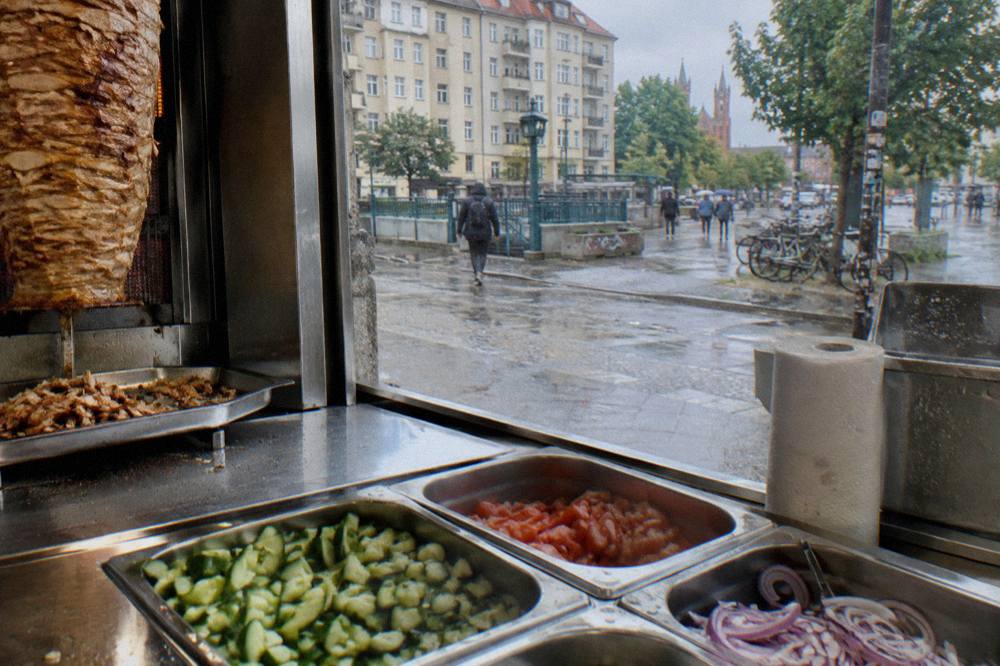
Operators describe their stops rather than promise identical ones every day. Stand closures, market days and the simple fact that a popular grill sells out can shift a route, and good guides adjust. The booking page for each option lists what is included.
For comparison shoppers, the range of doner-adjacent and street-food walks runs from short, cheap hall visits to long neighborhood circuits. The table below pulls the published figures for the three options this page features, so you can see duration, review standing and price side by side before reading further.
| Tour | Duration | Reviews | Price from |
|---|---|---|---|
| Berlin doner kebab walk with sightseeing | ~3 hours | 4.9 across 57 reviews | $51 per person |
| Hidden street food of Kreuzberg and Neukölln | ~3 hours | 9 reviews, too few for a star rating | $118 per person |
| KERB food hall street food experience | not stated as hours on the page | 12 reviews, too few for a star rating | $34 per person |
Which Doner-Focused Tours In Berlin Are Worth Booking?
Three walks cover the doner-and-street-food territory at different depths: the dedicated doner kebab and sightseeing walk at about 3 hours from $51, a hidden-flavors circuit of Kreuzberg and Neukölln at about 3 hours from $118, and a short KERB food hall experience from $34. Each suits a different budget and a different appetite for walking.
The dedicated doner tour is the obvious pick for visitors whose main goal is the sandwich itself. It is the only one of the three built squarely around doner history, and its review pool, 57 reviews averaging 4.9, is large enough to carry weight. At roughly 3 hours and from $51 per person it also sits at the accessible end of Berlin food tours generally, several of which run well past $150.
The Kreuzberg and Neukölln walk, from $118 for about 3 hours, goes wider rather than deeper. Its booking page describes hidden flavors across two adjacent districts, which means doner stands share the itinerary with other street food. It has 9 reviews, too few for a reliable star rating, so judge it on its description and route rather than its score. If your interest is the Turkish food story of Berlin specifically, the Turkish food and Little Istanbul guide maps that territory in detail.
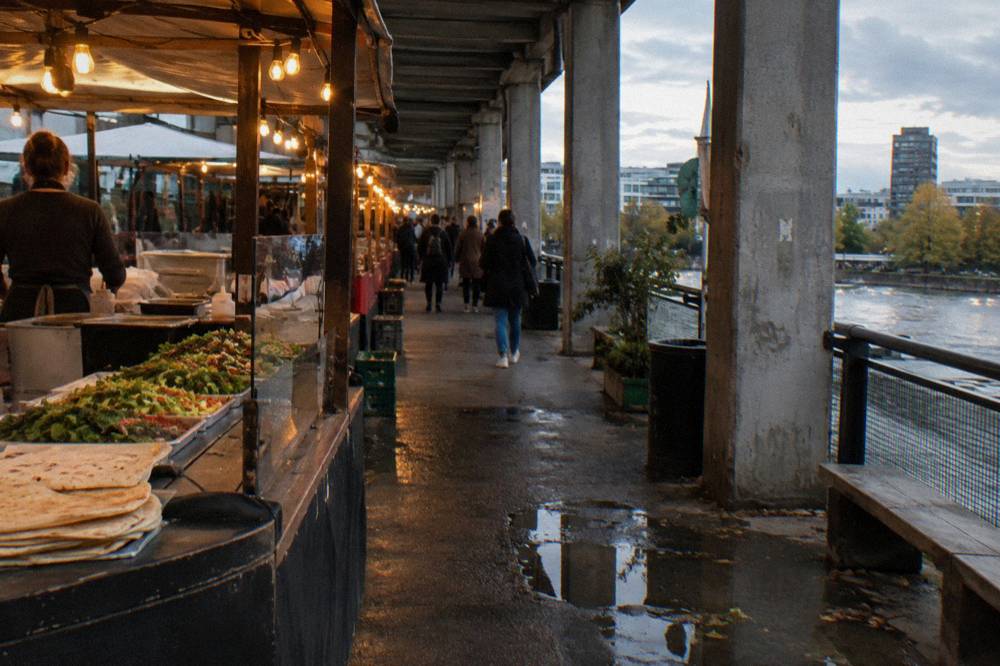
The KERB food hall option, from $34, is the shortest and cheapest of the three and works as a rainy-day or time-pressed alternative. Food halls concentrate many vendors under one roof, so you trade the street walk and the history-in-motion for convenience. With 12 reviews it also carries no star rating worth leaning on. A middle path for undecided visitors is laid out in which Berlin food walk to book, which compares formats side by side.
Berlin Doner Tours Compared By Starting Price
Starting price per person for the three walks covered in this guide
What Should You Order At A Doner Stand?
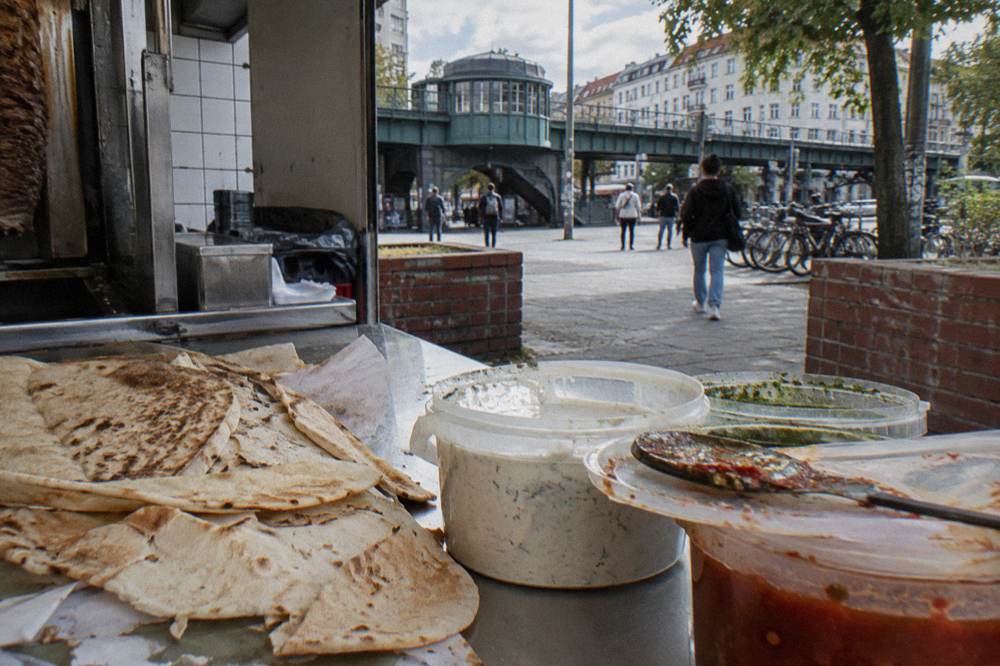
Order by bread, meat and sauce, in that order of importance. The classic Berlin doner comes in flatbread or durum wrap, with chicken or veal-and-beef mix, and the standard sauces are garlic-yogurt, herb-yogurt and spicy chili, often combined. Vegetables are usually lettuce, onion, tomato and cabbage, and the grilled vegetables at some stands are the signature touch.
Bread first. A durum wraps everything in a thinner flatbread, easier to eat while walking; a classic doner in thicker bread holds more and demands a seat or a strong napkin strategy. Meat choices are typically chicken, milder and leaner, or the mixed veal and beef, richer and more traditional. Asking what is on the spit that day is normal and not a tourist tell.
Sauce is where ordering goes right or wrong. Yogurt-based garlic sauce is the default for a reason: it cools the meat and binds the salad. Herb sauce adds parsley and sharpness. Chili sauce ranges from politely warm to genuinely hot depending on the stand, so a useful phrase is asking for it mild if you are unsure. Mixing garlic and chili is common and, for many regulars, the correct answer.
| Choice | Common options | What to know |
|---|---|---|
| Bread | Classic doner bread, durum wrap | Durum is the walking-friendly option |
| Meat | Chicken, mixed veal and beef | Mixed is the more traditional order |
| Sauce | Garlic yogurt, herb yogurt, chili | Mixing garlic and chili is standard practice |
| Vegetables | Lettuce, onion, tomato, cabbage | Grilled vegetables are a signature at some stands |
Guided walks handle ordering for the group, which removes the language question entirely. Guides also explain what differs from stand to stand, why the bread at one place is thicker, why the meat at another is darker. That running commentary is hard to reconstruct alone unless you read German reviews and know the neighborhoods. For solo visitors building their own route, the best doner in Berlin guide lists famous stands and local favorites without tour pressure.
How Do You Get To The Doner Neighborhoods?
Kreuzberg, Neukölln and the Mehringdamm area are all inside Berlin's AB fare zone, where a single ticket costs 4,00 EUR and stays valid for 120 minutes including transfers. A reduced AB ticket for children aged 6 to 14 is 2,50 EUR. The Deutschlandticket, at 63 EUR per month rising to 66,80 EUR in January 2027, only pays off for longer stays.
Berlin's transport authority publishes the fare table on its own site, and the BVG single-ticket price page is the source for those figures. The practical point for a food walker: most tours start inside zone AB, so the cheapest ticket that exists covers the trip. Children under 6 travel free, and hand luggage and prams are carried at no charge.
Fare changes are coming but modest ones. The regional transport association has decided that from 1 January 2027 prices rise on average 3.72 percent, while the Berlin AB single ticket stays at 4,00 EUR and the four-trip AB ticket goes from 12,40 EUR to 13,20 EUR, as reported on the city portal's VBB 2027 fare announcement. For a single visit the practical effect is close to zero.
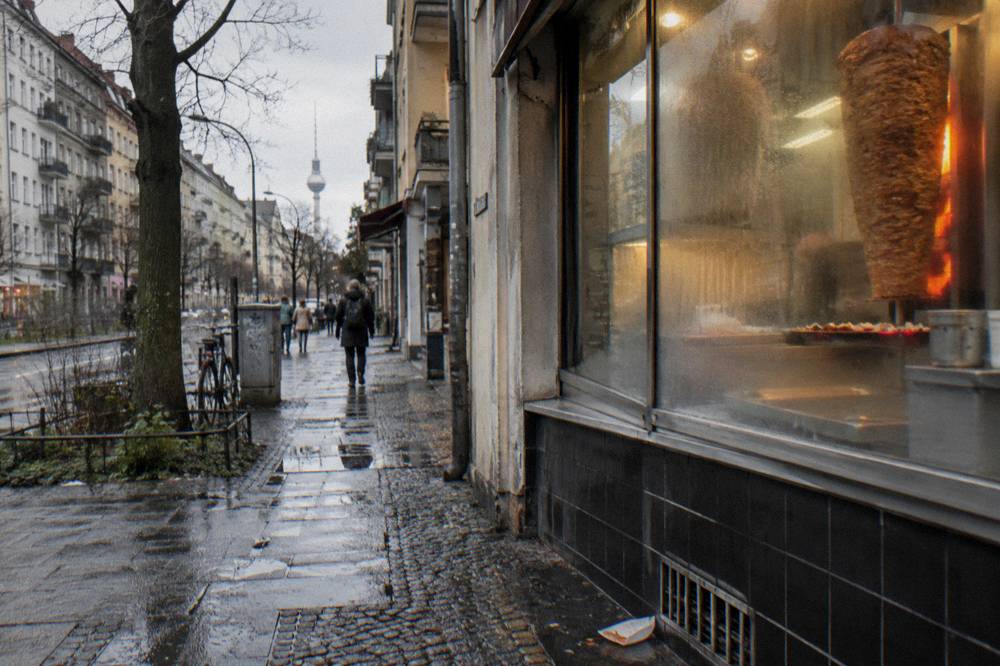
Meeting points matter as much as tickets. Tour start locations are stated on each booking page, and the listings here do not mention hotel pickup, so plan to reach the meeting point yourself by U-Bahn or on foot. Arriving ten minutes early is the standard advice; stands and guides move on schedule because the food is timed around the route. More on timing and what to carry is in the meeting points and packing guide for Berlin food walks.
What Does A Guide Add Over Going Alone?
A guide adds routing, context and ordering fluency: you get a planned sequence of stands, the migration and food history between them, and someone who orders in German and explains each sauce. Against that, a solo route using the free guides here costs only the food itself, and many stands need no help at all. The trade is money for depth and convenience.
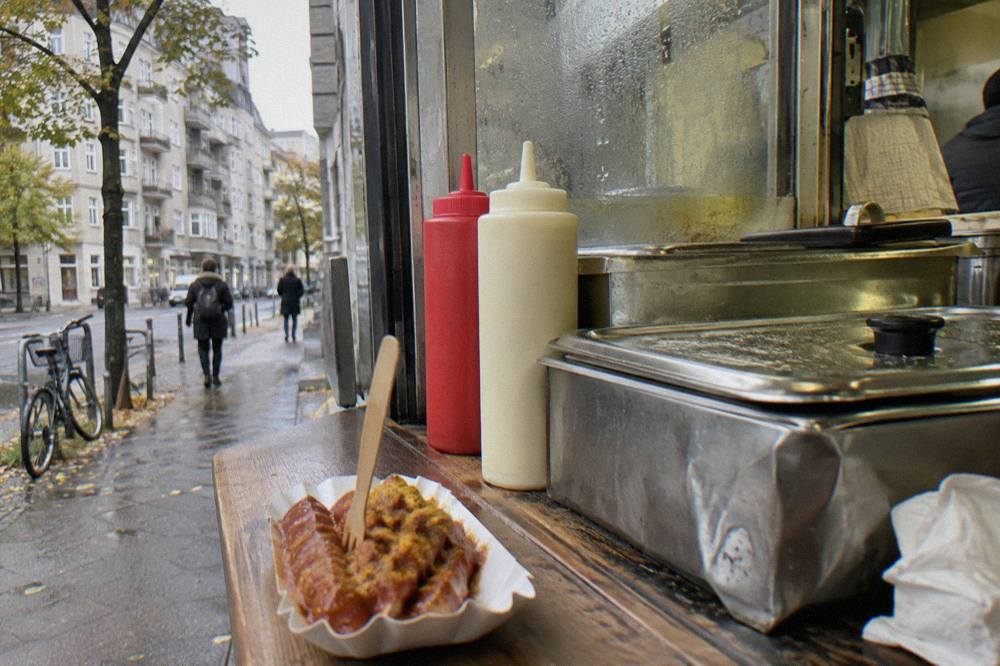
The honest case for the tour is context. Doner in Berlin is not just food, it is a fifty-year story of migration, labor and neighborhood change, and a good guide compresses that into the walk between stops. The featured doner walk also builds in sightseeing, so the tour doubles as a history outing. Guides typically know which stand is having a good day, which is the sort of judgment a first-time visitor cannot make.
The honest case against is independence. A visitor with the doner stands and etiquette guide can build a self-guided afternoon for the price of the sandwiches alone, moving at their own pace. The food is not hidden; it is on the street. What you give up is the narrative and the safety net when something closes unexpectedly.
| Factor | Guided doner walk | Self-guided route |
|---|---|---|
| Cost | From $51 per person plus transport | Food and transport only |
| History | Explained en route | Depends on your reading |
| Ordering | Handled by the guide | Your own German or pointing |
| Flexibility | Fixed route and timing | Fully flexible |
| Stand selection | Guide decides | Your research, your risk |
When Is The Best Time For A Doner Walk?
Evening suits doner culture best, since stands do their biggest trade late and the sandwich is historically a post-work and post-drink food, but afternoon walks avoid the busiest window. Winter works too: average January temperature at Alexanderplatz is 1.5 C, so dress for cold, and note that shops close on Sundays while street kitchens keep serving.
The climate record is precise enough to plan around. According to the Deutscher Wetterdienst 1991 to 2020 normals for Alexanderplatz, July averages 20.4 C while January averages 1.5 C, and November sits at 5.6 C with about 42 mm of rain across the month. None of that stops a doner walk; it only changes the jacket. Frost days cluster from November through March, so an evening tour in winter means gloves and a warm layer between stops.
Sunday is a special case. Under Berlin's shop-opening law, supermarkets stay closed on Sundays except at stations, while bakeries and confectioners may open from 07:00 to 16:00, per the Senatsverwaltung's opening-hours overview. Street food kitchens and market halls operate on their own schedules, and Thursday evenings bring Street Food Thursday to Markthalle Neun from 17:00 to 22:00, an option worth timing a visit around if your doner walk leaves an evening free.
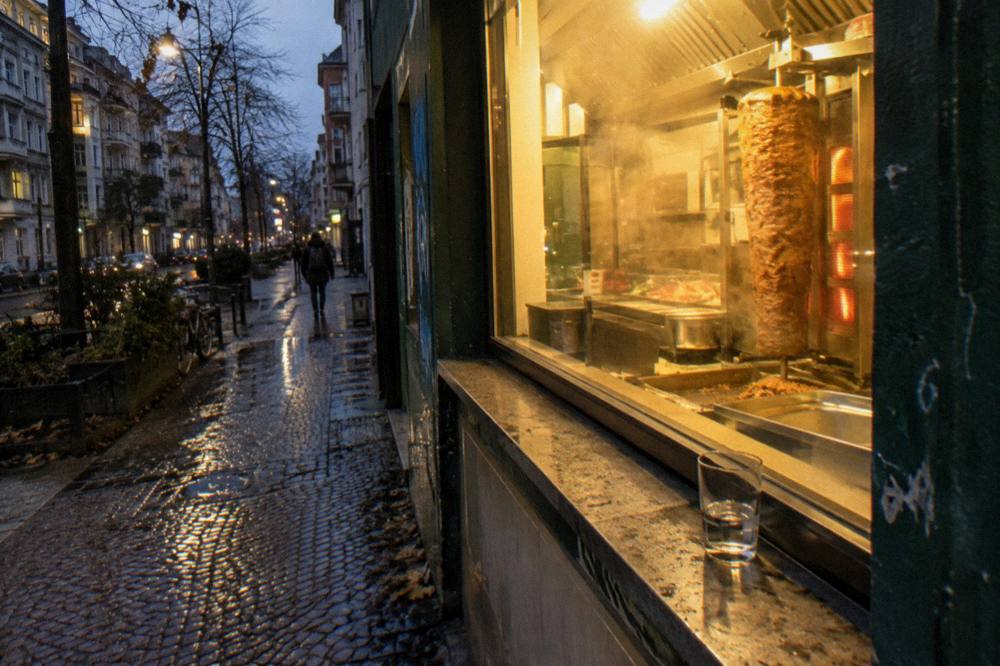
Seasonal visitors have extra reasons to come hungry. The city's Christmas markets open from late November, with the Alexanderplatz market running 23 November to 26 December 2026 with free admission, and a doner walk slots neatly alongside a market evening. The wider picture, including market food beyond doner, is in the Christmas market food and Glühwein guide.
How Do You Combine A Doner Walk With Other Berlin Food Plans?
Pair a doner walk with a market morning or a second food tour on a different day rather than stacking two walks into one afternoon. The doner tour covers one district in about 3 hours, so a Türkenmarkt morning at Maybachufer or a Street Food Thursday evening complements it without repeating stops. Most visitors find one guided food walk per two days is the comfortable pace.
The bookable pairing that fits best is the doner walk plus the Kreuzberg and Neukölln hidden-flavors circuit: one is doner-focused with sightseeing, the other roams two districts more broadly. Doing both across two days gives you the specialist depth and the generalist sweep, and they share a transport zone, so the same 4,00 EUR AB ticket logic applies to reaching either meeting point.
For visitors staying longer, the neighborhood coverage here can fill a week: the Berlin food by neighborhood guide maps which district suits which appetite, and the Markthalle Neun page details the Thursday street food institution. Budget planners can cross-check the what a Berlin food walk costs guide to see where the $51 doner walk sits in the overall price range.
Berlin Food Tours gathers history, stands and booking options in one place. Whatever combination you choose, book the doner walk early in your trip. It teaches the vocabulary, the sauce names and the neighborhood geography that make every later meal easier to navigate.
Common Questions About Doner Kebab Tours In Berlin
Where Did The Doner Kebab Sandwich Begin?
The doner sandwich, meat in bread as portable street food, is widely credited to Turkish guest workers who opened food businesses in West Berlin in the early 1970s. No single inventor can be stated as fact, but Berlin's role in popularizing the format is undisputed.
What Does A Berlin Doner Tour Include?
The featured walk runs about 3 hours, from $51 per person, rated 4.9 across 57 reviews. It combines doner tastings, including a gourmet doner stop, with sightseeing and history along the route. Exact stops and inclusions are listed on the booking page.
What Should You Order At A Doner Stand?
Choose bread, meat and sauce. Classic options are doner bread or a durum wrap, chicken or mixed veal and beef, and garlic-yogurt, herb or chili sauce, often mixed. Grilled vegetables are a signature addition at some stands.
Is Mustafa's Gemüse Kebap Worth The Queue?
Mustafa's on Mehringdamm is a famous stand whose long queue is regularly reported in the press. No verified queue length, prices or hours can be given here, so treat it as a Berlin legend and decide with your schedule in mind.
How Much Does Transport To The Doner Neighborhoods Cost?
The relevant districts sit in fare zone AB, where a single ticket costs 4,00 EUR and is valid 120 minutes with transfers. A reduced ticket for children 6 to 14 is 2,50 EUR, and children under 6 travel free.
Can You Do A Doner Walk In Winter?
Yes. January averages 1.5 C at Alexanderplatz per the Deutscher Wetterdienst 1991 to 2020 normals, so dress warmly. Street kitchens serve year-round, and Thursday evenings add Street Food Thursday at Markthalle Neun from 17:00 to 22:00.