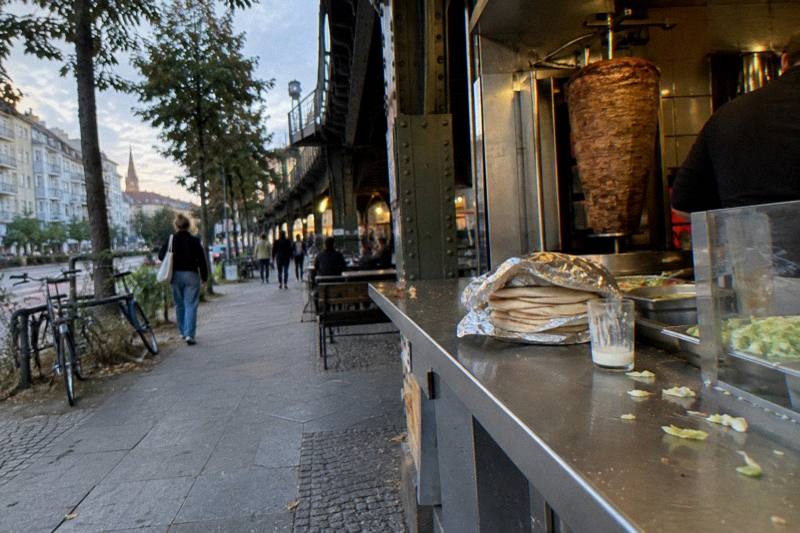
Is German Döner Better Than Turkish Döner?
A straight answer to the German döner versus Turkish döner question, how the Berlin sandwich came to be, and which döner stops in Berlin let you taste both styles in one afternoon.
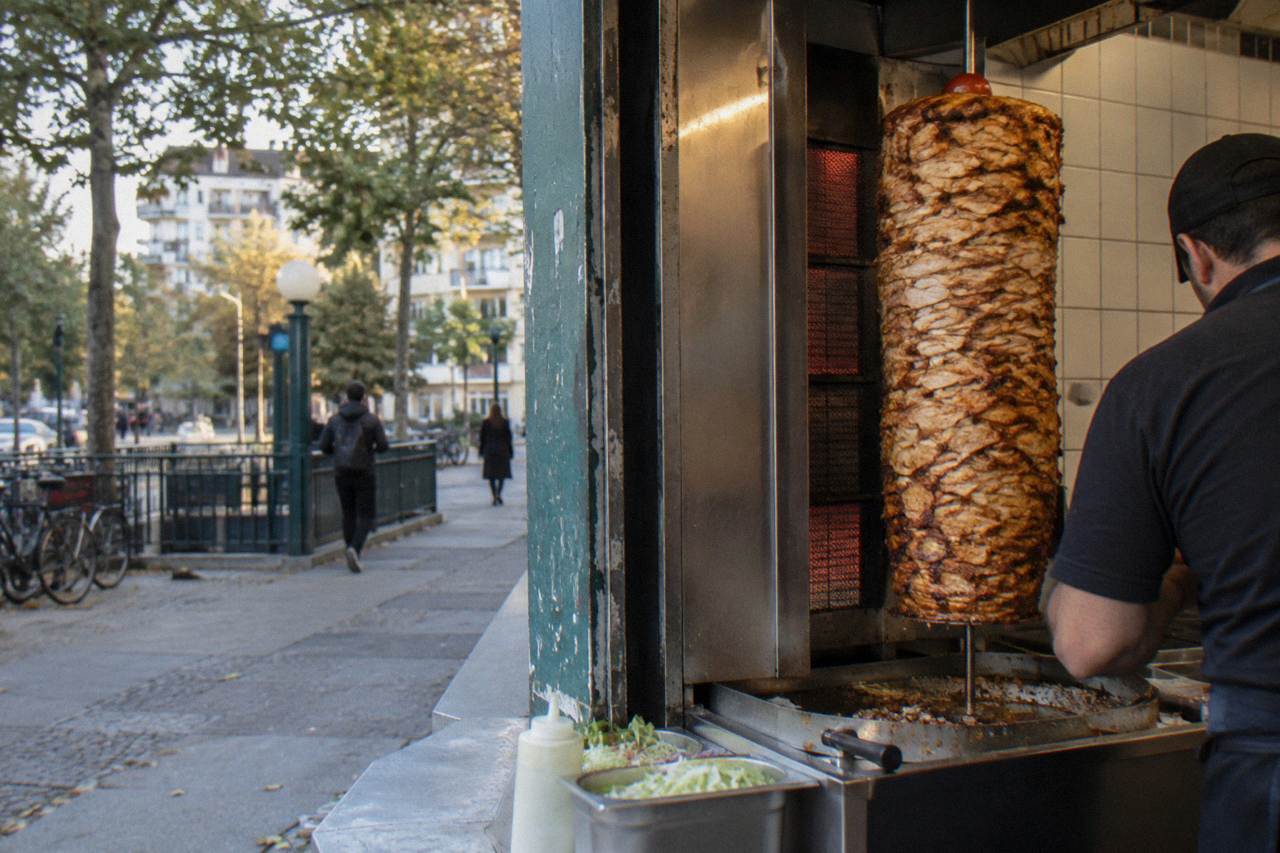
There is no objective winner, because the two are barely the same dish. Turkish döner is usually served on a plate or in a thin flatbread with simpler garnishes, while the German, and specifically Berlin, version is a loaded sandwich with salad, sauce choices and bread built to hold it all. Judged as a sandwich, Berlin wins. Judged as a classic of Turkish cuisine, the original wins by default.
The question itself is newer than either dish. Döner meat, stacked and roasted on a vertical spit, has been eaten in Turkey for well over a century, typically carved onto a plate or rolled into a thin lavaş flatbread with little more than a few vegetables. What most of the world now pictures when it hears the word döner, the fat wedge of bread, the mountain of lettuce and cabbage, the red and white sauce stripes, is a German reinvention that grew up in Berlin. Comparing the two is a bit like comparing Neapolitan pizza to a New York slice: shared ancestry, different purposes, and no referee.
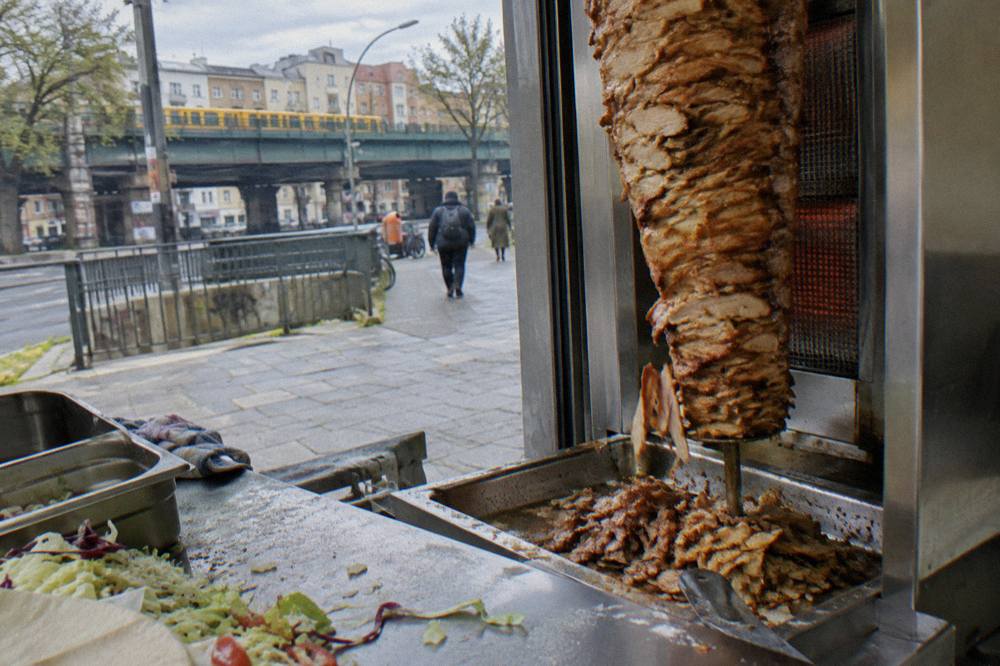
Berlin is the natural courtroom for this argument. The city is widely credited as the birthplace of the döner kebab as a mass-market sandwich, an idea usually traced to Turkish guest workers in the early 1970s, and no single inventor is agreed on by historians, so treat that origin story as widely credited rather than proven. It is also home to a large Turkish-origin community, Turkish grocers, bakeries importing their bread styles, and restaurants that serve the plated, Istanbul-style original alongside the Berlin sandwich. Within a few U-Bahn stops you can eat both and decide for yourself, and the fun part is that Berlin lets you taste both in a single afternoon.
If you want the comparison made easy, a guided walk does the routing for you. The Döner Kebab Tour & Sightseeing pairs a gourmet kebab stop with Berlin's historical sites over roughly 3 hours, from $51 per person, rated 4.9 across 57 reviews.
Where Did The Berlin Döner Sandwich Come From?
The sandwich form of döner is widely credited to Turkish guest workers in Berlin in the early 1970s, who adapted the classic Turkish roast meat into a portable meal for factory shifts and late-night trade. No single inventor is documented beyond dispute, so the honest phrasing is "widely credited." What is certain is that Berlin, not Istanbul, turned döner into the bread-and-salad sandwich now copied from London to Sydney.
The story, as usually told, goes like this: Turkish workers who arrived in West Germany under guest-worker programs wanted food that was quick, affordable and familiar. Vertical-spit roast meat existed in Turkey already, but serving it in thick pocket bread with a full salad garnish and sauces was a practical Berlin improvisation, food that could be eaten standing up between shifts or after the bars closed. Kreuzberg, with its dense Turkish community around Kottbusser Tor and the markets along the Maybachufer, became the cradle of the style.
Several individuals have claimed, or been credited with, inventing the sandwich, and Berlin has seen decades of friendly argument about it. Responsible food writing stops short of naming a winner. What matters for a visitor is the result: the city has a density of döner shops few places on earth can match, ranging from corner counters turning out hundreds of sandwiches a night to a new wave of gourmet kebab restaurants using better meat, house-baked bread and seasonal vegetables.
The proof of the reinvention is in the Turkish community's own response. Turkish-German families run both styles side by side, and many Berliners of Turkish origin have firm opinions about which shops still make the old-style, less-loaded version. A walk through Kreuzberg or Neukölln is effectively a walking seminar on fifty years of sandwich evolution, which is exactly why so many first-time visitors book a guided food walk there rather than guessing at shopfronts.
For the background reading, the Berlin döner kebab guide on bread, meat and sauces breaks down how the sandwich is built, and the history of döner kebab in Berlin covers the German-or-Turkish origin argument in detail.
What Makes A Berlin Döner Different From A Turkish Döner?
The Berlin döner differs from its Turkish cousin in bread, garnish, sauce and portion: thick toasted flatbread versus thin lavaş, a full salad bar of lettuce, cabbage, onion and tomato versus minimal vegetables, garlic and herb or spicy sauces versus simple accompaniments, and a sandwich sized as a whole meal. Turkish döner, especially in Istanbul, more often arrives plated with rice or rolled slim, meant as a lighter bite rather than dinner.
Start with the bread, because that is the biggest fork in the road. Berlin döner shops generally use a wide, thick, fluffy flatbread that gets toasted on a grill so it holds structure under sauce. A classic Turkish döner dürüm or lavash roll is thinner, wrapping the meat tightly, staying soft, and prioritizing the meat's flavor over the architecture. Neither approach is wrong; they optimize for different outcomes.
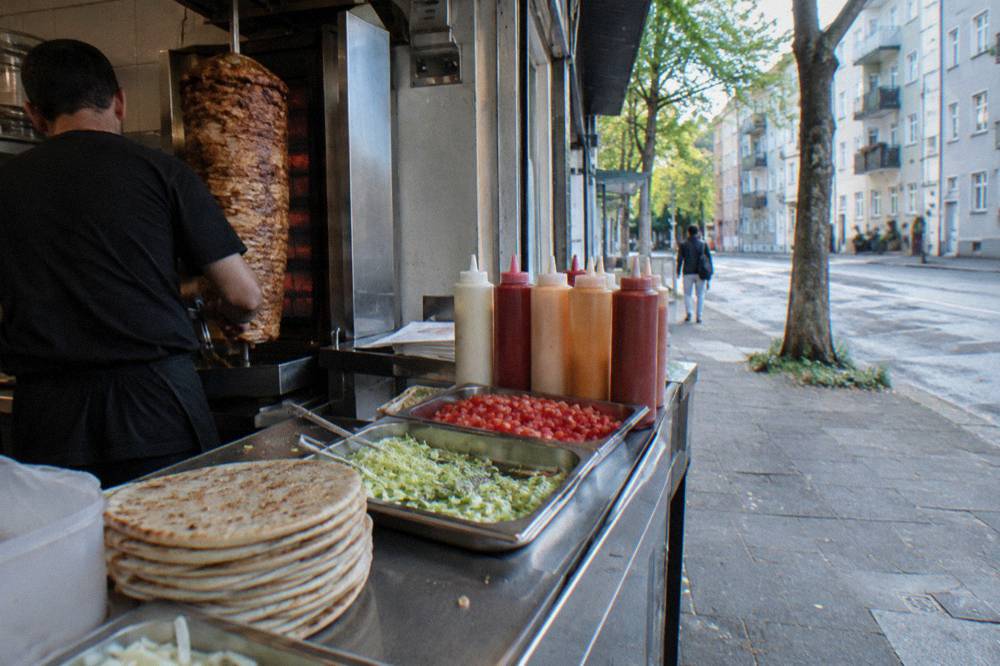
Then the filling philosophy. The Berlin version piles on crunch: shredded lettuce, white and red cabbage, sliced tomato, cucumber, red onion, sometimes pickles or grilled peppers. The Turkish tradition keeps the garnish restrained so the seasoned meat, often lamb or a beef-lamb mix, stays the headline. Sauces follow the same pattern: German shops offer a choice of garlic-yogurt, herb and chili sauces, often striped together, while Turkish versions lean on a simple yogurt or tomato accompaniment.
| Feature | German (Berlin) Style | Turkish (Istanbul) Style |
|---|---|---|
| Typical format | Thick flatbread sandwich, loaded | Plated with rice, or thin dürüm roll |
| Bread | Wide toasted flatbread, grill-crisped | Thin lavaş or dürüm wrap |
| Vegetables | Full salad: lettuce, cabbage, tomato, onion, pickles | Minimal, meat-focused garnish |
| Sauces | Garlic, herb and chili, often combined | Simple yogurt or tomato accompaniment |
| Portion logic | A complete standing meal | A lighter dish or shared course |
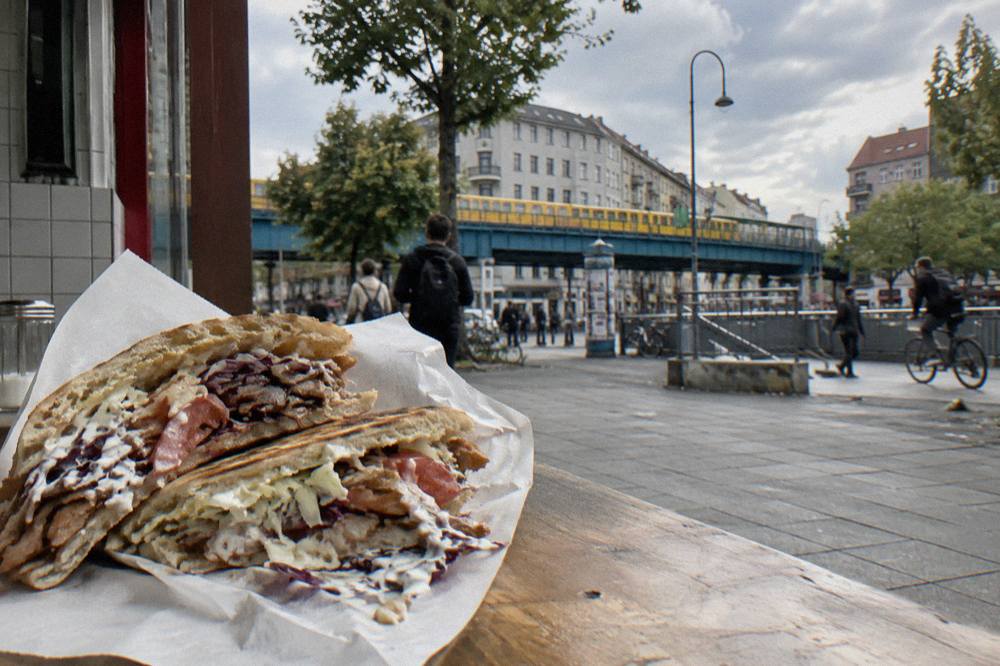
There is also a quality spectrum within the German style that surprises visitors. The gourmet kebab movement in Berlin treats döner like craft cooking: dry-aged meat, bread from a partner bakery, vegetables cut to order. The gourmet döner options in Berlin describe that scene, while the Kreuzberg food walk guide covers the traditional shops around Kottbusser Tor where the classic style still rules. One famous Mehringdamm stand, Mustafa's Gemüse Kebap, draws a queue that has been reported in the press for years; it is best treated as a well-known landmark rather than a guaranteed quick stop, and the question of whether that queue is worthwhile is examined separately in the guide to it.
Which Döner Style Should You Try First In Berlin?
Try the Berlin-style loaded sandwich first, because it is the dish this city invented the format for and the version you cannot get as well anywhere else, then seek out a Turkish-style plated döner or thin dürüm the same day for contrast. Eating both in one afternoon is realistic in Kreuzberg or Neukölln, where the two styles sit within walking distance of each other, and the comparison is more fun than any single stop.
Practical routing matters more than loyalty. Kreuzberg around Kottbusser Tor and the Maybachufer corridor, and Neukölln along Karl-Marx-Straße and the Weserstraße side streets, hold both old-school Berlin counters and Turkish-run kitchens serving the plated original. The Maybachufer Turkish market runs Tuesdays and Fridays from 11:00 to 18:30 per local reporting, and it doubles as a chance to taste ingredients, olives, cheeses, simit, that never make it into a sandwich. Getting there is cheap: a BVG single ticket for zones AB costs 4,00 EUR and is valid for 120 minutes, per BVG's single-ticket price table.
Timing your sandwich matters more than timing your neighborhood. A late-morning start lets you hit a bakery-fresh lunch service before the queues build, and Sunday planning needs care, since ordinary supermarkets in Berlin stay closed on Sundays except at stations, as the Senatsverwaltung's shop opening hours overview explains, while döner shops and market stalls operate on their own schedules. The safest assumption is that the famous stops are busy whenever tourists are awake.
Can You Taste Both Styles On A Guided Berlin Walk?
Yes, and a guided walk is the most efficient way to taste both, because guides know which kitchens serve the old-style Turkish döner and which build the loaded Berlin sandwich, knowledge invisible from the street. The Döner Kebab Tour & Sightseeing runs roughly 3 hours from $51 per person, rated 4.9 across 57 reviews, and pairs a gourmet kebab stop with historical sites, while Kreuzberg and Neukölln walks cover the neighborhoods where both styles live.
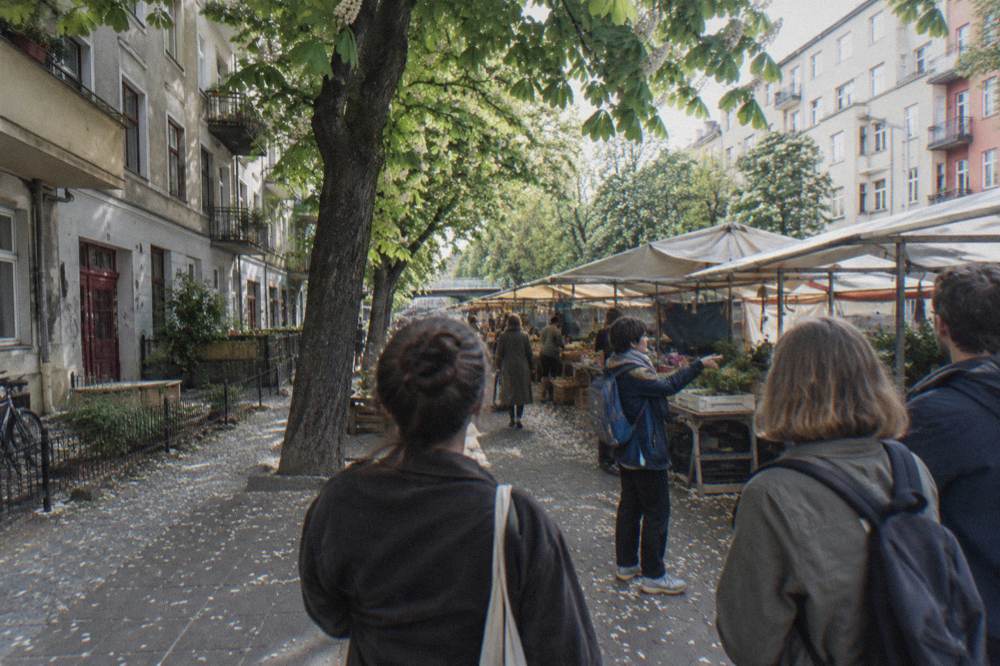
The döner-focused option, Berlin: Döner Kebab Tour & Sightseeing, incl. gourmet kebab & delicious stops, is built around exactly this argument. It lasts about 3 hours, costs from $51 per person, and combines the kebab stop with sightseeing, so you leave with both a full stomach and the story of the guest-worker era that produced the sandwich. Its 4.9 rating across 57 reviews is a solid base of feedback for a tour of this kind.
For a wider tasting spread, two other options fit. Hidden Flavors of Kreuzberg & Neukölln runs about 3 hours from $118 per person and works the two neighborhoods where the döner story unfolded; it has 9 reviews so far, too few for a reliable rating either way, but the route itself is the draw. At the quick-and-cheap end, the KERB food hall experience with street food and drinks starts from $34, has 12 reviews, and suits travelers who want a low-commitment taste of Berlin's street food under one roof.
| Tour | Duration | Price Basis | Reviews |
|---|---|---|---|
| Döner Kebab Tour & Sightseeing, incl. gourmet kebab | ~3 hours | from $51 per person | 4.9 across 57 reviews |
| Hidden Kreuzberg and Neukölln | ~3 hours | from $118 per person | 9 reviews, rating not yet reliable |
| KERB food hall experience with drinks | length not stated | from $34 per person | 12 reviews, rating not yet reliable |
A guided stop also solves the ordering problem. Sauce choice, bread choice, whether to have the sandwich "mit alles," these decisions happen fast at a busy counter, and a guide translates. The deeper background on ordering etiquette lives in the doner ordering and etiquette guide, which is worth reading before any self-guided attempt.
What Is The Best Way To Compare Both On A Döner Tour Day?
Pick one neighborhood, Kreuzberg or Neukölln, book a guided walk for the structured stops, then add one self-guided counter afterward for a second opinion while the first sandwich is still a memory. Thursday is the strongest single day, because Street Food Thursday at Markthalle Neun runs 17:00 to 22:00 and can finish the evening after a daytime walk through the neighborhood.
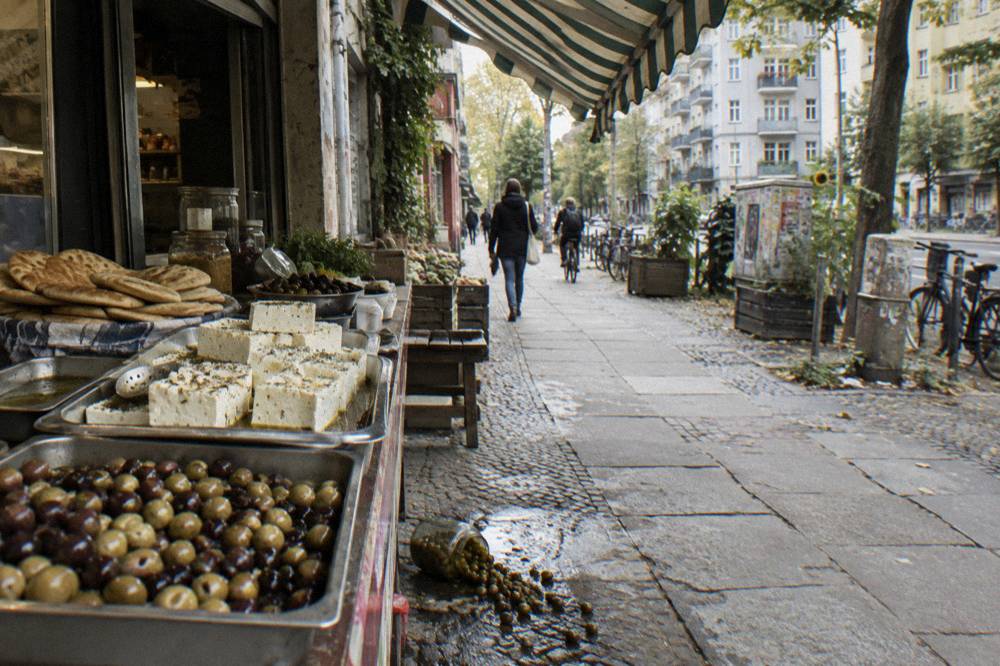
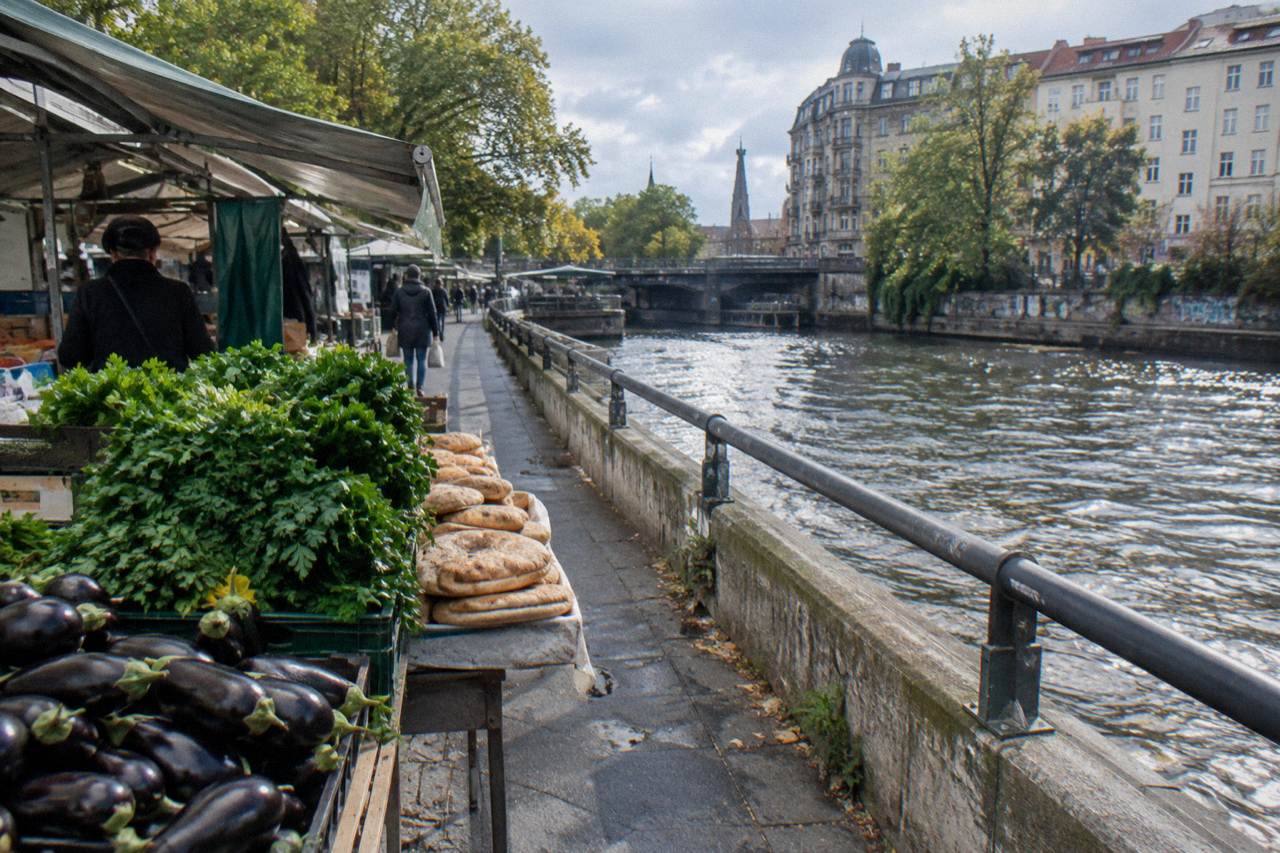
The morning belongs to markets. Tuesdays and Fridays, the Maybachufer gives you the Turkish ingredient panorama; other days, Winterfeldtplatz in Schöneberg runs Wednesday mornings and Saturdays until 16:00. Neither requires a ticket beyond a standard transit fare, and children aged 6 to 14 travel reduced at 2,50 EUR for the AB zone. The Berlin food markets overview maps the full weekly calendar if your dates are fixed. For the Thursday plan, the confirmed running times are published on the market's official Street Food Thursday page.
Afternoon is sandwich time. A guided döner walk handles the first stop, and a solo second stop at an old-school Turkish counter, plate or thin dürüm, gives you the contrast that answers this article's question personally. Order the same meat in both formats and the difference between the German sandwich tradition and the Turkish original becomes obvious in two bites: one is engineered abundance, the other is restraint built around the spit.
Evening options close the loop. Street Food Thursday brings dozens of independent kitchens into Markthalle Neun from 17:00, and while it is not a döner event, it shows the city's street-food culture in its current, hyper-diverse state, a useful reminder that the Berlin döner was this ecosystem's founding invention. For travelers who enjoy the beer side of the culture afterward, the Berlin beer tour options list tasting stops near both Kreuzberg and Mitte.
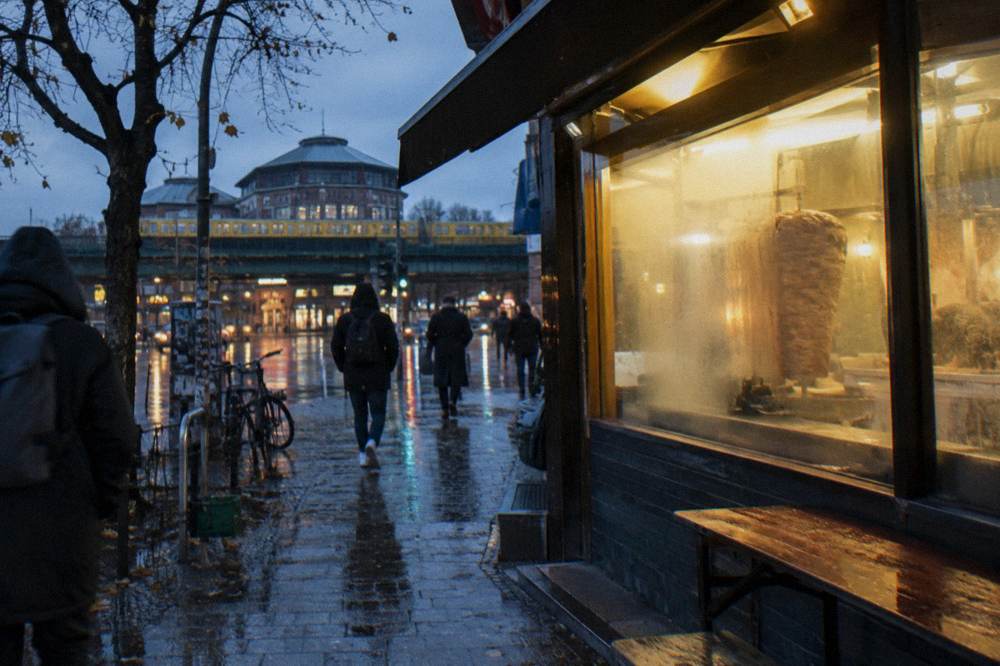
One practical note for winter visitors: Berlin's mean January temperature sits at just 1.5 C per the Deutscher Wetterdienst 1991 to 2020 normals for Alexanderplatz, so a walking food plan with indoor stops, a market hall, a seated kitchen, beats a long open-air crawl from December through February. The late-spring and early-summer months are gentler, with mean temperatures above 15 C from May onward.
Where Should You Eat Döner Like A Local In Berlin?
Eat where the Turkish community eats: around Kottbusser Tor and the Maybachufer in Kreuzberg, and along Karl-Marx-Straße in Neukölln, rather than in the sightseeing core. Locals judge a döner shop by turnover, bread supply and sauce made on site, and the shops that pass those tests cluster in the old guest-worker neighborhoods where the sandwich was born.
The distinction matters because central Berlin sells plenty of döner to people who will never come back. Out in Kreuzberg and Neukölln, shops live or die on regulars, which forces quality: meat that turns fast, bread delivered warm from a bakery relationship, vegetables cut through the day. None of this requires insider knowledge so much as geography, and it is the single biggest argument for spending your döner day outside Mitte.
The German-versus-Turkish debate also plays out differently at street level than online. In the neighborhoods, the two styles are not rivals but siblings, and many families have served both for decades, the loaded sandwich for the after-midnight crowd, the plated original for weekend lunches. Ask a shopkeeper which they eat themselves and you will usually get a genuinely held opinion, which is more than any ranking article can offer.
That is the real conclusion here, too. Whoever wins the argument, the sandwich or the plate, Berlin is the only place where the question can be settled over a single afternoon of eating, and that alone justifies the trip.
Common Questions About Döner In Berlin
Is German Döner Better Than Turkish Döner?
There is no objective winner, only different goals. The German, Berlin-style döner is a complete loaded sandwich with thick grilled flatbread, salad and a choice of sauces, while Turkish döner more often arrives plated or in a thin roll with a restrained garnish that keeps the meat central. As a portable one-hand meal, the Berlin version wins; as a classic dish in its own tradition, the original stands unchallenged. Berlin is the best city to compare both in person.
Was Döner Invented In Germany Or Turkey?
Roast meat on a vertical spit is Turkish and long predates the sandwich. The döner as a loaded sandwich sold from a shop counter is widely credited to Turkish guest workers in Berlin in the early 1970s, though no single inventor is documented beyond dispute. So the meat is Turkish, the sandwich format is generally credited to Berlin, and both claims can be true at once.
What Is The Difference Between Döner And Dürüm?
Döner classically refers to the meat itself, and in Berlin usually to the sandwich in thick toasted flatbread. Dürüm means the same meat rolled in a thin flatbread wrap, closer to the Turkish street style, softer and less loaded. Many Berlin shops offer both from the same spit, which makes the comparison easy at a single stop.
Where Is The Best Place To Eat Döner In Berlin?
Kreuzberg around Kottbusser Tor and the Maybachufer, and Neukölln along Karl-Marx-Straße, hold the densest concentration of long-standing shops serving both the Berlin sandwich and the Turkish original. Look for fast meat turnover, bread supplied from a partner bakery and sauces made on site. Guided options include the Döner Kebab Tour & Sightseeing, roughly 3 hours from $51 per person, rated 4.9 across 57 reviews.
Is Mustafa's Gemüse Kebap Worth The Queue?
Mustafa's Gemüse Kebap on Mehringdamm is a famous stand whose long queue has been reported in the press for years. Whether it is worth waiting for depends on your schedule and expectations. The dedicated guide to the stand weighs the arguments in more detail.
Can You Do A Döner Tour In Berlin?
Yes. The Döner Kebab Tour & Sightseeing includes a gourmet kebab stop and historical sites over about 3 hours, from $51 per person. The Hidden Flavors of Kreuzberg & Neukölln walk, about 3 hours from $118, covers the neighborhoods where the sandwich's history unfolded, and the KERB food hall experience from $34 offers a short street-food tasting under one roof.