Where Do Locals Eat In Berlin?
Where Berliners actually eat: the neighborhoods, markets and everyday dishes locals order, plus how a visitor can eat the same way on a guided walk.
Berliners eat where they live: in Kreuzberg around Maybachufer and Oranienstrasse, in Neukölln along Karl-Marx-Strasse, in Prenzlauer Berg around its weekly market and bakeries, and in Mitte's quieter side streets. The everyday diet is doner, currywurst, Turkish market produce, Vietnamese soup, and brunch on weekends, bought from corner shops, market stalls and small neighborhood kitchens rather than restaurants clustered around the big sights. Visitors can eat exactly the same way with a little planning.
The honest answer starts with geography. Berlin is a city of villages stitched together, and each Kiez, meaning neighborhood, feeds itself. A local in Neukölln rarely crosses town for dinner; the doner shop, the Spati and the Vietnamese place on the corner do the job. The restaurants around Alexanderplatz and Checkpoint Charlie exist mostly for visitors, and prices there reflect it.
That divide matters for anyone planning to eat well. The food Berliners actually rate sits a ten minute U-Bahn ride from the main sights, in districts where the rent is lower and the kitchens are smaller. That is where the city's Turkish, Vietnamese, Lebanese and Georgian communities cook, and where the weekly markets set up their stalls on fixed days that locals know by heart.
There is a second layer to the answer: time. Berlin eating is scheduled around market days, bakery mornings, Sunday closing rules and the Thursday street food ritual at Markthalle Neun. A visitor who learns that calendar eats dramatically better than one who wanders, because the best stalls appear on schedule and the best bread appears before noon.
A guided walk is one shortcut to those places. The Berlin: Guided Street Food Tour with Tastings runs about 3 hours, is rated 4.8 across 403 reviews, and costs from $75 per person. It focuses on the street food stops locals queue at themselves, which is exactly the point of the question.
Getting to these neighborhoods is cheap. A single BVG ticket for zones AB costs 4,00 EUR and is valid for 120 minutes, per BVG's single-ticket price table. Reduced fares for children 6 to 14 are 2,50 EUR. Nearly every food neighborhood named in this article sits inside zone AB, so one ticket covers the trip there and the trip back if the return ride starts within the validity window.
Which Neighborhoods Do Berliners Actually Eat In?
Four districts carry most of the everyday eating: Kreuzberg for Turkish food and street food, Neukölln for Vietnamese and Middle Eastern kitchens, Prenzlauer Berg for bakeries and brunch, and Mitte for everything in between, while Wedding and Charlottenburg add cheaper eats and older dining rooms respectively. Each district has its own rhythm, its own market day and its own long-standing favorite shops that never appear in a guidebook.
Kreuzberg is the strongest single answer to the question. The district wraps the Maybachufer canal, where the Turkish market runs Tuesday and Friday, and its side streets hold decades-old doner shops alongside newer falafel and Georgian places. The Kreuzberg food walk guide covers the ground stop by stop. Neukölln, one district over, is where rents pushed the interesting kitchens next, along Karl-Marx-Strasse and around Weserstrasse, a street packed with cafes and bars.
Prenzlauer Berg feeds families. Its bakeries and its brunch tables fill every weekend, the square at Kollwitzplatz draws crowds, and the district's calm streets suit slow mornings. Confirm current market days before you plan around them. The Prenzlauer Berg food walk guide lays out a route through it. Wedding, to the northwest, has picked up some of the energy as prices rose elsewhere, and locals who want generous portions for less money sometimes point visitors there.
| Neighborhood | What locals eat there | Typical food anchor |
|---|---|---|
| Kreuzberg | Doner, Turkish mezze, falafel, street food | Maybachufer market and surrounding streets |
| Neukölln | Vietnamese pho, Middle Eastern grills, cafes | Karl-Marx-Strasse and Weserstrasse |
| Mitte | Mixed: currywurst, modern casual, snack shops | Side streets off Rosenthaler Platz |
| Charlottenburg | Cantonese and German dining rooms | Kantstrasse |
Mitte deserves a caveat. The district contains both the tourist core and some genuinely local pockets, and the difference is one block. A currywurst stand two streets off Rosenthaler Platz serves the same locals a stand on Unter den Linden serves tour groups. The guide to Berlin food by neighborhood sorts the two Mittes from each other.
Charlottenburg, around Kantstrasse in the west of the city, is the quiet answer locals give when asked seriously. Kantstrasse has a long-standing reputation for Cantonese dining rooms alongside traditional German places, and a November 2026 report in the Berliner Zeitung noted five new openings around the Kurfürstendamm. It is the district to eat in when the plan is a proper seated dinner rather than a snack crawl.
Where Do Locals Shop For Food In Berlin?
Berliners shop at weekly markets rather than supermarkets when they can: the Turkish market at Maybachufer on Tuesday and Friday, Winterfeldtmarkt at Winterfeldtplatz on Wednesday morning and Saturday until 16:00, and Street Food Thursday at Markthalle Neun from 17:00 to 22:00, all of them working food markets rather than souvenir fairs. Each one anchors the week in its district. Produce, cheese, bread and hot stalls make these the closest thing the city has to a shared pantry.
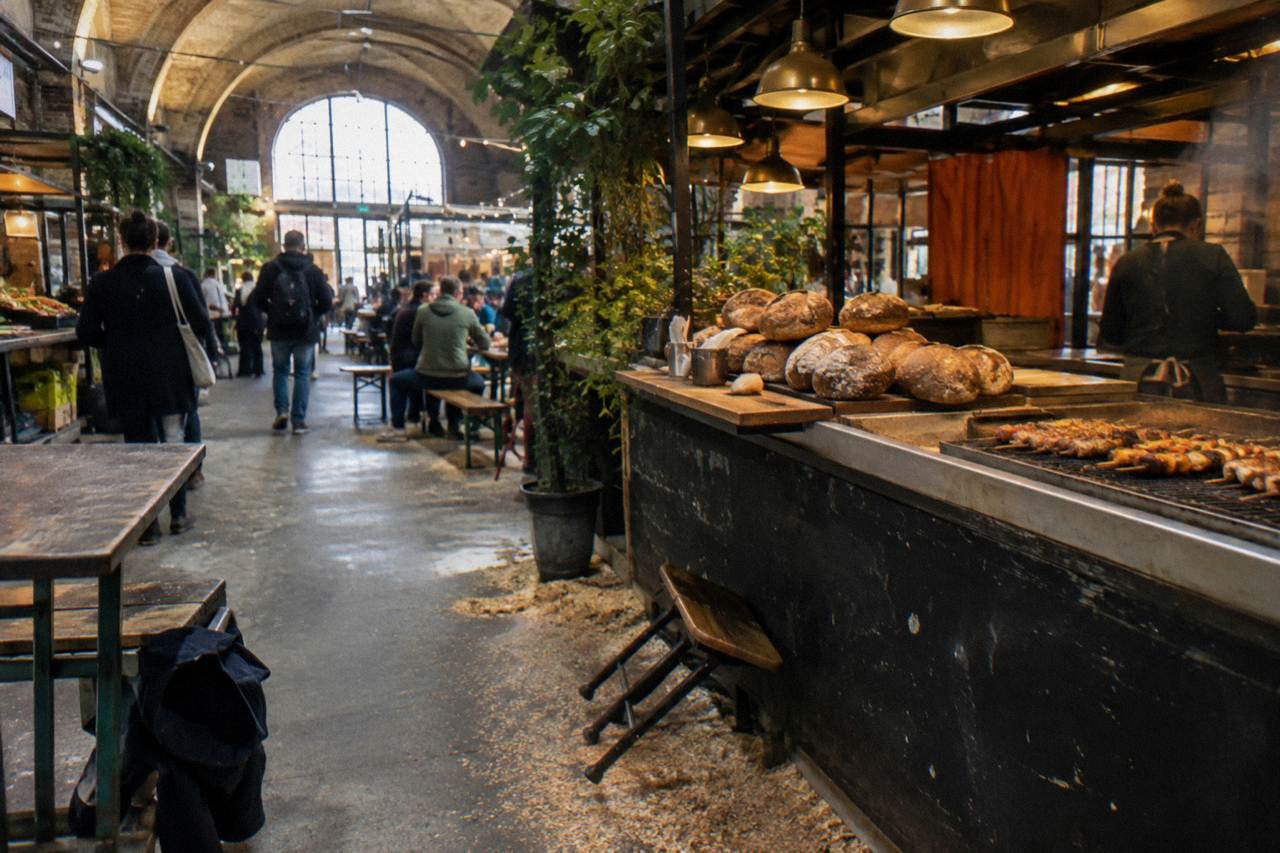
Street Food Thursday is the best known. Since 2013 the hall in Kreuzberg has filled every Thursday evening with independent kitchens, and the operator lists upcoming dates of 5, 19 and 26 November 2026, with 12 November notably absent from the calendar, on the official Markthalle Neun page. Arrive early or late; the middle of the evening is the crush. The Markthalle Neun guide covers what to order once inside.
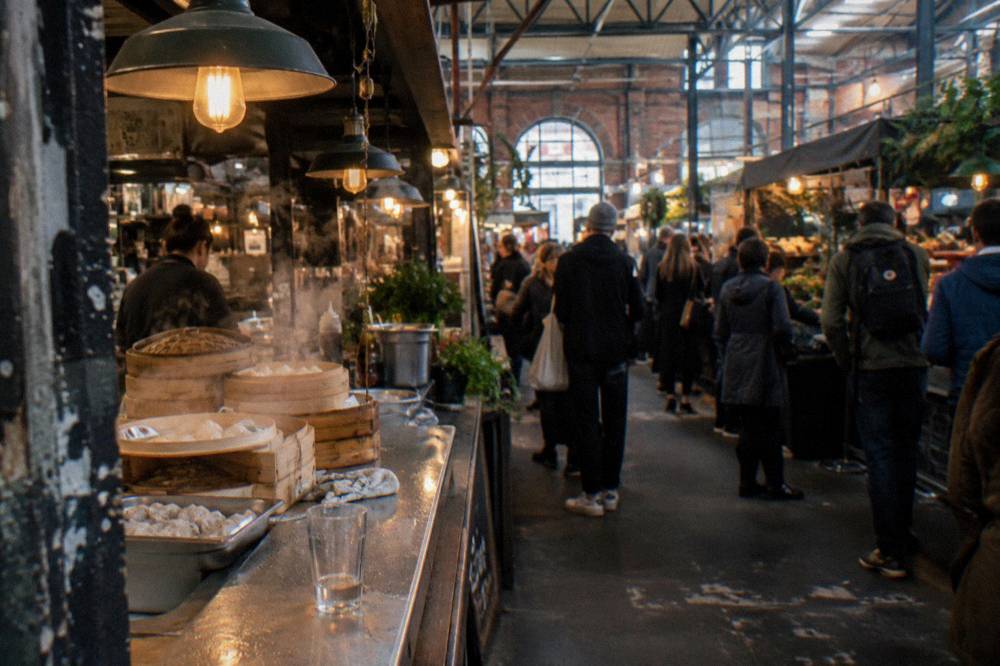
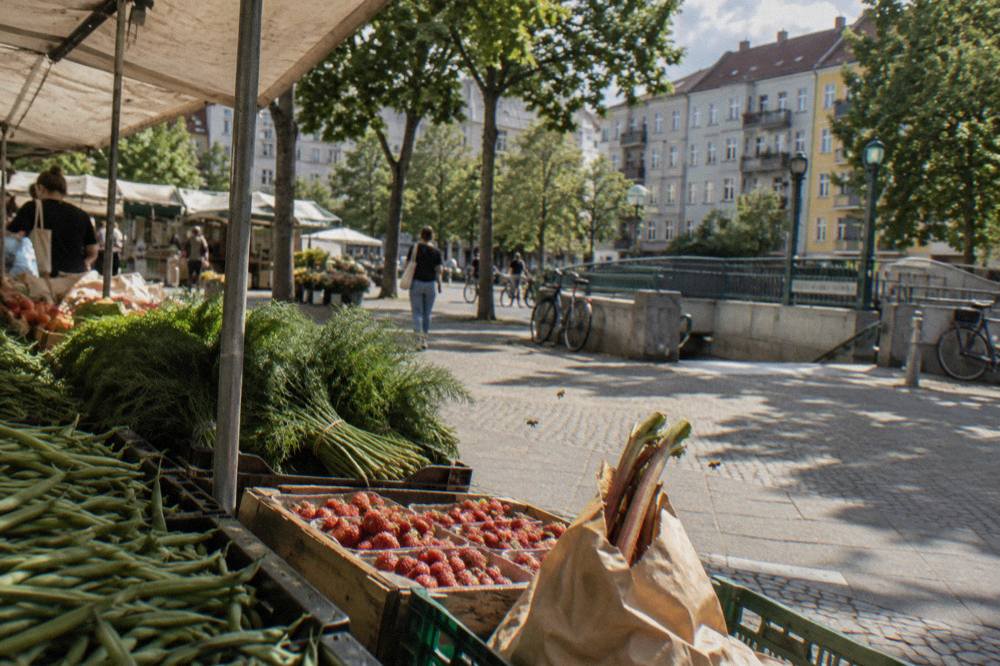
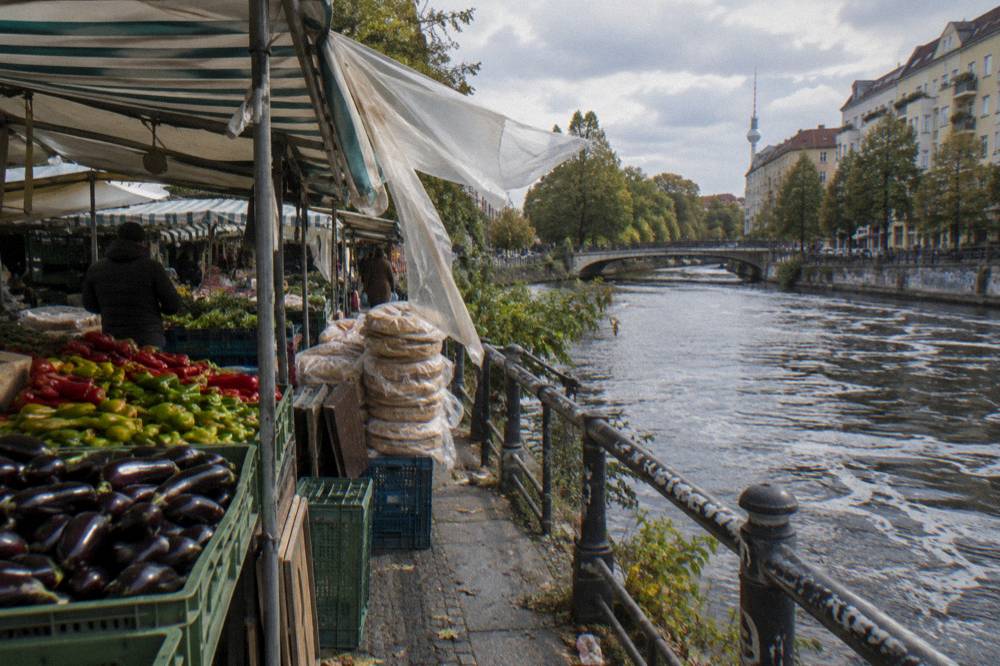
The Maybachufer Turkish market, listed Tuesdays and Fridays 11:00 to 18:30, is where Kreuzberg and Neukölln do their actual grocery shopping: olives, bread, herbs, cheese and lunch from the hot stalls. The Maybachufer market guide maps the stops worth making. Winterfeldtmarkt in Schöneberg is the older, calmer sibling, and visitBerlin's Winterfeldtplatz page confirms the Saturday hours.
For visitors, one market visit usually beats a restaurant reservation. A guided option connects the stalls to the stories: Berlin: Markthalle Neun Guided Food Tour with Craft Beer runs about 2.5 hours from $97 per person and pairs the hall's food with local beer.
Beyond the markets, Berlin's Spatis, the late-night corner shops, sell drinks and snacks and function as improvised social clubs. Weekday hours run around the clock under the city's shop rules. Fresh produce beyond market days comes from discount supermarkets, which are everywhere, and which close on Sundays like all other shops.
What Do Locals Eat On A Sunday In Berlin?
On Sundays Berliners eat brunch at home or in cafes, shop at whatever bakeries are open until 16:00, and buy tourist-need food from the limited shops allowed to open 13:00 to 20:00, because ordinary supermarkets stay closed under the Berlin shop-opening law. The rules shape the whole weekend rhythm of eating in the city. Sunday is a brunch and street food day, not a shopping day.
The exceptions are written into the Senatsverwaltung's shop opening hours page. Bakeries and confectioners may sell 07:00 to 16:00, tourist-need shops selling food and drink for immediate consumption may open 13:00 to 20:00, and shops at stations stay open throughout. Up to 8 Sundays a year can be opened citywide by general order, which is when the big shopping streets briefly come alive.
Practically, this pushes Sunday eating toward three patterns: a long brunch, which Prenzlauer Berg has turned into an institution; a walk with a bakery stop; and street food, since hot food stalls at markets and events operate under their own rules. A doner shop open on a Sunday evening is doing steady business with locals who did not plan a grocery run. The full index of guides sits on Berlin Food Tours.
Visitors should plan around it too. A Sunday arrival with no dinner plan is fine, because doner, falafel and market halls will feed you. A Sunday plan built around supermarket picnic supplies is not, unless the supermarket is inside a station, where the rules allow trading.
The pattern repeats on public holidays, including Christmas Day, Boxing Day and New Year's Day, when the same closures apply. Anyone booking a food-focused trip across those dates should anchor each day to a market hall, a walking street food strip or a booked restaurant table rather than to shops.
How Can A Visitor Eat Like A Local In Berlin?
Eat where the queues are local: doner shops in Kreuzberg and Neukölln, market stalls at Maybachufer and Markthalle Neun, Vietnamese kitchens away from the center, and brunch in Prenzlauer Berg, reached by U-Bahn rather than on foot from the sights. A guided food walk compresses the learning curve into about three hours. After that, repeat the stops you liked on your own.
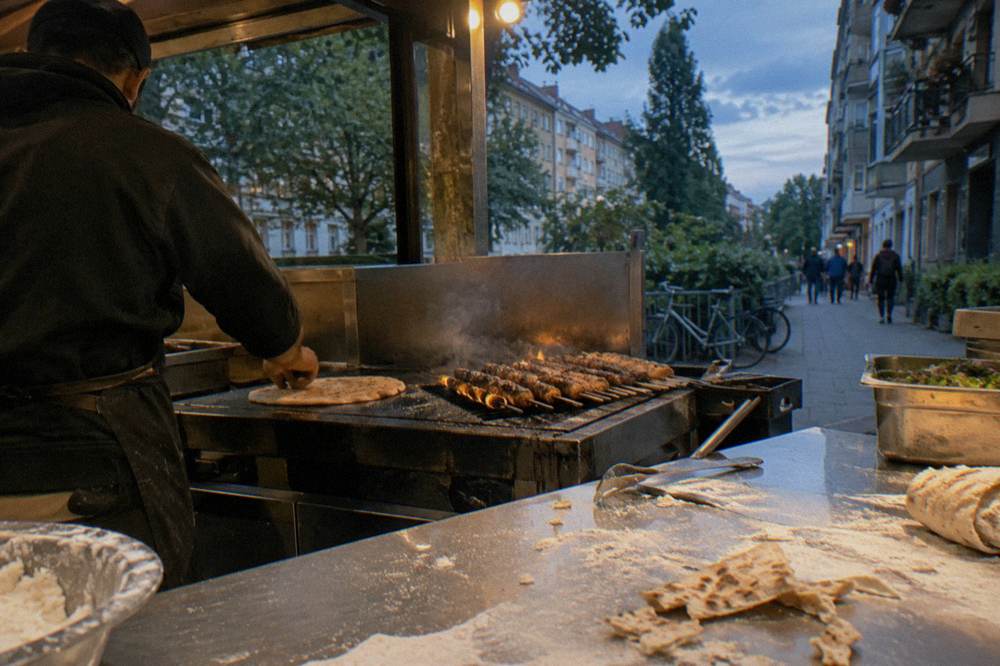
The doner question comes up constantly, and the answer is that Berliners treat it as a staple, not a novelty. The doner kebab guide covers bread styles, sauces and ordering etiquette. Currywurst is the other pillar, and the currywurst history guide explains why the dish belongs to the city in a way no other German city can claim.
A tour earns its price when it saves you the guesswork of which side street. Berlin: Mitte District Food Tour with 7 Authentic Local Tastings runs about 3 hours, is rated 4.9 across 1,583 reviews, and costs from $90.01 per person, with seven tastings that sketch the city's whole food history in one walk. For small-group seekers, Food tasting tour in Berlin of HIDDEN GEMS runs about 3 hours from $120.54 per person and is rated 4.6 across 80 reviews.
| Option | Duration | Rating | Price from |
|---|---|---|---|
| No Diet Club Street Food Walk | ~3 hours | 4.8 across 403 reviews | $75 per person |
| Mitte Walk, 7 Tastings | ~3 hours | 4.9 across 1,583 reviews | $90.01 per person |
| Markthalle Neun, Craft Beer | ~2.5 hours | No reviews yet | $97 per person |
| Hidden Gems, Small Group | ~3 hours | 4.6 across 80 reviews | $120.54 per person |
Timing matters as much as place. Market days are fixed, Street Food Thursday is once a week, and the best bakery items sell out by late morning. The trade fair Grüne Woche, running 15 to 24 January 2027 per its organiser's site, turns a January weekend into a food destination of its own, with producers from across Germany and beyond filling the exhibition halls under the radio tower.
Season shapes the plate too. Kale, or Grunkohl, hits its harvest peak from October to March and shows up on winter menus across the city, while December pushes eating outdoors into the Christmas markets, where the Alexanderplatz market runs 23 November to 26 December 2026 with free admission and the Lucia market at Kulturbrauerei runs 23 November to 22 December, also free.
The simplest formula: pick one market day, one neighborhood dinner, and one guided walk to fill the gaps. Book the walk for your first full day, then return to whatever you liked, since every stop the guides take you to will still be there the next afternoon.
Read the four as a ladder rather than a ranking. Three runs sit at about 3 hours, one comes in shorter, prices step from $75 to $120.54, and review counts run from zero to 1,583. If budget leads, start at the bottom of the ladder and spend the difference on market stalls and doner.
Common Questions About Where Locals Eat In Berlin
Where Do Locals Eat In Berlin?
In their own neighborhoods: Kreuzberg for Turkish food and street food around Maybachufer, Neukölln for Vietnamese and Middle Eastern kitchens, Prenzlauer Berg for bakeries and brunch, and Mitte's side streets for currywurst and casual rooms, rather than the restaurant strips around the main sights.
Which Berlin Market Do Locals Actually Shop At?
The Turkish market at Maybachufer on Tuesday and Friday 11:00 to 18:30 is a working grocery market for Kreuzberg and Neukölln. Winterfeldtmarkt runs Wednesday morning and Saturday until 16:00, and Markthalle Neun hosts Street Food Thursday from 17:00 to 22:00.
Do Berliners Eat Döner Every Week?
Many do. Döner is a staple meal rather than a tourist novelty, and the corner shops selling it double as neighborhood institutions. Bread, meat and sauce choices vary by shop, and locals tend to have a fixed personal favorite.
Can You Find Local Food On A Sunday In Berlin?
Yes. Bakeries may open until 16:00, tourist-need food shops may open 13:00 to 20:00, and station shops stay open, while ordinary supermarkets close. Brunch, bakery stops and street food carry the day.
Is A Guided Food Tour A Good Way To Eat Like A Local?
It is the fastest way. A walk such as Berlin: Guided Street Food Tour with Tastings, about 3 hours from $75 per person and rated 4.8 across 403 reviews, takes you to street food stops where the queues are local, then you can return to whatever you liked.