Berlin Doner Kebab Guide: Bread, Meat, Sauces And Etiquette
The doner kebab is the dish Berlin arguably gave the world, and it has its own bread rules, sauce rules and counter etiquette. Here is how the sandwich is built, how to order it, and how a guided doner walk stacks up against going alone.
Short answer
A Berlin doner is shaved rotisserie meat in bread with salad and sauce, widely credited to Turkish guest workers in the city in the early 1970s. A dedicated tasting walk, the Doner Kebab Tour and Sightseeing, runs about 3 hours from $51 per person and is rated 4.9 across 57 reviews.
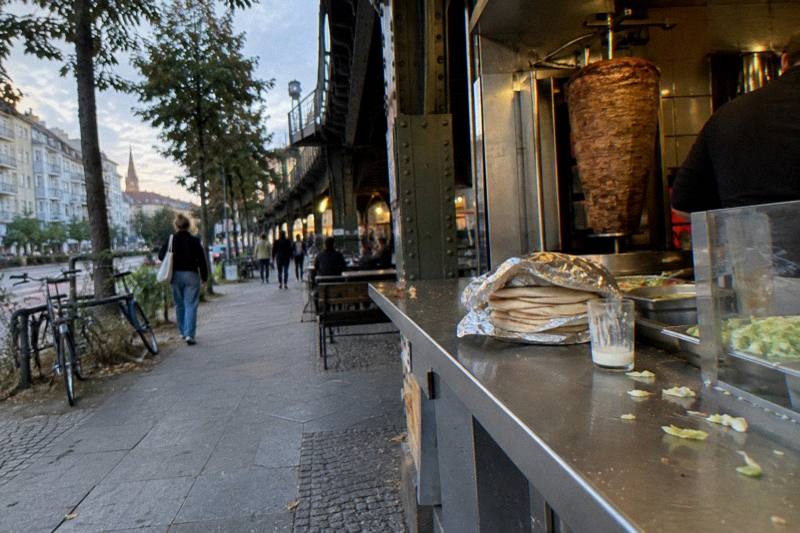
The doner kebab may be the most consequential thing Berlin has ever put between two pieces of bread. Turn any corner in Kreuzberg, Neukölln or Mitte and there is a spit turning somewhere, meat stacked in fat brown layers, a man with a long knife shaving the crisp edges into a tray. Locals argue about it the way other cities argue about pizza. Tourists discover within a day of landing that it is the cheapest good meal in town, then spend the rest of the trip working out which stand deserves a second visit.
This guide is the full briefing: what actually goes into a Berlin doner, where the sandwich form came from, how to order without holding up the line, what halal means at the counter, and how the bookable doner walks compare on price and time. The history is genuinely contested, so it is treated with care. The practical parts are not: bread choice is a real decision, sauce choice is a real decision, and the difference between a forgettable doner and a great one is usually visible from the street before you order. If you would rather taste your way through the contested origin story with a guide leading the way, the guided doner walk explainer covers what the stops involve and which route suits a tighter budget.
What Is A Berlin Doner Kebab?
A Berlin doner kebab is stacked, seasoned meat cooked on a vertical rotating spit, shaved to order and served in bread with salad, vegetables and sauce, and the Berlin version specifically means the sandwich form rather than the plated Turkish original. The three structural decisions are the bread, the meat and the sauce, and Berlin counters offer real choices on all three, which is why two doners from two stands can taste like entirely different meals.
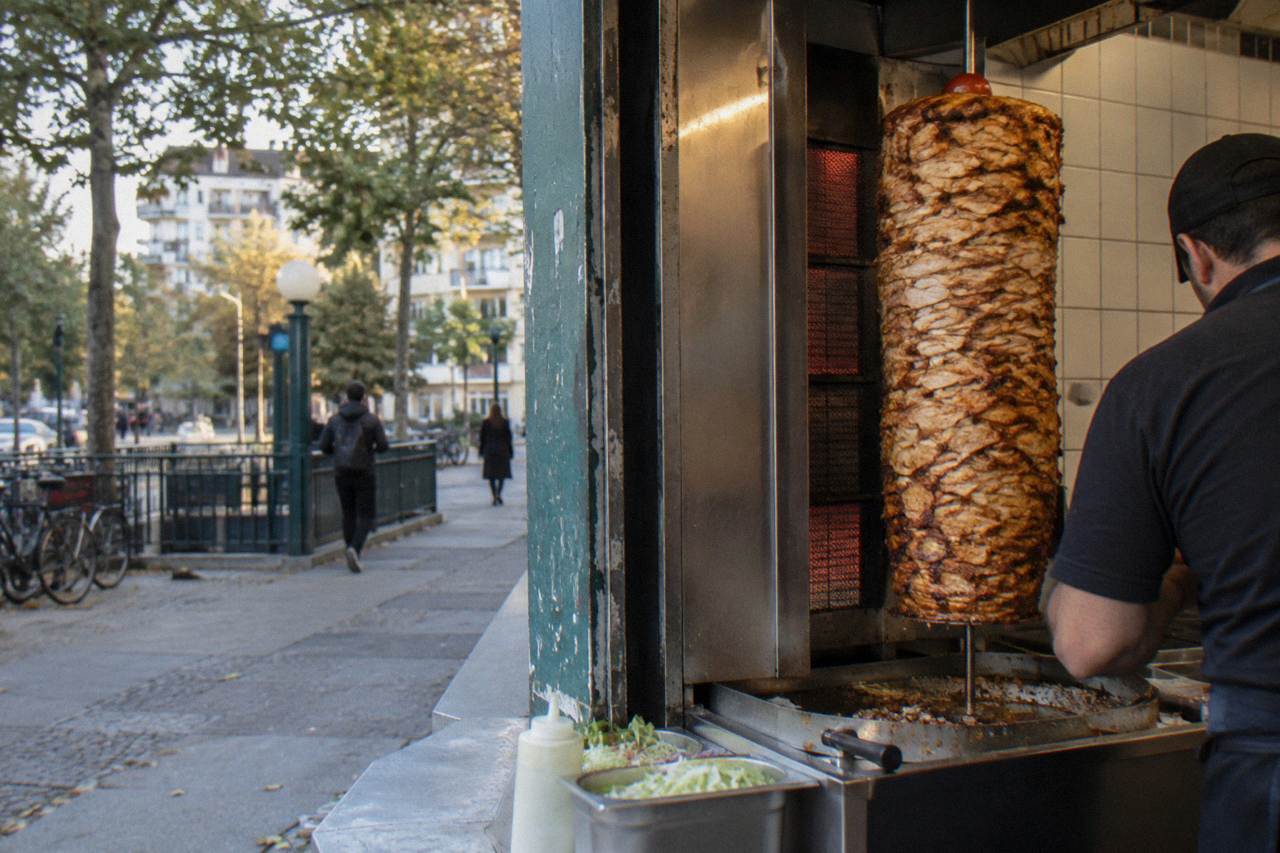
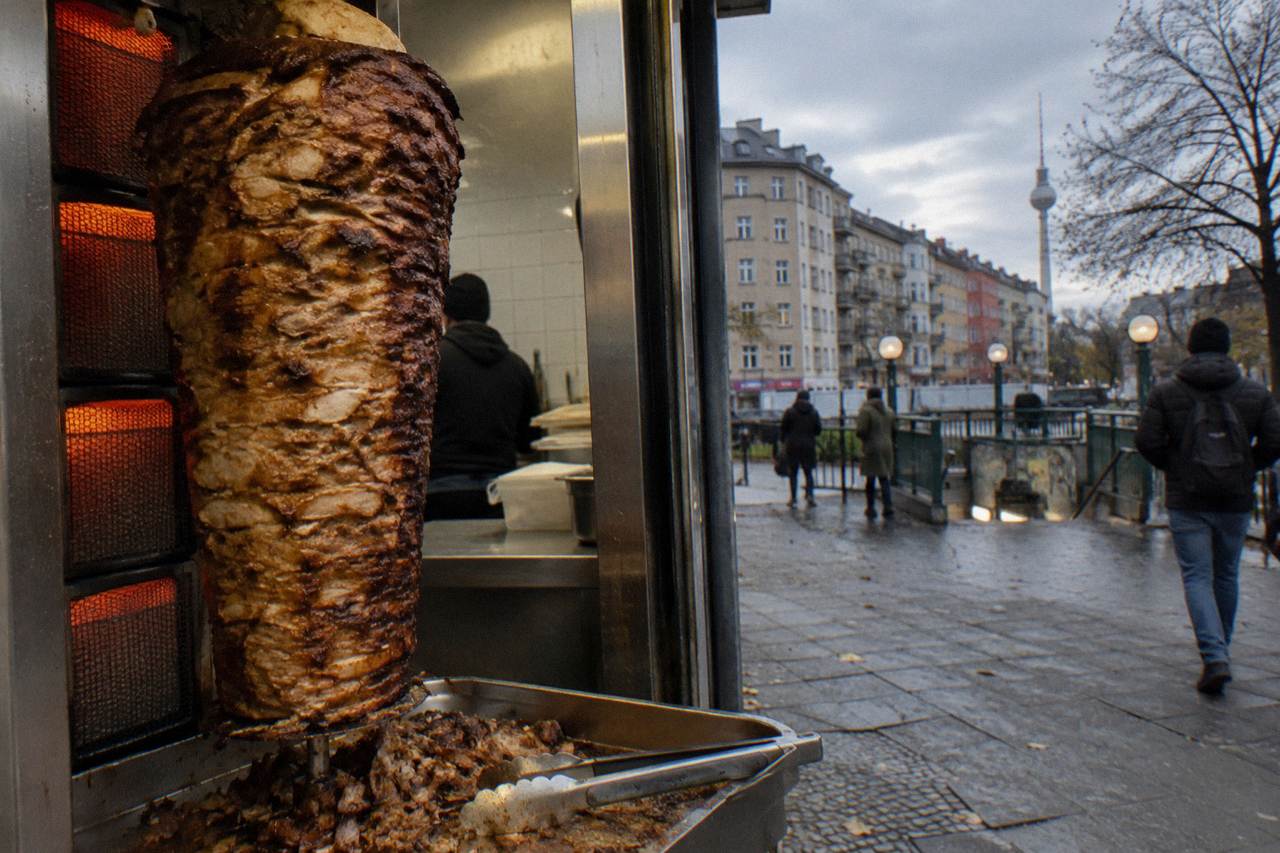
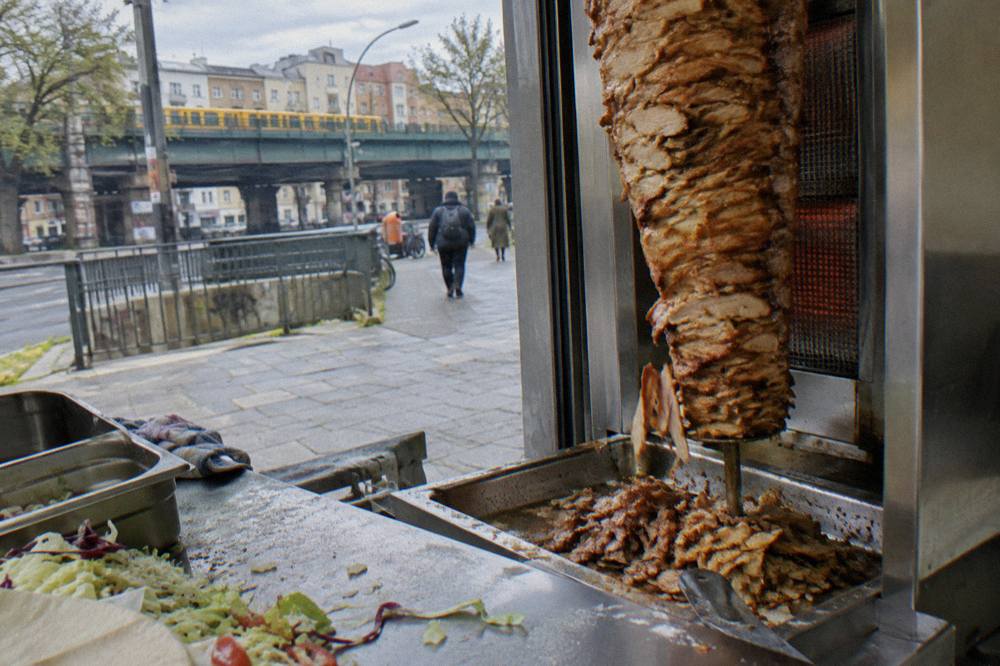
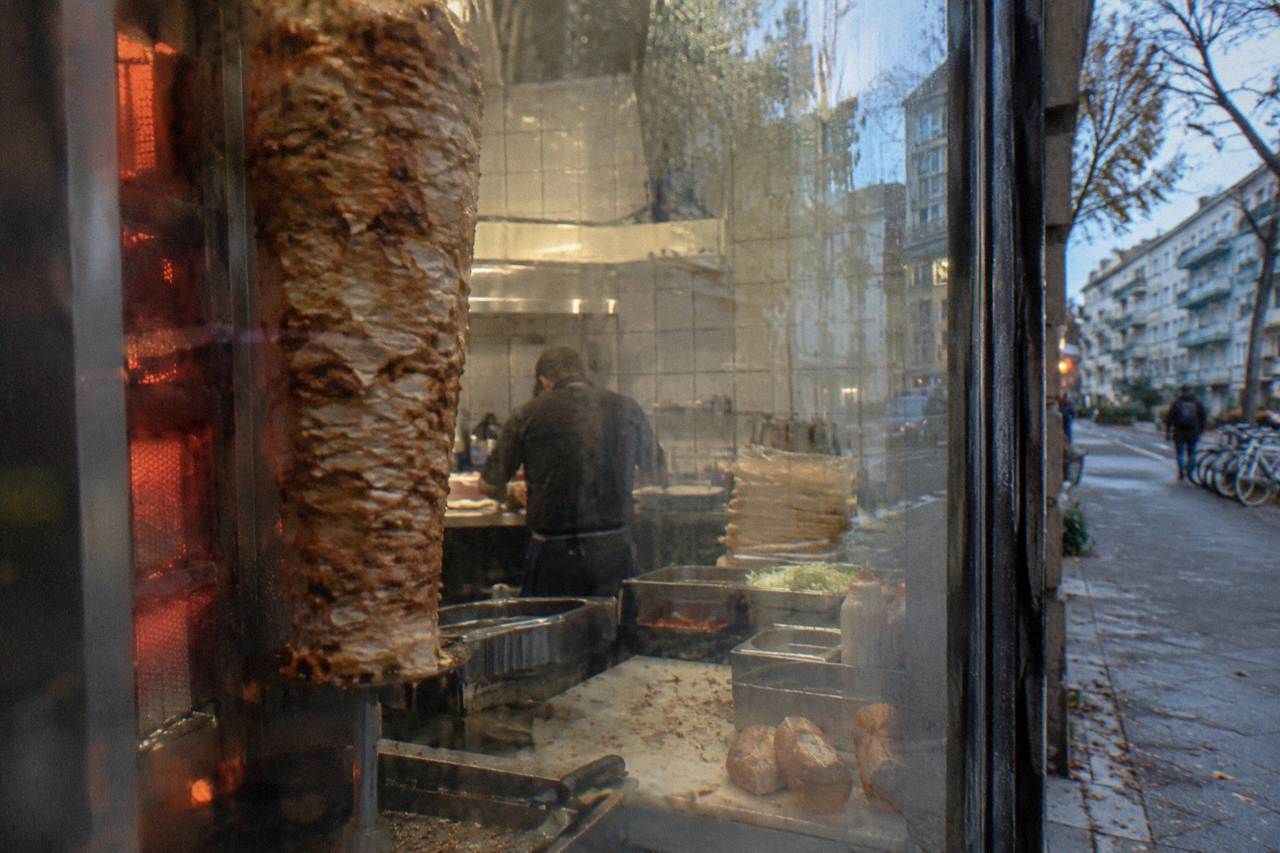
Start with the meat. The classic is a mix of veal and beef, stacked in layers with fat between them so the outside crisps while the inside stays juicy as the spit turns. Chicken doner, whiter and leaner, arrived later and now holds its own at many stands, and some places run both spits side by side. Lamb exists, mixed lamb and beef exists, and in recent years a handful of vegan spits, usually seitan or soy based, have appeared in the more central neighborhoods. Whatever the protein, the technique is the same: the outer layer browns, the knife shaves it off in thin strips, and the mass keeps turning so nothing dries out.
Then the bread, which matters more than most visitors expect. The three standard carriers are:
| Bread | What it is | Best for |
|---|---|---|
| Durum | Rolled flatbread, wrapped tight like a cylinder | Eating while walking, sauce in every bite |
| Doner in bread (Fladenbrot) | Round or oval flat loaf, split and stuffed | The classic form, most filling |
| Box (Durum Box or Doner Box) | Meat and salad served in a tray or box, no bread | Low-carb and fork eating, sharing |
| Meat type | Character | Notes |
|---|---|---|
| Veal and beef mix | The traditional doner, rich and crisp-edged | The benchmark most stands are judged against |
| Chicken | Leaner, milder, lighter color | Common everywhere, often the cheaper spit |
| Vegan spit | Plant protein, usually seitan or soy based | Concentrated in central, younger neighborhoods |
Finally the sauce, and this is where ordering culture lives. The default pairing is garlic yogurt sauce with red hot sauce on top, but kräuter (herb), cocktail and curry sauces all circulate. Ask for "scharf" and you get heat; ask for "alles" and you get the full salad range, usually lettuce, tomato, onion, cabbage, cucumber and sometimes pickled peppers. Every element above the bread line is negotiable, which is precisely the point.
Where Did The Doner Sandwich Come From?
The doner kebab itself, meat cooked on a vertical spit, is centuries-old Turkish cooking, but the doner as a handheld sandwich in flatbread is widely credited to Turkish guest workers in West Berlin in the early 1970s, and that credit is exactly as firm as the phrase suggests: no single inventor can be stated as fact. Several men have claimed it, several names circulate in the press, and the honest version of the story stops at "widely credited".
What is not contested is why it happened. Turkish workers arrived in West Berlin through the guest worker agreements of the postwar decades, opened restaurants to feed their own community, and faced a practical problem: the plated doner their customers knew from home was slow, sit-down food, and Berlin lunch crowds wanted something to eat standing up or on the move. Putting the shaved meat into bread with salad and a sauce turned a restaurant dish into street food, and the form spread from Kreuzberg outward until it conquered Germany and then a good part of Europe.
The geography still shows it. Kreuzberg, bordered by the Wall in those years, became the heartland, and the stretch of streets around Kottbusser Tor and down through Neukölln still carries the densest concentration of kebab shops in the city. The Kreuzberg food walk on this site covers that ground in detail, and the Little Istanbul guide explains how the Turkish commercial quarter took shape around Maybachufer and Karl-Marx-Strasse. If you want to eat the history rather than read it, walking those two neighborhoods with a doner in hand is the fastest education available.
One useful distinction for your trip: Turkish doner culture and German doner culture are the same tree with different branches. In Turkey the vertical spit tradition is old and the sandwich is one serving style among several. In Berlin the sandwich became the dominant form, German tastes pushed the bread and the sauces in their own direction, and stands began competing on size, crispness and speed. The argument over whose doner is better is enjoyable and unresolvable, and the comparison piece on German versus Turkish doner makes the case for both sides.
How Do You Order A Doner In Berlin Without Holding Up The Line?
Order by naming the meat, the bread and the sauce in one sentence, pay, and step aside: a standard order is something like "one chicken durum, garlic sauce, scharf", and knowing this pattern is the entire etiquette. Berlin counters move fast, staff often serve three customers at once, and the locals behind you are assessing your order the way a queue anywhere assesses hesitation.
The vocabulary you need is small. "Mit allem" means everything, salad included. "Ohne Zwiebeln" means no onions. "Scharf" means hot sauce, "nicht scharf" means none, and "extra Fleisch" gets you more meat for a small surcharge. "Zum hier essen" means eating in, "zum mitnehmen" means takeaway, and some shops have a small seating area where the eat-in portion lands on a plate with a fork. If your German runs out, English works at nearly every stand in the central districts, and pointing at the spit with a hopeful expression works at all of them.
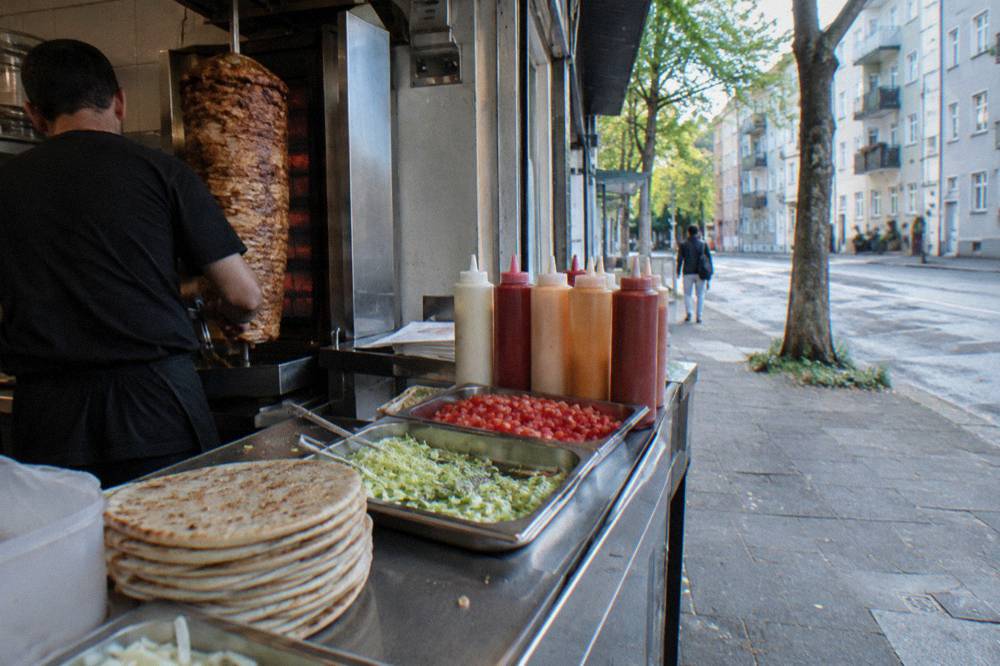
A few unwritten rules earn you goodwill. Decide before you reach the counter rather than at it. Do not ask for a taste from the spit; this is not a deli. Cash was long the norm at kebab stands and many still prefer it, though card terminals have spread through the central neighborhoods, so have coins on you at the more old-school places. Eat a durum from the paper wrap, working downward, and eat a stuffed flatbread over the wrapper, because the sauce goes where it wants. And if the stand has a queue stretching down the block, that queue is information: Berliners queue for a reason.
The most famous single example of queue-as-information is Mustafa's Gemüse Kebap on Mehringdamm, a stand repeatedly reported on in the press for the long line that forms daily outside it. Its doner with grilled vegetables has become one of the city's defining cheap-eats stories, and the dedicated Mustafa's guide on this site weighs the wait honestly. No queue length, price or opening hours are printed here because they shift constantly, but the stand's fame is real and the line is part of the experience. Bring patience and eat elsewhere first if you are starving.
If reading all this makes you hungry to try several stands in one afternoon, a guided walk does the route-planning for you, and three of the options here fit a doner-focused trip especially well. The comparison a few sections down puts their numbers side by side.
Is Doner In Berlin Halal?
Halal status varies from stand to stand, and some shops serve non-halal meat or add alcohol-based items, so anyone with a strict requirement should ask directly at the counter, where staff answer the question many times a day and answer it plainly.
The background helps. Pork never enters a traditional doner spit, which removes the most common concern on its own. The exceptions tend to be stands that have branched into German fast food hybrids, shops selling a wider grill menu alongside the spit, or newer chains courting a broad audience with items like bacon-topped sides. The vegan spits mentioned earlier are a separate lane again, plant based by definition.
The practical advice is to ask "ist das Fleisch halal?" before ordering. Staff are used to the question from Muslim customers and from visitors alike, and a direct answer costs nothing. Travelers with broader dietary needs, vegetarian, vegan or gluten free, will find a fuller briefing in the site's dietary requirements guide, which covers how Berlin's street kitchens handle each of them and where the reliable options cluster. For halal specifically, the doner counter is one of the easiest places in the city to eat confidently.
A short walk can also short-circuit the guesswork. The hidden flavors of Kreuzberg and Neukölln walk moves through Kreuzberg and Neukölln with a hidden local döner, currywurst and künefe among the stops. It runs about 3 hours from $118 per person, though with only 9 reviews so far it is a young option without an established star rating; read the booking page's description of the stops before committing.
If the halal question and the history question both matter to you, the doner tour is the natural next step, since a guide who knows the stands also knows how they source their meat.
For a faster, cheaper taste of Berlin's street food culture, the KERB food hall experience from $34 is a self-paced food hall visit with a 20 EUR food voucher and two drinks, the lightest commitment on the site. It carries just 12 reviews so far, too few for any star claim, so go in expecting an easy introduction rather than a deep dive.
How Much Does A Doner Tour In Berlin Cost?
The dedicated doner tour, the Berlin: Döner Kebab Tour and Sightseeing, runs about 3 hours from $51 per person and is rated 4.9 across 57 reviews, and around it the doner-adjacent options on this site run from $34 for a food hall stop to $118 for a three-hour small-group neighborhood walk, so a guided doner experience in Berlin sits comfortably below the price of a full evening culinary tour.

The value case is simple arithmetic. A single doner is one of the cheapest meals in the city, so the argument for a tour is never savings on the food itself; it is the stops you would never find, the history attached to them, and the sightseeing folded into the walk. The doner tour above pairs gourmet kebab stops with historical sites, which is why doner researchers are such a natural fit for it: the page you are reading and the tour cover the same streets. Bookings, terms and meeting points are shown on the booking page before you pay.
| Tour | Duration | Price (per person) | Rating and reviews |
|---|---|---|---|
| Berlin: Döner Kebab Tour and Sightseeing | ~3 hours | from $51 | 4.9, 57 reviews |
| Hidden Flavors of Kreuzberg and Neukölln | ~3 hours | from $118 | 9 reviews, no star claim |
| KERB Food Hall street food experience | short stop format | from $34 | 12 reviews, no star claim |
| No Diet Club Street Food Walk | ~3 hours | from $75 | 4.8, 403 reviews |
Doner And Street Food Tours In Berlin: Price Per Person
Starting prices for guided tours listed on this page
Two of those four deserve a second look depending on your priorities. The guided street food tour at 4.8 across 403 reviews is the most reviewed of the group by a wide margin, a genuine track record rather than a handful of early ratings, and it covers street food broadly rather than doner narrowly. The doner tour itself is the specialist choice, the only one built around the sandwich this page is about. Between them, the doner kebab history guide on this site lays out the historical route those walks follow.
Getting to the doner heartland is cheap. A single BVG ticket for zones AB costs 4,00 EUR and is valid for 120 minutes including changes, per BVG's single-ticket price table, so the trip out to Kreuzberg or Neukölln costs less than a sauce upgrade. If your stay is longer, the Deutschlandticket at 63 EUR per month covers regional transport citywide, though it rises to 66,80 EUR in January 2027.
Which Doner Stands And Walks Should You Actually Book?
For a first visit, one guided walk plus independent stand visits is the strongest combination: book the 3-hour doner tour from $51 to learn the sandwich and its streets, then return to the stands it introduced, with Mustafa's on Mehringdamm and the Kottbusser Tor strip as your independent targets, and add a market morning such as Tuesday or Friday at Maybachufer when the Turkish traders are out in force.
The reasoning behind that stack is time. Three hours with a guide buys you context, three or four calibrated tastings and a mental map; every doner you buy afterward benefits from the calibration. Then the independent half of the trip takes over. The best doner stands roundup names the famous addresses and what to order at each, and the ordering conventions are the ones set out in the sections above.

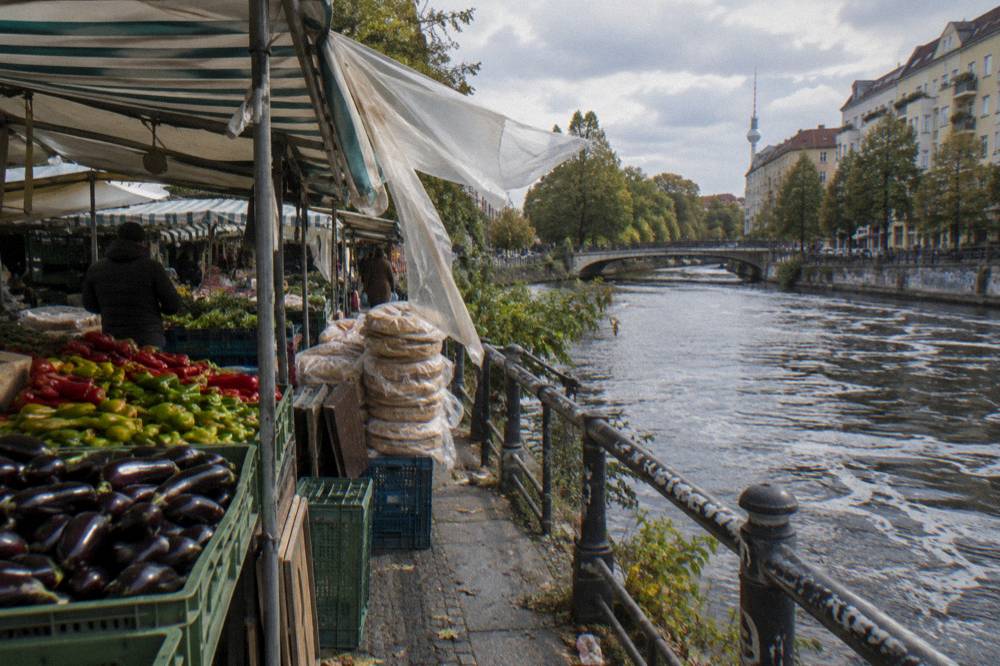
Market days are the quiet upgrade. The Turkish market on Maybachufer runs Tuesdays and Fridays from 11:00 to 18:30, and those midweek mornings are when the neighborhood's food culture is at its most visible, olives, cheeses, breads and grills all in one stretch of canal. The details are in the Maybachufer market guide. One planning note that catches Sunday visitors: Berlin shops close on Sundays by law, with only limited exceptions, and bakeries that open may close by mid-afternoon; the rules are summarized by the Senatsverwaltung's shop opening hours page. Kebab stands are generally exempt as food sellers, but your bakery breakfast plans may not survive a Sunday morning without checking.
For travelers who want the doner story with the city's heavier history attached, the East Berlin options add a different layer. A private East Berlin food walk from $142.36, rated 4.9 across 256 reviews, threads food (including a döner and a station currywurst) through Friedrichshain's Wall-era streets, and the site's private tour guide explains when that premium pays for itself. Groups, families and repeat visitors tend to get the most from it.
The street food paradise walk is the relaxed alternative: about 3 hours from $75, rated 4.8 across 403 reviews, with a generous tasting pace that makes it a meal rather than a snack tour.
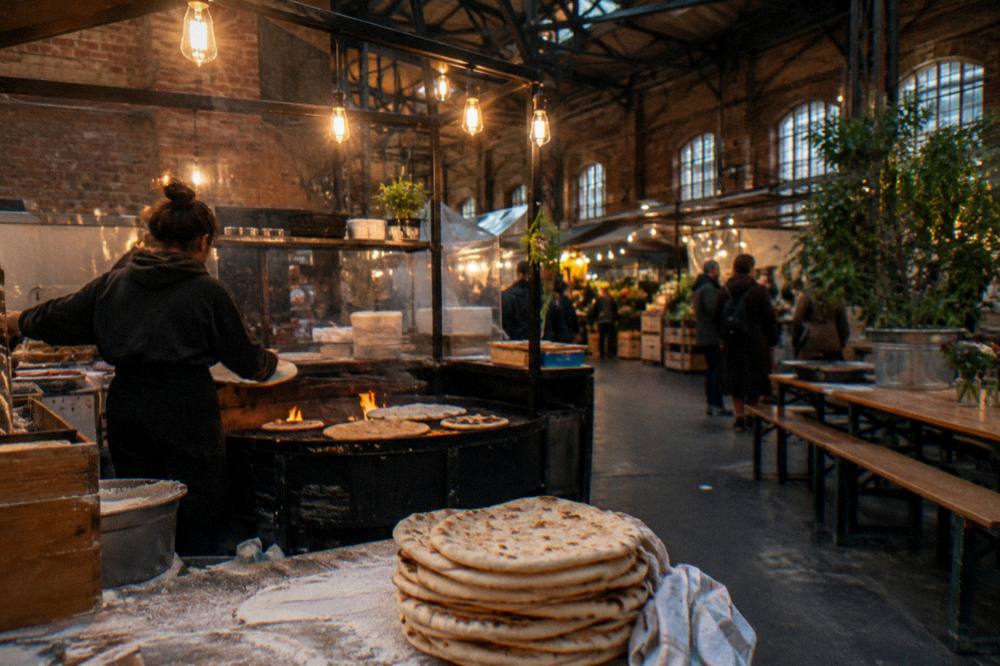
One timing note before you plan the week. Street Food Thursday at Markthalle Neun, the granddaddy of Berlin's street food events, runs every Thursday from 17:00 to 22:00, with 5, 19 and 26 November 2026 listed on the hall's official market page. It is not a doner event, but it is the single best weekly snapshot of the city's street kitchen scene, and Thursday visitors can pair it with a daytime doner circuit in Kreuzberg a few streets away.
Common Questions About Doner Kebab In Berlin
What Is A Berlin Doner Kebab?
Shaved rotisserie meat served in bread with salad and sauce, in the sandwich form that Turkish guest workers in Berlin are widely credited with inventing in the early 1970s. The Berlin version specifically means bread, typically durum flatbread or a split loaf, rather than the plated Turkish original.
How Do I Order A Doner In Berlin?
Name the meat, the bread and the sauce in one sentence, for example "one chicken durum, garlic sauce, scharf", then pay and step aside. "Mit allem" adds the full salad range. English works at nearly every central stand, but deciding before you reach the counter is the real etiquette.
Is Doner Meat In Berlin Halal?
It depends on the stand, so do not assume either way. Ask "ist das Fleisch halal?" at the counter; staff field the question daily.
Is There A Doner Tour In Berlin?
Yes. The Berlin: Döner Kebab Tour and Sightseeing runs about 3 hours from $51 per person, is rated 4.9 across 57 reviews, and pairs gourmet kebab stops with historical sites. Availability and meeting points are shown on the booking page.
Where Did The Doner Sandwich Come From?
Vertical-spit meat is centuries-old Turkish cooking, but the sandwich form is widely credited to Turkish guest workers in West Berlin in the early 1970s, who adapted the plated dish for eaters on the move. No single inventor can be stated as fact, despite several competing claims.