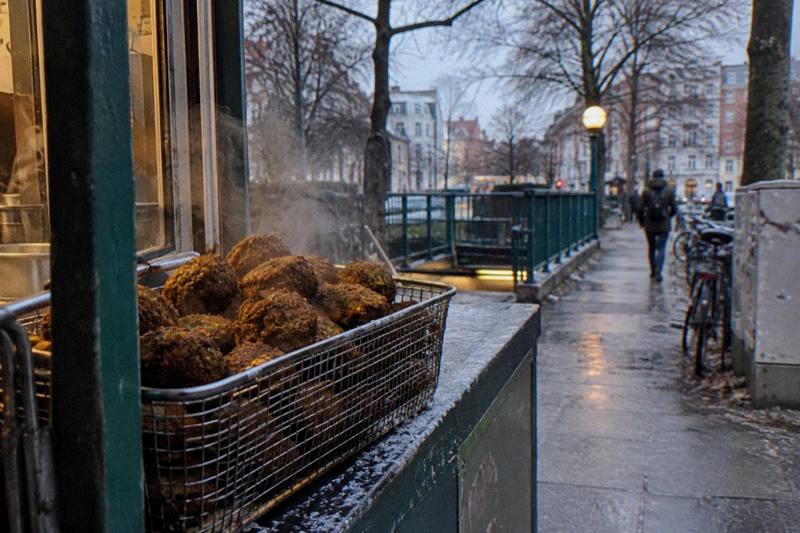
Where Is Little Istanbul In Berlin?
Little Istanbul sits in Kreuzberg along the Landwehr Canal, anchored by the Turkish market at Maybachufer and the kebab shops of Wrangelstrasse and Oranienstrasse. Here is where it is, what to eat and how to tour it.
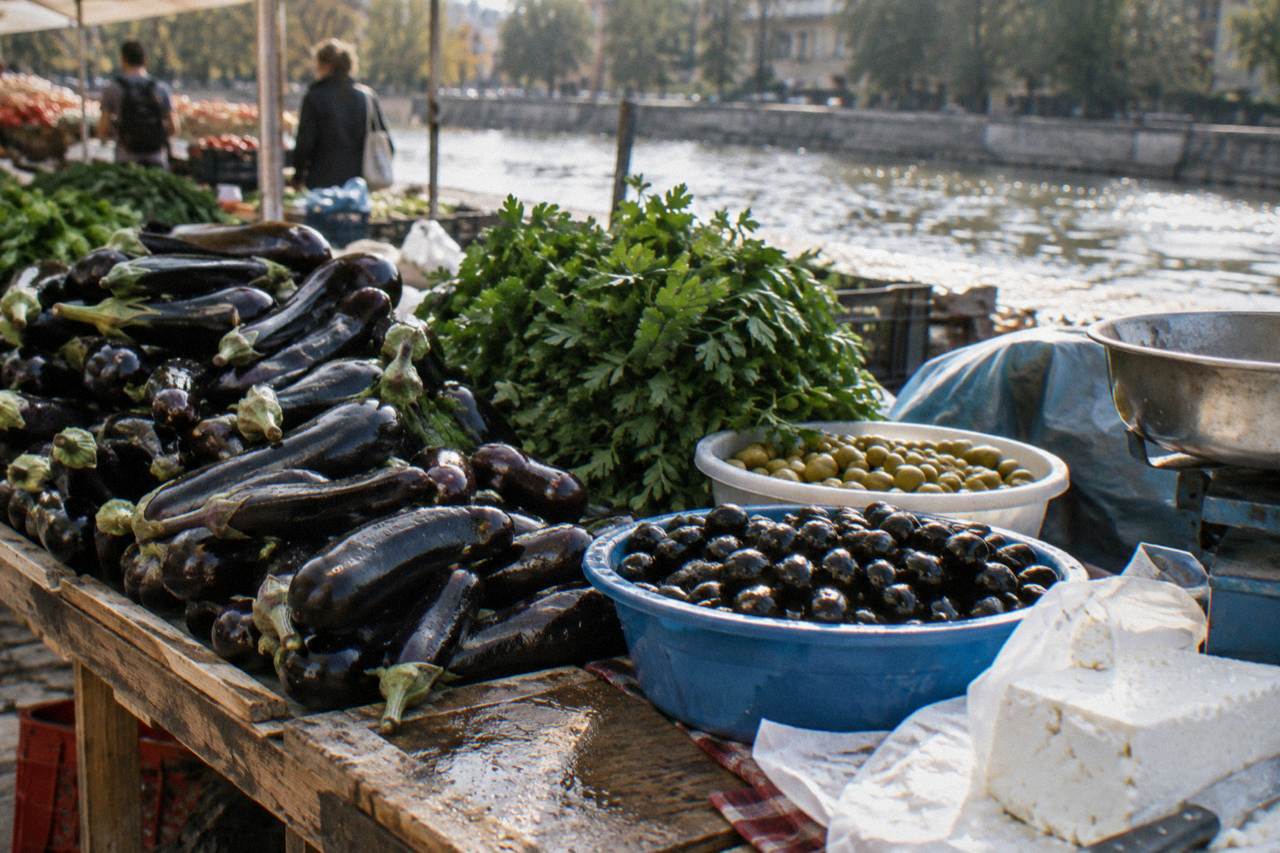
Little Istanbul is the informal name for the Turkish quarter of Kreuzberg, centered on Maybachufer on the south bank of the Landwehr Canal and the blocks around Kottbusser Tor, Wrangelstrasse and Oranienstrasse. There is no official boundary and no sign anywhere. Locals mean the market, the grocers and the kebab shops within about ten minutes' walk of the canal, a district shaped by Turkish migration over more than half a century of family businesses, tea houses and grill kitchens.
The name does the neighborhood a slight injustice, because the area is not a theme-park version of anywhere. It is a working district where people buy vegetables, bread and lunch, and where the Turkish community that arrived as guest workers built groceries, tea houses, bakeries and grill kitchens that now anchor the district. For a food traveler the draw is obvious: this is the place where the doner kebab as a sandwich is widely credited with been invented.
Which Streets And Markets Make Up Little Istanbul?
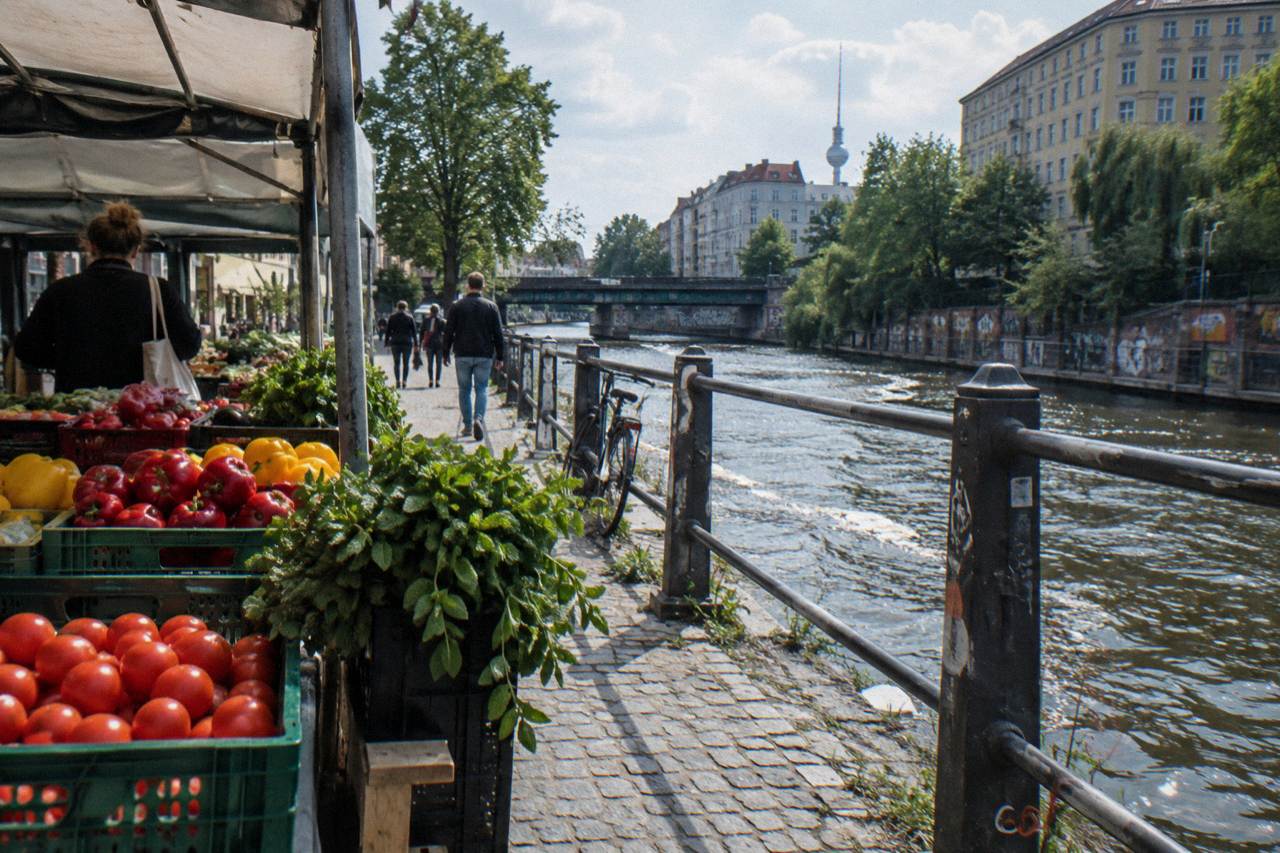
Little Istanbul's core runs along Maybachufer between Kottbusser Damm and Boppstrasse, then spills into Wrangelstrasse, Oranienstrasse, Skalitzer Strasse, and the streets around Kottbusser Tor. Kottbusser Tor, Oranienstrasse and Wrangelstrasse lie in Kreuzberg on the north side of the canal, while the Maybachufer market stalls stand on the Neukölln bank, so the neighborhood straddles the Kreuzberg/Neukölln border. Three anchors define it. The first is the canal-side Turkish market, the Tuesday and Friday market at Maybachufer. The second is the Kottbusser Tor area, a transport hub ringed with bakeries and grill stands. The third is the Wrangelkiez, the low, densely built quarter near the Spree whose shopfronts read like a district of Istanbul. Everything sits within comfortable walking distance of everything else.
Getting there is simple. Kottbusser Tor and Görlitzer Bahnhof stations sit on the U1 and U3 viaduct lines, and a single BVG AB ticket, 4,00 EUR and valid for 120 minutes, covers the ride from anywhere in the central zone, per BVG's single-ticket price table. From Alexanderplatz the trip is about fifteen minutes. Most visitors arrive by U-Bahn and leave on foot along the canal, which is the pleasant way to do it.
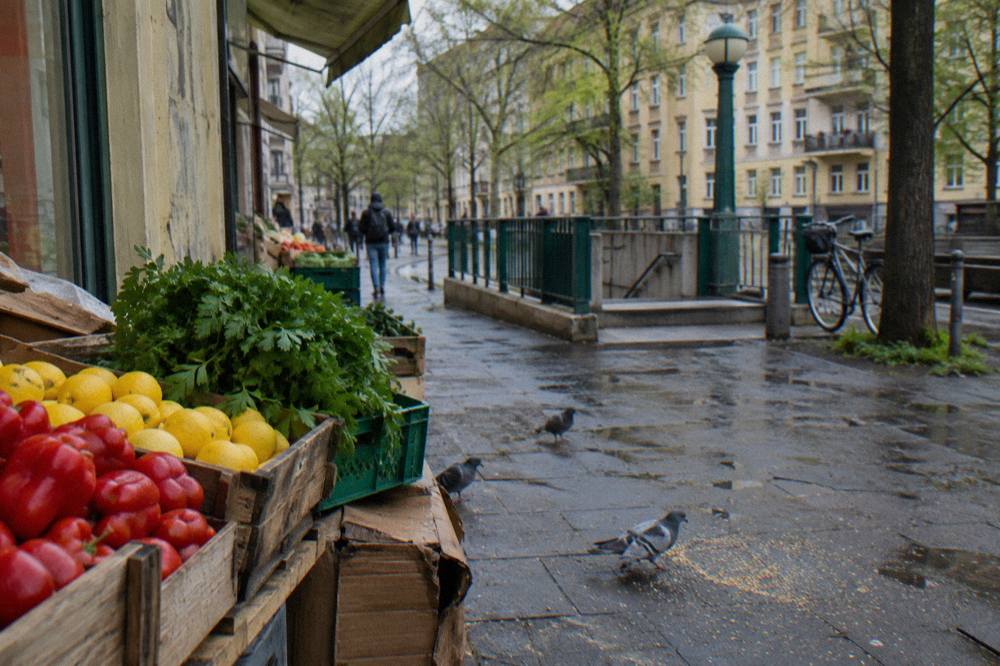
A rough walking frame, if you want to see the whole patch in one loop: start at Kottbusser Tor for the bakeries and grill stands, browse Oranienstrasse, then follow the canal to the Maybachufer market bank. Along the way you pass, by conservative count, several dozen places to eat. Give it a morning, more if the market is on.
What Should You Eat Around Little Istanbul?
Eat doner kebab, lahmacun, pide, gozleme, Turkish borek and baklava, plus grilled vegetables and the market's olives, cheeses and simit, all within a few blocks of Maybachufer; the district covers the full range from street-corner grills to sit-down Turkish restaurants, so a mixed eating day is easy to build. This is not a one-dish neighborhood. Doner is the headline, but the borek bakeries selling flaky filled pastries and the flatbread griddles turning out gozleme are just as much the local daily food, and the market stalls sell produce and mezze you can assemble into a canal-side picnic without a restaurant at all.
The wider Kreuzberg eating scene reaches well beyond Turkish kitchens, and the district's markets and halls are covered in the guide to Berlin food markets and weekly markets. If you are building a food-first day around this neighborhood, the practical split is simple: street snacks and grills in the Wrangelkiez, market shopping on Maybachufer on a Tuesday or Friday, and a sit-down meal wherever the smell from the door wins. What things cost depends entirely on where you stop, and dish prices in this area are not printed here because they change often and vary stall to stall.
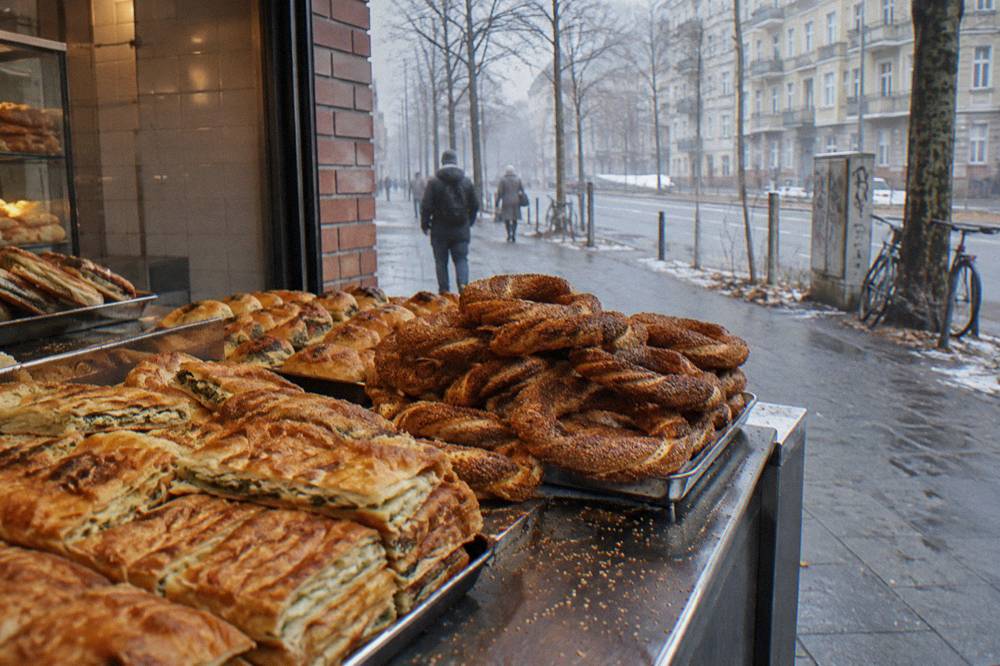
For depth on the dishes themselves, the companion pieces help: Turkish food in Berlin, Little Istanbul and beyond covers the cuisine dish by dish, and the doner kebab guide to bread, meat and sauces covers how to order without sounding like a tourist. One famous stop deserves a name here: Mustafa's Gemüse Kebap on Mehringdamm, technically just outside Kreuzberg's Turkish core, is a vegetable kebab stand whose long queue is reported regularly in the press. The queue is part of the experience; nobody promises you a time estimate.
A guided option does the deciding for you. The Berlin doner tour with historical sights runs about three hours from $51 per person, includes a gourmet doner stop among other food stops, and is rated 4.9 across 57 reviews. It pairs the eating with the migration story, which is the part most visitors miss when they wander in alone.
How Does The Doner Kebab Story Connect To This Neighborhood?
The doner kebab served in bread as a portable sandwich is widely credited to Turkish guest workers in Berlin in the early 1970s, though no single inventor can be named as a settled fact, and the story belongs to this neighborhood because the guest workers who created it lived and worked in Kreuzberg and Neukölln. Before that, doner meat existed in Turkish cuisine, carved from a vertical spit and served on a plate. The innovation attributed to Berlin was putting it in bread with salad and sauce so that construction workers could eat it standing up, on a break, with one hand.
Kreuzberg in the years when the Wall still stood was the cheap, partly derelict district beside the border where Turkish families settled because rents were low and factory work was close. The food businesses that grew from those blocks, groceries first, then grills and bakeries, turned the quarter into the Little Istanbul nickname people use today. The full origin story, including the competing claims and the Wall-era context, is told in the history of doner kebab in Berlin.
That history is exactly why the doner tour above works as a bookable pairing with this neighborhood: the gourmet doner stop sits inside the same migration story you are walking through. If you would rather range wider than doner, the Hidden Flavors of Kreuzberg and Neukölln walk, about three hours from $118 per person, crosses both halves of the old guest-worker district. It has only 9 reviews so far, too few for a fair star rating, which is worth knowing before you book.
When Is The Best Day To Visit The Turkish Market?
Tuesday and Friday are the market days at Maybachufer, running 11:00 to 18:30; the market sits closed on public holidays, so time a visit around those dates, and the first two hours of any market day are the calmest window for browsing. Treat them as the stated schedule rather than a promise. Arriving early means thinner crowds and first pick of the bread and borek stalls.
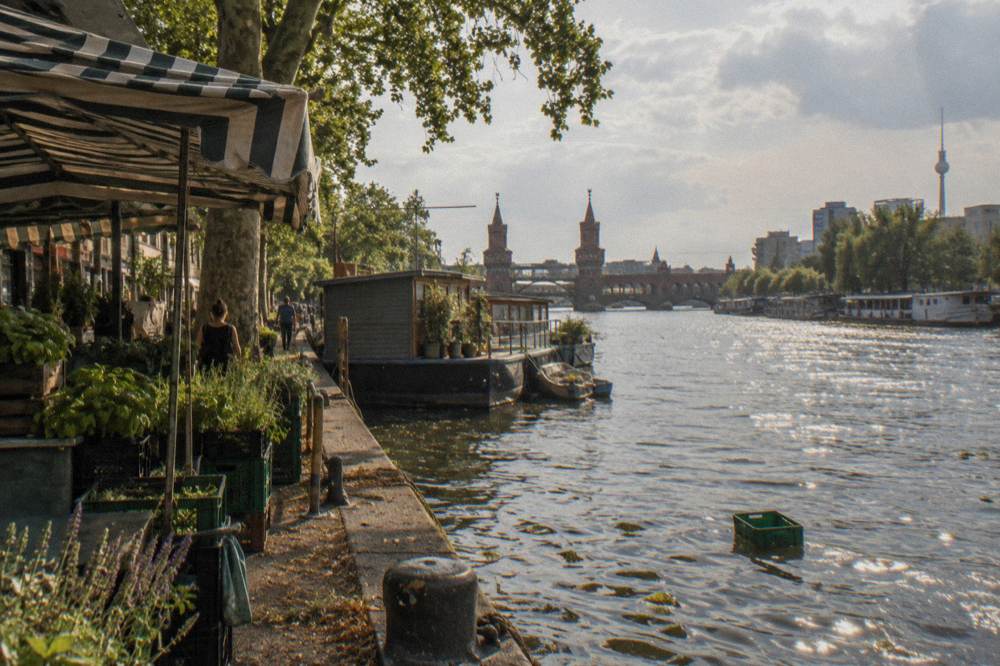
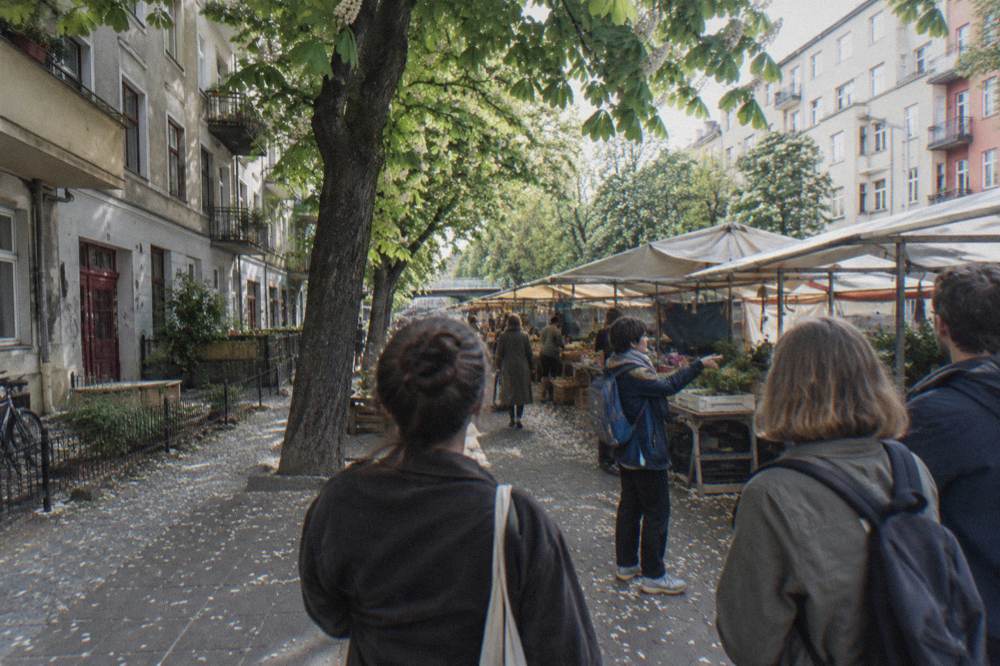
The market itself runs along the canal bank, so the setting is half the point: stalls of peppers, herbs, olives, cheeses and flatbreads on one side, houseboats and plane trees on the other. Vendors sell both Turkish staples and Berlin-grown produce, and the mezze stalls make it a legitimate lunch stop. A dedicated rundown of what to eat there is in the Maybachufer Turkish market guide.
If your visit falls on neither day, Kreuzberg still eats well. A short walk north-east, the Markthalle Neun hall in Eisenbahnstrasse hosts Street Food Thursday, listed every Thursday 17:00 to 22:00, with confirmed dates in November 2026 on the 5th, 19th and 26th. Note that the 12th is not listed. And keep Sundays in mind for the wider neighborhood: under the Berliner Ladenöffnungsgesetz, ordinary shops must close on Sundays, with bakeries and confectioners allowed 07:00 to 16:00, per the Senatsverwaltung's shop opening hours page. The practical version: Saturday market, Sunday bare shelves, Tuesday and Friday the days to aim for.
The November 2026 calendar rewards pairing. Each confirmed Street Food Thursday, the 5th, 19th and 26th, is followed the next morning by a Friday market day at Maybachufer, so an evening at Markthalle Neun, a short walk north-east of the stalls, can roll into a Friday market morning, assuming no public holiday closes the stalls.
Transit pricing is stable for this trip. A BVG AB single costs 4,00 EUR and stays at that price through the VBB's January 2027 fare round, while other ticket types take the average 3.72 percent rise, so visitors buying singles can budget the same fare on either side of that round.
For an upscale bookend, CODA in Neukölln, the district next to Little Istanbul, kept its two stars in Michelin's 2026 guide, one marker of how far the area has moved from its guest-worker-era reputation. A lunch of flatbreads, olives and mezze by the canal, then a two-star dinner next door in Neukölln, makes a full-day arc from market stall to fine dining.
Can You Tour Little Istanbul With A Guide?
Yes, several guided food tours walk this exact district, from a roughly three-hour doner and sightseeing tour at $51 per person to group and private walks across Kreuzberg and Neukölln, and a guide adds the migration history that the storefronts alone do not explain, which is the main argument for booking rather than self-guiding. The trade-off is price against depth. The cheapest options lean on street-food quantity, while the costlier ones add narrative, smaller groups or private pacing. The table below compares the tours that actually route through this neighborhood.
| Tour | Length | Rating | Price |
|---|---|---|---|
| Berlin doner tour and sightseeing with gourmet kebab | ~3 hours | 4.9 from 57 reviews | from $51 |
| Kreuzberg Culinary food tour (per group up to 10) | ~3 hours | 4.6 from 831 reviews | from $561 per group |
| Hidden Flavors of Kreuzberg and Neukölln | ~3 hours | 9 reviews, too few for a rating | from $118 |
Two notes on reading that table. The Kreuzberg Culinary price is per group of up to 10 people, not per person, so a full group brings the per-head cost down sharply; the per-group price is printed on the booking page. And the Hidden Flavors walk has nine reviews so far, too few to support a star claim.
The private option deserves a sentence for families and slow walkers. A private tour means one pace, one language and the freedom to linger at a bakery, and the guide to when a private food walk is worth it works through the arithmetic. Group tours in this district run in most weather, since the eating happens indoors at the stops, but the walking between them is open air, so November visitors should plan for the season: the Deutscher Wetterdienst 1991 to 2020 normals put Berlin's November mean at 5.6 C with about 42 mm of rain.
Where Should You Go After Little Istanbul?
Walk south across the canal into Neukölln, or north across the Spree to Mitte, because Little Istanbul sits at the center of Berlin's best eating corridor and the U8 line connects all of it in under twenty minutes, so one well-chosen base serves every district. Neukölln, the area immediately south, is the natural next stop: it shares the same migration history and has picked up the young restaurant scene Kreuzberg priced out. The Neukölln food walk from Maybachufer to Karl-Marx-Strasse maps a full route.
North across the river, Mitte offers the polished end of the scale, and the neighborhood-by-neighborhood overview at Berlin food by district, Mitte, Kreuzberg, Neukölln and Prenzlauer Berg helps you sequence several areas into one trip. Prenzlauer Berg, quieter and brunch-heavy, makes a good morning contrast to a Kreuzberg afternoon. If you would rather plan by appetite than by sightseeing, compare the districts by what you want to eat and build the trip around that.
For a same-day plan, the strongest pairing is the market plus a guided walk: shop Maybachufer on a Tuesday or Friday morning, lunch from a stall or a grill, then let a guide handle the afternoon.
Common Questions About Little Istanbul In Berlin
Where Is Little Istanbul In Berlin?
Little Istanbul is the Turkish quarter of Kreuzberg, centered on Maybachufer along the Landwehr Canal and the surrounding streets of Wrangelstrasse, Oranienstrasse and Kottbusser Tor, south of the river Spree in central Berlin.
Why Is Kreuzberg Called Little Istanbul?
Turkish guest workers who arrived during the postwar recruitment era settled in Kreuzberg because rents were cheap near the Wall, and the groceries, bakeries and grill kitchens they opened gave the district a visibly Turkish character that earned the nickname.
What Days Is The Turkish Market At Maybachufer Open?
The market runs on Tuesdays and Fridays from 11:00 to 18:30, and it closes on public holidays. Friday is generally the busier market day.
Was Doner Kebab Invented In Berlin?
The doner kebab as a bread-based sandwich is widely credited to Turkish guest workers in Berlin in the early 1970s, but no single inventor is a settled historical fact, and the plate version of doner meat long predates it in Turkish cuisine.
How Do You Get To Little Istanbul?
Take the U1 or U3 to Kottbusser Tor or Görlitzer Bahnhof. A BVG AB single ticket costs 4,00 EUR, is valid for 120 minutes, and covers the roughly fifteen-minute ride from Alexanderplatz.
Can You Take A Food Tour Through Little Istanbul?
Yes. Guided options include a roughly three-hour doner and sightseeing tour from $51 per person, rated 4.9 across 57 reviews, plus a group-priced Kreuzberg culinary tour routed through this district.