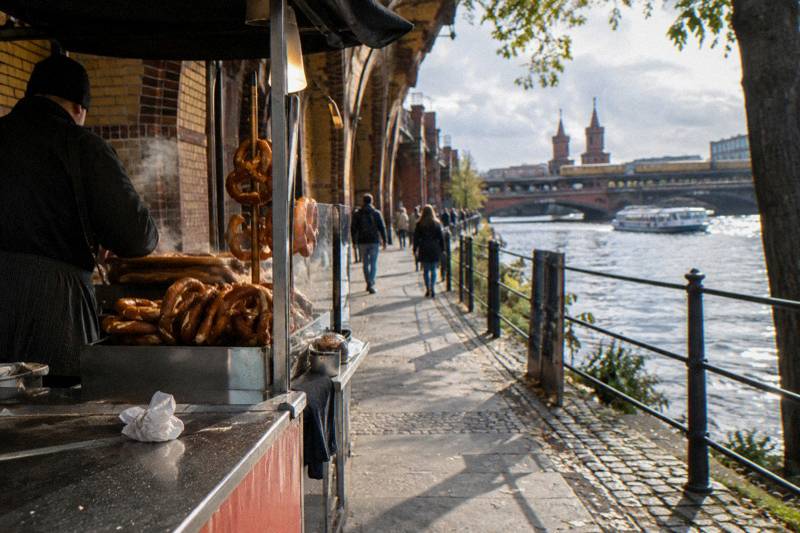
How To Eat Currywurst?
A practical first-timer guide to eating currywurst in Berlin: how to order it, what to eat it with, which stands are famous, and how the dish began.
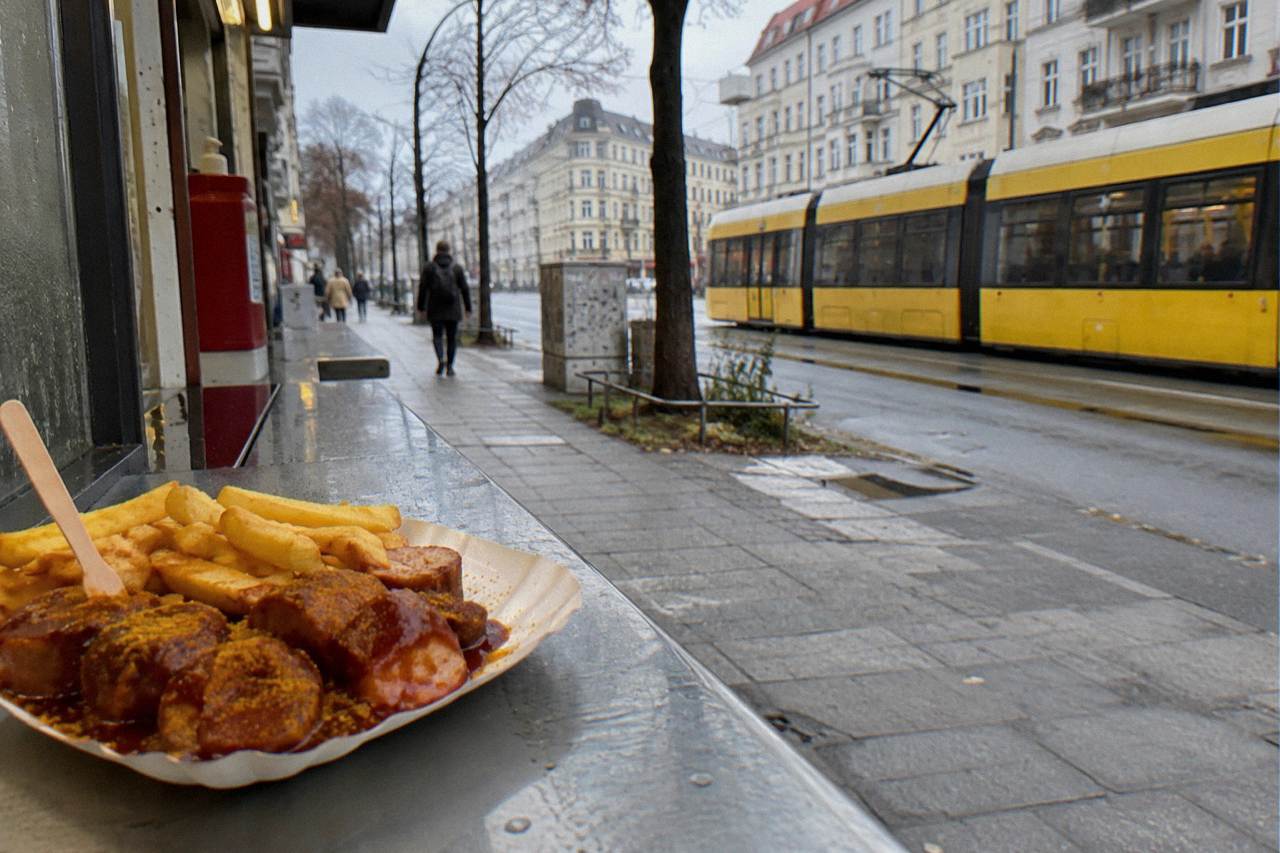
Currywurst arrives sliced into rounds, swimming in warm curry sauce, in a cardboard tray with a small wooden or plastic fork. You eat it standing or at a counter, spearing one piece at a time, mopping up sauce with fries or a roll. The curry powder sits on top of the sauce, so the first bite is often the most fragrant one, and locals treat the whole thing as a fast, cheap, no-ceremony meal rather than a sit-down dish.
The snack is so woven into Berlin identity that it deserves a bit of unpacking: where it came from, how to order it without hesitating, what to drink alongside it, and which stands to seek out. The answers below cover all of that, ending with the street food walks that fit a first visit, in case you would rather taste your way through the city with a guide who knows the counters. It also settles the smaller questions that trip up first timers, such as whether the skin stays on and how currywurst differs from a plain bratwurst or a döner, since all three are sold from the same windows.
You eat currywurst with a two-pronged wooden fork, one sliced round at a time, straight from the tray, using fries or a chunk of roll to wipe the sauce. It is street food, so there is no cutlery etiquette: most people stand at a counter or a window ledge, finish in ten minutes, and order it either with skin or without.
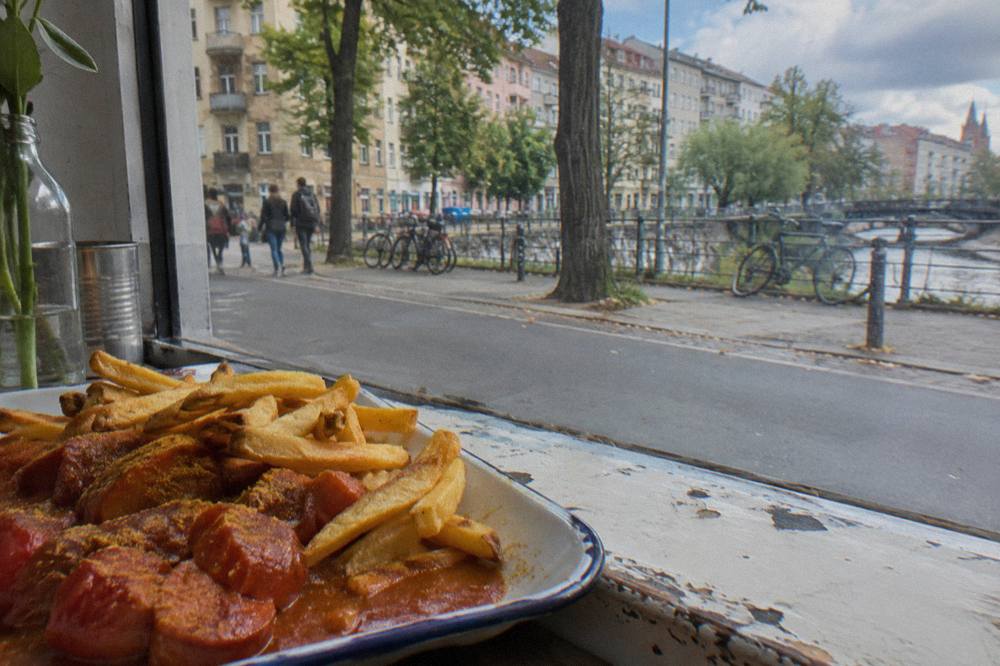
The mechanics are simple. The sausage, a boiled-then-fried bratwurst, comes pre-sliced so nothing needs cutting. The sauce is a lightly spiced tomato ketchup, warmer and less sweet than bottled ketchup, and the curry powder is a dusting over the top rather than a coating. The classic move is to spear a slice, drag it through the pooled sauce at the edge of the tray, then alternate bites with fries. Plenty of Berliners finish the leftover sauce with the fork or the roll, and nobody looks twice either way.
Where you eat it shapes the experience. Imbiss stands, the small sausage kiosks scattered across the city, mostly have standing counters or a few stools. Some have a handful of tables, and in busy pockets of Mitte and Kreuzberg the window ledge of the kiosk itself does service as a table. In winter, the tray does double duty as a hand warmer, which is part of why the dish sells steadily through the cold months. The format is designed for speed and informality: you order at the window, you pay at the window, and you eat within a few steps of it.
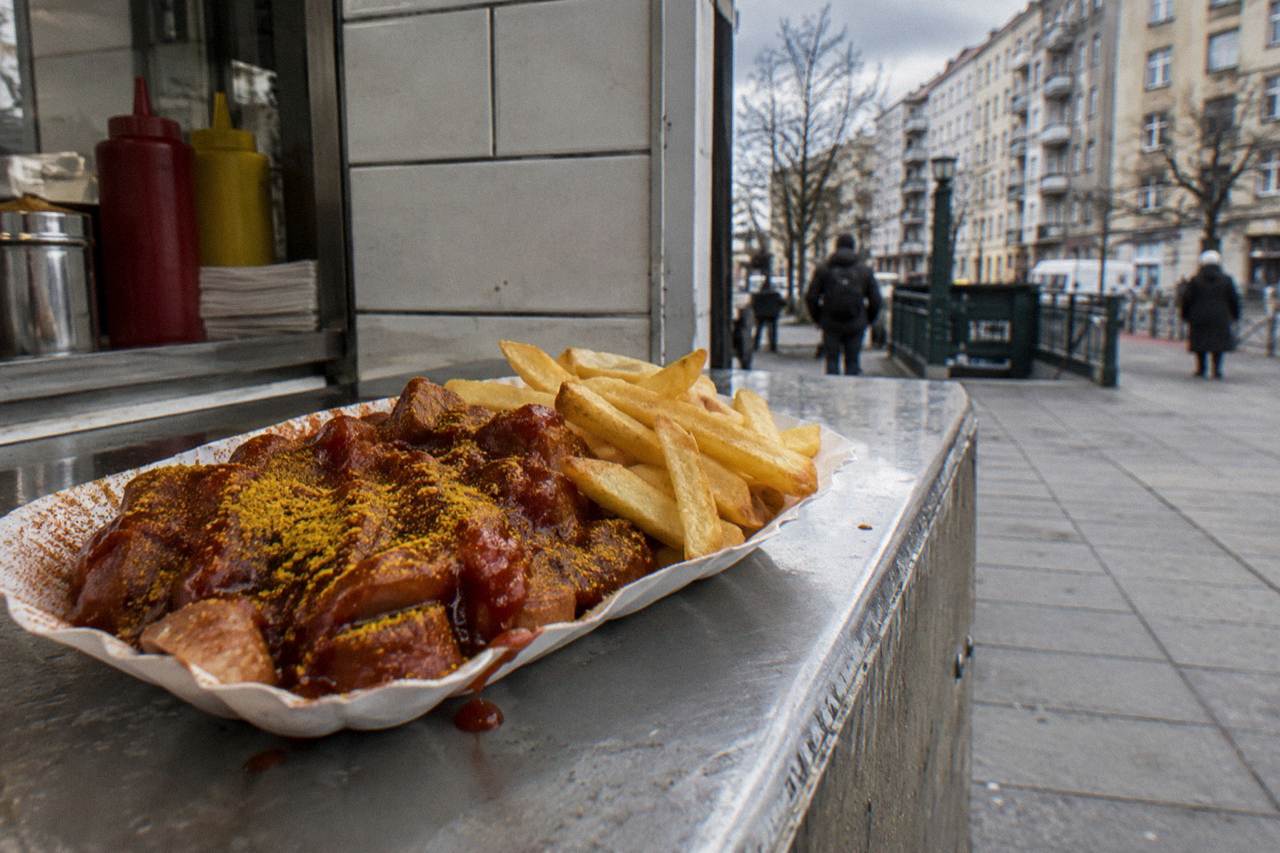
There is one habit worth copying from the regulars. Do not rush the sauce. The powder slowly sinks and mixes as you eat, so the flavor of the last slices is different from the first, softer and more integrated. Locals who grew up with the dish will tell you the tray is not finished until the sauce is gone, and the roll, when you order one, exists precisely for that job. A first-timer who leaves a clean tray has eaten currywurst correctly, whatever else happens.
If you would rather not work out the stands and the ordering yourself on day one, a guided walk does the decoding for you:
Where Did Currywurst Come From In Berlin?
The dish is credited to Herta Heuwer, who is said to have first served the sauce-and-powder combination at a kiosk in Charlottenburg in 1949, using ketchup or a similar sauce obtained from British soldiers and curry powder of her own devising.
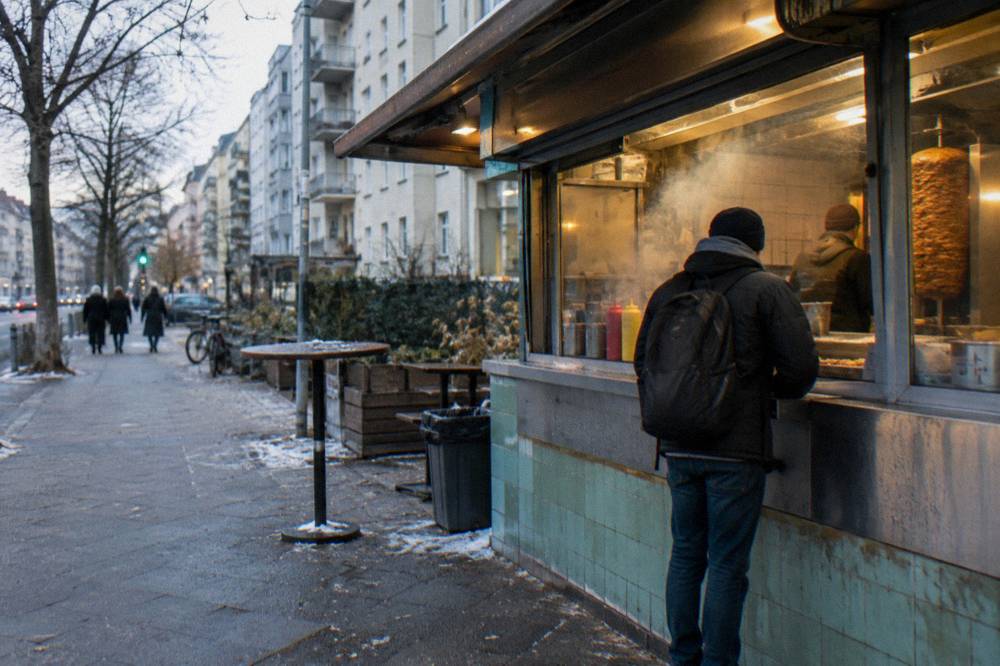
The story goes that Heuwer ran a stand in the ruins of post-war Charlottenburg and mixed a sauce from what she could get, poured it over grilled sausage and dusted it with curry powder. Whether every detail holds, the timing fits the city: spices, ketchup and sausage were all trickling into Berlin through occupation channels, and a cheap hot snack that tasted of somewhere exotic sold itself in a city rebuilding itself on very little. Her kiosk is said to have served the dish for decades, and the Imbiss culture that grew around the idea spread across both halves of the divided city, each side adapting the snack to its own supply chains and tastes.
The dish then split into two schools. In West Berlin, the sausage is typically boiled then fried and can be ordered with or without the casing. In East Berlin, currywurst was often served ohne Darm. Both versions survive, and some stands still advertise which school they belong to. The split is one of the small ways food records the wall: two cities, one snack, two techniques, and to this day Berliners can argue about which half got it right.
For the deeper version of this story, the currywurst history guide traces the Herta Heuwer legend, the East-West divide and the sauce itself in detail.
How Do You Order Currywurst In Berlin?
Most stands let you customize two things: the sausage, with casing or without, and the side, usually fries or a bread roll. Ordering is a single short sentence at the counter, and the standard option, with everything, needs no explanation at all. If you say nothing special, you get a fried sausage in sauce with curry powder.
The useful vocabulary is small and worth knowing before you reach the counter, because the pace at a busy stand is quick. Here are the words that matter:
| German term | What it means |
|---|---|
| Mit Darm | Sausage with the casing, giving a firmer snap when bitten |
| Ohne Darm | Sausage without the casing, softer in texture |
| Pommes | Fries, the most common side |
| Brötchen | A bread roll, the alternative side |
| Scharf | Spicier sauce, where the stand offers it |
| Currywurst mit Pommes | The full standard order: sausage, sauce, powder, fries |
Two habits make ordering painless. First, decide your two choices, casing and side, before you reach the front of the line, since the counter staff will expect a quick answer and the line behind you will expect a quicker one. Second, pay attention to where the sauce is applied: some stands sauce the fries as well when you ask, which is a matter of taste rather than custom, so listen for the question rather than assuming either way.
A first-timer who memorizes one line from the table above, mit Darm or ohne Darm plus a side, can order anywhere in the city without hesitation. The general guide to ordering currywurst well covers the finer points, including regional quirks and the etiquette of the counter, for readers who want the full picture before their first tray.
What Do You Eat And Drink With Currywurst?
The default pairing is fries with mayonnaise or the curry sauce itself, plus a bread roll for mop-up duty, and the classic drink is a cold pilsner beer or a bottle of fizz water, though a small sausage stand will sell you whatever is in the fridge. The combination is engineered around the sauce.
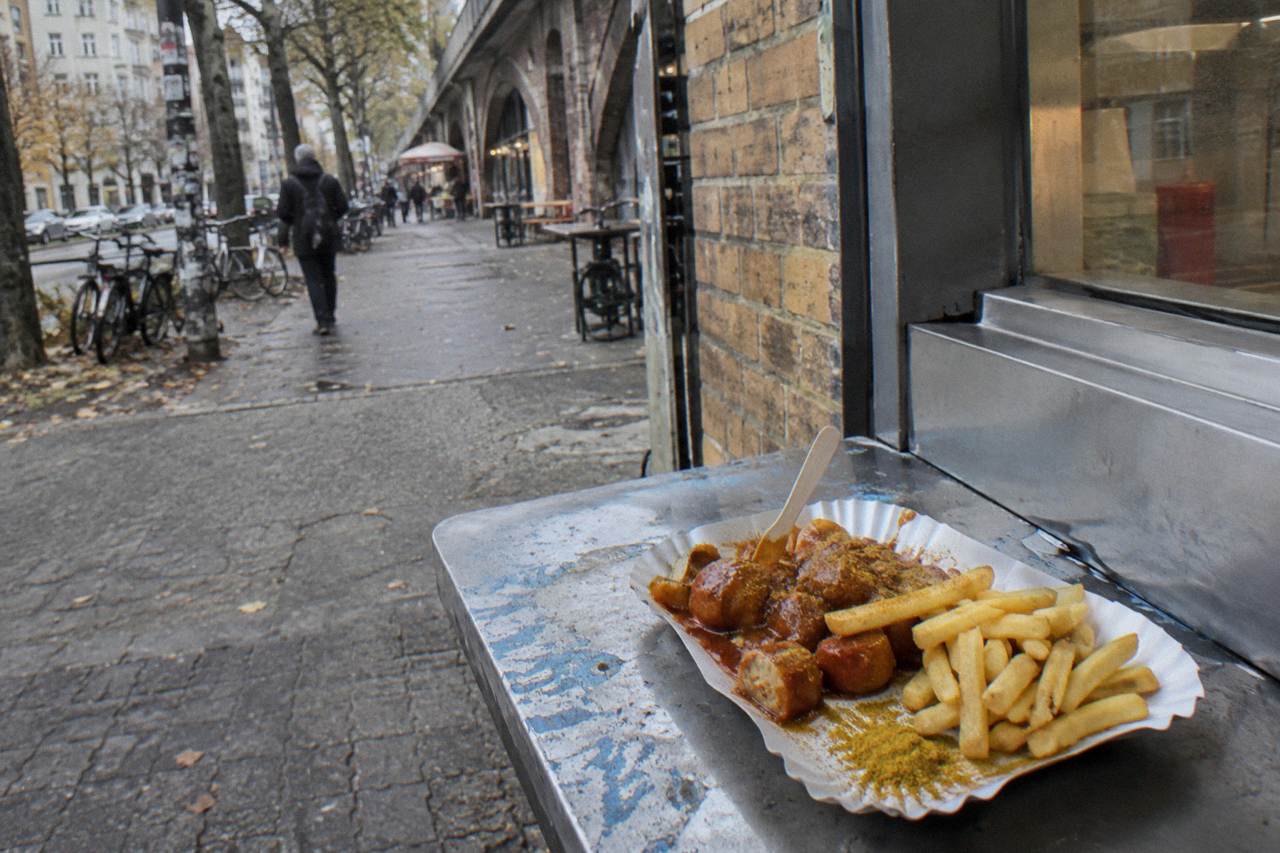
Fries do most of the work. They are usually served in a paper cone or on the tray beside the sausage, and the choice of mayonnaise, sauce or both is yours. The roll, when you order one, exists almost entirely to clean the tray at the end, which tells you how seriously Berliners take the sauce: it is the point of the dish, and the sausage is arguably just the vehicle. A squirt of mayo on the fries is standard enough that stands keep it in pump bottles beside the ketchup.
Beer is the traditional counter companion, a light pilsner style that cuts through the sweet-spiced sauce. Soft drinks are equally normal, and in winter the stand's hot options come into their own. If your currywurst stop happens during a Christmas market visit, the markets are where the hot spiced wine season overlaps with the sausage season, and the Christmas market food guide maps that combination stand by stand. The Alexanderplatz market, for instance, runs 23 November to 26 December 2026, daily 11:00 to 22:00 with free admission, which makes it an easy currywurst-plus-market stop.
One more first-timer note: sausage stands keep their own hours, which vary, and Berlin's Sunday rules mean ordinary shops around them are closed. Supermarkets stay shut on Sundays except at stations, while bakeries and confectioners may sell from 07:00 to 16:00. The city's Sunday opening rules, including the limited exceptions, are set out by the Senatsverwaltung shop opening hours page.
Which Berlin Stands Are Famous For Currywurst?
Two names come up constantly: Curry 36, with locations in Kreuzberg and elsewhere, and Konnopke's Imbiss, the family stand under the U-Bahn arches in Prenzlauer Berg with East Berlin roots. Both are well-known, repeatedly recommended stands, though queues and hours vary, so treat any specific wait time you read elsewhere with caution.
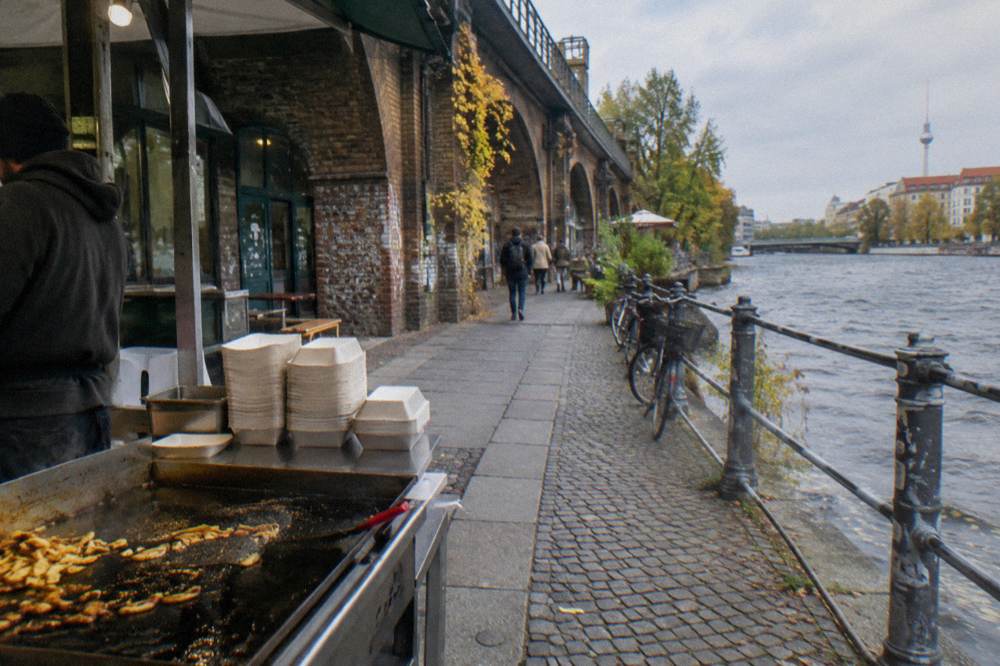
Curry 36 is the name most guidebooks repeat, and its original Kreuzberg stand on Mehringdamm has served the West Berlin style, fried sausage with optional casing, for decades. Konnopke's is the East Berlin counterweight, a kiosk under the elevated tracks on Schönhauser Allee that griddled its way through the GDR era and still draws crowds for the skinless school of the dish. Choosing between them is a fine first-world problem: the honest answer is to try both styles and decide which sausage texture you prefer, since the sauce recipes differ too.
Beyond the two famous names, the dish is everywhere, from kebab shops that also griddle sausage to market halls and Christmas market stalls. Neighborhood distribution matters more than you might expect: the famous stands sit in different districts, and a self-guided currywurst crawl of two or three of them will cross the city. The round-up of famous stands and local favorites covers the wider counter scene, and if you want the stands chosen for you with the story attached, the Markthalle Neun walk below visits one of the city's great food halls, where Street Food Thursday runs 17:00 to 22:00 with 5, 19 and 26 November 2026 listed.
Can You Try Currywurst On A Guided Berlin Street Food Walk?
Yes. Several guided walks in the city build stops around sausage stands, market halls and snack counters, and they handle the ordering, the history and the pacing for you. The best fit for a currywurst-first visit is the Mitte Walk, 7 Tastings, about 3 hours, rated 4.9 across 1,583 reviews, from $90.01 per person.
That tour names currywurst among its tastings, which suits travellers who want the classics decoded rather than discovered by trial and error. The No Diet Club walk, from $75.00 per person, focuses instead on kebab, tacos and a pastry. A guide also smooths the ordering moment that catches many first timers, translating the mit Darm question and steering you to the counter style you will actually enjoy. For readers comparing the full field, the comparison of Berlin food walks breaks the options down by price, duration and review base.
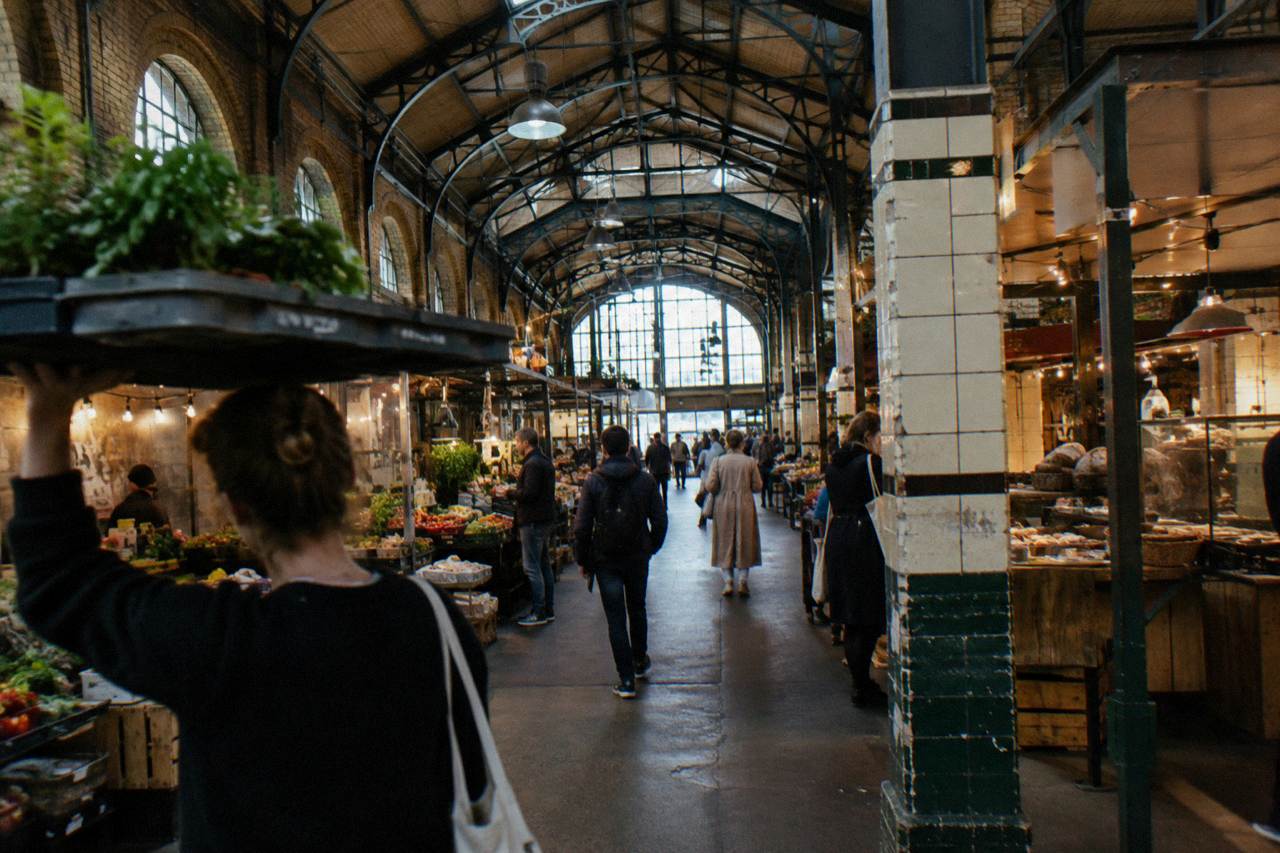
Two alternatives sharpen the choice. The Markthalle Neun guided walk, about 2.5 hours from $97 per person, pairs the market hall with craft beer and currently carries no reviews, so it should be judged on format rather than rating. The KERB food hall experience, from $34, is the cheapest of the three, with 12 reviews so far. Neither is a currywurst tour as such, but both put you inside halls where sausage, fries and sauce are never far away.
For the fuller picture of what these walks cost and what they include, the food walk pricing guide compares inclusions across price points, so you can see at a glance which walks bundle a full meal and which are built around tastings.
Is Currywurst Different From Bratwurst And Döner?
Yes, on all counts. Bratwurst is the sausage itself; currywurst is that sausage, sliced and sauced with curry-spiked tomato sauce. Döner is a different dish entirely, meat carved from a vertical spit into bread, and it arrived in Berlin later, though its Berlin version has its own claim to fame.
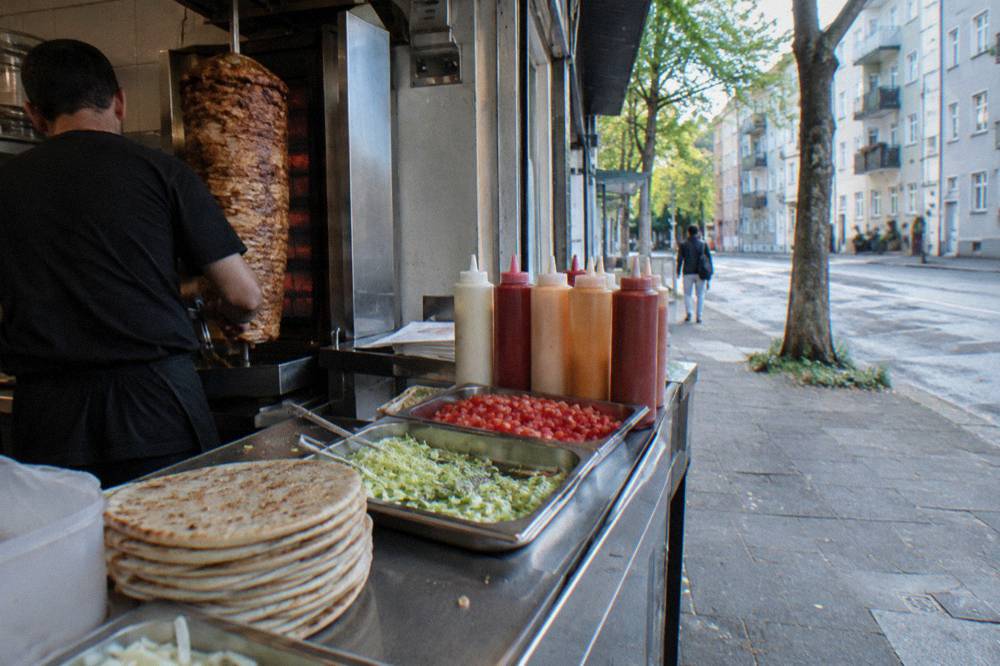
The distinction matters when you order, because most stands sell all three from the same window. Ask for a bratwurst and you get a plain grilled sausage, often with mustard and a roll. Ask for currywurst and the same style of sausage gets transformed by sauce and powder into a different meal with a different price logic. Ask for a döner and you leave the sausage world altogether for carved meat, salad and sauce in flatbread. The döner kebab history guide covers the separate story of Berlin's döner, and the döner tour overview covers where to eat it well.
A practical note for a currywurst-focused day: the famous stands sit in different neighborhoods, and a single BVG AB ticket, 4,00 EUR and valid for 120 minutes, covers the trip between them. The reduced fare for children aged 6 to 14 is 2,50 EUR in the AB zone. The BVG single-ticket price table has the current fares, and the AB single price holds at 4,00 EUR into 2027 even as other VBB tickets rise.
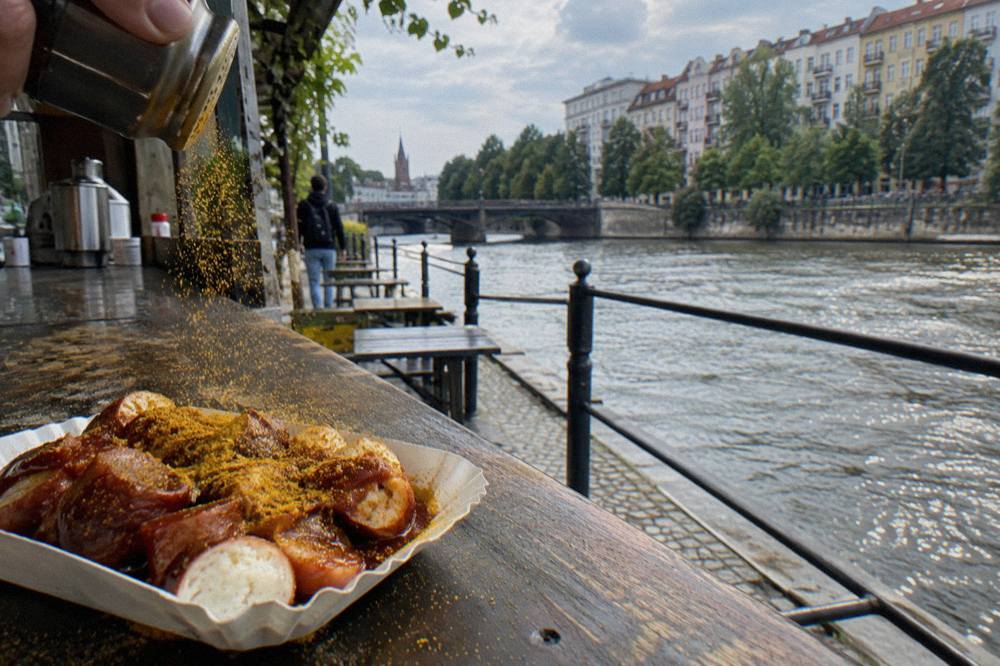
Whichever way you assemble the day, the pattern holds: order with one short sentence, eat standing with the little fork, and let the roll handle the sauce. Currywurst rewards the unbothered, and Berlin has spent the better part of a century perfecting a dish that asks nothing else of you.
Common Questions About Eating Currywurst
How To Eat Currywurst?
With the small wooden fork from the tray, one slice at a time, using fries or a roll to mop up the sauce. It is standing street food: no knife, no plate, no ceremony, and the sauce is meant to be finished.
Do You Eat Currywurst With Skin Or Without?
Both are standard. The casing, ordered as mit Darm, gives a firmer bite; ohne Darm is softer and is the default at many East Berlin style stands. Either choice is normal at most counters.
What Do Germans Eat With Currywurst?
Fries, usually with mayonnaise or curry sauce, and often a bread roll for the leftover sauce. Beer or a soft drink alongside completes the standard order.
Where Was Currywurst Invented?
The dish is credited to Herta Heuwer, who is said to have served it at her Charlottenburg kiosk in 1949. The story is widely repeated but the details are historical legend rather than documented fact.