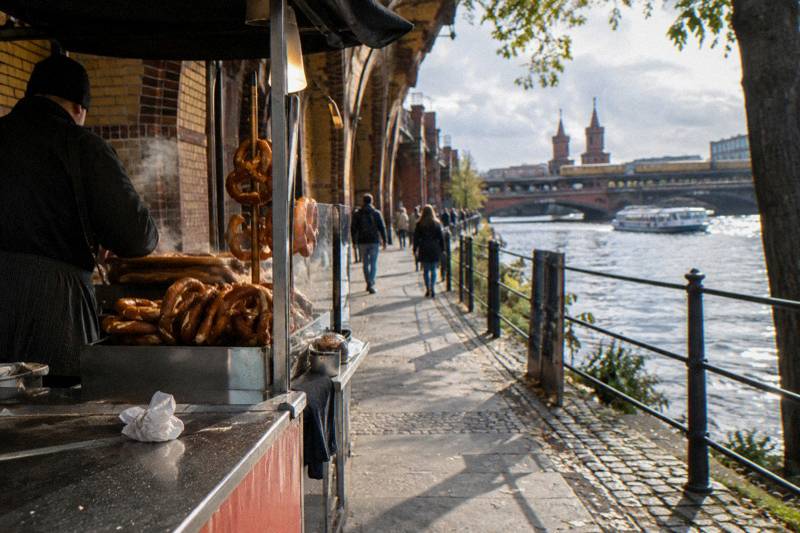
Best Currywurst In Berlin And How To Order It
Currywurst is Berlin's most argued-about snack: sliced sausage, curry-ketchup sauce, powder on top. Here is where the famous stands are, how to order without hesitating, and how a guided tasting fits in.
Short answer
The best-known currywurst stands in Berlin include Curry 36 and Konnopke's Imbiss. Order by saying the style you want, with or without casing, with fries or a roll. A guided tasting such as the Mitte District Food Tour with 7 tastings runs about 3 hours from $90.01 per person and names currywurst among its stops.
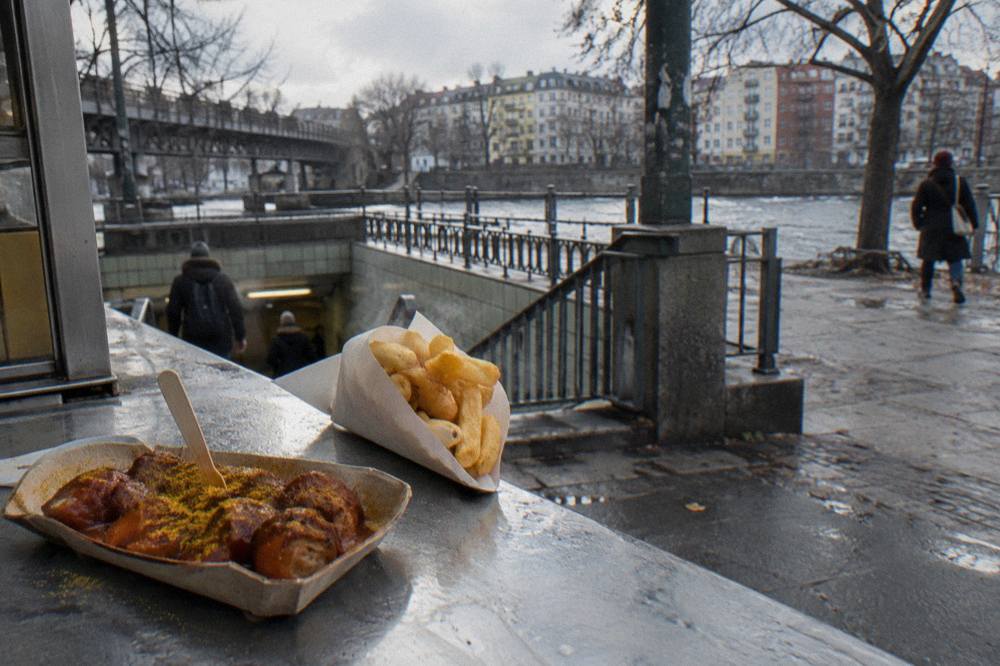
Few dishes carry a city's argument the way currywurst carries Berlin's. The dish is credited to Herta Heuwer, who is said to have first served a curry-spiced ketchup over fried sausage in Berlin in 1949, and every district has defended its own stand ever since. The snack itself is simple: pork sausage, sliced, drowned in a curry-tomato sauce, dusted with curry powder. The debates are about casing, sauce recipe, and whether the fries matter. This page covers the stands worth knowing, the exact words to use when ordering, and the honest question of whether a guided tasting gets you further than a solo hunt. If this is your first go at the dish, our beginner's guide to ordering and eating currywurst in Berlin covers the vocabulary, the sides, and the stands locals argue over.
What Is Currywurst And Why Does Berlin Claim It?
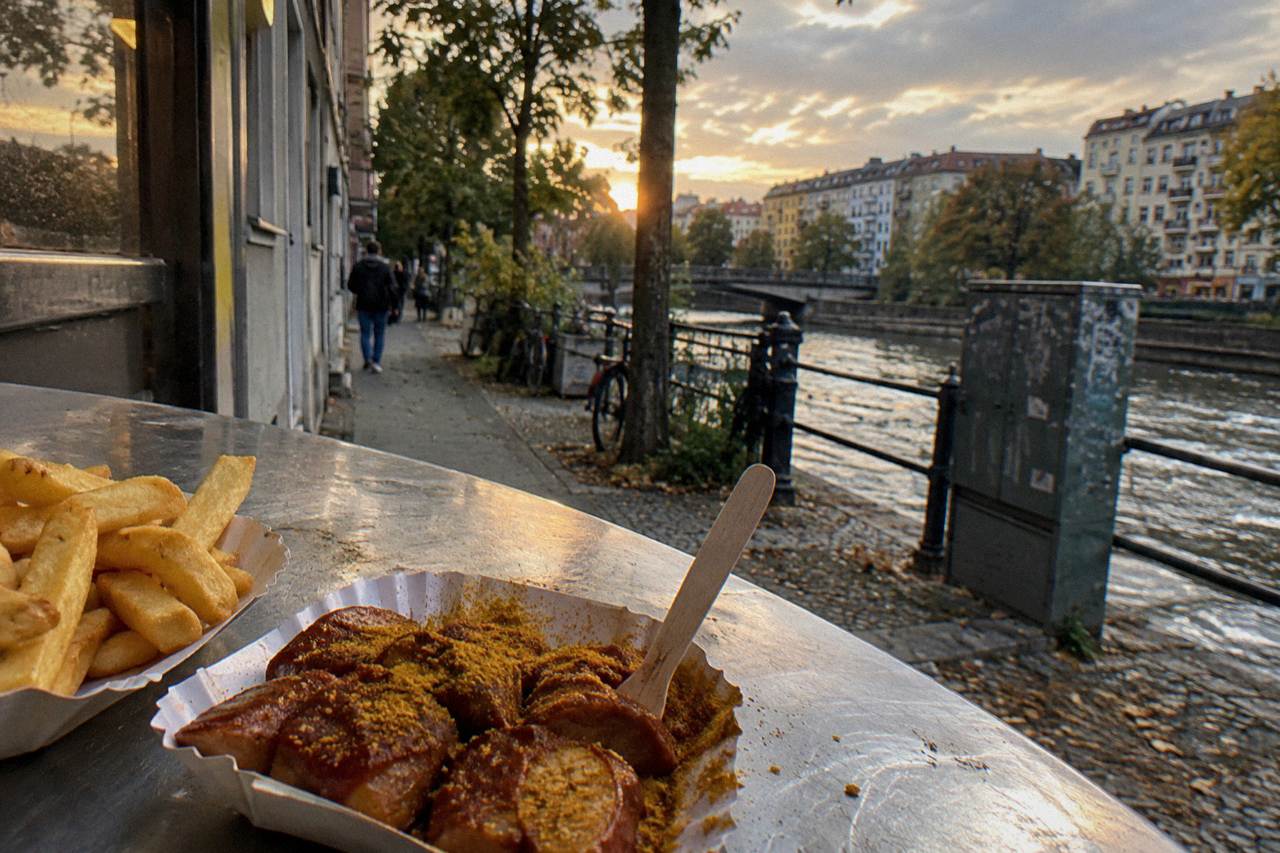
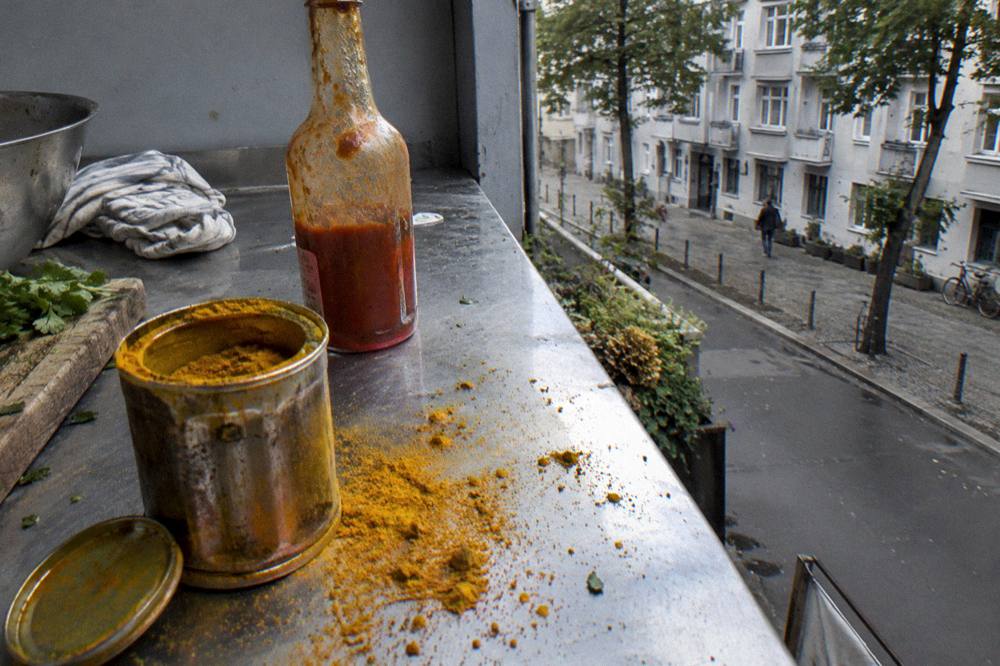
Currywurst is sliced sausage under a warm curry-ketchup sauce, finished with a dusting of curry powder, and Berlin claims it because the dish is credited to Herta Heuwer, who reportedly served the first version in the city in 1949, a credit that is repeated proudly across Berlin even though it remains a tradition rather than a documented fact. The sausage itself is usually pork, either skinless and soft or with the casing left on for a firmer bite. The sauce is the stand's signature, a guarded recipe that sits somewhere between ketchup and spiced tomato paste. Powder goes on last, and the whole thing arrives in a cardboard tray, eaten with a wooden or plastic fork designed for exactly this job.
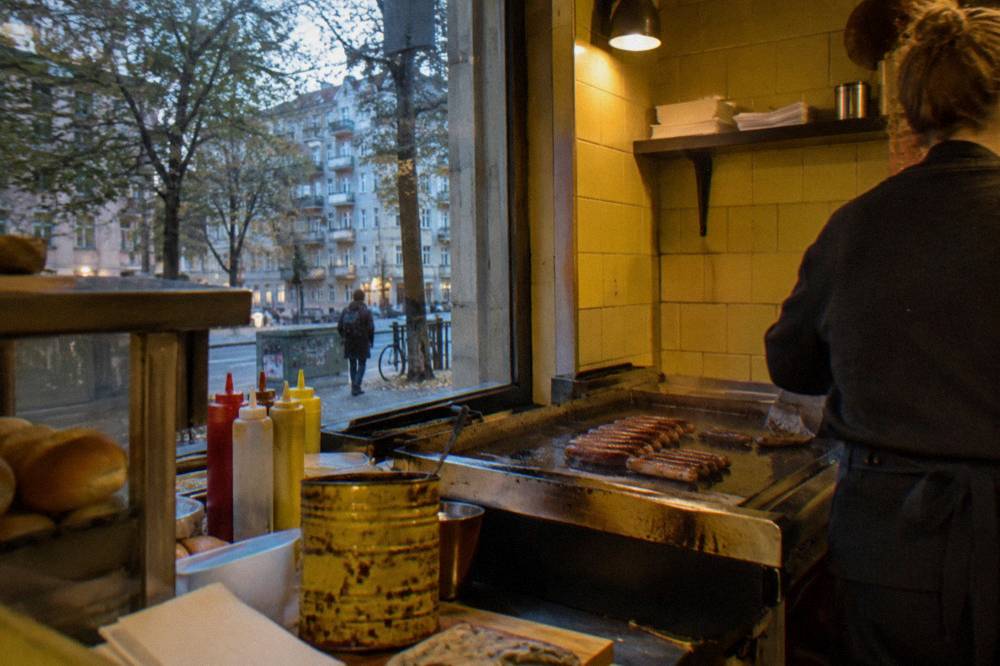
The dish belongs to the Imbiss tradition, the snack-counter culture that fed postwar Berlin when sit-down restaurants were scarce and hot food had to be fast and cheap. That origin explains the ordering style: short, direct, and spoken over a counter rather than from a chair. It also explains why the best-known stands are institutions rather than restaurants, often little more than a grill, a window, and a queue that moves quickly because everyone in it already knows what they want.
The history runs deeper than this page needs to. For the full story of the sauce, the postwar years, and the Heuwer credit, the companion piece on how currywurst started traces it in detail. The short version: an occupied city, cheap ingredients, a spice borrowed from British soldiers, and a snack that outlived everything around it. Berlin built a small museum around the sausage at one point, and the dish still appears on menus that would never admit to serving fast food, which tells you how deep it sits in the city's self-image.
| Part of the dish | What it is | What people argue about |
|---|---|---|
| The sausage | Pork, sliced into coins | With casing (Darm) for snap, or without (ohne Darm) for softness |
| The sauce | Warm curry-ketchup, recipe kept private | Sweet versus sharp, smooth versus chunky |
| The powder | Curry powder sprinkled on top | Amount, freshness, blend |
| The side | Fries (Pommes) or a bread roll (Brötchen) | Whether fries are essential or optional |
| The tray | Cardboard, eaten standing | Nothing, everyone agrees here |
Which Currywurst Stands In Berlin Are Famous?
The best-known currywurst stands in Berlin include Curry 36 on Mehringdamm in Kreuzberg and Konnopke's Imbiss under the U-Bahn arches in Prenzlauer Berg, both long-running names that locals and guidebooks return to year after year, though no official body crowns a single winner and queue lengths or consistency at either stand vary with the hour. Curry 36 is famous enough that its name appears in most Berlin food conversations, and Konnopke's is a family Imbiss with decades of history under the elevated train tracks in the east. Both are long-running, well-known stands, and no official ranking exists.
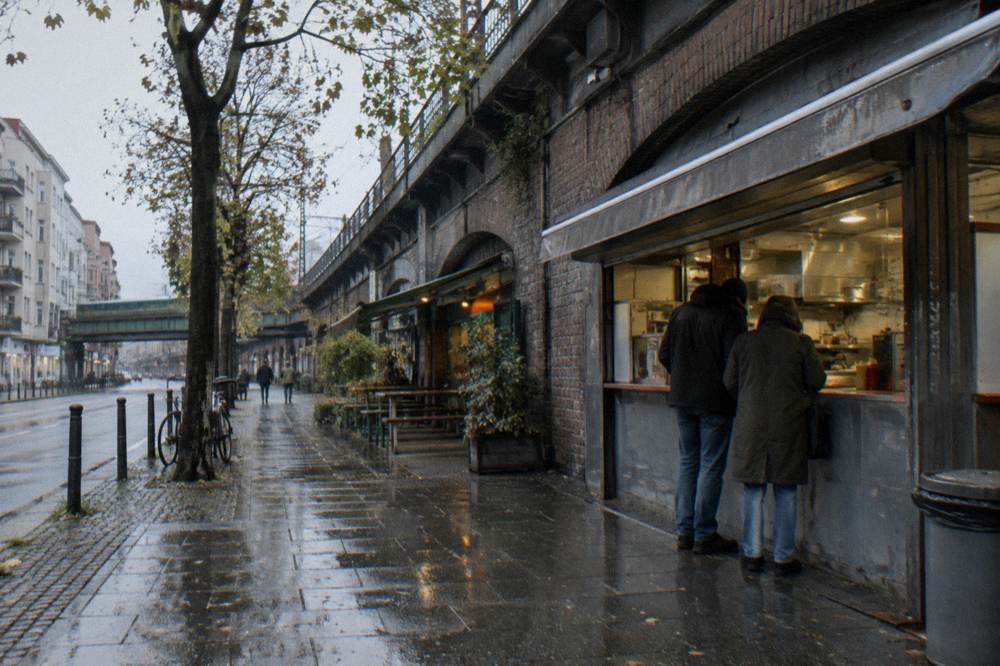
Beyond those two, the city is full of contenders. The honest answer to "which is best" is that Berliners disagree by district, and the disagreement is part of the fun. A visitor hunting stands alone will taste two or three in a day at most, because the famous names sit in different neighborhoods and the walking between them adds up faster than the appetite. Public transport makes it manageable: a single BVG ticket for zones AB costs 4,00 EUR and is valid for 120 minutes, per BVG's single-ticket price table.
This is where a guided tasting earns its place. Rather than a list of names, a tour walks you between stands with a local deciding the route, and the Mitte District Food Tour with 7 tastings runs about 3 hours from $90.01 per person, rated 4.9 across 1,583 reviews, with currywurst named among its tastings. It fits this exact question: which bites are worth the walk, decided by someone who eats them weekly rather than someone reading a top-ten list for the first time. You can compare it against other options in which Berlin food walk to book.
The market-hall angle matters as much as the stand-hunt. Street Food Thursday at Markthalle Neun runs every Thursday from 17:00 to 22:00, per the hall's own market page, and a guided Markthalle Neun food tour with craft beer runs about 2.5 hours from $97 per person, with too few reviews on the booking page to quote a rating fairly. The KERB food hall visit, at from $34 per person, is the cheapest option here, with 12 reviews so far.
For a self-guided stand crawl, order matters. Start with whichever famous name sits closest to your first stop of the day, then work outward by district rather than zigzagging across the city; with the AB ticket's 120-minute validity, one ride between neighborhoods can fit inside a single fare. Treat the stands as spontaneous snacks rather than a scheduled lunch, because an unexpected queue can quietly claim an afternoon, and the point of the hunt is the tasting, not the transit.
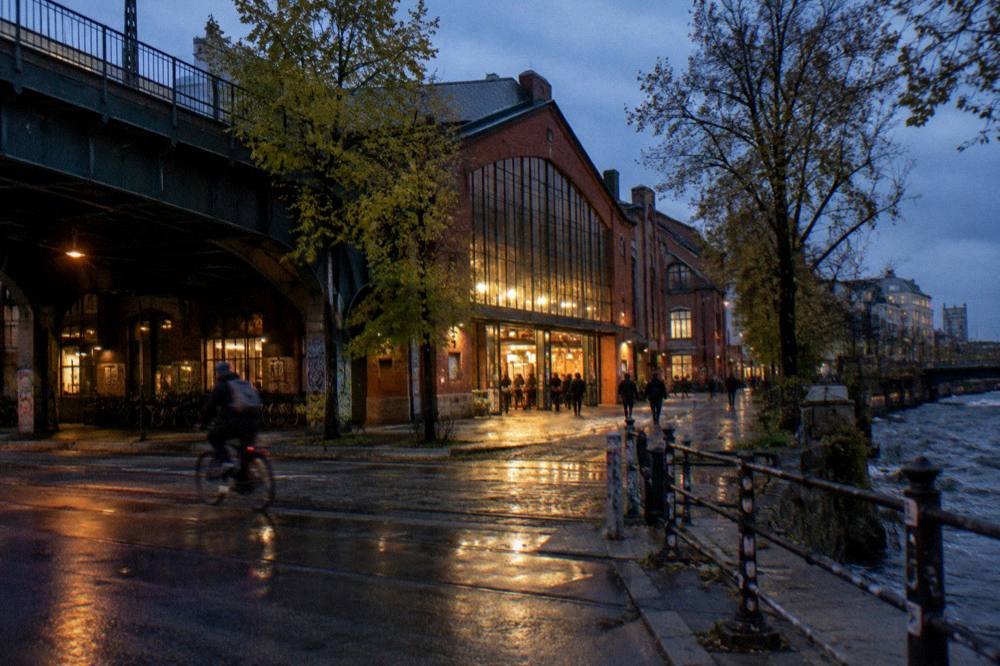
The KERB food hall walk works as a first taste of the scene; the No Diet Club tour, about 3 hours from $75 per person, runs the longest duration quoted here and gives a local's route the most room to unfold; the Markthalle Neun craft beer option, about 2.5 hours from $97 per person, adds beer to the bites. Reading each booking page before you pay settles which version matches your pace.
One scheduling note: if your trip lands on a Thursday, Street Food Thursday hands you a ready-made evening, and since the Markthalle Neun tour shares that venue, its departure days are worth checking against the market's hours.
How Do You Order Currywurst Like A Berliner?
Ordering currywurst means two quick choices spoken over the counter, casing or no casing and fries or a bread roll, and the single phrase "Eine Currywurst mit Pommes, bitte" covers most situations completely, because the counter staff will not walk you through the options and the decision has to happen before you reach the window rather than at it. This section lays out the exact vocabulary once, in full, and later sections only point back to it.
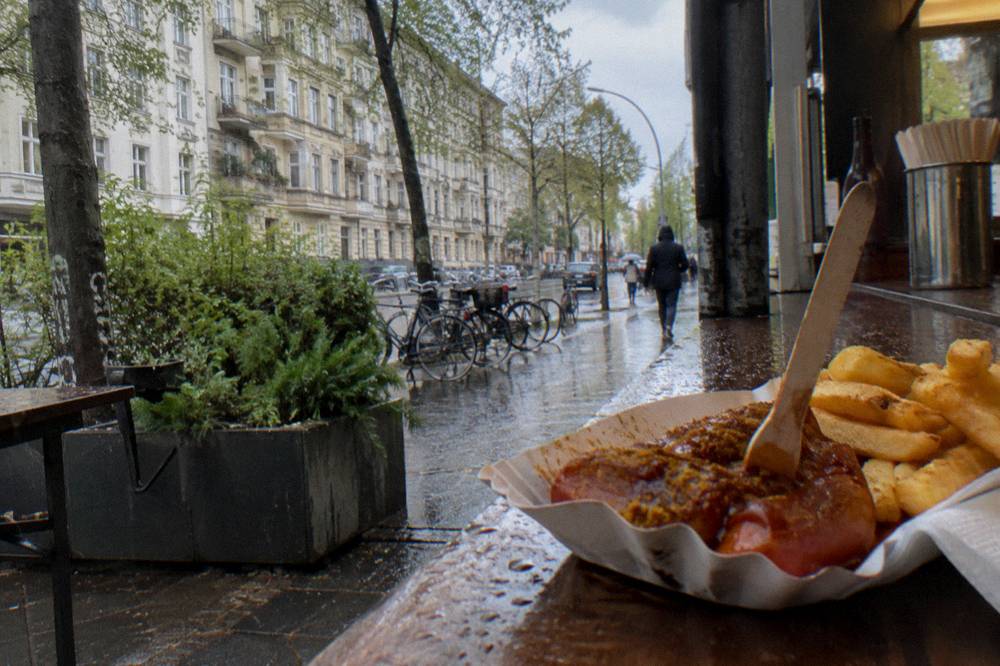
The first choice is the sausage itself. With casing, called Darm, the sausage keeps its skin and gives a firm snap when you bite. Without, called ohne Darm or sometimes skinless, the texture is softer and the sauce soaks in faster. Berliners split on this the way other cities split on pizza crust, and neither choice is wrong. If unsure, ordering with casing is the more traditional bite, and saying so at the window marks you as someone who has done at least a little homework.
The second choice is the side. Pommes means fries, usually with ketchup or mayonnaise, and Brötchen means a bread roll, the older and cheaper companion that predates the fryer in the Imbiss tradition. Mayo on the fries is standard enough that asking for it is unremarkable. The full ordering vocabulary fits in one table:
| Phrase | What it gets you | When to use it |
|---|---|---|
| Eine Currywurst, bitte | One currywurst, the counter's default style | When you want the house version |
| Mit Darm | Sausage with casing, firm snap | The traditionalist order |
| Ohne Darm | Skinless sausage, softer texture | The soak-the-sauce order |
| Mit Pommes | With fries | The full meal |
| Mit Brötchen | With a bread roll | The classic, cheaper pairing |
| Scharf | Spicier sauce, where offered | Only if the stand offers it |
One habit worth avoiding: pointing and gesturing works, but it slows the queue behind you, and queue culture at an Imbiss is brisk. Decide before you reach the window, pay fast, and step aside to eat. For a deeper run at Berlin snack etiquette beyond currywurst, the guide to döner kebab in Berlin, bread, meat, sauces and etiquette covers the same counter culture from the other side of the street.
If the self-guided hunt sounds like work, a döner-and-sightseeing tasting walk covers several stands in one go: the Berlin Döner Kebab Tour with sightseeing and gourmet kebab stops runs about 3 hours from $51 per person, rated 4.9 across 57 reviews, and it weaves historical sites between the bites.
What Should You Skip When Eating Currywurst In Berlin?
The main things to skip are sit-down expectations, the assumption that the longest queue means the best sausage, and any plan that carries the tray more than a few steps, since queue length varies by hour and says nothing verifiable about quality, and the dish is made to be eaten standing at a counter within minutes of serving, while the sauce cools into a skin and the powder sinks if it waits. Currywurst does not travel well and does not wait well.
Skip also the urge to crown one stand before tasting. The two famous names are famous for a reason, but the city's Imbiss culture is wide, and a small stand near a market can match the institutions on any given day. The guided options that include street food stops carry real review counts on their booking pages.
Timing shapes the experience too. Berlin shops close on Sundays in principle under the city's trading law, with limited exceptions for bakery goods and tourist-need items, per the Senatsverwaltung's opening-hours overview. Snack stands are not ordinary shops, and many open on Sundays, but assuming any specific stand's hours in advance leads to disappointment; the booking pages of guided walks list their own schedules exactly. Weather matters as well: Deutscher Wetterdienst 1991 to 2020 normals for Alexanderplatz put January's mean at 1.5 C and July's at 20.4 C, so a standing-and-eating plan in winter is a different sport than in summer, and worth dressing for.
Is A Guided Currywurst Tasting Better Than Going Alone?
A guided tasting is better when you want several stands compared in one walk and a local's judgment on what to skip, and going alone is better when you have one specific stand in mind, since the street food walks compared here run from $34 to $97 per person while a self-guided hunt costs only the food and a transit ticket. Neither answer is universal. The trade is money and fixed timing against reach and context.
| Option | Length | Price basis | Reviews |
|---|---|---|---|
| Mitte District Food Tour with 7 tastings | About 3 hours | From $90.01 per person | 4.9 across 1,583 reviews |
| Markthalle Neun, Craft Beer | About 2.5 hours | From $97 per person | No rating printed, too few reviews |
| KERB food hall tour with street food and drinks | Varies by listing | From $34 per person | 12 reviews, too few for a star claim |
| Berlin Döner Kebab Tour with sightseeing | About 3 hours | From $51 per person | 4.9 across 57 reviews |
| Berlin's Greatest Hits: Food, Beer and History | About 2 hours | From $79.21 per person | 4.9 across 84 reviews |
The short-format walk deserves a mention for anyone with a tight schedule. Berlin's Greatest Hits combines food, beer and history in about 2 hours from $79.21 per person, rated 4.9 across 84 reviews, and it moves fast enough to fit between two museum slots. For visitors whose real question is broader than one sausage, it doubles as a first-evening orientation to the city's food culture.
For a fuller comparison of what walks cost and what they include, see what a Berlin food walk costs and what is included. The pattern across the options: price tracks length and group format, not quality, and the cheapest walk on paper is rarely the one that answers the currywurst question best, because the question is really about comparison, and comparison needs multiple stops.
Berlin Currywurst And Street Food Tours Compared
| Tour | Length | Price Per Person | Reviews |
|---|---|---|---|
| No Diet Club street food tour | about 3 hours | from $75 per person | 4.8 across 403 reviews |
| Markthalle Neun, Craft Beer | about 2.5 hours | from $97 per person | too few reviews to quote |
| Döner Tour Plus Sightseeing | about 3 hours | from $51 per person | 4.9 across 57 reviews |
Where Does Currywurst Fit In A Bigger Berlin Food Day?
Currywurst works best as one stop in a day built around a district, and the natural pairing is a market morning followed by a snack-counter afternoon, with Kreuzberg's Turkish market on Tuesday or Friday and Street Food Thursday at Markthalle Neun anchoring the week's rhythm. The Maybachufer Turkish market runs Tuesday and Friday 11:00 to 18:30 per local reporting, and Winterfeldtmarkt on Winterfeldtplatz runs Wednesday morning and Saturday until 16:00, per visitBerlin's market page.
A Mitte-based day is the other classic shape. The Mitte District Food Tour with 7 tastings runs about 3 hours from $90.01 per person, rated 4.9 across 1,583 reviews, and it sits in the neighborhood where many visitors stay anyway. Pairing a morning market with an afternoon walk keeps the eating spread out, which is the difference between a food day and a food ordeal.
Between stops, transport is cheap and simple. The Deutschlandticket costs 63 EUR per month now and 66,80 EUR from January 2027, which only makes sense for longer stays, while a single AB ticket at 4,00 EUR covers the casual visitor; VBB fares rise on average 3.72 percent from 1 January 2027, though the AB single stays put, per the official VBB announcement on Berlin.de. The point for a currywurst crawl: the stands are scattered, and a 4,00 EUR ticket buys a lot of scattered.
Which Walk Should You Actually Book For Currywurst?
Book the Mitte District Food Tour with 7 tastings if currywurst is the main goal and you want several stops in one walk, book the Markthalle Neun tour if your visit includes a Thursday, and book the KERB food hall tour if the budget is tight, at from $34 per person with only 12 reviews so far. Two of the three are guided street food walks, the KERB food hall visit is self-paced, and none is a single-stand visit.
The decision comes down to schedule and confidence. A reader who has memorized the ordering table and knows the district layout can hunt stands alone for the price of the food and a transit ticket. A reader who wants the argument settled in three hours, with tastings that go beyond one dish, is the reader the guided walks are built for.
Common Questions About Currywurst In Berlin
What Is Currywurst?
Sliced pork sausage under a warm curry-ketchup sauce, dusted with curry powder and served in a tray, usually with fries or a bread roll. The dish is credited to Herta Heuwer in Berlin in 1949, though the credit is a tradition rather than a settled fact.
Which Currywurst Stand Is The Best In Berlin?
There is no official winner. Curry 36 and Konnopke's Imbiss are the best-known stands, but Berliners disagree by district and queue length varies by hour, so the honest answer is to taste two or three and compare.
How Do You Order Currywurst In Berlin?
Say the sausage style and the side: mit Darm for casing, ohne Darm for skinless, mit Pommes for fries or mit Brötchen for a roll. "Eine Currywurst mit Pommes, bitte" covers most situations.
What Should You Skip When Eating Currywurst?
Skip carrying it far, since the sauce waits for nobody, and skip judging a stand purely by its queue. Order at the counter, eat it standing nearby, and decide for yourself.
Is A Guided Tour Worth It For Currywurst?
If you want several stops compared in one walk with a local choosing, yes: the Mitte District Food Tour with 7 tastings runs about 3 hours from $90.01 per person, rated 4.9 across 1,583 reviews, with currywurst among its tastings. If you have one specific stand in mind, go alone.