Berlin Street Food: What To Try And What To Skip
Berlin street food runs from currywurst counters that have fed the city for generations to weekly markets where a dozen stalls sell a dozen cuisines. Here is what to try, what to skip, and how to plan the eating.
Short answer
Start with currywurst, doner kebab and a market hall such as Markthalle Neun in Kreuzberg, where Street Food Thursday runs 17:00 to 22:00. A guided street food walk such as the No Diet Club tour costs from $75 per person for about three hours; a single BVG AB ticket is 4,00 EUR.
Berlin's street food scene grew out of improvisation: postwar sausage stands, Turkish grocers in Kreuzberg and Neukölln, and a wave of weekly markets that turned empty halls and squares into open-air dining rooms. Today the choice is wide enough that a first-time visitor can easily waste a whole evening and a fair chunk of money on the wrong stalls, because the loudest vendors are rarely the best ones. This page sorts the scene into what earns its queue and what does not, with market schedules, transport prices and the guided walks that shortcut the whole problem. Read it once before your trip and once on the ground, and the city's snack culture starts to make sense quickly. Once you've sorted the stalls, the guide to where locals actually eat in Berlin takes you to the neighborhoods and everyday dishes that never make the tourist lists.
What Should You Try First In Berlin Street Food?
Start with three things: currywurst, the city's postwar sausage classic cut and sauced at the counter; doner kebab, whose modern handheld form was developed in Berlin by its Turkish community; and Boulette, the fried meatball that older Berliners still treat as a snack between meals. All three are sold within walking distance of Mitte and Kreuzberg, cost a few euros at most stands, and explain more about how Berlin eats than any sit-down restaurant menu can.
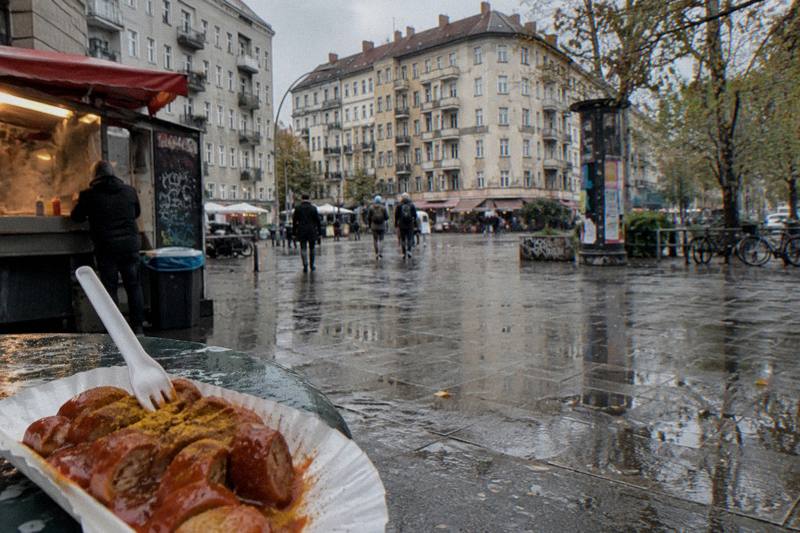
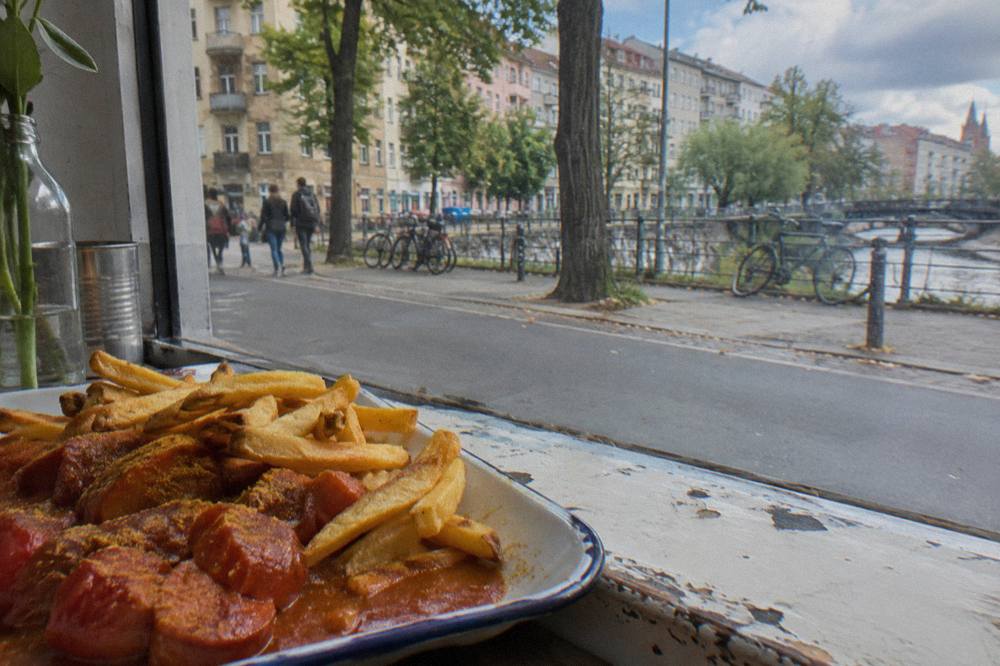
Currywurst is the dish most visitors arrive already knowing, and it rewards a little ordering knowledge. The classic version is a bratwurst or bockwurst, sliced, drowned in a mild tomato sauce and dusted with curry powder, served with a plastic fork or a pile of fries on the side. Ordering it "mit Darm" means with the natural casing still on, The sauce ranges from sweet to properly sharp depending on the stand, and regulars develop fierce loyalties to one counter or another. The currywurst stands and sauce guide covers how the famous counters differ and how to order like a local.
Doner is the other pillar, and in many ways the bigger one. The essentials are simple: look for fresh bread rather than pre-cut pita, meat carved to order rather than rotating gray under a heat lamp, and a stand where the queue moves steadily, because movement means turnover and turnover means freshness. Mustafa's Gemüse Kebap in Kreuzberg is the famous case study; its queue is the stuff of legend and every visitor ends up deciding whether it earns the wait. The vegetable-loaded style there differs from the classic meat-and-salad doner most Berliners eat weekly, and both are legitimate entries into the culture.
Boulette is the quiet third classic that most tourists walk straight past. A flat, pan-fried meatball of pork and beef, often with onion and herbs mixed through, it is sold at market snack bars and butcher counters and eaten standing, usually with a brötchen on the side. Older Berliners treat it as the original street snack of the city, the thing you ate before doner arrived, and ordering one at a market counter is one of the cheapest authentic experiences available.
Spaetzle, the soft Swabian egg noodle, appears at Christmas markets and some market halls as a hearty plate rather than street food proper, usually with cheese or lentils. It is a sit-down dish wearing street food clothes, filling enough to end an eating day on its own. Berliner Weisse, the sour wheat beer served with red or green syrup, belongs on the same list as a drink rather than a dish, and it turns up at beer gardens and traditional pubs near the market squares.
If you want the doner story with the food included, the Berlin Doner Kebab Tour & Sightseeing pairs gourmet kebab stops with historical sites over about three hours, rated 4.9 across 57 reviews, from $51 per person. See the full tour listing.
The dishes above share one trait: they were working-class food before they were attractions. Nobody invented currywurst or the handheld doner for Instagram; both solved the problem of feeding a busy, not especially wealthy city quickly and cheaply. That is the filter worth applying to everything else you see sold on a Berlin street, and it explains most of the skip advice further down this page.
| Dish | What it is | Where it shines |
|---|---|---|
| Currywurst | Sliced sausage, tomato sauce, curry powder | Counter stands in Mitte and Kreuzberg |
| Doner kebab | Carved meat, salad and sauce in flatbread | Turkish stands in Kreuzberg and Neukölln |
| Boulette | Fried pork-and-beef meatball | Market snack bars and butcher counters |
| Spaetzle | Soft egg noodles, often with cheese | Christmas markets and market halls |
| Berliner Weisse | Sour wheat beer with red or green syrup | Beer gardens and traditional pubs |
Where Are The Best Street Food Markets In Berlin?
The two anchors are Markthalle Neun in Kreuzberg, whose Street Food Thursday runs every listed Thursday from 17:00 to 22:00, and the Maybachufer Turkish market, which sets up Tuesdays and Fridays from 11:00 to 18:30. Winterfeldtplatz in Schöneberg runs Wednesday mornings and Saturdays until 16:00. Each has a different character, and the Thursday hall event is the closest thing Berlin has to a street food festival on a weekly cycle.
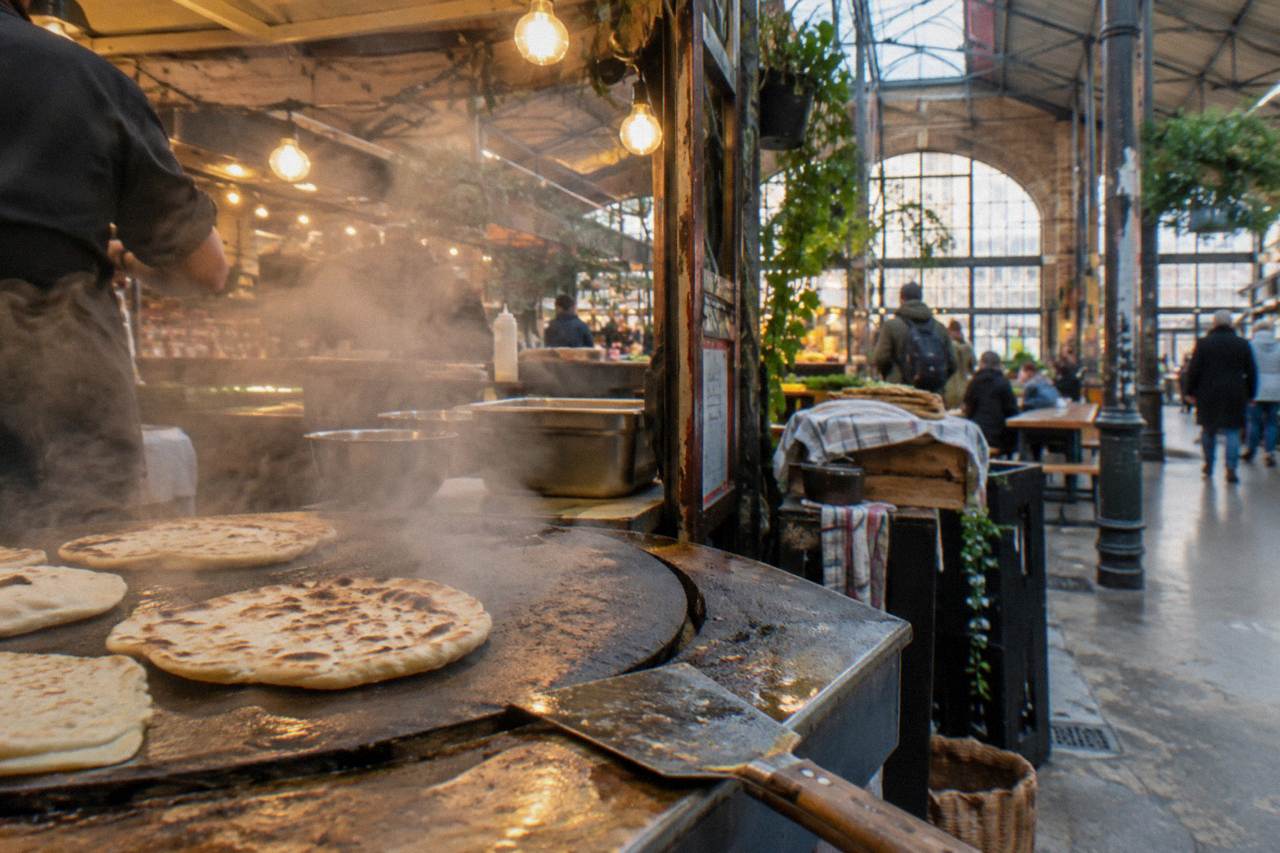
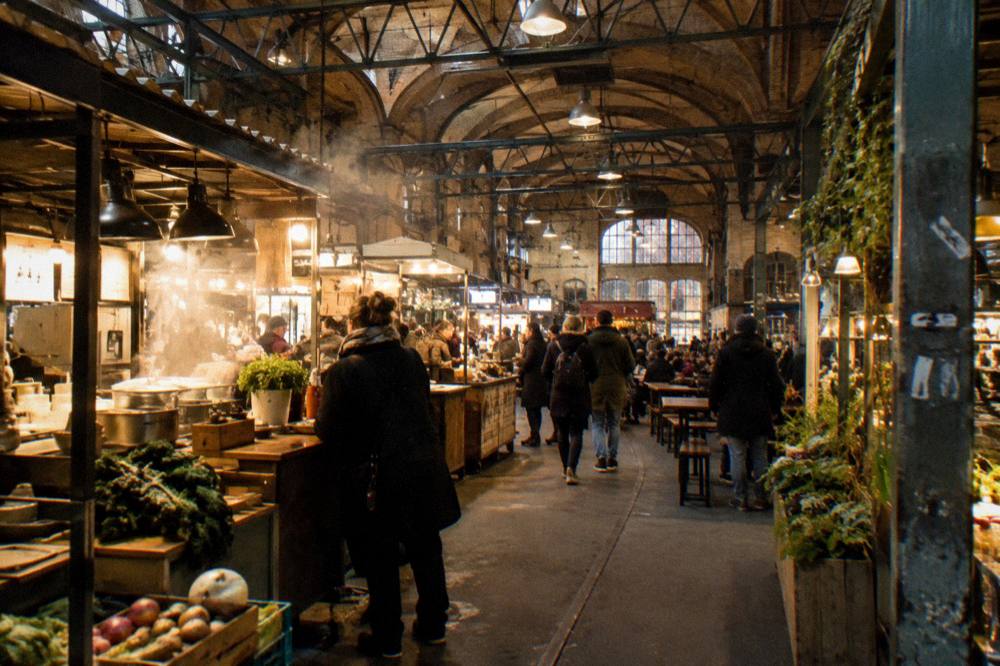
Markthalle Neun is a restored market hall in Kreuzberg, dating from 1891, and Street Food Thursday has run there since 2013. The format is simple: dozens of independent cooks take over the hall for one evening, and the crowd that follows is half foodie, half neighborhood. The operator's page currently lists 5, 19 and 26 November 2026 as confirmed dates, with 12 November notably absent, so check before you build an evening around it. The full Markthalle Neun guide covers what to eat once inside. The official Street Food Thursday page is the source for dates and hours.
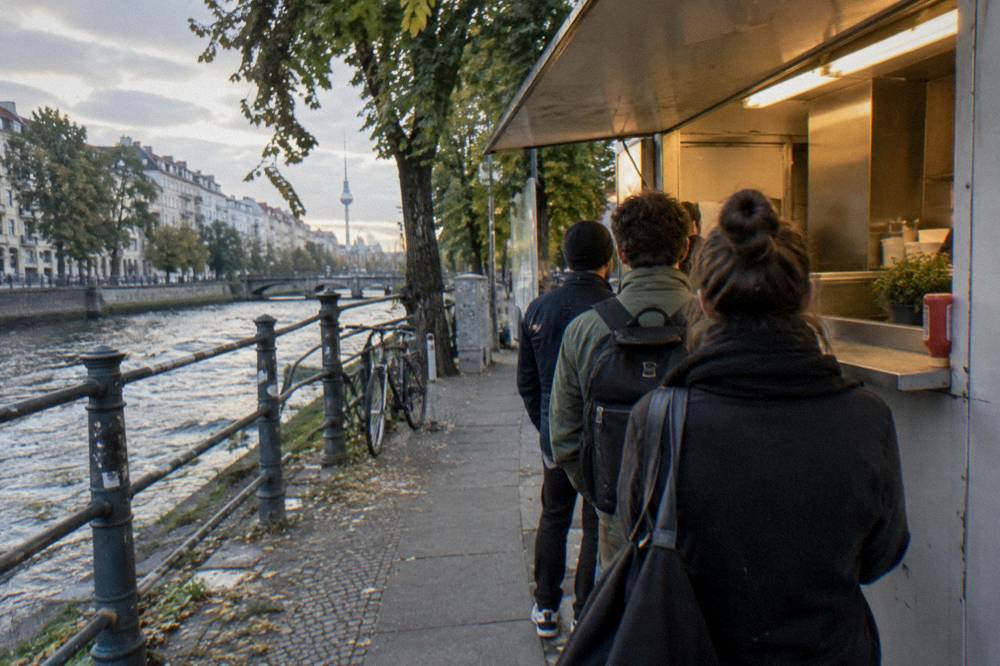
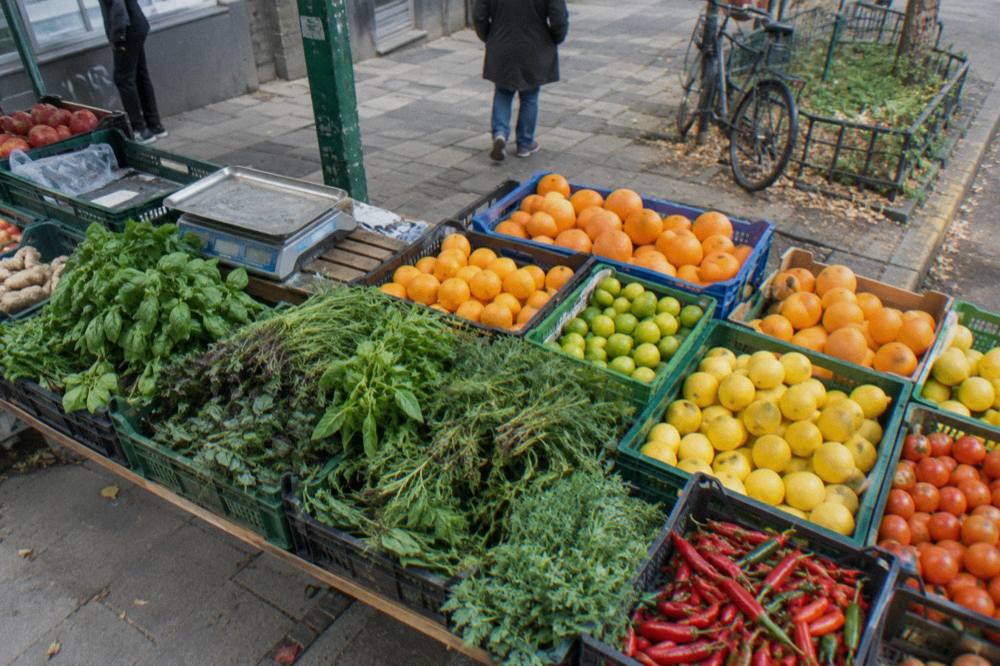
The Maybachufer market, often called the Türkenmarkt, lines the canal in Neukölln with fruit and vegetable stalls, olives, bread, cheese and hot food, and it runs along the water far enough that you never see all of it in one pass. The market closes on public holidays. Note the hours come from a local news source rather than the market's own official page, so treat them as reported rather than guaranteed. Between the two, a first-time visitor gets two completely different Berlin food experiences on different days of the week.
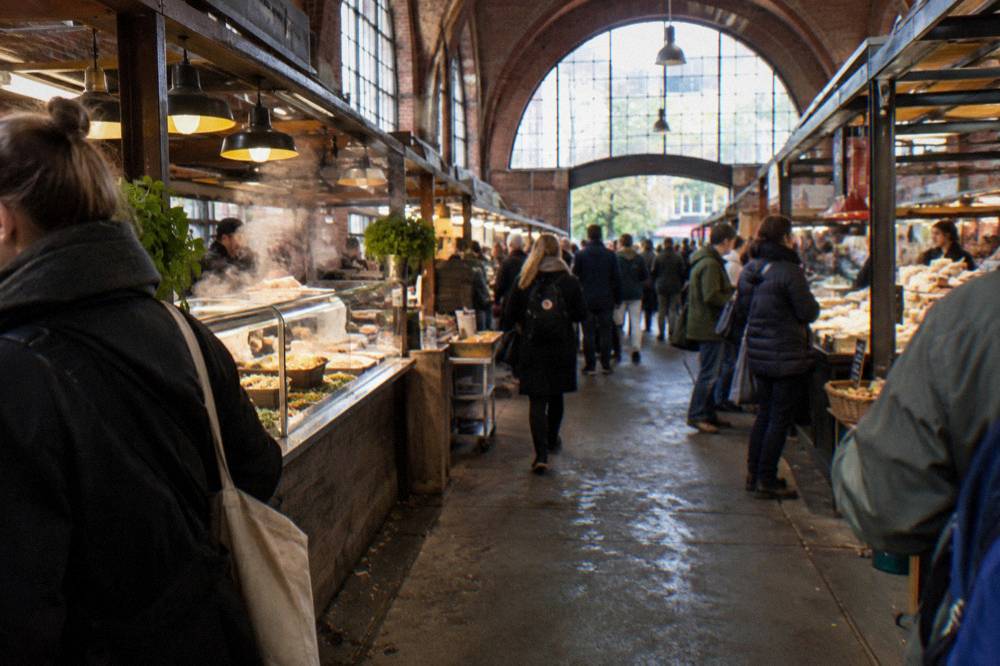
For a guided shortcut through the scene, the Berlin Guided Street Food Tour with Tastings (the No Diet Club walk) runs about three hours from $75 per person and is rated 4.8 across 403 reviews. See the No Diet Club tour listing.
There is also a dedicated Markthalle Neun guided food tour with craft beer, about two and a half hours from $97 per person, which layers a brewery-drink angle onto the market hall visit. It carries no published reviews yet, so judge it on its itinerary rather than a star rating. Where a review pool is that new, the itinerary and the operator's description are the honest basis for a decision, and a market hall is a low-risk environment for a first guided food experience anyway.
If you would rather stay indoors near the city center, the KERB food hall visit is a self-paced browse of the hall with a 20 EUR food voucher plus two drinks, from $34 per person, with 12 reviews so far. That makes it the cheapest option of the group, and the small review count is worth knowing rather than a reason to dismiss it.
| Market | District | When |
|---|---|---|
| Markthalle Neun Street Food Thursday | Kreuzberg | Thursdays 17:00 to 22:00 |
| Maybachufer (Türkenmarkt) | Neukölln | Tuesday and Friday 11:00 to 18:30 |
| Winterfeldtmarkt | Schöneberg | Wednesday morning and Saturday until 16:00 |
| KERB food hall | Mitte area | Indoor hall, check the booking page for times |
Is A Guided Street Food Tour In Berlin Worth It?
For most first-time visitors, yes: guided street food walks from $51 to $172.20 per person buy stall selection, portion pacing and context that takes locals years to accumulate. The No Diet Club street food tour, 4.8 across 403 reviews and from $75 per person for roughly three hours, sits mid-range. Self-guiding is cheaper but slower, and on a short trip the hours a guide saves are often worth the ticket price several times over.
The value of a guide in Berlin is less about access and more about filtering. The city has hundreds of stalls and a shifting calendar of weekly markets; a good operator has already eaten at most of them and knows which vendor had a great week. A guide also paces the eating, which matters more than it sounds: six stalls in three hours is a genuinely full meal, and doing that solo requires both route knowledge and discipline. The shortlist for street food specifically is small: the No Diet Club walk for breadth, the Markthalle Neun tour for depth in one hall, and the doner tour for the city's signature handheld.
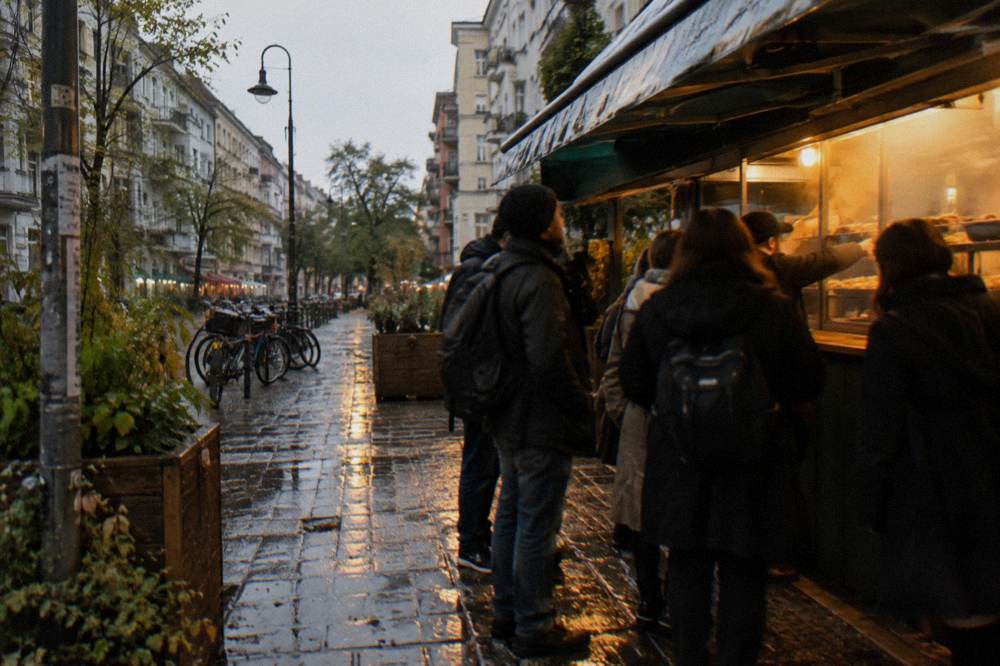
The No Diet Club walk describes itself as a street-food paradise route with tastings included.
Meeting points for these walks are stated on each booking page; seven listings rule out hotel pickup and the rest do not mention it, so plan to reach the meeting point yourself. That is standard for Berlin walking tours and rarely a problem, since the meeting points sit on major transit lines within a short ride of most hotels. Arrive ten minutes early, check the meeting point the day before in case it shifts, and bring an appetite rather than a full lunch.
What Street Food In Berlin Can You Skip?
Skip the sausage stands directly under major sights like Alexanderplatz and Brandenburger Tor, tourist-focused "schnell-imbiss" spots with photographed menus in four languages, and any stall whose meat was carved hours ago. Also be skeptical of pay-to-enter food festivals marketed at tourists; Berlin's best street food sits in weekly markets that charge nothing to walk in.
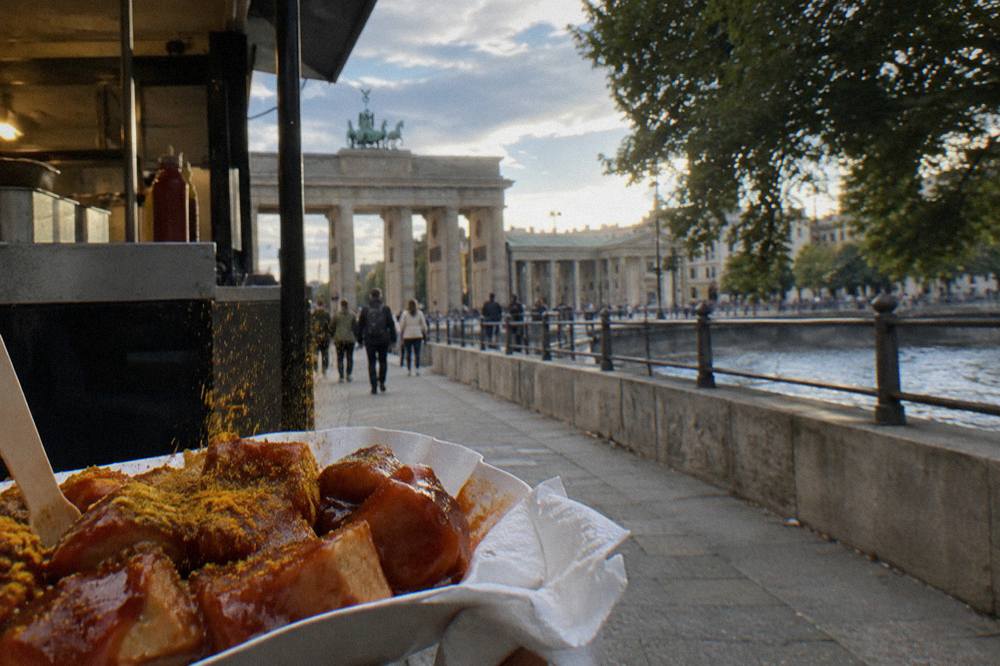
The geography rule matters most. A currywurst stand 30 meters from a landmark pays a premium for that location and sells to a captive audience; the same sausage, better cooked, usually sits ten minutes away on a side street where the rent is lower and the regulars are locals. The queue composition tells you everything: locals queueing means a stand earns its place, while a queue made entirely of camera straps means a stand earns its address.
The second filter is turnover. Doner meat that has rotated past lunch service, pre-fried bouletten sitting under a heat lamp, and sauce bottles that look tired are all signs of low volume, and low volume is the enemy of freshness. A busy stall cooks constantly and therefore cooks well; an empty stall at 19:00 on a Thursday is telling you something. This is the simplest quality signal Berlin offers, and it costs nothing to read.
The third filter is format. A food hall is not an automatic skip, as the KERB option above shows; the caution is for venues that layer table service charges onto what is essentially market food, where the weekly markets do the same thing cheaper, louder and better. This is also why the Sunday rule matters: since supermarkets close on Sundays except at stations, and bakeries may open only from 07:00 to 16:00 under the Berlin shop opening regulations, a spontaneous Sunday self-catering plan can fail where a market or a booked food walk does not. Planning around the German week, rather than against it, is half the battle.
| Skip it when | Why | Better option |
|---|---|---|
| Stand sits directly under a landmark | Rent priced in, captive customers | Side-street stands ten minutes away |
| Meat carved well before you order | Dry, reheated doner | Stands carving to order |
| Menu photos in four languages | Tourist-first positioning | German-only chalkboard menus |
| Paid-entry food festival | Often pricier per taste | Free-entry weekly markets |
| Empty stall at peak evening hours | Low volume, low freshness | The stall with the moving queue |
How Much Does Street Food In Berlin Cost?
Individual dishes cost a few euros at most stands, and exact per-item prices vary by stall, so no per-item list is given here; the firm numbers that can be stated are tour prices from $34 to $120.54 per person and transport fares, with a single BVG AB ticket at 4,00 EUR. A guided walk bundles several tastings into one price, which is the most predictable way to budget a street food evening.
For planning purposes, treat standalone snacks as a running cost you discover on arrival rather than a figure promised in advance; snack prices vary by district and by stand, and any fixed number printed here would be a guess. What can be stated precisely is what a structured version costs. The table below uses only the firm per-person prices from the tour descriptions; where a tour has no reviews or too few for a star rating, the count alone is shown.
| Tour | Duration | Rating | From (per person) |
|---|---|---|---|
| KERB food hall visit, voucher and drinks | Not stated | 12 reviews | $34 |
| No Diet Club street food tour | ~3 hours | 4.8, 403 reviews | $75 |
| Markthalle Neun tour with craft beer | ~2.5 hours | no reviews yet | $97 |
| Vegan food walk in Mitte | ~2.5 hours | 4.8, 31 reviews | $98 |
| Downtown food tour, 8 tastings | ~3 hours | 4.9, 407 reviews | $115 |
| Hidden Gems small-group tasting tour | ~3 hours | 4.6, 80 reviews | $120.54 |
Berlin Guided Street Food Tours Compared
| Tour | Price Per Person | Duration | Rating And Reviews |
|---|---|---|---|
| KERB Food Hall, Drinks | from $34 | Duration not listed | 12 reviews so far |
| Berlin Doner Kebab Tour & Sightseeing | from $51 | about three hours | 4.9 across 57 reviews |
| Berlin Guided Street Food Tour (No Diet Club) | from $75 | about three hours | 4.8 across 403 reviews |
| Markthalle Neun, Craft Beer | from $97 | about two and a half hours | No published reviews yet |
| Vegan food walk in Mitte | from $98 | about two and a half hours | 4.8 across 31 reviews |
Getting to the food is cheap and precisely priced. A BVG single ticket for zones AB costs 4,00 EUR and stays valid for 120 minutes of interrupted travel; the ABC version for airport and Potsdam trips is 5,00 EUR, and children 6 to 14 pay a reduced 2,50 EUR in AB. Regular visitors should know the Deutschlandticket costs 63 EUR per month now and 66,80 EUR from 1 January 2027, though a short city break rarely justifies one. A couple eating their way across three districts in an evening will spend more on the food than on all their transport combined.
When Is The Best Day For Street Food In Berlin?
Thursday evening is the single best slot: Street Food Thursday fills Markthalle Neun from 17:00 to 22:00 with dozens of rotating stalls. Tuesday and Friday afternoons bring the Maybachufer market to the canal, and Saturday mornings suit Winterfeldtmarkt. Avoid planning a self-guided market crawl for Sunday, when most shops close and only station supermarkets and limited bakery hours apply.
The weekly rhythm matters more in Berlin than in cities with daily markets, because the good events are one-day affairs and missing a day means waiting a full week. Street Food Thursday is the flagship: confirmed November 2026 dates are the 5th, 19th and 26th, and the gap on the 12th shows why the hall's own market page is worth a check before you commit an evening. Turn up hungry, in layers, and with cash as a backup even at stalls that take cards, and treat the first circuit as reconnaissance before you buy anything.
Seasonality plays its part too. From late November the Christmas markets add a parallel street food layer: the Alexanderplatz market runs 23 November to 26 December 2026, daily 11:00 to 22:00 with free entry, and the Lucia market at Kulturbrauerei runs 23 November to 22 December, also free. Winter weather is part of the deal at that point in the year, and the tradeoff between festive atmosphere and frozen fingers is a real one worth weighing when you pick your dates.
Can You Do Berlin Street Food Without A Tour At All?
Yes, and many residents would argue that is the authentic version: pick one market day, one or two classic stands and one neighborhood, and walk it yourself. The tradeoff is research time and dead ends. A self-guided day costs transport plus whatever you eat; a good written itinerary compresses the planning into an afternoon read rather than a week of guesswork.
Build a self-guided day around a district rather than a list, because Berlin's neighborhoods reward depth over breadth. Kreuzberg works best: start at the Maybachufer market on a Tuesday or Friday, walk north through the side streets toward the canal crossings, and finish at Markthalle Neun if it is a Thursday. The Kreuzberg food walk guide lays out that route stop by stop, with the doner stands and market counters sequenced so the walk makes geographic sense.
Where a tour still wins is pacing. A guide orders the right thing at each stop and moves a group through several venues in three hours; solo, the same circuit takes most of a day and includes a few dead ends. This is why Berlin Food Tours treats a guided walk not as a replacement for wandering but as a first evening that teaches you the map. The Mitte District Food Tour with 7 Authentic Local Tastings, rated 4.9 across 1,583 reviews and from $90.01 per person for about three hours, is the most-reviewed option on the site and a solid demonstration of the format.
| Approach | Best for | Tradeoff |
|---|---|---|
| Guided street food walk | First visit, short trips | Cost from $75 per person |
| Self-guided market day | Repeat visitors, slow travelers | Research time, dead ends |
| One classic stand plus a walk | Very short stopovers | Narrow picture of the scene |
Common Questions About Berlin Street Food
What Street Food Is Berlin Famous For?
Currywurst and doner kebab are the two dishes Berlin claims as its own, alongside Boulette and, in beer terms, Berliner Weisse. Currywurst is a postwar Berlin creation, and the modern handheld doner was developed in the city by its Turkish community.
Where Should I Eat Street Food In Berlin?
Kreuzberg and Neukölln carry the densest cluster of stalls and weekly markets, with Markthalle Neun's Street Food Thursday from 17:00 to 22:00 as the weekly highlight. Mitte works for classic sausage and doner stands near transit hubs.
How Much Does Street Food Cost In Berlin?
Individual snacks cost a few euros at most stands, and exact per-dish prices vary by stall, so no per-item list is given here. Guided street food walks run from $51 to $172.20 per person, and a single BVG AB transport ticket costs 4,00 EUR.
Is Street Food Thursday Every Week?
It runs on a Thursday schedule from 17:00 to 22:00, but not every Thursday is confirmed: November 2026 dates are the 5th, 19th and 26th, with the 12th not listed. Check the hall's own market page before planning around it.
Can You Do Street Food In Berlin On A Sunday?
Partly. Weekly markets do not run on Sundays, supermarkets are closed except at stations, and bakeries may only open 07:00 to 16:00. A booked food walk or a station-area snack is the most reliable Sunday option.