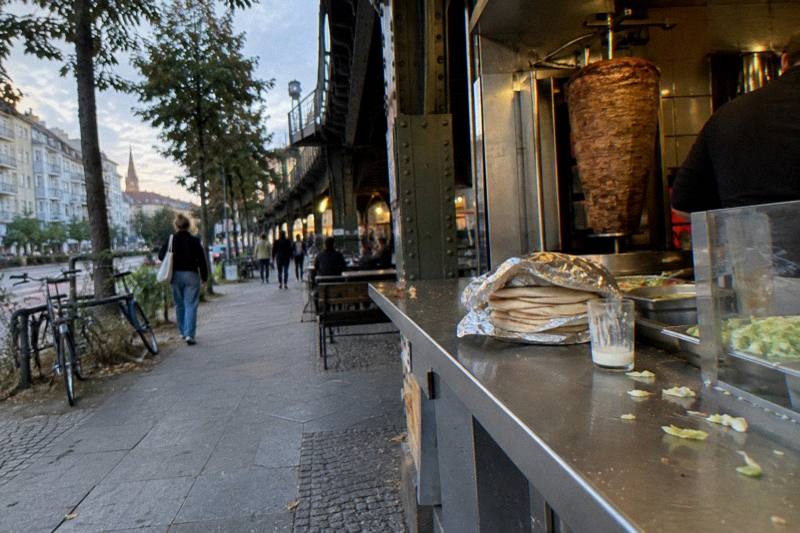
Doner Kebab History In Berlin: German Or Turkish
The doner kebab as a handheld sandwich is widely credited to Turkish guest workers in Berlin in the early 1970s, but the meat itself is centuries older and firmly Turkish. Here is the full story, and the tours that walk it.
Short answer
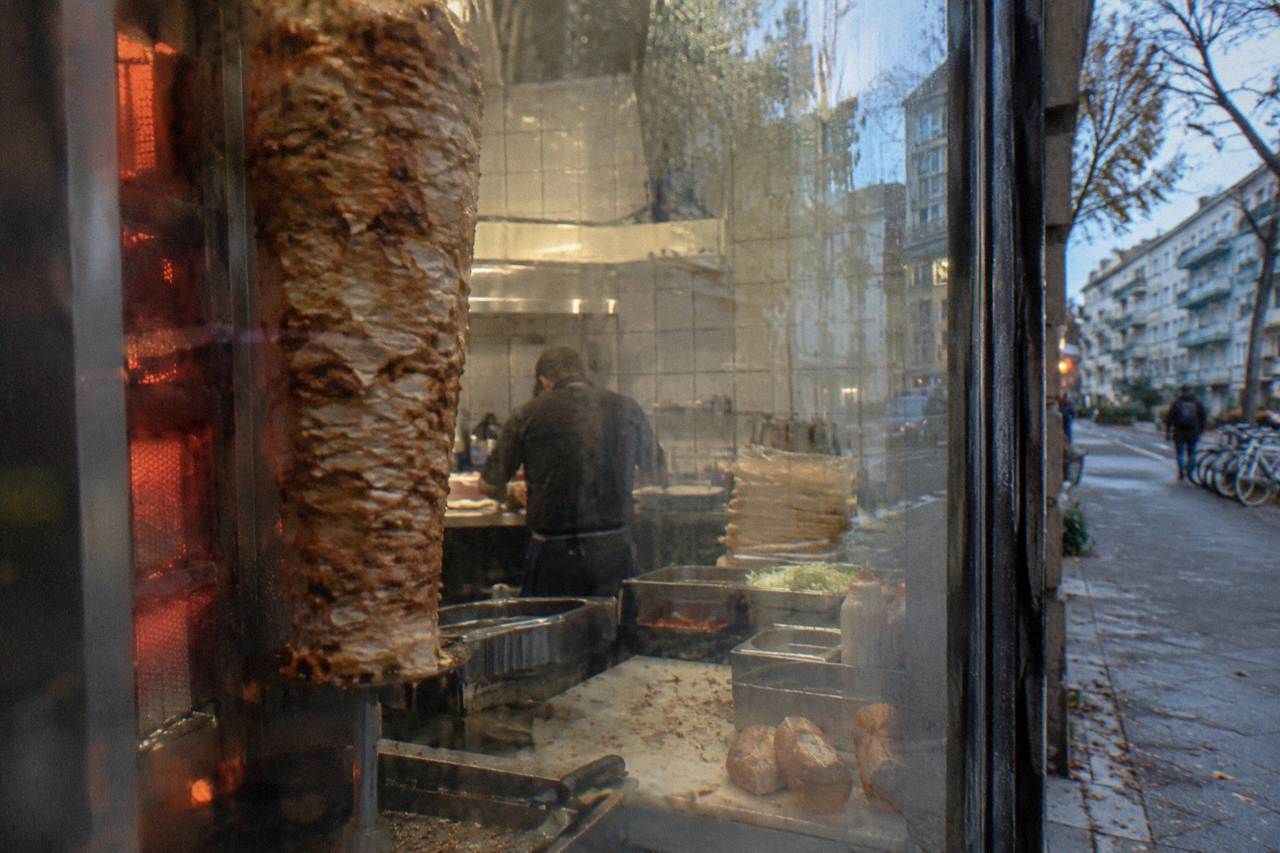
The doner kebab sandwich is widely credited to Turkish guest workers in 1970s Berlin, most often linked to Kreuzberg, while the rotating-spit meat goes back much further in Turkey. A Berlin doner tour with a gourmet kebab stop and sightseeing runs about 3 hours, rated 4.9 across 57 reviews, from $51.
The doner kebab sitting in a folded flatbread is, by most accounts, a Berlin invention with Turkish parents. The vertical rotating spit and the shaved meat are old Anatolian craft; the sandwich format that now feeds half the world is widely credited to Turkish guest workers who arrived in West Berlin in the early 1970s. That tension, one dish with two passports, is exactly why the question "is doner German or Turkish" produces so many confident and contradictory answers online.
The honest version is more interesting than either flag. This guide walks through the migration history that put the spit in Kreuzberg, the differences between the sandwich as eaten in Berlin and the plates served in Turkey, and the bookable walks that trace the story on the street where it happened. Along the way it covers prices, durations and what a doner-focused tour actually includes, so the history ends at a decision you can make the same day.
Is Doner Kebab Turkish Or German Food?
The meat is Turkish and old; the sandwich is widely credited to Berlin in the early 1970s, and that credit belongs to Turkish immigrants. Vertical-stack roasted meat has Anatolian and Ottoman roots going back centuries, served in Turkey largely on plates or in thin lavash. The idea of stacking that meat into a substantial bread roll with salad and sauce as fast street food is the step most commonly placed in West Berlin's Kreuzberg.
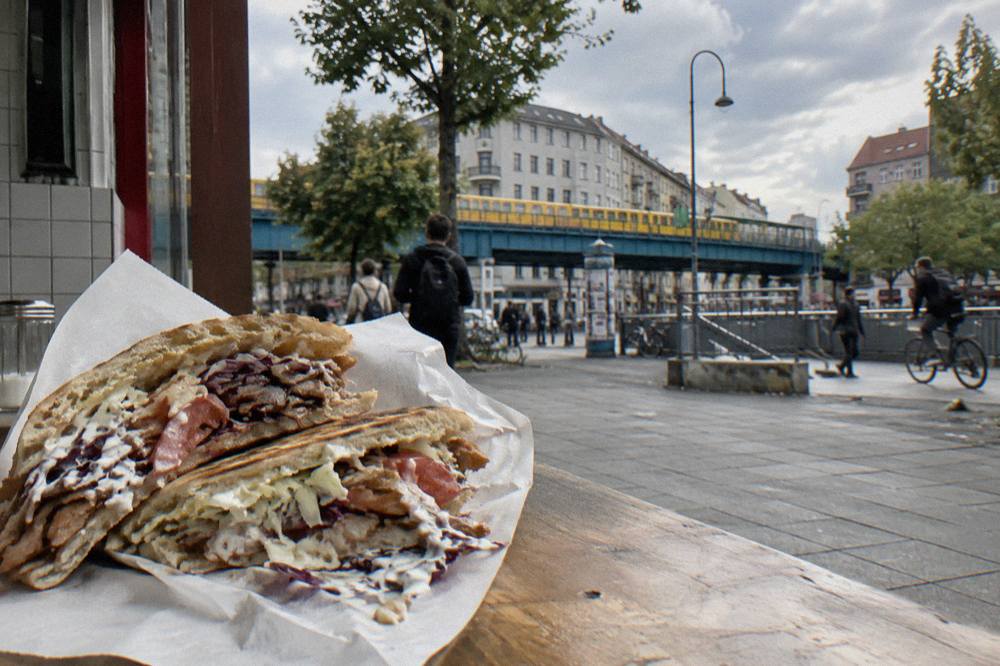
Calling doner simply "German food" erases the Gastarbeiter families who built the trade. Calling it simply "Turkish food" ignores that the specific sandwich format, the bread choice, the vegetable fillings and the sauce culture developed for German customers on German streets. Food historians and Turkish community writers alike tend to describe the modern doner as a Turkish-German creation, which is also why it travels so well: it was already a hybrid before the world copied it.
That hybrid status is visible everywhere in Berlin today. The city has its own doner etiquette, its own ordering vocabulary and its own famous stands, and the walkable districts of Kreuzberg and Neukölln hold the densest concentration of them. For a fuller map of that food landscape, the Kreuzberg doner and Turkish market walk guide covers the neighborhood where most of this history happened.
Who Invented The Doner Kebab Sandwich In Berlin?
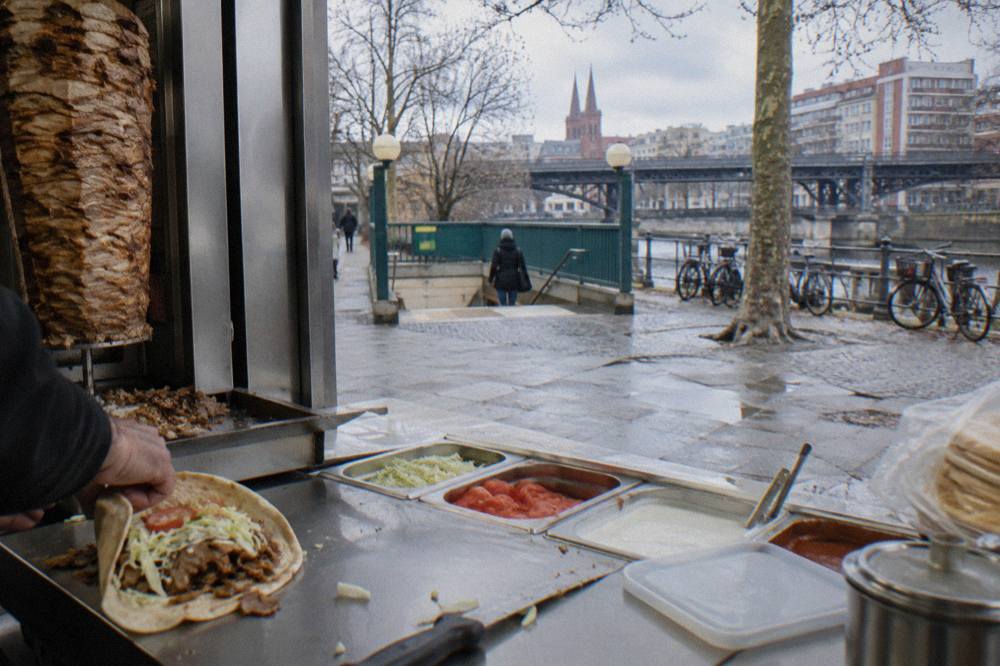
No single inventor can be stated as fact. The doner kebab as a sandwich is widely credited to Turkish guest workers in Berlin in the early 1970s, and no single inventor is agreed. Historians describe the credit as shared and contested among several Turkish cooks, so any page naming one sole inventor is overstating what the record supports.
That story matters because of what it says about the moment, not because it settles who got there first. West Berlin's Turkish population grew quickly through the postwar recruitment decades as workers brought families and opened businesses. Rotating spits existed in the city before the sandwich boom, mainly serving Turkish customers on plates. The innovation credited to the early 1970s was turning that meat into a portable, affordable meal for German office workers and commuters: bigger bread, more filling, faster service.
Other names compete for the same credit, including cooks who claim earlier bread-wrapped sales elsewhere in Germany, and Turkish food writers who point out that meat-in-bread combinations existed in Istanbul before Berlin. The claim that survives scrutiny is narrower: Berlin in the early 1970s is where the modern industrial doner sandwich, the format that spread globally, took its recognisable shape.
If you want to stand in the middle of that history rather than read about it, three bookable options pair the origin story with actual tastings:
The first of those, the Berlin: Döner Kebab Tour & Sightseeing, runs about 3 hours, is rated 4.9 across 57 reviews and starts from $51, with a gourmet kebab stop and historical sites built into the route. Check availability if the dates suit, and read the meeting point details on the booking page before you go.
Why Did Turkish Doner Take Root In Kreuzberg?
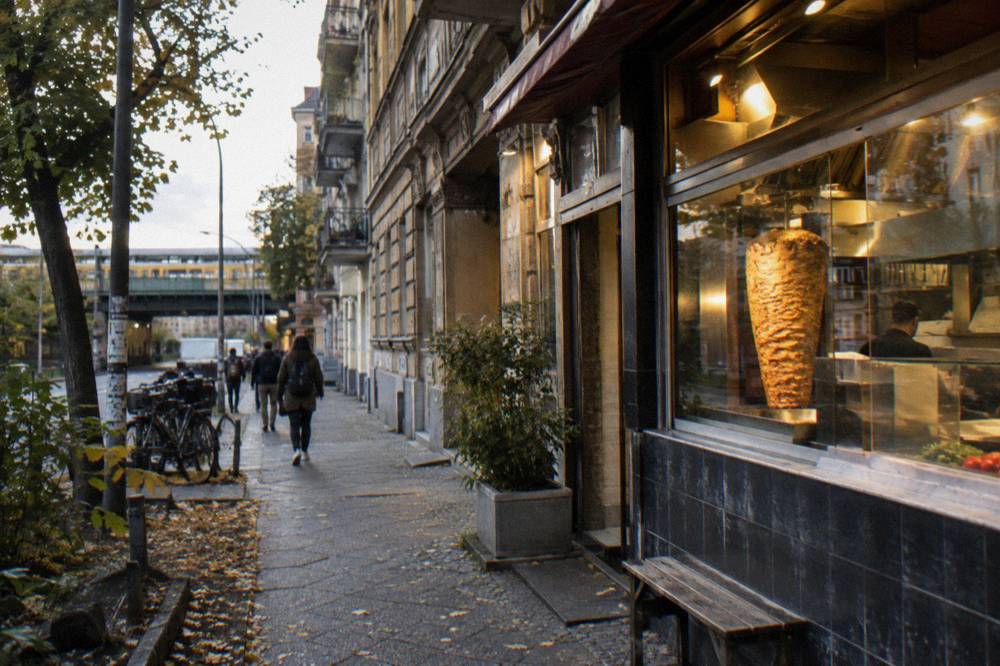
Kreuzberg was where cheap housing, factory jobs and Turkish community networks overlapped in postwar West Berlin, hemmed in on three sides by the Wall. Guest workers settled there because rent was low and work was close; cafés, grocers and kebab shops followed the residents. Within a generation the district had a Turkish commercial life dense enough that parts of it became known as Little Istanbul, and doner was its most visible export to the rest of the city.
The Wall itself shaped the story. West Berlin's subsidies and exemptions from some West German labor rules drew both industry and immigrants, while the enclosed city kept rents affordable in districts like Kreuzberg that sat hard against the border. Turkish businesses clustered along the main streets, and food was the most portable trade: low startup costs, skills carried from home, customers from both communities. Doner's rise from side business to one of Germany's most popular fast foods happened inside one generation.
That history is still legible on the street. The Maybachufer market on the Landwehrkanal runs Tuesday and Friday 11:00 to 18:30 and anchors the Turkish trade in northern Neukölln just across the water from Kreuzberg. Tracing the layers yourself is easiest on foot, and the Neukölln food walk from Maybachufer guide maps that stretch stop by stop.
How Is Berlin Doner Different From Turkish Doner?
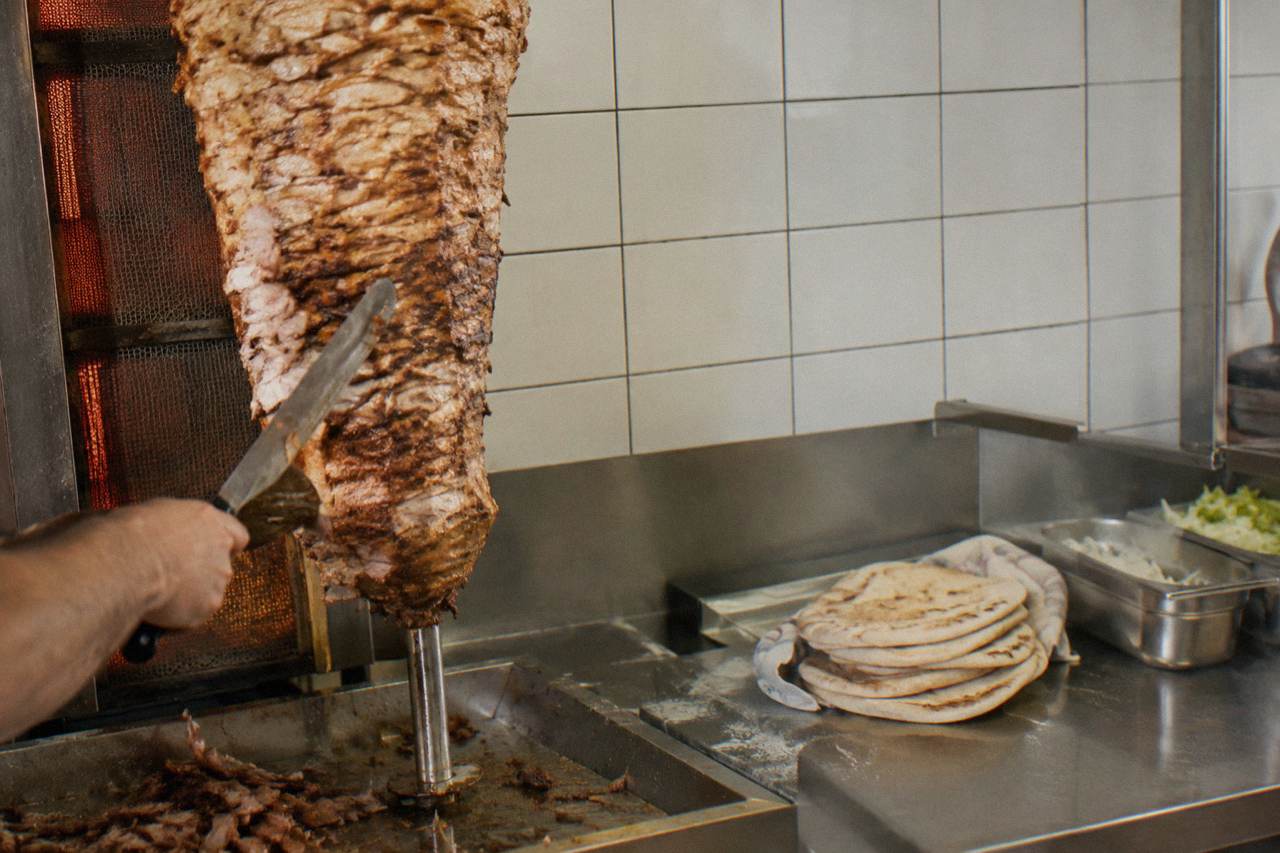
In Turkey, doner is usually plate food or a light wrap in thin bread; in Berlin it became a full sandwich in thick bread with lettuce, cabbage, onion, tomatoes and a choice of sauces. Berlin portions are bigger, the bread is heavier, and sauces like garlic yogurt became standard through German customer demand. Purists in both cities still debate whether the Berlin version counts as doner at all.
The differences are practical, not just philosophical. Bread is the clearest marker: Turkish street doner often uses thin lavash or durum wraps, while the classic Berlin format uses a wedge of crusty round bread that holds more filling. Meat preparation also drifted, with Berlin shops historically mixing beef and veal, and chicken doner becoming a second standard spit. Vegetable volume and sauce variety are Berlin additions tuned to local tastes and bigger appetites.
Ordering culture diverged too. Berlin has its own shorthand, its own arguments about sauce order, and famous stands whose reputations rest on a single house combination. The etiquette and ordering details are worth a page of their own, and the Berlin doner ordering guide covers bread types, meat choices and how locals actually order at the counter.
| Feature | Turkish street doner | Berlin doner sandwich |
|---|---|---|
| Typical format | Wrap in thin lavash or durum, or plate service | Wedge of thick round bread, fully loaded |
| Common meat | Beef or lamb, chicken as option | Beef and veal mix, chicken as a second standard spit |
| Vegetables | Moderate, often tomato, onion, parsley | Large volume: lettuce, cabbage, onion, tomato |
| Sauces | Chili and yogurt-based, restrained | Garlic yogurt, herb sauce, spicy options, combined on request |
| Origin of the format | Older Anatolian tradition | Early 1970s Berlin, widely credited to Turkish guest workers |
| Role in food culture | Everyday meal and restaurant staple | One of Germany's most popular fast foods, exported worldwide |
The export is the final proof of the Berlin version's independence. The loaded sandwich format spread from Berlin back to Istanbul and onward to dozens of countries, so that today many Turkish vendors sell a format their grandparents would recognise as German-Turkish. The circular migration of a single dish is a good reason to taste both versions while in Berlin, since the city holds shops serving each tradition. Before you start tasting, the guide to whether German döner beats Turkish döner settles the debate and names the Berlin shops where you can sample both styles in a single afternoon.
Where Does Mustafa's Gemüse Kebap Fit In?
Mustafa's Gemüse Kebap on Mehringdamm is the most famous single doner-adjacent stand in Berlin, known above all for a long queue that press coverage has reported for years, and for a house style that loads chicken doner with fried vegetables. It is a Berlin original of the modern fame era, not the 1970s origin story.
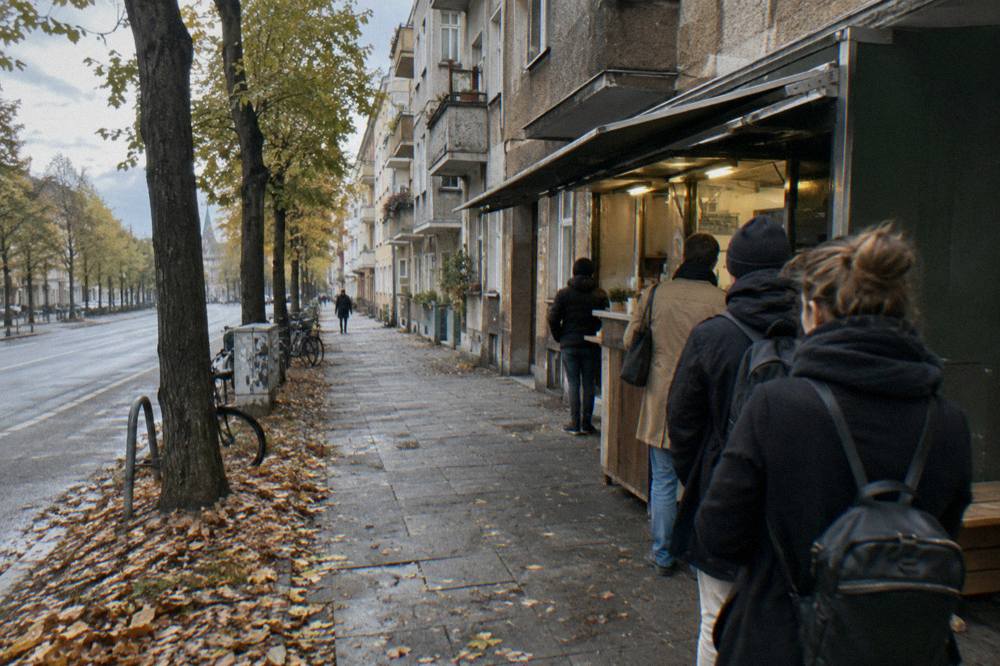
The stand's signature approach, vegetables fried and stuffed alongside the meat rather than underneath it, has been copied across the city and abroad. Its reputation grew through word of mouth and food media rather than tourism boards. Because the stand sits at Mehringdamm in Kreuzberg itself, an easy add-on to a Kreuzberg walk, visitors often pair it with a wider food walk rather than treating it as a single destination.
Whether the wait is worth it depends on your pace and priorities, which is exactly the question the separate Mustafa's Gemüse Kebap queue guide examines in detail. If your time is short, a guided walk that includes kebab stops in its route delivers several tastings in the time a single famous queue can consume.
Getting around Kreuzberg to Mehringdamm is easy by U-Bahn; a BVG zone AB single ticket costs 4,00 EUR and is valid for 120 minutes, including changes, per BVG's single-ticket price table. Children from 6 to 14 travel reduced at 2,50 EUR.
How Much Do Doner And Street Food Tours In Berlin Cost?
Bookable doner and street food walks run from $34 to $118 per person, with the dedicated doner tour at from $51, the hidden Kreuzberg and Neukölln walk at from $118 and the KERB food hall experience at from $34. These are per-person starting prices from the tour pages; group-size and private options elsewhere on the site run higher. What each includes varies, so price alone is a poor comparator.
The table below gathers the relevant options with their durations and review standing, using figures exactly as the tour pages state them. Review counts matter here as much as stars: an option with a handful of reviews has less of a track record than one with hundreds, and three of these are too new for a star claim at all.
| Tour | Duration | Rating | From (per person) |
|---|---|---|---|
| Berlin: Döner Kebab Tour & Sightseeing | ~3 hours | 4.9 across 57 reviews | $51 |
| Hidden Kreuzberg and Neukölln | ~3 hours | 9 reviews, too few for a star claim | $118 |
| KERB Food Hall, Drinks | Not stated | 12 reviews, too few for a star claim | $34 |
| Markthalle Neun, Craft Beer | ~2.5 hours | no reviews yet | $97 |
| No Diet Club Street Food Walk | ~3 hours | 4.8 across 403 reviews | $75 |
| Budget Mitte Culinary Walk | ~3 hours | 4.6 across 506 reviews | $50 |
Duration per dollar is one lens; stops per walk is another. The doner tour concentrates on one dish family plus historical sites, the Kreuzberg and Neukölln walk spreads across hidden stops in two districts, and the KERB hall experience compresses many vendors into one roof, which is why it costs least. The street food tour with tastings and the Mitte culinary walk are the broadest options if doner is one interest among several.
What Does A Doner Kebab Tour In Berlin Actually Include?
The doner tour page lists a roughly 3-hour walk combining historical sites with a gourmet kebab stop and several food stops, from $51 per person, rated 4.9 across 57 reviews. Meeting point details are on the booking page, and the listing does not mention pickup. The neighboring street food walks include tastings in their price; the inclusions list on each booking page is the deciding document before you reserve.
The value of a guided doner walk over a self-directed crawl is narrative and access. The guide supplies the guest worker history, the Kreuzberg geography and the ordering fluency that turns a snack into a story, and the gourmet stop is chosen rather than chanced upon. For travelers with limited German or limited time, that scaffolding is the product. Independent eaters with more days can replicate parts of it using the neighborhood guides on this site, at the cost of research time.
Pairing works well too. A doner-focused walk in the morning or afternoon leaves the evening free for a different register of Berlin eating, and the evening street food after dark guide covers that shift. Visitors planning a longer stay can also slot the doner story into a bigger route with the food-first Berlin itinerary guide.
Timing around markets matters if you want to combine the walk with the Turkish market at Maybachufer, which runs Tuesday and Friday 11:00 to 18:30 and closes on public holidays. Markthalle Neun's Street Food Thursday runs 17:00 to 22:00, with listed November 2026 dates on the market's official page, and makes a natural Thursday pairing with an afternoon walk nearby.
When Is The Best Time To Eat Doner In Berlin?
Any day works for doner, since kebab shops are Berlin's most reliable food source, but the surrounding food calendar is not uniform: supermarkets close on Sundays except at stations, bakeries may serve until 16:00 on Sundays, and markets run only on fixed days. Tuesday and Friday bring the Maybachufer Turkish market, Thursday evenings bring Street Food Thursday, and the pre-Christmas weeks add market food from late November.
Sunday deserves the most forethought. Under Berlin's shop-opening law, Sunday trading is closed in principle, with tourist-need shops allowed 13:00 to 20:00 and bakery-type special ranges 07:00 to 16:00, per the Senatsverwaltung's opening-hours overview. Small food stands and imbiss counters are a different category from supermarkets, and doner shops anchored in station areas are the most reliably open, but a Sunday food plan should not assume mid-morning grocery runs.
Winter eating has its own logic. Deutscher Wetterdienst 1991 to 2020 normals for Alexanderplatz put January at a mean of 1.5 degrees and December at 2.5 degrees, so a hot sandwich eaten standing becomes genuinely attractive in the cold months, and the pre-Christmas market season from late November adds Glühwein stops to any walk. Summer shifts the same route toward canal-side eating around the Landwehr canal, where the Maybachufer stalls sit.
The fixed food calendar around a doner plan looks like this:
| Event | Day and hours | Notes for visitors |
|---|---|---|
| Turkish market, Maybachufer | Tuesday and Friday 11:00 to 18:30 | Closed on public holidays |
| Street Food Thursday, Markthalle Neun | Thursday 17:00 to 22:00 | Listed November 2026 dates on the official page |
| Winterfeldtmarkt, Winterfeldtplatz | Wednesday morning, Saturday until 16:00 | Weekly market in Schöneberg |
| Grüne Woche | 15 to 24 January 2027 | International food fair |
| Alexanderplatz Christmas market | 23 November to 26 December 2026, 11:00 to 22:00 | Free admission |
| Lucia Christmas Market, Kulturbrauerei | 23 November to 22 December 2026 | Free admission |
Transport costs stay stable through the year: the AB single ticket holds at 4,00 EUR into 2027 while the four-trip AB ticket rises to 13,20 EUR, per Berlin.de's report on the VBB 2027 fare round.
Which Bookable Walks Pair Doner With Berlin History?
The strongest pairing is the Prenzlauer Berg doner and sightseeing walk from $51 together with the hidden Kreuzberg and Neukölln walk from $118: one covers the story with a gourmet kebab stop in about 3 hours, the other goes deeper into two districts' hidden food stops over a similar length. Adding the KERB food hall experience from $34 gives a low-commitment taste of Berlin's current street food scene, past and present covered in three bookings.
The pairing logic follows the history. Kreuzberg holds the origin sites and the oldest Turkish commercial streets, so a walk anchored there delivers the early 1970s story. Neukölln, one canal further south-east, shows where the community and the food scene moved next, and a two-star kitchen like CODA is the contemporary coda to a story that started with corner shops. A visitor who walks both sees the whole arc in two afternoons.
For travelers who prefer one broader booking over two focused ones, the wider street food tour with tastings at from $75, rated 4.8 across 403 reviews, sweeps several of the same neighborhoods into a single walk. Review depth is its strength: with 403 reviews it has one of the larger track records among the street food options, and the 4.8 rating is well supported by that pool rather than resting on a thin base.
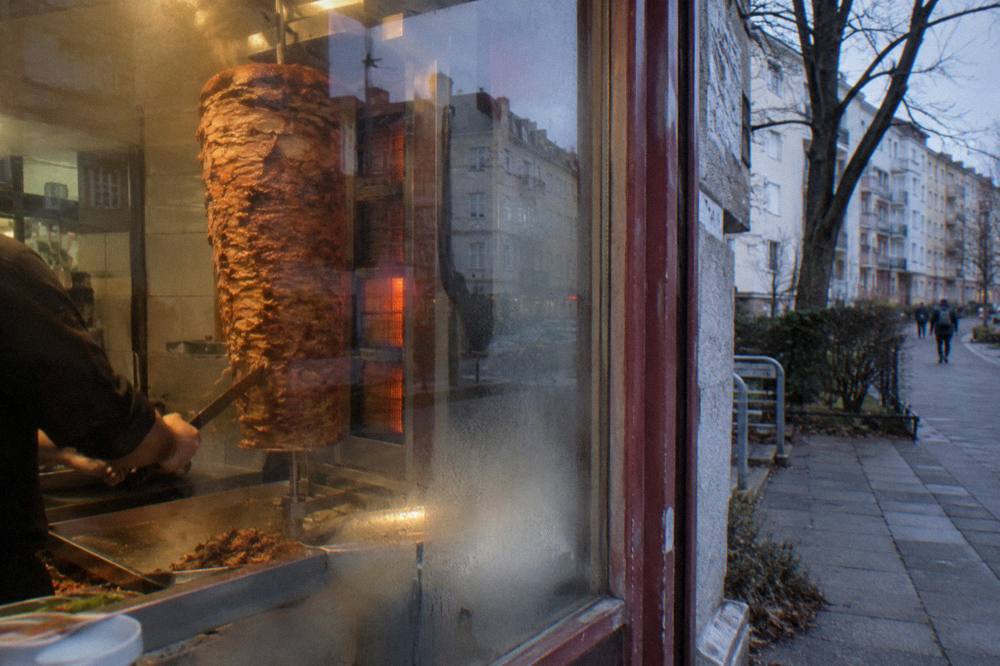
Whatever you book, the history holds the same shape: a Turkish craft, a German city, a sandwich born at the intersection in the early 1970s and eaten today on every continent. Berlin remains the place where the argument over its nationality is loudest and best informed.
Common Questions About Doner Kebab History In Berlin
Is Doner German Or Turkish?
The meat is Turkish, the modern sandwich is widely credited to Turkish guest workers in Berlin in the early 1970s. Most food historians describe the loaded flatbread doner as a Turkish-German creation, so the honest answer is both, with the sandwich format anchored in Berlin.
Who Invented The Doner Kebab?
No single inventor can be stated as fact. The credit is widely given to Turkish guest workers in early 1970s West Berlin, but the claim is shared and contested among several cooks and no single name is agreed.
Where Was The First Doner Kebab Shop In Berlin?
The origin story is widely credited to Turkish guest workers in West Berlin, who set up food businesses among cheap housing and factory jobs in the postwar decades. The precise first shop cannot be verified from the historical record.
How Is Berlin Doner Different From Turkish Doner?
Turkish street doner is usually a light wrap in thin bread or a plate dish; Berlin doner is a full sandwich in thick bread with a large volume of vegetables and multiple sauces. The heavier Berlin format is the version that spread worldwide.
How Much Does A Doner Tour In Berlin Cost?
The dedicated doner kebab and sightseeing tour starts from $51 per person for roughly 3 hours, rated 4.9 across 57 reviews. Broader street food walks run from $34 to $118 per person depending on format and scope.
Is Mustafa's Gemüse Kebap Part Of The Doner Origin Story?
No. Mustafa's on Mehringdamm is a modern famous stand, known for a long queue reported in press coverage and a house style loading chicken doner with fried vegetables. It belongs to the fame era of Berlin doner, not the early 1970s origins.