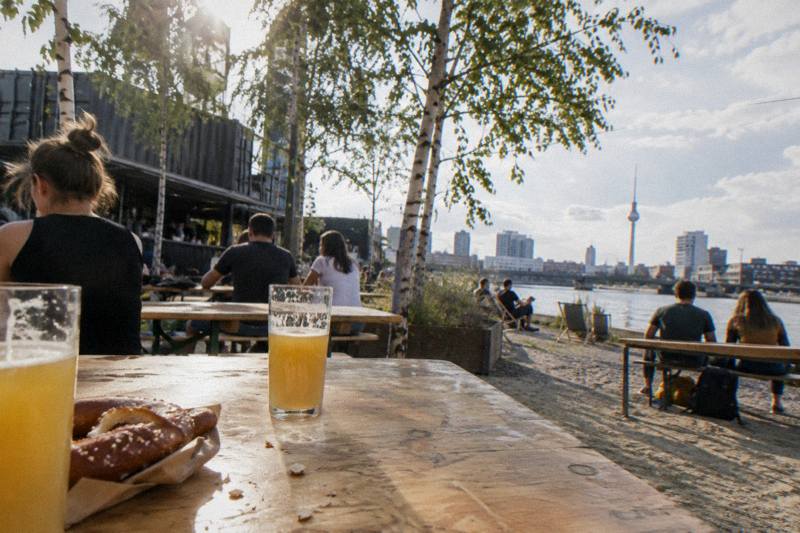
Berliner Weisse: Red Or Green Syrup And Where To Try It
Berliner Weisse is Berlin's own sour wheat beer, traditionally served with a shot of red raspberry or green woodruff syrup. This guide explains the drink, the syrup question, where to find it, and which Berlin beer experiences pair well with it.
Short answer
Berliner Weisse is a lightly sour, low-alcohol wheat beer served in a wide stemmed glass with a straw and, by custom, a shot of red Himbeer (raspberry) or green Waldmeister (woodruff) syrup. Beer experiences in Berlin run from $20 for a brewery tasting to $218.13 for an evening culinary tour, and craft beer tours visit the kind of taprooms where it often appears.
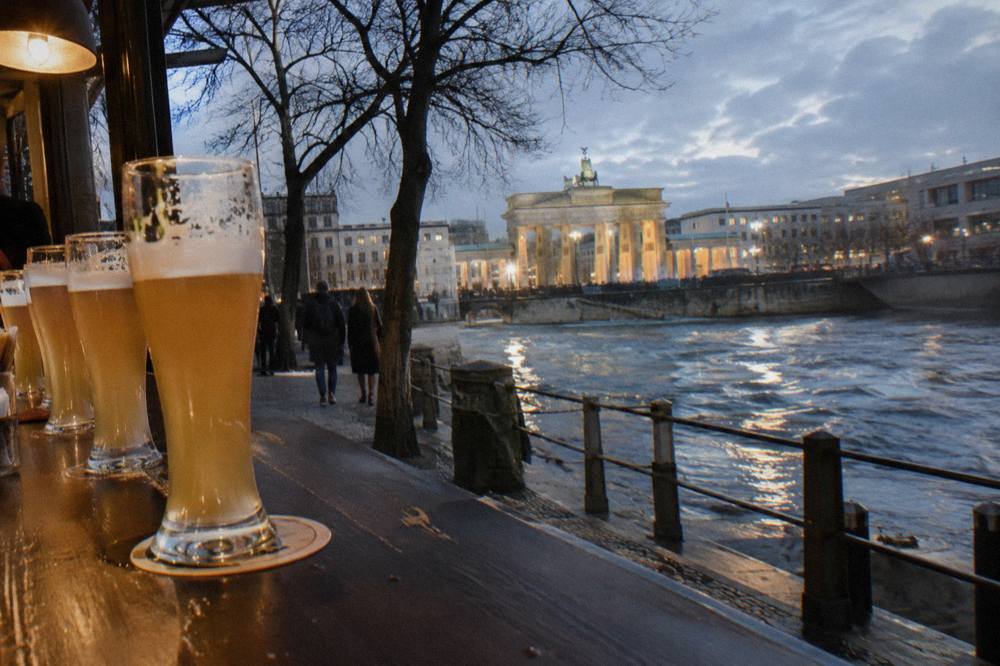
Berlin has a drink that locals argue about in two colours. Berliner Weisse, the city's lightly sour wheat beer, has been poured here for many generations, and the custom of sweetening it with a shot of syrup, red or green, is the part visitors remember longest. The beer itself is faintly tart, low in alcohol and served cold in a broad stemmed glass, sometimes with a straw, sometimes with a raspberry floating in it. Deciding between red and green is a small ritual, but it is a genuine piece of Berlin drinking culture, and this guide covers it end to end: what the beer is, what the syrups do, where to try it, and which booked beer experiences in Berlin build a whole afternoon around the city's brewing story.
The site behind this page, Berlin Food Tours, exists to connect drinking and eating culture to real, bookable options.
What Is Berliner Weisse And Why Is It So Sour?
Berliner Weisse is a top-fermented wheat beer brewed with a mixed culture that includes lactic acid bacteria, and that is precisely why it tastes so sour: the bacteria produce lactic acid during fermentation itself rather than the sourness being added afterwards. The result is a tart, lemony edge in a beer that is light in alcohol, heavily carbonated, and cloudy.
The sourness is the whole point. Where a Bavarian hefeweizen leans on banana and clove esters from the yeast, a traditional Berliner Weisse gets its character from lactobacillus working alongside the brewer's yeast, dropping the pH and producing a clean, sharp acidity. The result is a beer closer in spirit to a dry cider or a salty-sour gose than to anything malty, and it is one of the few beer styles tied so closely to a single city's name in Germany.
That tartness is also why the syrup custom exists at all. Drunk straight, the beer can be bracing, and the historical answer was to soften it with fruit or herbal sweetness. Napoleon's troops are credited in popular accounts with calling it the Champagne of the North, a story repeated so often it has become part of the drink's folklore whether or not every detail survives scrutiny. What is not folklore is the style's collapse and revival: Berliner Weisse faded to a niche product in its own city before the modern craft beer movement, both in Germany and abroad, rediscovered the style as a base for fruit sours and kettle sours.
For a visitor, the practical takeaway is simple. The beer you meet in a traditional Berlin pub is not the same product as the fruit-loaded pastry sours sold in craft taprooms, even though both descend from the same souring logic. Both are worth trying, and both appear on the itineraries of the tours covered later in this guide. If you want the deeper background on the city's brewing scene before booking anything, the Berlin beer tour guide walks through breweries, beer gardens and tasting stops in more detail.
Red Or Green: Which Syrup Goes In A Berliner Weisse?
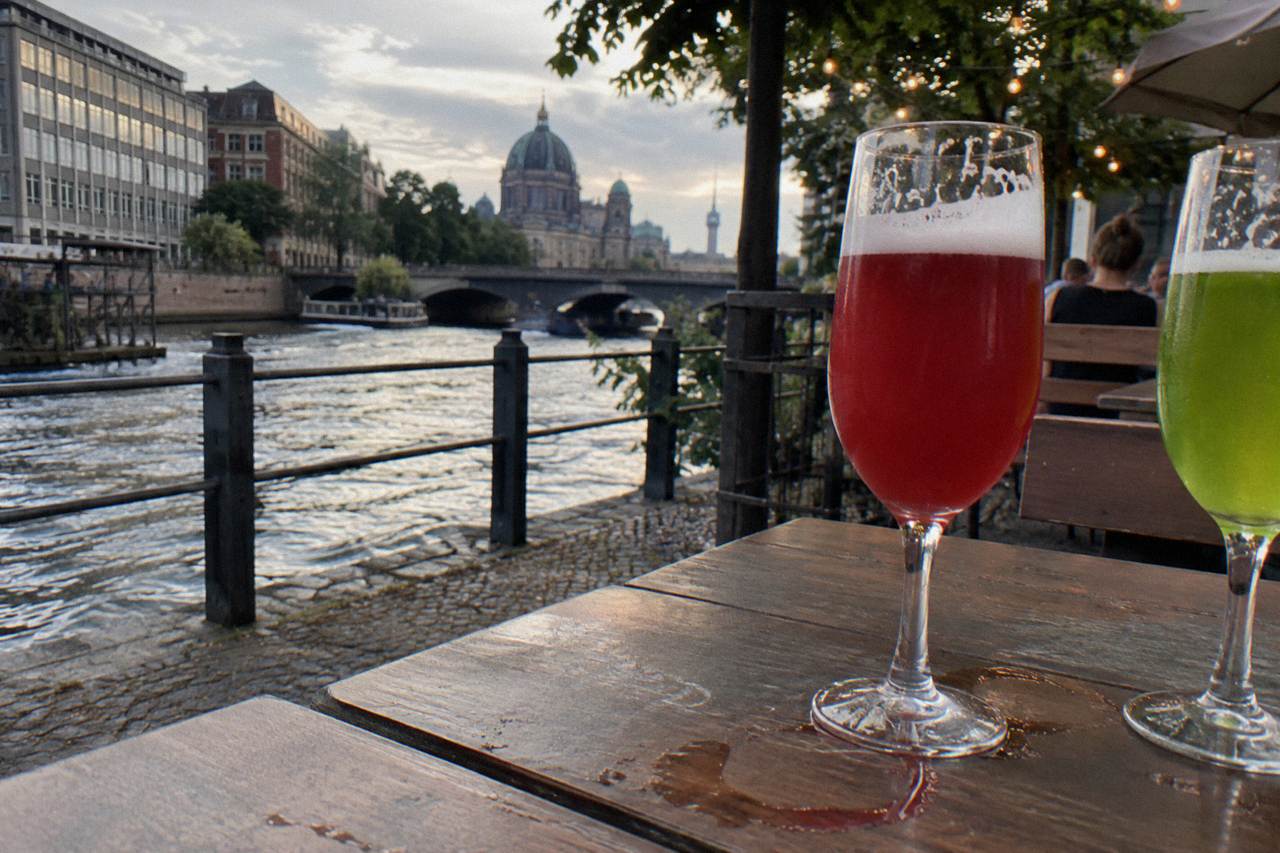
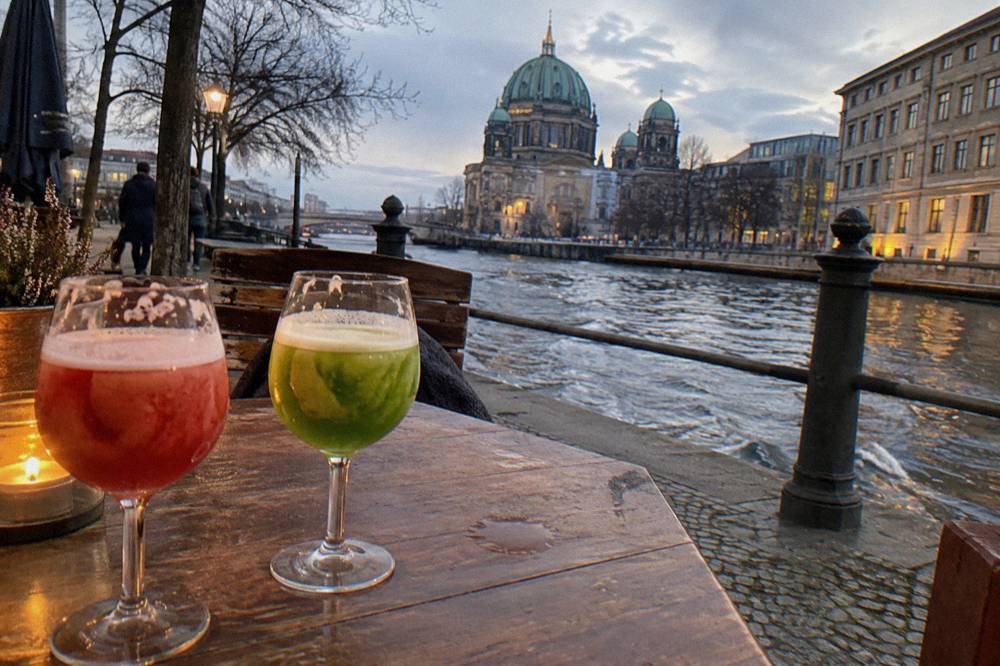
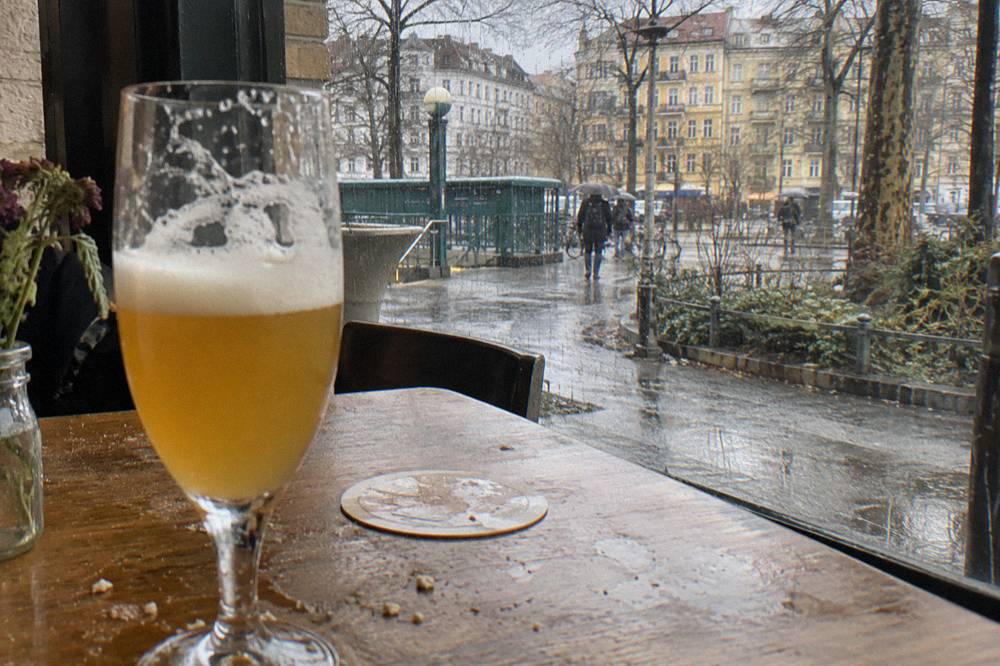
The custom offers two syrups: red Himbeersirup, raspberry, which pushes the beer toward sweet-tart berry; and green Waldmeistersirup, woodruff, an herb syrup with a vanilla-like, slightly earthy flavour and the colour of a green apple. Neither is mandatory, and locals do order the beer plain, but the sweetened versions are the ones most visitors encounter first, and the choice between them is genuinely a matter of taste rather than etiquette.
By tradition, red is the safer first pick for people who want something fruit-forward, while green is the more distinctive, oddly nostalgic flavour that many Berliners grew up with, since woodruff syrup also flavours jelly desserts and soft drinks in Germany. The green variant's flavour is hard to place on first encounter: it is not mint, not herbal like a liqueur, and its closest reference point is a mild vanilla-almond note. Servers describe both options as a matter of custom, and operators do not promise one over the other.
| Syrup | German name | Base flavour | Effect on the beer | Who it suits |
|---|---|---|---|---|
| Red | Himbeersirup | Raspberry, sweet-tart | Rounds the sourness, adds berry aroma | First-timers, fruit-beer drinkers |
| Green | Waldmeistersirup | Woodruff, vanilla-like, herbal | Sweetens with an unusual herbal edge | Adventurous drinkers, the nostalgic local pick |
| None | pur | Pure wheat and lactic tang | Full sourness, driest finish | Sour-beer fans, craft palates |
Two practical notes. First, the syrup goes in at the table or at the bar, often poured in front of you so you can see the colour swirl through the pale beer, which is half the theatre. Second, the amount matters: a heavy pour turns the drink into something closer to a soft drink, and many regulars ask for it "mit Schuss", with a shot, expecting restraint.
If tasting your way across Berlin's drinks culture appeals more than a single glass, these three options are the ones most closely tied to the beer theme:
Each covers a different slice of the scene: a historic pub walk with beer tastings, a deep craft-beer experience, and a short brewery visit with a tasting. Details for all three appear later in this guide, with prices and durations as listed by each operator.
Where To Try Berliner Weisse In Berlin?
The honest answer is that Berliner Weisse shows up in two kinds of venue: traditional corner pubs and beer gardens in districts like Mitte, Kreuzberg and Prenzlauer Berg, where the stemmed glass and syrup custom survive, and modern craft taprooms, where Berlin-style sours and contemporary interpretations are poured alongside IPAs. Booked beer tours reach both worlds, and a guided option saves the guesswork of finding which pubs still keep a Weisse on the menu. Once you have tracked down your first syrup-topped glass, you may start wondering what else the city drinks, and the guide to Berlin's most famous drinks walks through the beer, wine, and coffee culture around it.
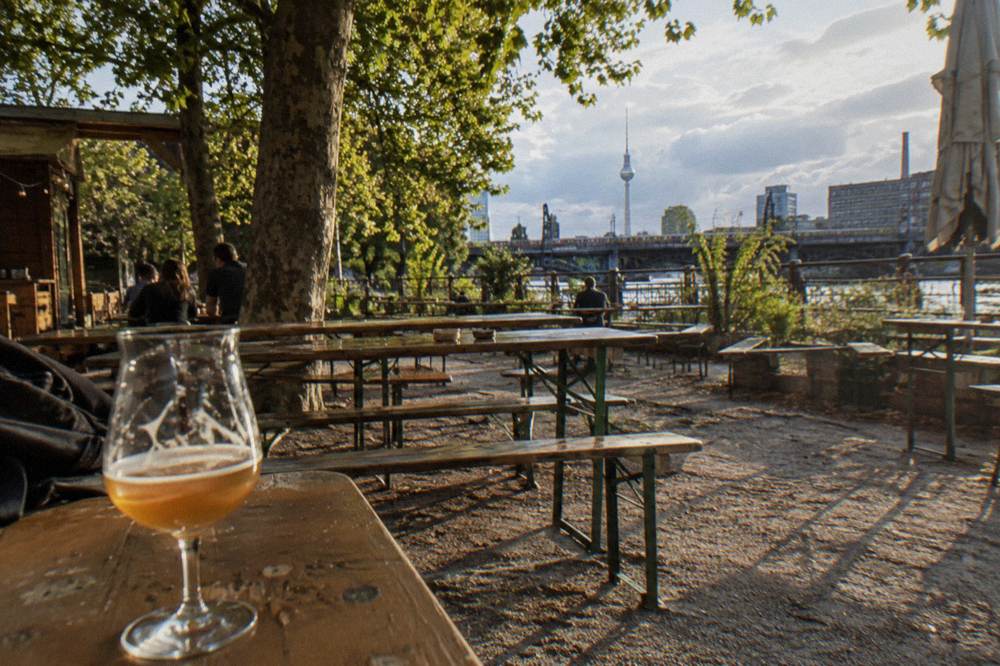
The traditional route is the most atmospheric. Old Berlin Kneipen, the corner pubs with frosted glass and bentwood chairs, are where the drink belongs historically, and beer gardens pour it in summer alongside the standard pilsners and helles. No specific venue can be promised here, since pub menus change and the style is no longer universal, but the pattern holds: ask for a Berliner Weisse mit Schuss, red or green, and most traditional houses will know exactly what you mean. Season matters too. Beer garden season follows the warm months, and the Deutscher Wetterdienst 1991 to 2020 normals for Alexanderplatz put July at a mean of 20.4 C with 238.2 hours of sunshine, against January's 1.5 C, so outdoor drinking is overwhelmingly a May to September pleasure.
The craft route is where the style is being actively reinterpreted. Breweries like BRLO, whose Berlin operation now includes a gastropub location in Charlottenburg with 20 taps featuring its own beers including a Berliner Weisse, keep the style alive for a new audience. A short booked visit is often the easiest way in: the Berlin: BRLO BRWHOUSE Tour and Craft Beer Tasting runs about 1.5 hours from $20 per person and is rated 4.5 across 788 reviews, making it one of the most reviewed beer options in the city and the cheapest structured entry point on this theme.
For structure, the Berlin Craft Beer & Cultural Tour With Snack, about 3 hours, rated 5.0 across 364 reviews and listed from $125.14 per person, pairs several tasting stops with neighbourhood context, and its own tour page has the full meeting point details. Beyond tours, market halls occasionally pour local beer alongside food stalls: Street Food Thursday at Markthalle Neun runs every Thursday from 17:00 to 22:00, as listed on the official Markthalle Neun market page, and the market-and-beer combination makes a good self-guided evening. For planning that kind of evening yourself, the evening food walk guide covers what stays open late.
Which Berlin Beer Tours Include A Berliner Weisse Stop?
No operator publishes a stop-by-stop guarantee that Berliner Weisse is poured, and itineraries vary with venue availability, so treat any specific pour as likely rather than promised. What the beer tours do promise, on their booking pages, is a route through Berlin's brewing culture: craft taprooms, historic pubs and working breweries, the three venue types where a Berlin-style sour is most likely to appear on the board.
The closest thematic match is Berlin's first original craft beer tour & experience, about 3 hours, rated 4.9 across 284 reviews and listed from $149.20 per person. Craft-focused routes concentrate on smaller producers, and modern Berlin breweries are precisely the places reviving the style. The Historic Pubs of Berlin & Berlin Beer Tour, about 3 hours 30 minutes, rated 5.0 across 239 reviews and from $84.95 per person, works the traditional end, the old pubs where the stemmed glass never fully disappeared. Between them, the two formats cover the full arc from corner-pub classic to contemporary sour.
| Tour | Duration | Rating and reviews | Price basis |
|---|---|---|---|
| Craft Beer Tour, Snack Included | ~3 hours | 5.0, 364 reviews | from $125.14 per person |
| Berlin's first original craft beer tour & experience | ~3 hours | 4.9, 284 reviews | from $149.20 per person |
| Historic Pubs Beer Crawl | ~3 hours 30 minutes | 5.0, 239 reviews | from $84.95 per person |
| BRLO Brewery, Budget Fare | ~1.5 hours | 4.5, 788 reviews | from $20 per person |
| Wine Tasting With Sommelier | ~1 hour 30 minutes | 5.0, 17 reviews | from $170 per person |
The wine row is there deliberately. Drinkers who enjoy the sour, low-alcohol profile of a Berliner Weisse often get along well with dry Riesling and other German whites, and the sommelier-led format, though built on wine, shares the guided-tasting structure. Reviews are thin at 17, so treat that rating as a small pool rather than a verdict. If beer history rather than beer styles is your angle, the question of free walking tour or food walk in Berlin covers how the history-first and food-first formats differ.
Is Berliner Weisse The Same As Modern Craft Sour Beer?
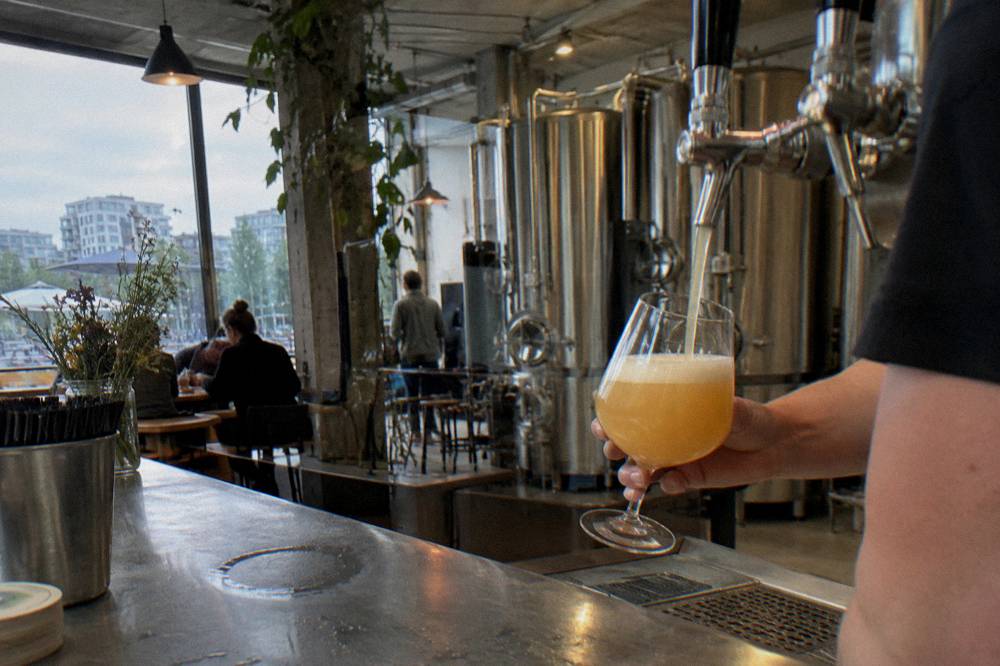
No, though they are related. Traditional Berliner Weisse is a light, low-alcohol wheat beer soured by lactic bacteria, usually served with syrup; modern craft sours are a broad category, often stronger, fruitier and deliberately hazy, brewed worldwide using similar acidification techniques. In Berlin taprooms today you can meet both: the classic stemmed glass with red or green Schuss, and contemporary kettle-soured interpretations sold as craft products.
The family tree matters when you order. A brewer describing a "Berliner-style sour" on a chalkboard is usually signalling technique, a fast lactic souring in the kettle, not adherence to the old Berlin recipe. The classic version is subtler, drier when taken plain, and built around the syrup custom that the modern versions mostly skip in favour of added fruit. Neither is the wrong order; they are simply different drinks sharing an ancestor.
For visitors, this split explains why two beer tours can feel nothing alike. A historic-pub route introduces the drink as Berliners have known it for generations, while a craft route, like the Berlin's first original experience mentioned above, frames the style as a living tradition that breweries keep rewriting.
How Much Does A Beer Tour In Berlin Cost?
Structured beer experiences in Berlin start at $20 per person for a 1.5-hour brewery tour and tasting with BRLO, rise through the $84.95 to $149.20 range for guided pub and craft routes of roughly 3 hours to 3 hours 30 minutes, and reach $218.13 at the top end for a 4-hour evening culinary tour at 4.8 across 122 reviews. Every figure here is an operator-listed starting price in USD, per person.
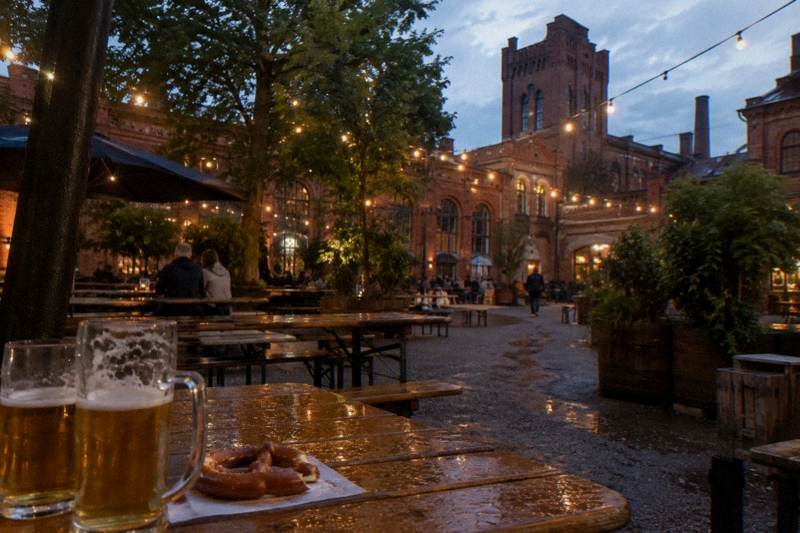
What shifts the price is length and inclusions, not quality. The cheap end buys a single-site visit with a tasting flight; the middle band buys a walking route with multiple stops and several included drinks; the top end adds a full culinary component. The Berlin Evening Culinary Tour - Award Winning, about 4 hours, 4.8 across 122 reviews and from $218.13 per person, is better described as a food tour with drinks than a beer tour, but it suits travellers who want one evening to cover both.
| Price band | Tours in this band | What you typically get |
|---|---|---|
| Under $85 | BRLO brewhouse tour and tasting, Beer & Battlefields | Shorter visits, tasting samples |
| $84.95 to $125.14 | Historic Pubs tour, Berlin Craft Beer & Cultural Tour With Snack | Multi-stop walking route, several tastings, guide |
| $149.20 and above | Original craft beer experience, evening culinary tour | Longer routes, deeper context |
One budget note on getting between stops: a BVG single ticket for zones AB costs 4,00 EUR and stays at that price into 2027, per BVG's single-ticket price table, and the VBB 2027 fare announcement on Berlin.de confirms the AB single is the one ticket that does not rise in the new year. Most walking tours start centrally enough that you will use at most one or two rides each way.
When Is The Best Time To Drink Berliner Weisse In Berlin?
Summer is the drink's natural season: beer gardens pour it from roughly May through September, and July, at a mean of 20.4 C and 238.2 sunshine hours per the Deutscher Wetterdienst 1991 to 2020 normals for Alexanderplatz, is the peak month. Winter does not kill the tradition, since traditional pubs serve it year round, but the outdoor, syrup-in-the-sun version of the experience is a warm-weather one.
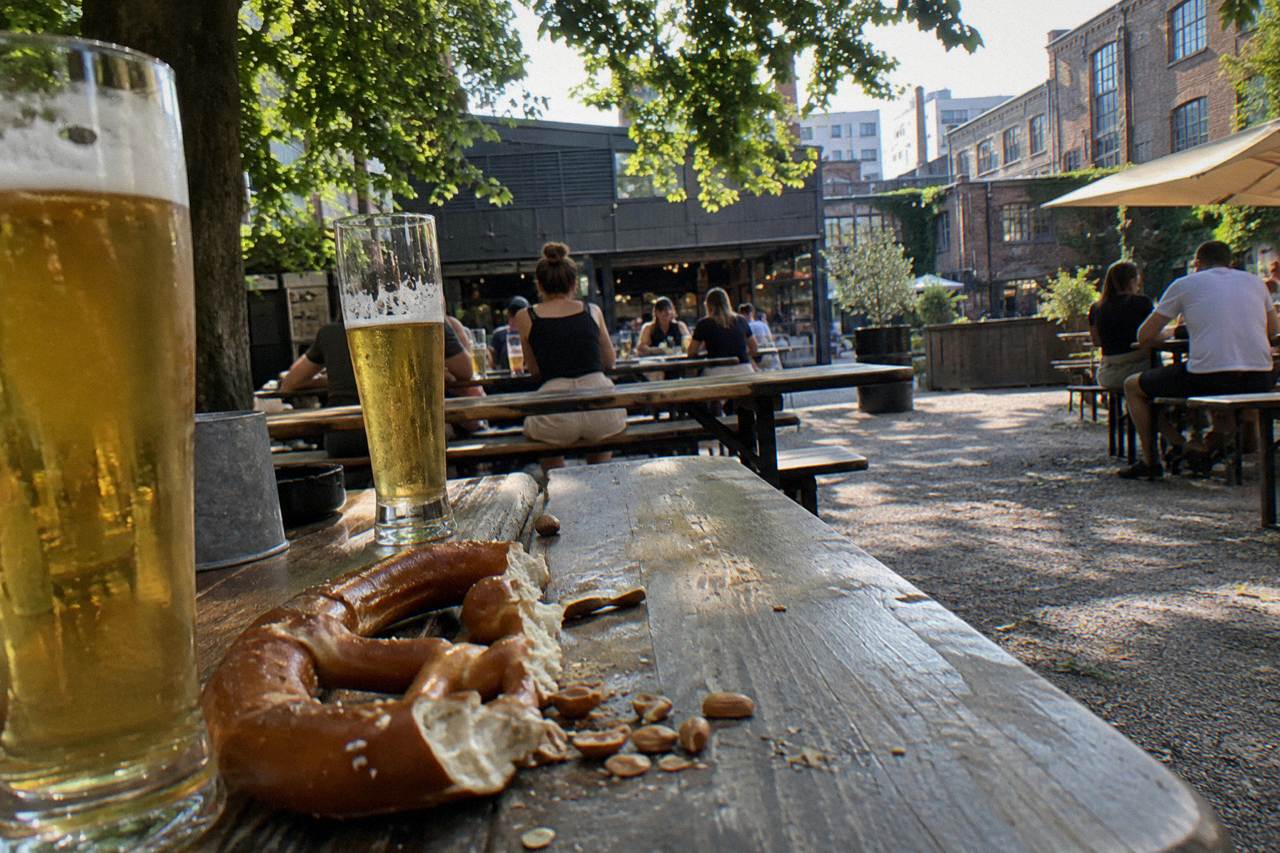
The seasonal logic is partly historical. Berliner Weisse was marketed as a refreshing warm-weather drink, light and tart enough to serve as an alternative to heavier beers when the city heats up. Beer gardens follow suit, opening their benches when the weather allows. The same climate data puts January at a mean of 1.5 C with only 51.7 sunshine hours, and frost days at nearby Tempelhof average 16.8 in January, which explains why winter drinking moves indoors to the Kneipe.
| Month | Mean temp (C) | Sunshine (h) | Frost days | Drinking outlook |
|---|---|---|---|---|
| April | 10.7 | 195.4 | 2.1 | Beer gardens reopening |
| July | 20.4 | 238.2 | 0 | Peak beer garden season |
| September | 15.5 | 166.8 | 0 | Warm afternoons, quieter terraces |
| November | 5.6 | 55.1 | 7.7 | Indoor pubs, pre-Christmas mood |
Visitors in late November and December get a different but equally Berlin experience: the Christmas markets. The Alexanderplatz market runs 23 November to 26 December 2026, daily 11:00 to 22:00 with free admission, per visitBerlin's official market page. A market evening plus a booked beer tour the following afternoon is a workable winter combination. For matching your dates to the wider food calendar, the best time to visit Berlin guide breaks the year down month by month.
Can You Try Berliner Weisse Without A Tour?
Yes, easily. Berliner Weisse is a retail and pub product, not a tour-gated one: any traditional pub that lists it will sell you a glass with red or green syrup, and bottled versions are sold in shops. A tour adds context, routing and guaranteed stops, but a self-guided evening through two or three known pub streets in Mitte or Kreuzberg costs nothing beyond the drinks and a transit ticket.
The self-guided route works best with two constraints in mind. Sundays are the awkward day: shops must in principle stay closed under the Berlin shop-opening rules published by the Senatsverwaltung for Economic Affairs, with supermarkets shut except at stations, so bottled purchases need planning around a Sunday visit.
A hybrid plan suits most travellers. Book one structured beer experience for the guided depth, then spend a second evening repeating the two or three drinks you liked in venues you found yourself. The Berlin's Greatest Hits: Food, Beer & History Tour, about 2 hours, rated 4.9 across 84 reviews and from $79.21 per person, is a compact option that leaves the rest of the evening free, and its format pairs naturally with a self-guided bar-hopping walk afterwards. The meeting points and packing guide covers what to bring for the booked half of that plan.
Common Questions About Berliner Weisse
Red Or Green Syrup: Which Should I Order In A Berliner Weisse?
By custom, red Himbeer (raspberry) gives a sweet-tart berry flavour and is the easier first glass; green Waldmeister (woodruff) tastes vanilla-like and herbal and is the more distinctively local pick. Neither is wrong, and ordering it plain, without syrup, is also standard.
Is Berliner Weisse Very Sour?
It is lightly sour, more tart and lemony than harsh, because lactic acid bacteria work during fermentation. The syrup softens the tartness considerably, and a plain pour is the driest way to taste it.
Is Berliner Weisse Strong Beer?
No. It is traditionally low in alcohol compared with most German beers, which is part of why it became a warm-weather day-drink in Berlin. Check the specific glass or bottle for the exact figure.
Where Can I Try Berliner Weisse In Berlin?
Traditional pubs and beer gardens pour the classic stemmed-glass version, and craft breweries and taprooms serve modern sour interpretations. Booked beer tours reach both; the BRLO brewhouse tour and tasting runs about 1.5 hours from $20 per person.
Do Berlin Beer Tours Include A Berliner Weisse Stop?
Operators describe their routes by theme, craft taprooms, historic pubs, breweries, and do not publish a guaranteed Berliner Weisse stop, since venue lineups change. Craft-focused tours are the likeliest place to meet both the classic and modern versions.
When Is Berliner Weisse Season?
Summer, roughly May to September, when beer gardens are open and July averages 20.4 C. Traditional pubs serve it year round, so a winter visit still works indoors.