Best Time To Visit Berlin For Food And Fewer Crowds
Berlin eats differently in every season: the calendar of markets, beer gardens and Christmas stalls shifts month by month, and the crowds shift with it. This guide lines up the two so a food-focused trip lands in the sweet spot.
Short answer
Late April to June and September to October give Berlin its longest, warmest eating days with fewer peak-season crowds than July and August. January is the quietest month of all, with Grüne Woche from 15 to 24 January 2027, and December trades mild weather for Christmas markets from 23 November 2026.
Berlin's food scene runs on two overlapping calendars: the weather, which decides whether dinner happens in a beer garden or beside a Glühwein stall, and the market and event cycle, which concentrates locals and visitors on particular days of the week. Get both right and the city feels manageable. Get them wrong and every stop is a queue.
This guide works through the timing question the way a trip gets planned: season by season, then day by day, then down to the Sunday rules that catch out almost every first-time visitor. Weather figures come from the Deutscher Wetterdienst 1991 to 2020 climate normals for the Alexanderplatz station, which is the official long-run record for central Berlin.
When Is The Best Time To Visit Berlin For Food?
The strongest months for a food-focused trip are late April through June and September through October, when mean temperatures in Berlin sit between 10.4 and 18.4 degrees, outdoor eating is possible, and the summer visitor peak has either not arrived or has gone. January is arguably the quietest month in the city, with Grüne Woche, 15 to 24 January 2027, as its one big food draw.
The reasoning is simple. Berlin's warmest months, July and August at 20.4 and 20.0 degrees mean temperature, are also its busiest: school holidays across Germany and Europe fill Mitte, Kreuzberg and the East Side Gallery area, and popular food stops fill with them. May and June deliver nearly the same temperatures, 15.1 and 18.4 degrees, with far more room to breathe. September and October drop back to 15.5 and 10.4 degrees but keep long daylight and the harvest season, which is when the markets are at their best stocked.
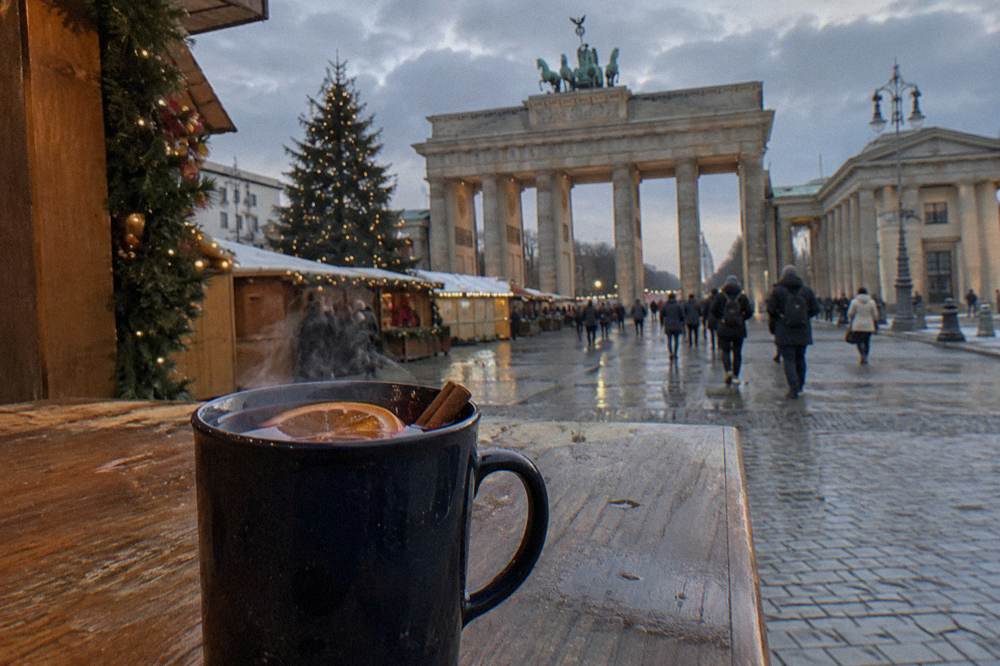
Winter is a different argument rather than a worse one. From 23 November 2026 the Christmas markets open, including the Alexanderplatz market with free admission daily 11:00 to 22:00, and the whole eating culture moves indoors and into the wooden stalls. Crowds are high at the markets and low everywhere else. Anyone whose priority is a table without a wait, rather than mulled wine in the open air, will find January and February the easiest eating months of the year.
Readers narrowing down a district before a date should start with the Berlin neighborhood food overview, since the best timing differs a little between Mitte, Kreuzberg, Neukölln and Prenzlauer Berg.
Which Months Have The Best Eating Weather In Berlin?
By the Deutscher Wetterdienst 1991 to 2020 normals for Alexanderplatz, May to August are the warm and rainy months, at 15.1 to 20.4 degrees mean temperature with 51.9 to 78.2 mm of rain each, while April and September are drier, at 30.1 and 45.1 mm. Sunshine peaks in July at 238.2 hours and bottoms out in December at 41.9 hours.
That combination matters more for food than it first appears. July, the sunniest and warmest month, is also the wettest at 78.2 mm of precipitation, which usually arrives as short heavy showers rather than all-day rain. A beer garden evening in July is a good bet; a five-stop walking tour in a downpour is not. April, by contrast, is the driest month in the record at 30.1 mm with 195.4 hours of sunshine, which makes it one of the most reliable months for a long outdoor food walk.
| Month | Mean temperature | Precipitation | Sunshine hours |
|---|---|---|---|
| January | 1.5 C | 48.8 mm | 51.7 h |
| February | 2.5 C | 37.1 mm | 75.2 h |
| March | 5.5 C | 41.5 mm | 128.0 h |
| April | 10.7 C | 30.1 mm | 195.4 h |
| May | 15.1 C | 51.9 mm | 228.1 h |
| June | 18.4 C | 60.1 mm | 231.8 h |
| July | 20.4 C | 78.2 mm | 238.2 h |
| August | 20.0 C | 55.4 mm | 223.1 h |
| September | 15.5 C | 45.1 mm | 166.8 h |
| October | 10.4 C | 43.4 mm | 115.5 h |
| November | 5.6 C | 42.0 mm | 55.1 h |
| December | 2.5 C | 46.5 mm | 41.9 h |
Winter walkers should also weigh the frost numbers. The Deutscher Wetterdienst 1991 to 2020 record for the Tempelhof station counts 16.8 frost days and 7.1 ice days in January, against 1.4 frost days in October and none from May through September. In plain terms: an evening food walk in January is cold in a way that a Berliner would plan around, with warm layers and indoor stops, while the same walk in September is comfortable the whole way. The underlying data is published by the Deutscher Wetterdienst climate normals.
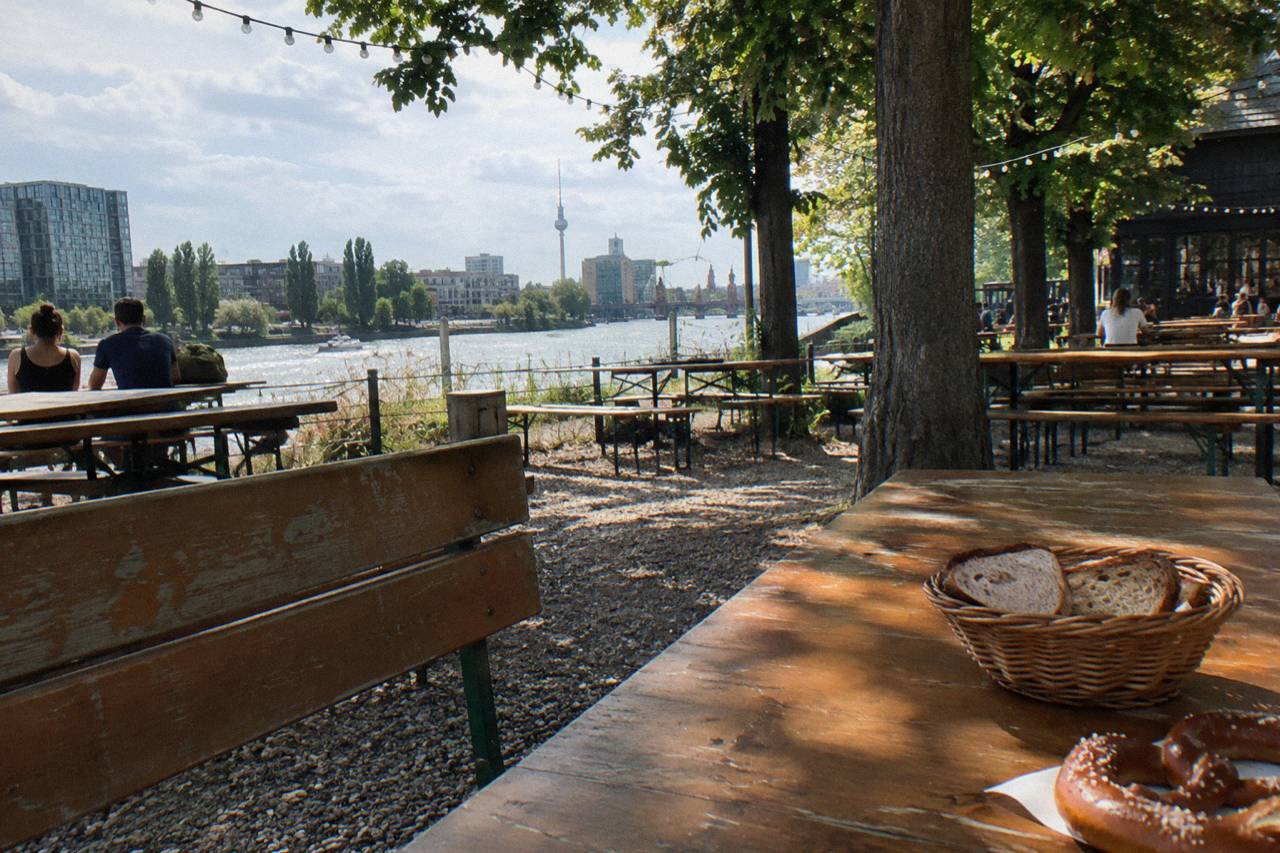
Weather also shapes the format of the tour worth booking. In the warm half of the year, longer walking routes with outdoor stops work well, and the Berlin Mitte District Food Tour with 7 Authentic Local Tastings, about 3 hours, from $90.01 per person, rated 4.9 across 1,583 reviews, fits that window comfortably. In deep winter, shorter or more indoor-weighted options make more sense.
When Are Berlin Food Crowds At Their Lowest?
The quietest eating weeks in Berlin are mid-January through late February and the shoulder weeks of late October to mid-November, outside holidays, school breaks and the Christmas market season that runs from 23 November 2026. Weekdays are quieter than weekends at every market and food hall in the city, and Tuesday and Friday markets draw fewer visitors than Saturday ones.
Crowd pressure in Berlin is event-driven more than season-driven. The peaks stack up on public holidays, on the Christmas market period from late November, and on summer weekends when beer gardens and the Markthalle Neun street food night are at their fullest. The troughs are just as predictable: the weeks after New Year, before the spring trade fairs pick up, and the grey stretch of early November before the markets open.

Day of the week matters almost as much as month. The Saturday Winterfeldtmarkt runs until 16:00 and draws heavy Saturday crowds; the same square on a Wednesday morning is a local's shop. Street Food Thursday at Markthalle Neun runs 17:00 to 22:00 every Thursday and is busy by design, while the surrounding Kreuzberg streets on a Monday evening are close to empty. Timing a visit around midweek days converts the same itinerary into a calmer one without changing anything else. When you're ready to build an eating schedule around those quieter weekdays, the food-first guide to planning your Berlin days lays out market days and tasting walks from the shortest trip to the longest.
For travellers weighing the trade-off, a practical rule: the months with the best crowd-to-weather ratio are May, June, late September and early October. The weeks with the lowest crowds of all are mid-January, at the cost of 1.5 degrees mean temperature and short days. December offers the most distinctive food experience, the Christmas markets, at the price of the year's biggest evening crowds.
What Are Berlin's Market Days And Food Seasons?
Berlin's fixed market anchors are Street Food Thursday at Markthalle Neun every Thursday 17:00 to 22:00, the Türkenmarkt at Maybachufer on Tuesday and Friday 11:00 to 18:30, Winterfeldtmarkt on Wednesday mornings and Saturdays until 16:00, and Grüne Woche from 15 to 24 January 2027. Aligning a trip with one of these days changes what the city tastes like.
The Thursday night market in Kreuzberg is the single most useful calendar fact for a food trip. It has run since 2013, and the operator lists the next 2026 dates as 5, 19 and 26 November, with the schedule published on the Markthalle Neun market page. Not every vendor attends every week, so a Thursday visit is a sample of the scene rather than a fixed menu, but it concentrates more independent food in one hall than any other regular night in the city. The Markthalle Neun guide covers what to look for once inside.
| Market | Where | When | Notes |
|---|---|---|---|
| Street Food Thursday | Markthalle Neun, Kreuzberg | Every Thursday 17:00 to 22:00 | Listed dates in November 2026: 5, 19, 26 |
| Türkenmarkt | Maybachufer, Neukölln | Tuesday and Friday 11:00 to 18:30 | Closed on public holidays |
| Winterfeldtmarkt | Winterfeldtplatz, Schöneberg | Wednesday morning, Saturday 08:00 to 16:00 | Saturday is the busiest session |
| Grüne Woche | Messe Berlin | 15 to 24 January 2027 | International food fair, generally 10:00 to 18:00 |
The weekday markets reward a slower style of trip. The Türkenmarkt along the Maybachufer brings the produce and spice stalls of Berlin's Turkish trading community out twice a week, and the Maybachufer market guide maps the stops around it. A Friday arrival in Berlin, planned around the market and a Saturday at Winterfeldtplatz, is one of the most food-dense 48 hours the calendar allows. Spring through early autumn is when these markets are fullest: stalls of local vegetables, cheeses and flowers thin out after October.
Seasonality shows up on the plate too, though Berlin's restaurant scene imports almost everything year round. Spring means the first local asparagus and rhubarb appearing on seasonal menus; late summer means beer gardens at their peak; from October, kale dishes start appearing on traditional menus, with the harvest peak running through winter into March. None of this requires precise date planning, but knowing the arc helps set expectations: a May trip and a February trip eat differently, even at the same tables.
Is Winter A Good Time To Eat In Berlin?
Winter is a strong food season in Berlin despite the cold, because the Christmas markets open from 23 November 2026 and the city's indoor eating culture, from historic pubs to food halls, carries the rest. December mean temperature is 2.5 degrees with 41.9 hours of sunshine, so the trade is weather for atmosphere, and early evening darkness pushes eating earlier into the day.
Two markets anchor the winter season with confirmed 2026 dates. The Alexanderplatz Christmas market runs 23 November to 26 December 2026, Monday to Sunday 11:00 to 22:00, with free admission, per visitBerlin's official market page. The Lucia Christmas Market at the Kulturbrauerei in Prenzlauer Berg runs 23 November to 22 December 2026, free to enter, Monday to Friday 15:00 to 22:00 and Saturday to Sunday 13:00 to 22:00, per Berlin.de's listing. The Lucia market's Nordic theme and courtyard setting make it the calmer of the two for eating.
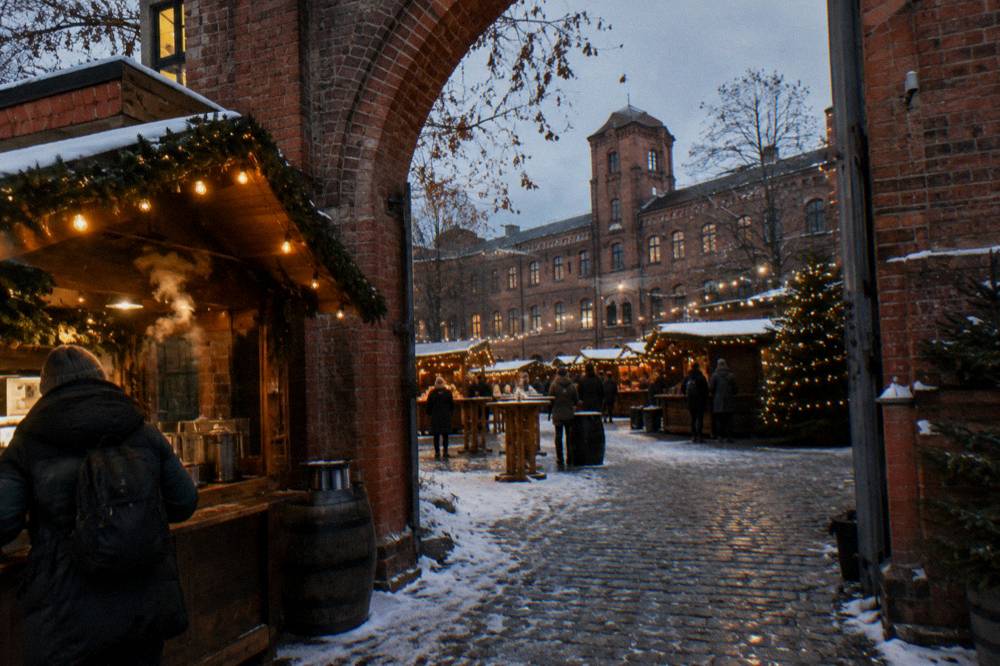
Beyond the markets, winter suits the city's indoor food culture: the historic pubs of the Mitte and Prenzlauer Berg kind, long dinners, and the brewery houses. The Historic Pubs of Berlin and Berlin Beer Tour, about 3 hours 30 minutes, rated 5.0 across 239 reviews, from $84.95 per person, is built exactly for dark evenings, moving between warm rooms rather than open air. The Glühwein and Christmas food guide covers the market stalls in detail.
One practical winter note: frost is real. The Tempelhof climate record counts 13.9 frost days in December and 16.8 in January, so winter tours are planned around indoor stops, and warm clothing is not optional advice. Prices do not drop for the season; the winter advantage is availability and space, not discounts.
How Do Sunday Rules Change A Berlin Food Trip?
Under Berlin's shop opening law, supermarkets stay closed on Sundays except at stations, bakeries and confectioners may sell from 07:00 to 16:00, and tourist-need shops can open 13:00 to 20:00. Restaurants, cafes, bars and market food stalls are unaffected, so Sunday eating is easy while Sunday grocery shopping is not.
This catches visitors out every week. A Sunday morning in Berlin is a bakery-and-cafe morning by law as much as by custom: the pastry counters are open, the restaurants serve brunch, and the supermarkets are dark until the station exceptions. Anyone self-catering should shop Saturday. The rules are set out in the Berliner Ladenöffnungsgesetz, and the Senate economics administration publishes the plain-language version, including the provision allowing up to eight open Sundays a year citywide from 13:00 to 20:00, at its official opening hours guidance page.
For tour timing, Sunday changes the rhythm rather than the options. Walking food tours run as normal, and the streets between stops are calmer than on a Saturday. A Sunday works well for a daytime route such as the Berlin Mitte Culinary Food Tour, about 3 hours, rated 4.6 across 506 reviews, from $50 per person, one of the lower-priced full walks in the city. The Berlin breakfast culture guide explains what a Sunday morning table looks like in practice.
| Day type | Shops | Bakeries | Markets and tours |
|---|---|---|---|
| Monday to Saturday | Open around the clock in principle | Open | Markets on their listed days, tours as scheduled |
| Sunday | Closed, exceptions at stations and for tourist-need goods 13:00 to 20:00 | 07:00 to 16:00 | Restaurants, cafes and food stalls open; tours run |
Which Food Tours Fit Which Season?
Long outdoor walking tours fit best from April to October, when mean temperatures in Berlin run 10.4 to 20.4 degrees; evening and indoor-weighted tours carry November to March; and year-round fixed routes in Mitte work in any month with indoor stops. The Berlin Downtown Food Tour with 8 Authentic Local Tastings, rated 4.9 across 407 reviews, from $115 per person, is a strong three-season pick.
The table below matches the timing logic to specific walks, using only the prices, durations and review figures on each booking page.
| Tour | Duration | Rating and reviews | From | Best season |
|---|---|---|---|---|
| Berlin Mitte District Food Tour, 7 Tastings | ~3 hours | 4.9, 1,583 reviews | $90.01 | Year round |
| Berlin Downtown Food Tour, 8 Tastings | ~3 hours | 4.9, 407 reviews | $115 | Year round |
| Award-Winning 4-Hour Evening Walk | ~4 hours | 4.8, 122 reviews | $218.13 | May to September |
| Historic Pubs of Berlin and Berlin Beer Tour | ~3 hours 30 minutes | 5.0, 239 reviews | $84.95 | October to March |
| KERB Food Hall, Drinks | ~1 hour | 14 reviews | $34 | November to February |
A note on the KERB food hall walk: with 14 reviews it is too new for a star rating, so judge it on format and price rather than reputation. The evening culinary tour, at about 4 hours, is the longest of the group and needs daylight-friendly months to shine, while the fixed Mitte route with seven tastings, described in the Berlin food walk comparison guide, moves between indoor rooms and works in December exactly as in June.
How Does Transport Timing Affect A Food Day?
A BVG single ticket for zone AB costs 4,00 EUR and stays at that price from 1 January 2027, when VBB fares rise 3.72 percent on average, while the Deutschlandticket costs 63 EUR per month now and 66,80 EUR from January 2027. For a visitor, the AB single at 4,00 EUR covers most food districts and remains valid for 120 minutes.
Food districts cluster well inside zone AB: Mitte, Kreuzberg, Neukölln, Prenzlauer Berg and Schöneberg are all a short ride apart, and the 120-minute validity window on a single ticket allows a changed or interrupted trip, though not a return journey. The BVG single-ticket price table is the source for these fares, and children from 6 to 14 travel reduced at 2,50 EUR in AB. Anyone planning several food days in a row might weigh the Deutschlandticket, whose current and 2027 prices are published at the Deutschlandticket site.
The 2027 fare round is worth knowing for winter and spring trips: the Berlin AB single is held at 4,00 EUR, but the four-trip ticket rises from 12,40 EUR to 13,20 EUR, per the VBB decision reported by Berlin.de's VBB announcement. None of this changes which district to eat in, only the arithmetic of getting between stops. More on fitting the days together is in the how many days in Berlin itinerary guide.
What Is The Single Best Week To Book?
For one week that balances everything, the last week of May or the first week of June wins: mean temperatures of 15 to 18 degrees, the Saturday Winterfeldtmarkt and a Tuesday or Friday Maybachufer day both fit, queues are shorter than in July and August, and daylight runs past the end of any evening tour. For winter travellers, the week before 23 November 2026 gives the calm city; the weeks after give the Christmas markets.
That May to June window also lines up with the tour calendar. Beer gardens are open, and the meeting points in Mitte and Kreuzberg are reachable in a single AB ride. Visitors booking at short notice will find more availability in that window than in the Christmas period, when availability is tightest. The walk format matters as much as the date, so pair the week with the route rather than choosing them separately.
For a calmer alternative, the first half of December after the markets open but before the school holidays: the stalls are running, the weekday evenings are quiet, and the frost count, 13.9 frost days across December at Tempelhof, means the Glühwein is doing its job. Whatever the week, book the walking tours before the hotels, because tour capacity is fixed and hotel rooms are not.
Common Questions About The Best Time To Visit Berlin
When Is The Best Time To Visit Berlin?
Late April to June and September to October offer the best balance of eating weather and manageable crowds, with mean temperatures from 10.4 to 18.4 degrees. January is the quietest month of all, and December trades warmth for the Christmas markets that open 23 November 2026.
Is December A Good Month For Food In Berlin?
Yes, if the Christmas markets are the point. The Alexanderplatz market runs 23 November to 26 December 2026 daily 11:00 to 22:00 with free entry, and the Lucia market at Kulturbrauerei runs 23 November to 22 December. Expect 2.5 degrees mean temperature and big evening crowds at the stalls themselves.
What Is The Quietest Month To Eat In Berlin?
Mid-January through late February, after the Christmas markets close and before spring tourism starts. Grüne Woche, 15 to 24 January 2027, is the one exception that draws food crowds that month.
Which Day Of The Week Is Best For A Berlin Food Tour?
Tuesday through Thursday generally. Thursday evening aligns with Street Food Thursday at Markthalle Neun, 17:00 to 22:00, which is lively by design, while weekday daytime walks see fewer groups than Saturdays.
Are Things Closed On Sundays In Berlin?
Supermarkets are closed on Sundays except at stations, bakeries may sell 07:00 to 16:00, and tourist-need shops can open 13:00 to 20:00. Restaurants, cafes and food tours operate normally, so Sunday is a good tour day.
When Do Berlin's Christmas Markets Open?
The Alexanderplatz and Lucia markets both open on 23 November 2026. Alexanderplatz runs to 26 December 2026 with free admission, and Lucia at Kulturbrauerei runs to 22 December 2026, also free.