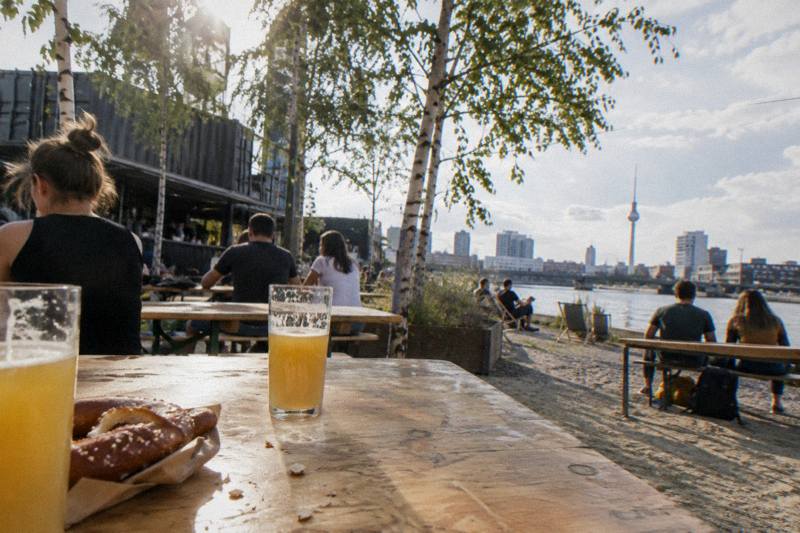
What Drink Is Berlin Famous For?
Berlin's famous drinks explained: beer first, then Berliner Weisse with its colored syrup, the craft beer scene, wine, and coffee, with the guided tastings that fit each.
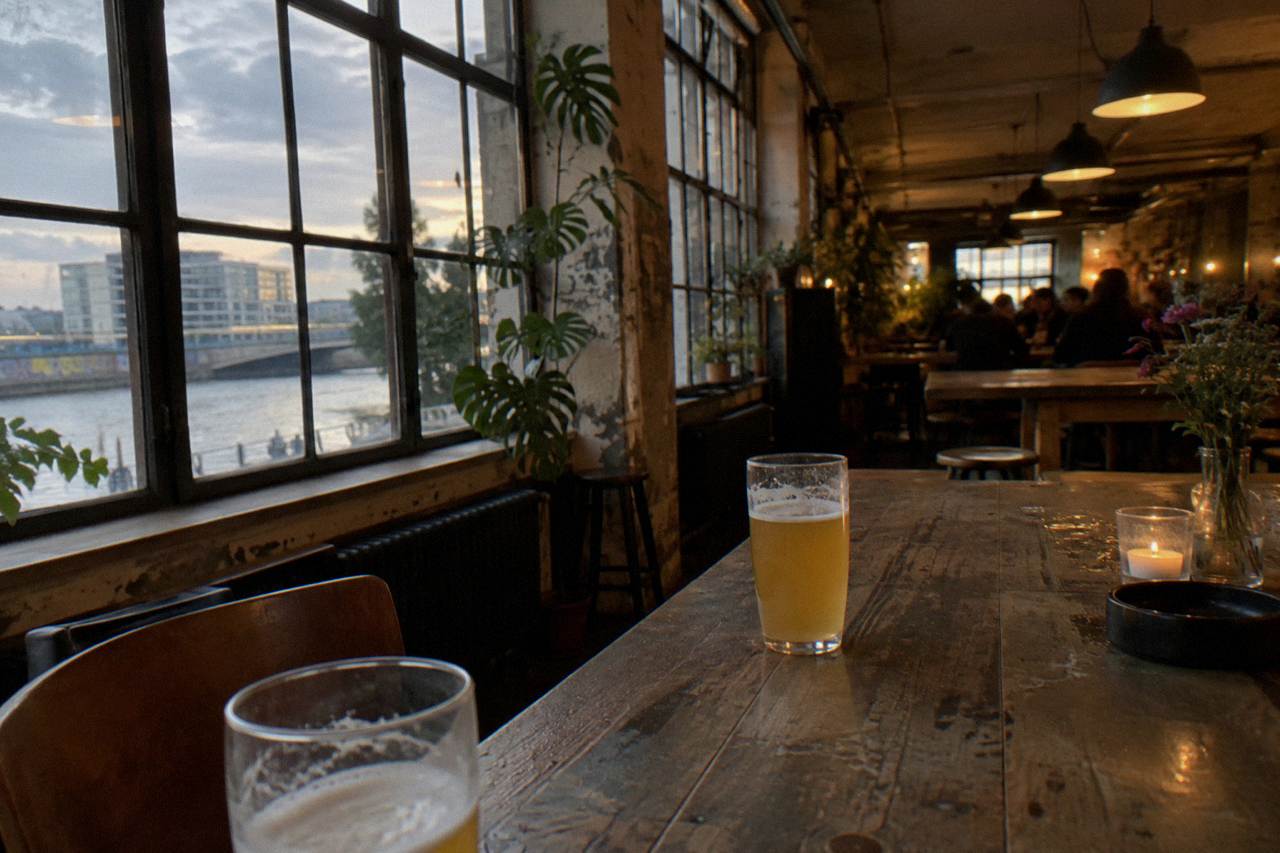
Berlin is famous for beer above all, and within that for Berliner Weisse, a tart wheat beer traditionally served with a shot of red raspberry or green woodruff syrup that turns the glass amber or emerald. The city's broader claim runs wider than one style: a deep lager and wheat tradition, a loud craft brewing scene anchored by breweries you can tour, a growing natural wine current, and a specialty coffee culture that treats the roaster as a destination. That spread is unusual among European capitals, and it is why a drinks question in Berlin so often ends at a brewery door rather than a single famous glass. There is no one brewery that owns the answer the way a cola brand might in another city, and that plurality is itself the point. If that red or green choice appeals, our Berliner Weisse syrup guide explains where to try both.
The drink Berlin is most famous for is beer, and its signature style is the Berliner Weisse. Beyond that classic, a craft brewing scene that has grown since the 2010s has put the city on the international beer map, making beer in both traditional and modern forms the drink most tied to Berlin's identity. Berliner Weisse is the glass visitors recognize: pale, sharply tart, low in alcohol, and colored by syrup in a custom local bartenders still keep alive. Alongside it sit pilsner on tap in almost every corner bar, a craft wave led by breweries with their own taprooms, and a small but serious wine and coffee scene for the hours between pints. If a waiter in Berlin asks what you are drinking before you ask, the default assumption will be a beer.
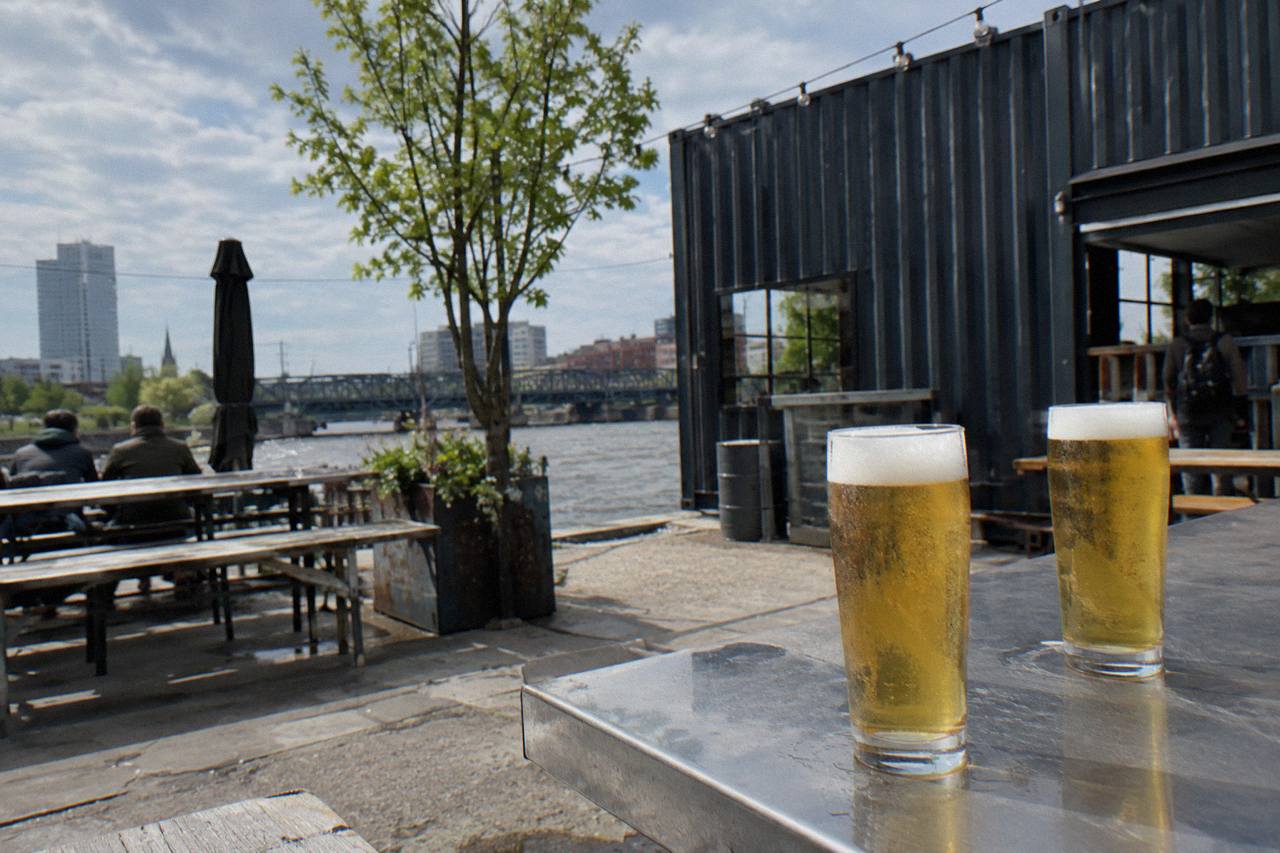
Beer is not just available in Berlin, it is the default setting of the city's social life. Corner pubs, beer gardens in summer, brewery courtyards, and kiosks called Spätis selling bottles to go all run on it. The customs around it matter too: bottles carried legally in public, glasses brought back to the kiosk for the deposit, and long tables shared with strangers in the warm months. The beer garden guide on this site covers the summer side of that culture in detail: where to sit and what to order outdoors.
The city also drinks seasonally. Winter means mulled wine at the Christmas markets, and the Alexanderplatz market, running 23 November to 26 December 2026 with free admission and daily hours of 11:00 to 22:00, is one of the biggest glasses in town, as the Glühwein and market food guide explains. Spring and autumn belong to the taprooms, when the beer gardens close and the brewhouses fill the gap. But if a single drink has to carry the word famous, it is the tart wheat beer with the syrup, and the beer culture around it.
For visitors who want the full picture in one afternoon, these are the three tastings that cover Berlin beer best, from a historic pub crawl to the original craft tour to a working brewery visit:
Why Is Beer So Central To Berlin Drinking Culture?
Beer sits at the heart of Berlin drinking culture because the city brewed it at industrial scale for centuries, shaped purity and taxation rules early, and built its social life around the tap rather than the table, with corner pubs, beer gardens, and brewery courtyards all serving as everyday gathering places. The city's brewing families shaped whole neighborhoods, and the surviving pub and beer garden stock still reflects that history. Even the street food halls pour local beer alongside the food stalls. A visitor notices it fast: the drink is woven into the buildings themselves, not sold as a separate experience bolted onto them.
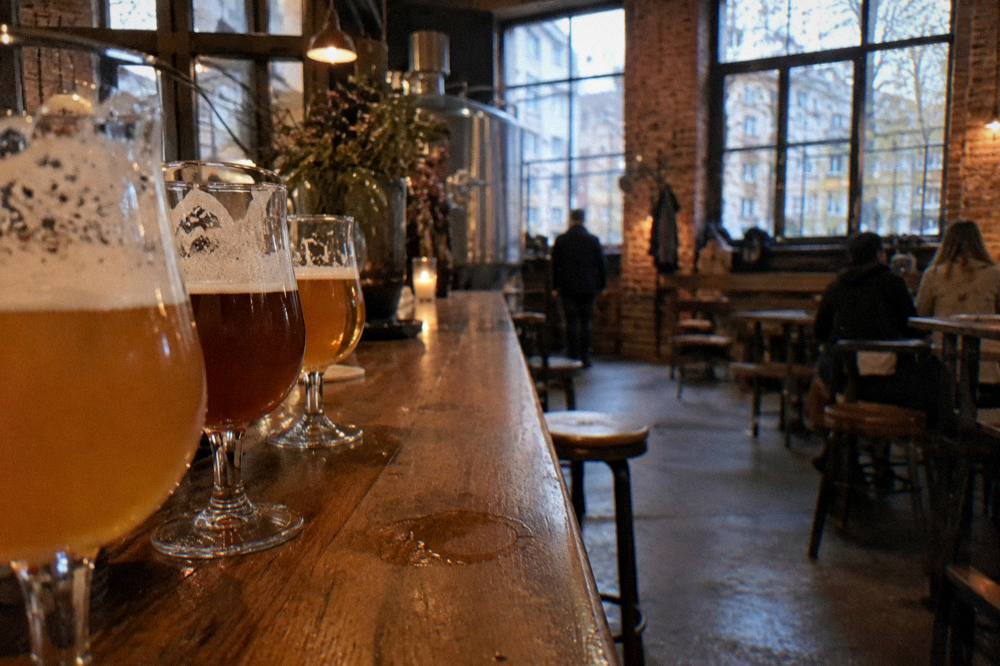
The numbers behind that inheritance are visible in what the city still offers: historic pubs that run guided beer tours of their own rooms, a brewery tour inside a working craft brewhouse, and beer-themed walks that fold in Berlin history. One example: the Historic Pubs of Berlin & Berlin Beer Tour, about 3 hours 30 minutes, rated 5.0 across 239 reviews, from $84.95 per person, moves through the old pub stock with the beers that belong to it. There is even a format that mixes war history with the pint, the Berlin Beers & Battlefields Tour, about 3 hours 15 minutes, rated 4.9 across 40 reviews, from $79.21. Beer history here is not a museum piece; it is the reason a whole tour category exists here.
The brewery and beer garden guide goes deeper on which breweries welcome visitors. One recent shift worth knowing: Brewdog announced insolvency in November 2026 and is closing all of its Berlin locations, including the Mariendorf brewery with its attached beer garden, while BRLO, the brewhouse with the most-reviewed tour here, opened a fourth outlet in Charlottenburg with 20 taps in late August 2026. The wider calendar matters too: the Internationales Berliner Bier-Festival on Karl-Marx-Allee drew over 300 breweries from 85 countries in August 2026, and Berlin Beer Week ran across the city into early September. The scene moves, and a guided stop is a reliable way to catch it mid-motion.
What Is Berliner Weisse And Why The Colored Syrup?
Berliner Weisse is a lightly alcoholic wheat beer with a sharp tartness that Berlin breweries have produced for centuries, and the colored syrup, red raspberry or green woodruff, exists because locals use it to soften the sour bite while turning the drink amber or emerald in the glass. The syrup is added at the bar, sometimes by the drinker, and the color choice is a small ritual of belonging. Ordering it plain marks you as a purist or a foreigner, depending on who is pouring. The style nearly vanished from its home city before being revived, and today it sits somewhere between heritage order and insider pick.
That revival story is genuinely odd. The style nearly died out and only later worked its way back onto local tap lists. Today a handful of Berlin breweries keep a Weisse on tap, and the custom survives in traditional pubs more than in fashion bars. The red versus green question, woodruff's herbal edge against raspberry's fruit, has its own page: Berliner Weisse, red or green syrup and where to try it.
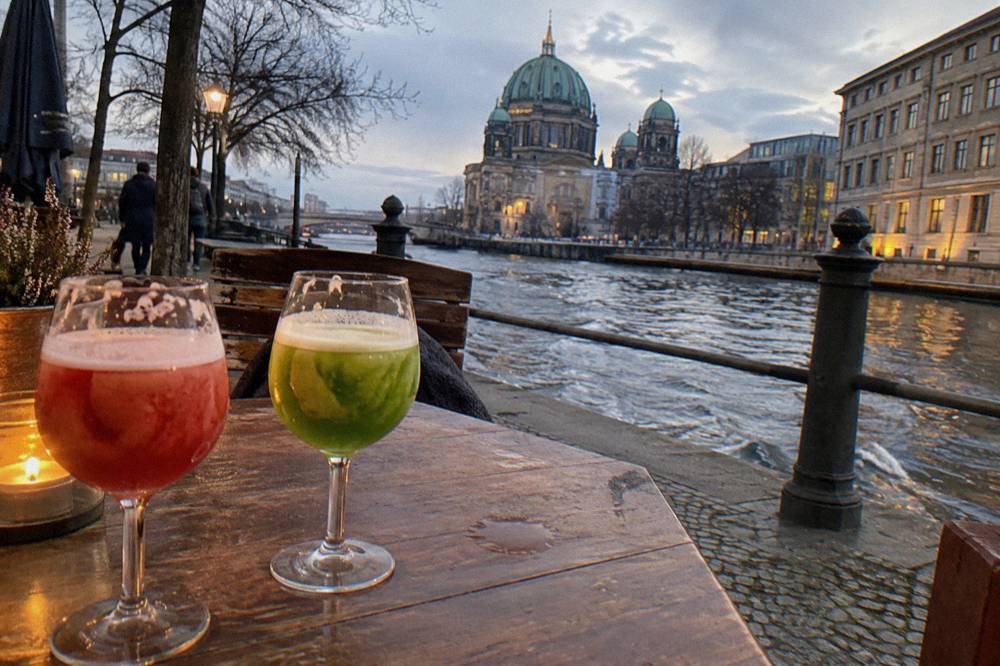
What the glass offers is balance: sourness with a sweet edge, low alcohol so an afternoon does not disappear, and a look that photographs like nothing else on a Berlin table. No price is printed here because a glass of Weisse varies widely by venue, and the syrup custom itself is described by operators as exactly that, a custom, not a fixed recipe. Bars pour their own ratio, and the drinker stirs. Some rooms serve it with a straw, a detail that divides opinion as sharply as the syrup color.
| Weisse custom | What it involves | What to expect |
|---|---|---|
| Red (Himbeere) | Raspberry syrup stirred into the tart wheat beer | Fruit-forward, amber color, sweeter finish |
| Green (Waldmeister) | Woodruff syrup, the older traditional order | Herbal edge, emerald color, more divisive |
| Plain (puristisch) | No syrup at all | Full sourness, mostly ordered by enthusiasts |
Where Can You Taste Berlin Beer On A Guided Tour?
The strongest all-round option is the Berlin Craft Beer & Cultural Tour With Snack, about 3 hours, rated 5.0 across 364 reviews, from $125.14 per person, which pairs the city's beer history with tastings and something to eat. It is the rare tour that covers both the culture and the glass in one walk. For depth, Berlin's First Original Craft Beer Tour & Experience, about 3 hours, rated 4.9 across 284 reviews, from $149.20, goes brewery by brewery through the craft wave. Both are walking formats, so comfortable shoes matter more than transport planning.
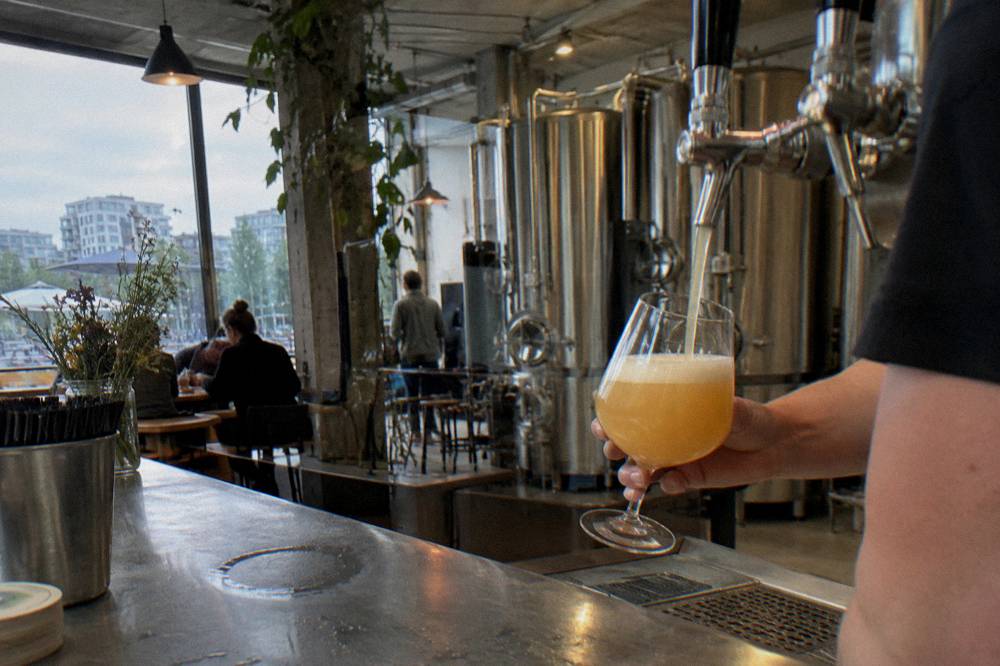
The third angle is production. The BRLO BRWHOUSE Tour and Craft Beer Tasting, about 1 hour 30 minutes, rated 4.5 across 788 reviews, from $20, walks you through a working brewhouse and ends at the tasting counter, and it is the cheapest way in. At the other end, Berlin's Greatest Hits: Food, Beer & History Tour, about 2 hours, rated 4.9 across 84 reviews, from $79.21, compresses beer, bites and sightseeing into a short evening loop. Review pools differ sharply, from 788 down to 40, so the 5.0 ratings on smaller pools deserve a little more caution than the big-sample numbers.
| Tour | Duration | Rating | Price |
|---|---|---|---|
| Craft Beer Tour, Snack Included | ~3 hours | 5.0, 364 reviews | from $125.14 |
| Berlin's First Original Craft Beer Tour & Experience | ~3 hours | 4.9, 284 reviews | from $149.20 |
| BRLO Brewery, Budget Fare | ~1.5 hours | 4.5, 788 reviews | from $20 |
| Historic Pubs Beer Crawl | ~3 hours 30 minutes | 5.0, 239 reviews | from $84.95 |
| Berlin Beers & Battlefields Tour | ~3 hours 15 minutes | 4.9, 40 reviews | from $79.21 |
Meeting points vary by tour and are stated on each booking page; these start at a meeting point, so check each listing for pickup details and plan to arrive on foot or by transit. A single BVG ticket in zone AB costs 4,00 EUR and is valid for 120 minutes, per BVG's single-ticket price table, which covers most tour meeting points in the inner city. Children from 6 to 14 pay a reduced 2,50 EUR in the same zone. For visitors planning to book the related craft beer walk, check availability on its tour page, where the current meeting point and schedule are listed.
Is There A Wine Scene In Berlin?
Yes, and it is small but genuinely local: Berlin has surrounding Brandenburg vineyards, a natural wine bar current that grew strong in the 2010s, and even a sommelier-led city wine tour, the Berlin Wine Tour With Local Sommelier, about 1 hour 30 minutes, rated 5.0 across 17 reviews, from $170. Wine will never outrank beer here, but the glass has stopped being an afterthought. The sommelier tour is the clearest sign: a dedicated tasting format that treats Berlin as a wine city, not just a beer one with a wine list attached.
The rating pool is small, 17 reviews, so treat that 5.0 as promising rather than proven. What the format offers is contrast: after days of pilsner and Weisse, a structured tasting with a professional guide resets the palate and introduces German regions, plus local pours, in a single sitting. It also runs short, an hour and a half, which leaves the evening free for the beer part of the itinerary.
For a self-guided angle, the Grüne Woche food and agriculture fair runs 15 to 24 January 2027, per the organiser's site. The city's Michelin standing gives the wine bar scene a floor to stand on as well: Berlin retained one 3-star restaurant and four 2-star restaurants in the 2026 guide, and rooms at that level keep serious lists.
What About Coffee And Other Berlin Drinks?
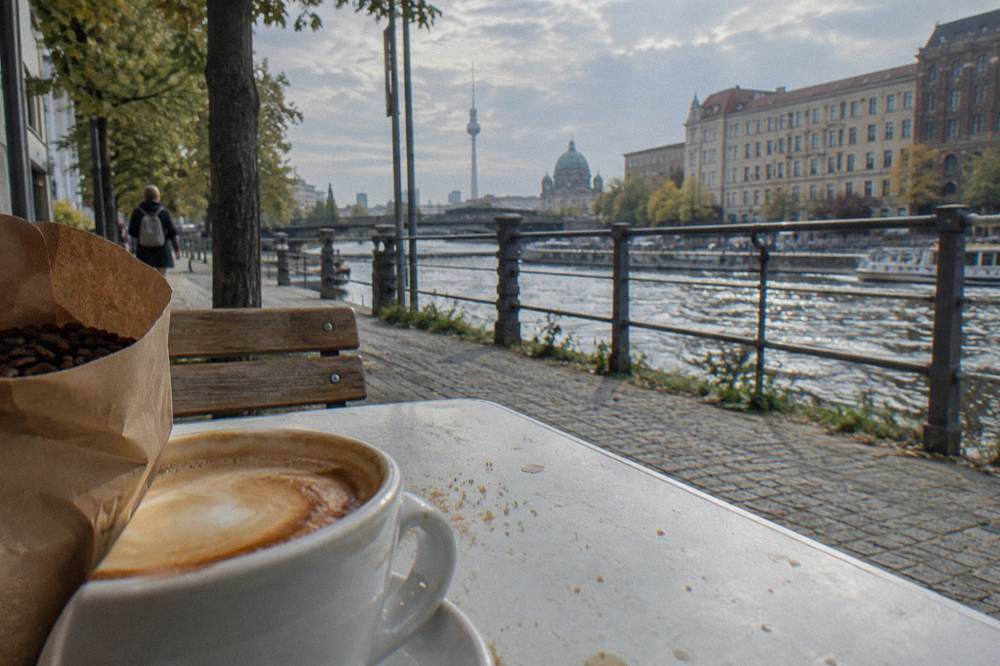
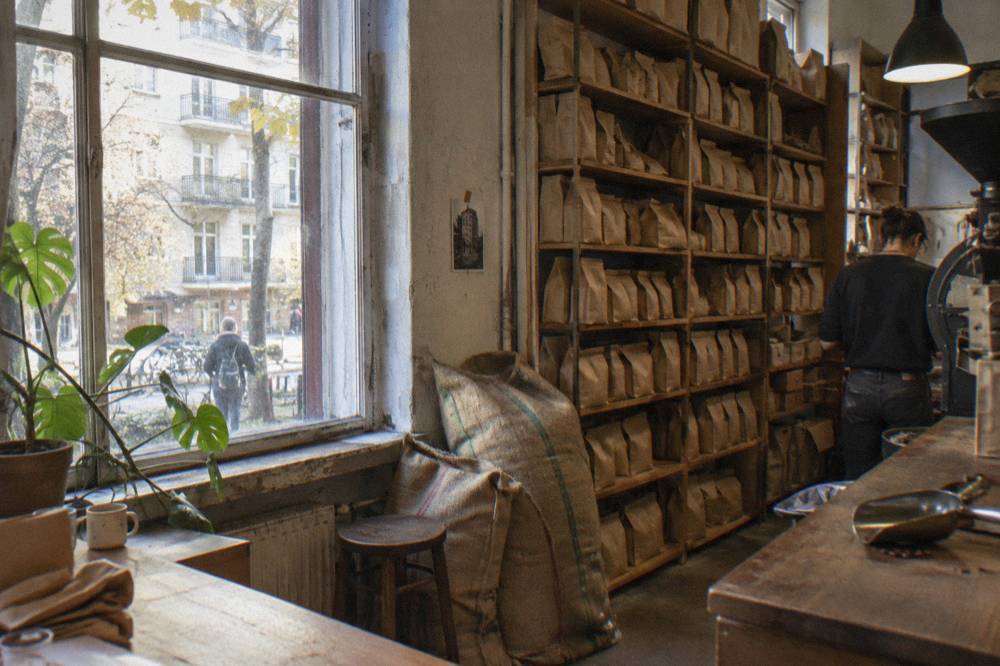
Coffee is the heart of Berlin's other famous drink culture, one built on specialty roasters who treat the city as a European capital of third-wave coffee. The best way to enjoy it is not by hunting down a single famous cup, but by embracing coffee as a daily morning institution across the city. Names like The Barn, Five Elephant, Bonanza and Companion have anchored that reputation for years and continue to appear as active in current guides, with no recent closure announcements among them. No prices or hours are printed here because they vary by shop. The culture is breakfast-adjacent: roasters, brunch rooms and bakery counters form one continuous morning economy, and the breakfast culture guide covers the food side of it.
The cafe scene has its own rhythms worth knowing before you plan mornings. Shops close on Sundays in principle under Berlin's trading law, with bakeries and confectioners allowed 07:00 to 16:00 and station shops open regardless, per the Senatsverwaltung's opening-hours rules. The specialty roasters follow the standard rule, so a Sunday coffee run means a station or a bakery, not a flagship cafe. Supermarkets are closed on Sundays too, except at stations, which is why the Späti and the bakery carry the day.
Beyond beer, Weisse, wine and coffee, the supporting cast includes mulled wine in winter, the Späti, the late-shop institution that sells cold bottles around the clock on weekdays, and tap water that is drinkable everywhere. One noted closure: 19grams is shutting its oldest Friedrichshain location on Boxhagener Strasse at the end of 2026, a reminder that even institutions move. Getting between any of these stops is cheap: the Deutschlandticket costs 63 EUR per month now, rising to 66,80 EUR from January 2027, though short visitors will do better with single tickets. A morning coffee in Prenzlauer Berg, a Weisse in a Mitte pub at noon, and a craft taproom in Kreuzberg by evening is a perfectly normal Berlin day, stitched together with a 4,00 EUR ticket.
For most visitors the drink question resolves in one afternoon: beer first, a Weisse for the photo, coffee the next morning, and a guided tasting to make the beer part count.
Common Questions About Drinks In Berlin
What Drink Is Berlin Famous For?
Beer, with Berliner Weisse, the tart wheat beer served with red raspberry or green woodruff syrup, as the signature style. Around it sit a strong craft brewing scene, a small but real wine culture, mulled wine in winter, and a specialty coffee scene built on well-known roasters.
What Is The Syrup In A Berliner Weisse?
A shot of raspberry syrup (red) or woodruff syrup (green), stirred into the tart wheat beer to sweeten it and color the glass. The choice between red and green is a local custom, and the ratio is set by the bar, sometimes adjusted by the drinker.
Which Berlin Beer Tour Should You Book?
The Berlin Craft Beer & Cultural Tour With Snack, about 3 hours, rated 5.0 across 364 reviews, from $125.14 per person, is the strongest all-round pick. For a working brewery visit, the BRLO BRWHOUSE Tour and Craft Beer Tasting runs about 1 hour 30 minutes from $20 and is rated 4.5 across 788 reviews.
Can You Drink Berlin Tap Water?
Yes, Berlin tap water is drinkable and commonly served on request in restaurants. It is the standard free option between the city's more famous drinks.
Where Do Locals Buy Beer Late At Night?
At Spätis, the corner late shops that sell cold bottles to go and may open around the clock on weekdays, with Sunday rules limiting them like other shops. Beer gardens and brewery courtyards are the warm-weather alternative.