Which City In Germany Has The Best Food?
Berlin, Munich, Hamburg and Cologne all claim Germany's best food. A direct answer, what makes each city distinct, and the Berlin food walks that prove the case.
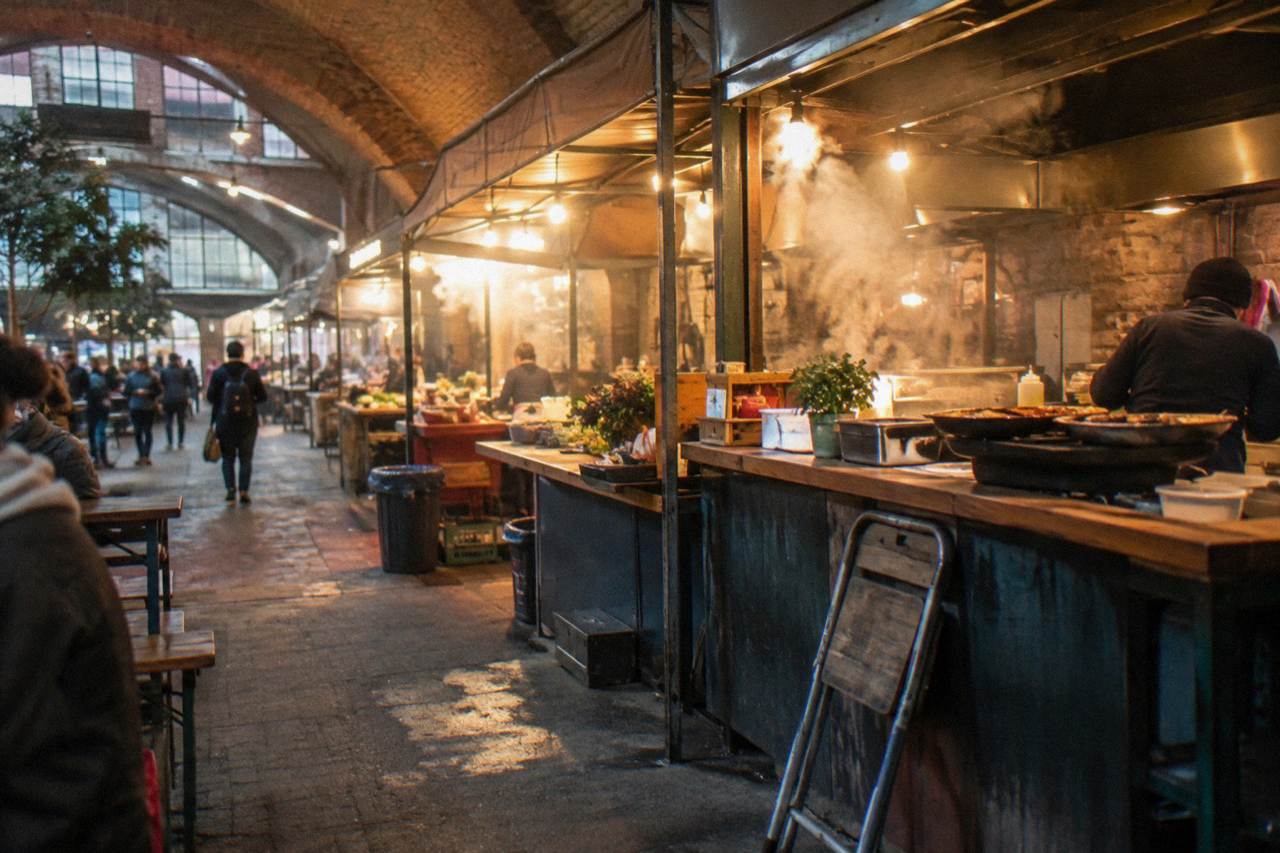
Berlin has the best food of any German city, and the reason is range rather than refinement. Munich owns Bavarian tradition and Hamburg owns fish, but Berlin layers Turkish, Vietnamese, Arabic and Eastern European kitchens over old Prussian staples, at prices a visitor can actually eat through in a week. No other German city has anything like Kreuzberg's density of street kitchens or Neukölln's pace of openings. The Michelin Guide's June 2026 awards underline the same point: Berlin retained Rutz as a three-star restaurant and holds four two-star kitchens including CODA in Neukölln and Tim Raue in Kreuzberg, while remaining the city where the döner kebab, widely credited to Berlin, competes seriously for attention with the tasting menus.
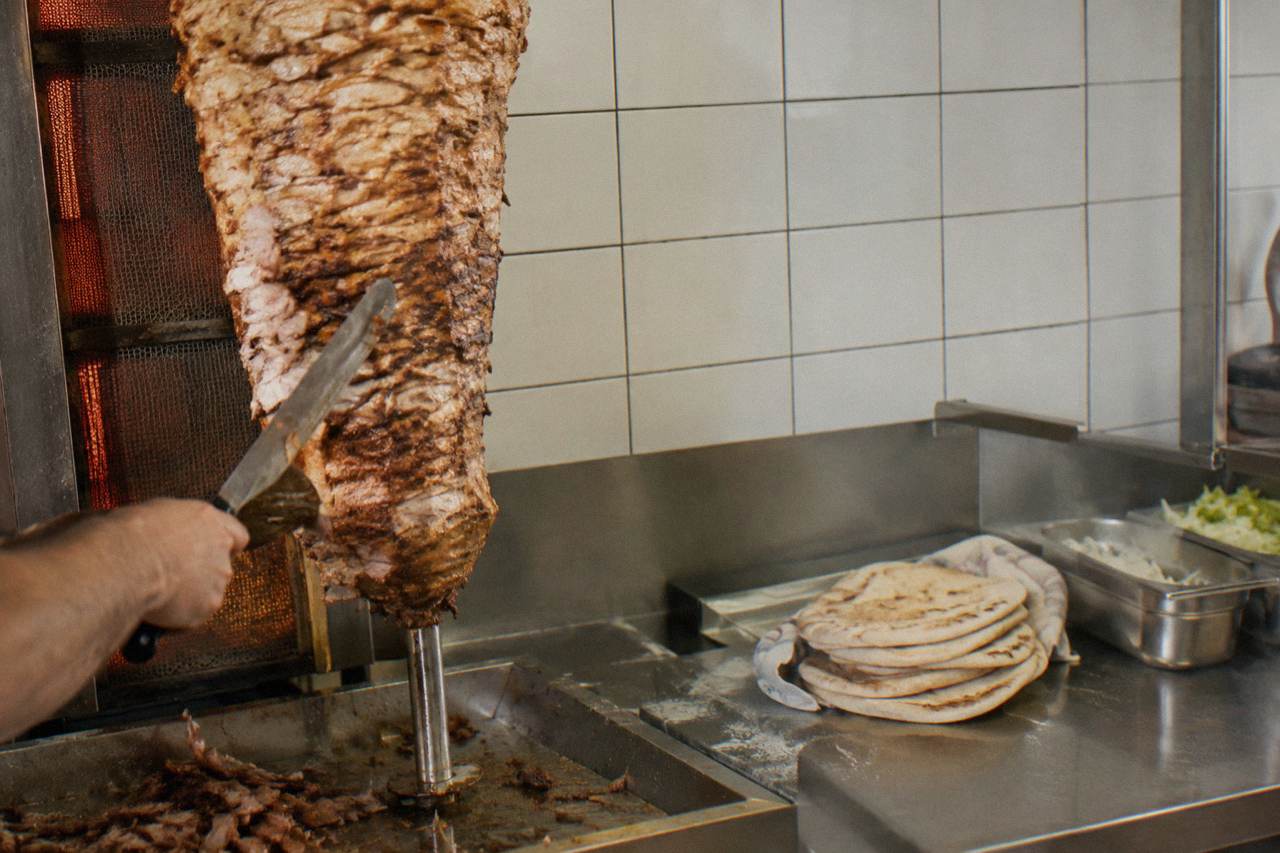
That last detail matters more than it sounds. The döner kebab in its modern sandwich form was popularised in Berlin, and the city still argues over which stand makes the best one, an argument covered in depth in the Berlin doner kebab guide. Currywurst is widely credited to Berlin too. When people ask which German city eats best, they are usually picturing somewhere with one strong regional identity. Berlin's food identity is the opposite: a city of arrivals, each wave opening kitchens, markets and stalls that stayed.
Of the walks featured here, the cheapest is the street food tour, from $75 per person for about 3 hours and carries a 4.8 rating across 403 reviews, which is a large review pool for a food walk. The Mitte district tour from $90.01 with 7 tastings has the biggest footprint of the three at 4.9 across 1,583 reviews. If you want to see how a food walk stacks up against beer and history options, the guide to the best tour to take in Berlin compares them by district, length and price.
Is Berlin Really Better Than Munich For Eating?
Yes, on range and price, while Munich wins on concentration of traditional Bavarian cooking. Munich does beer gardens, Schweinshaxe and Weißwurst breakfast at a level Berlin cannot match per square kilometre, while Berlin's international kitchens run wider and cheaper. Berlin's advantage is that a visitor can eat Turkish, Vietnamese, Georgian, Lebanese and classic Berliner cooking in the same afternoon, often within one district, and often from a stall rather than a restaurant with tablecloths.
The fair version of Munich's case is tradition. A city that treats a beer garden as a public institution, and where lunch can still mean a proper Bavarian plate, offers something Berlin's restless scene does not always deliver: consistency rooted in habit. Hamburg's case is the waterfront, the Fischmarkt and a north German pantry, plus a claim to the fish roll that Berlin concedes without a fight. Cologne's case is really about Kölsch culture, small glasses and brauhaus food, which is a fine evening but not a cuisine that travels.
What tips the verdict is turnover. Berlin's scene regenerates faster than any other German city's, and the news flow proves it: Berliner Zeitung reported in early November 2026 that five new restaurants and cafés had opened around the Ku'damm in Charlottenburg since September alone. A city where Charlottenburg, long the conservative dining district, is suddenly adding bagel spots and brunch wine bars is a city where the eating does not stand still. The traditional dishes themselves are covered in what to eat in Berlin.
What Makes Berlin's Street Food Scene The Strongest In Germany?
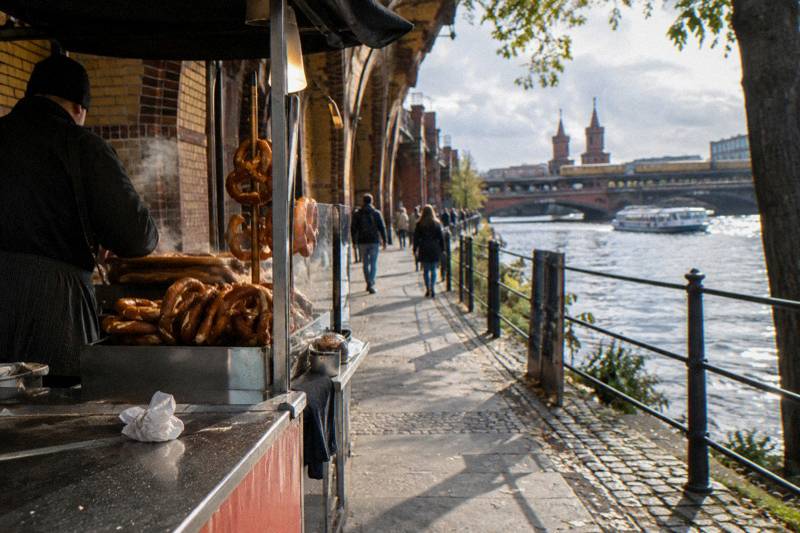
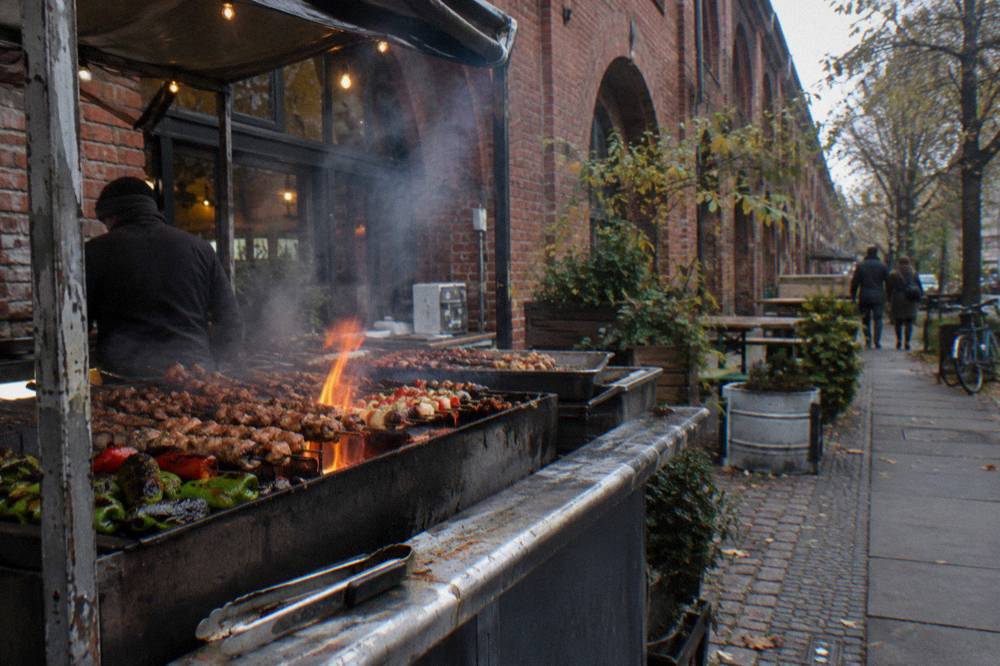
Berlin's street food scene is Germany's strongest because it pairs dedicated market infrastructure with deep food history. Markthalle Neun's Street Food Thursday has run since 2013, the Turkish market on Maybachufer trades twice a week, and the döner kebab itself is a Berlin street product, so the city's snack culture is both well organized and genuinely homegrown. No German city combines a purpose-built market hall with a weekly street food institution and a residential market culture the way Berlin does, and none has a street snack of comparable national reach. Munich and Hamburg have markets, but not this density of them inside walkable food districts where a visitor stays anyway.
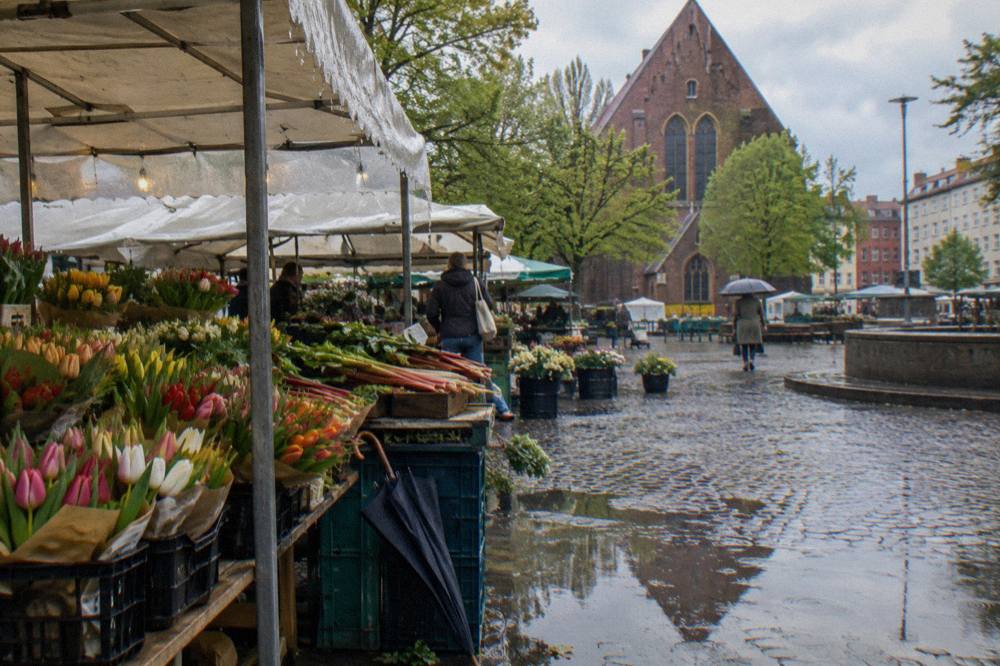
Street Food Thursday runs every Thursday from 17:00 to 22:00 in the Kreuzberg hall, and a Thursday visitor should check the hall's page before building an evening around it. The Wednesday and Saturday Winterfeldtmarkt on Winterfeldtplatz, Wednesday mornings and Saturday until 16:00 per visitBerlin, covers the weekly-market side of the same habit. Both fit naturally into a food-first stay, and the Markthalle Neun guide covers what to eat once inside.
| What Berlin offers | Where it is strongest | How a visitor reaches it |
|---|---|---|
| Street food hall institution | Markthalle Neun, Kreuzberg, Thursdays 17:00 to 22:00 | U Görlitzer Bahnhof, or a Kreuzberg walk |
| Twice-weekly Turkish market | Maybachufer, Tuesday and Friday 11:00 to 18:30 | U8 Hermannplatz |
| Weekly neighborhood market | Winterfeldtmarkt, Wednesday morning and Saturday to 16:00 | U Nollendorfplatz, Schöneberg |
| Döner and currywurst street kitchens | Citywide, densest in Kreuzberg, Neukölln and Mitte | Any district food walk |
One Sunday wrinkle shapes market planning: under the Berlin shop-opening rules, ordinary shops stay closed on Sundays, tourist-need shops may open 13:00 to 20:00 and bakeries and confectioners 07:00 to 16:00, so a Sunday arrival in Berlin is best organised around markets that trade and stalls that cook, not supermarkets. The Senatsverwaltung's opening-hours page sets out the rules, and they explain why street food carries the city on Sundays. A hall full of independent kitchens on a Thursday evening is doing the job a closed supermarket cannot.
Which Berlin Food Walk Proves The Case Best?
For a single walk that demonstrates why Berlin out-eats the rest of Germany, the guided street food tour from $75 is the strongest pick: about 3 hours, rated 4.8 across 403 reviews, built around the stalls and markets that define the city. For visitors anchored in Mitte, the 7-tastings district tour from $90.01, about 3 hours, rated 4.9 across 1,583 reviews, is the more reviewed option. Both include food, and both skip fine dining entirely, which is the point.
The street food tour suits a first-time visitor who wants the Mitte street food experience with a guide who knows which stall is worth the stop. The Mitte tour suits a visitor staying central who wants the classic-Berlin arc, currywurst territory included, without crossing the city twice. Readers weighing a guide against exploring alone will find the trade-offs in free walking tour or food walk, and those deciding between neighborhoods can start with Berlin food by neighborhood.
Does the question of which city to eat in change the budget? Not much. Tours here run from $20 per person to $561 for a private group of up to 10, so the ceiling and the floor both sit within reach. What changes is what the money buys: in Berlin, $75 to $120 reliably buys a walk built on markets, immigrant kitchens and street food, which is precisely the layer Munich and Hamburg offer less of. The wider set of guides lives on Berlin Food Tours.
What About Berlin's Competitors Beyond Munich And Hamburg?
Beyond Munich and Hamburg, Berlin's other rivals are real but narrower in scope: Cologne stands out for its brauhaus culture, Frankfurt for green sauce and cider, Leipzig and Dresden for Saxon baking, and the Stuttgart region for Swabian pasta. Each city has genuine food traditions worth a trip, yet none matches the full breadth of Berlin's dining scene on its own. Each is worth a trip for one specific thing, and each defends its specialty with genuine conviction. None of them sustains a week of varied eating the way Berlin does, and none has an immigrant food culture of comparable depth, the layer that produced Berlin's döner stands, its Vietnamese quarter around the Dong Xuan Center, and the Arabic kitchens now collecting Michelin Bib Gourmand mentions.
Berlin's 2026 Bib Gourmand list makes the point in miniature: the Michelin ceremony in June 2026 added BYBLOS, a Lebanese kitchen, and Salhino, a Georgian one, to a Berlin list that already included Lucky Leek and MASTAN. A city whose cheap-eats honours span Lebanon, Georgia and modern vegetarian cooking is not competing with Cologne on one dish. It is competing with London and Istanbul on breadth, and winning more often than German food's sausage-and-beer reputation suggests.
For visitors who want the market layer rather than the restaurant layer, January has a national draw: the Grüne Woche food and agriculture fair runs 15 to 24 January 2027, per the organiser's site, and it gathers regional food producers from across Germany under one roof. Berlin hosting it is not a coincidence.
A practical note on getting between the districts that carry this argument: a single BVG AB ticket costs 4,00 EUR and is valid for 120 minutes of travel including changes, per the BVG single-ticket price table. That one ticket connects a Mitte morning market, a Kreuzberg döner lunch and a Neukölln dinner, which is the actual test of a food city, and Berlin passes it daily.
How Should A Food-Lover Turn This Into A Plan?
Base yourself in Berlin, book a single guided walk to anchor your first day, and then self-direct the rest of your stay around two or three districts rather than attempting the whole city. This gives you one structured introduction, keeps the trip focused, and leaves your remaining days free to wander, snack, and revisit favorites at your own pace. A sensible shape is Mitte for classics and bakeries, Kreuzberg for markets and döner, and Neukölln for whatever opened last month, with each district given a half day rather than a rushed stop. The street food tour does the first-day job well, and the guided Markthalle Neun market walk with craft beer, from $97, pairs a hall visit with local brewing for about 2.5 hours. For visitors who want the neighborhood comparison compressed into one outing, the Classic Bites and Culinary Trends walk runs about 3.5 hours from $195.17 per person.
Timing matters more in Berlin than in calmer cities. Street Food Thursday pulls crowds into a market hall that was never built for them, the Maybachufer Turkish market packs a canal-side street on Fridays, and the best döner stands queue at any hour. The best time to visit Berlin guide breaks the year down for food-first visitors; the short version is that shoulder months buy shorter lines and the same stalls.
For a central anchor, the Mitte district food tour is the most-reviewed option on the site and remains the default: 7 tastings, about 3 hours, from $90.01 per person. Its route doubles as a primer on the district a first-time visitor will already be walking for the sights.
Budget visitors should also read Berlin cheap eats before assuming a guided walk is the only route. Berlin rewards both approaches, and the honest pitch for the paid walk is not access to secret food, it is context: a guide who can explain why a Neukölln Späti, a Kreuzberg market and a Mitte currywurst stand belong to the same story, which is exactly the story that answers this article's question. Add a second self-directed day around Maybachufer or Winterfeldtplatz and the plan covers both layers of the city's food culture, the guided and the independent.
Common Questions About Food In German Cities
Which City In Germany Has The Best Food?
Berlin, on range, price and street food depth. Munich and Hamburg each beat it in one narrow category, Bavarian tradition and fish respectively, but neither sustains the variety of immigrant kitchens, markets and street stalls that Berlin offers across Mitte, Kreuzberg and Neukölln.
Is Munich Better Than Berlin For Traditional German Food?
For Bavarian food specifically, yes: Munich's beer gardens, Schweinshaxe and Weißwurst culture are unmatched in Germany. For traditional cooking overall, including Prussian and Berliner staples alongside everything else, Berlin covers far more ground, and does more of it cheaply.
What Food Is Berlin Most Famous For?
The döner kebab in its sandwich form and the currywurst are both Berlin street products, and both still define the city's eating. Around them sit Berliner Pfannkuchen, the Turkish markets of Kreuzberg and one of Europe's livelier vegan and Vietnamese scenes.
How Much Does A Food Tour In Berlin Cost?
Covered options run from $20 for a brewery visit to $561 for a private group walk, with most guided walks between $50 and $195.17 per person. The street food tour from $75 and the Mitte 7-tastings tour from $90.01 sit at the accessible end of that range.
Is Berlin Good For Cheap Eats Compared To Other German Cities?
Yes, unusually so for a capital. Stall culture, weekly markets and the döner economy keep the floor low, and the street food tour from $75 reflects that same affordability. Details and tactics are in the Berlin cheap eats guide.
Which Berlin Neighborhood Is Best For Food?
Kreuzberg for markets and street kitchens, Neukölln for new openings and value, Mitte for classics within walking distance of the main sights, and Prenzlauer Berg for bakeries and brunch. A first visit covering two of the four, plus a guided walk, is usually the right dose.
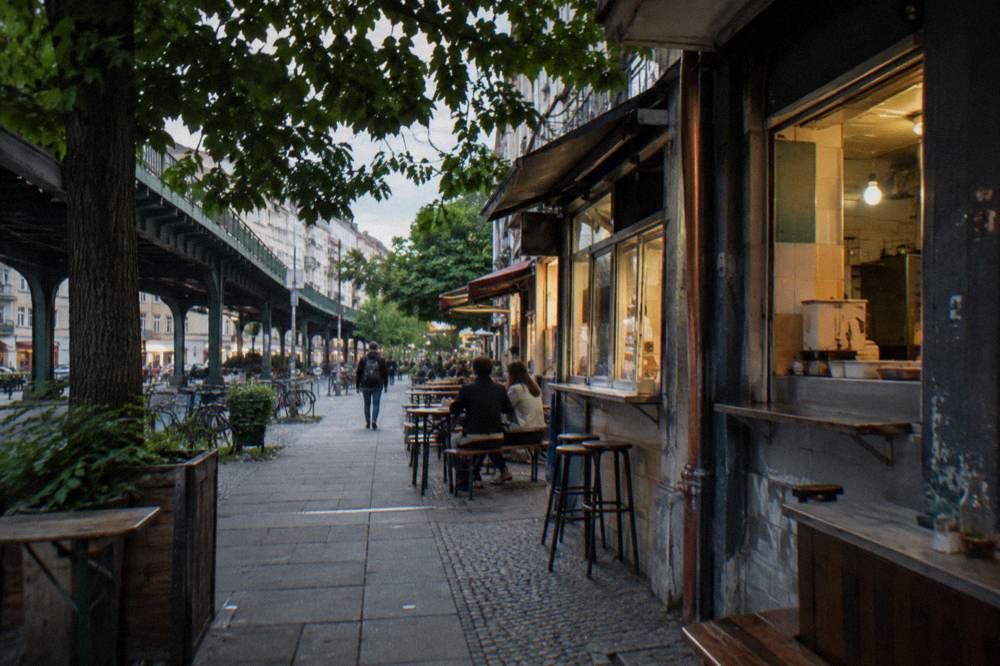
The verdict stands on evidence rather than pride. A city widely credited with two of its signature dishes at street level, hosts the national food fair, added Lebanese and Georgian kitchens to its cheap-eats honours in 2026, and can take a visitor from a Thursday night market hall to a Michelin-starred Neukölln dinner in one evening is not merely in the conversation. For eating widely, cheaply and interestingly, it is Germany's answer.