What Is The Best Area To Stay In Berlin For Tourists?
Mitte is the best area to stay in Berlin for most tourists: central, walkable, and close to the city's classic food stops. Here is how each district compares for food lovers.
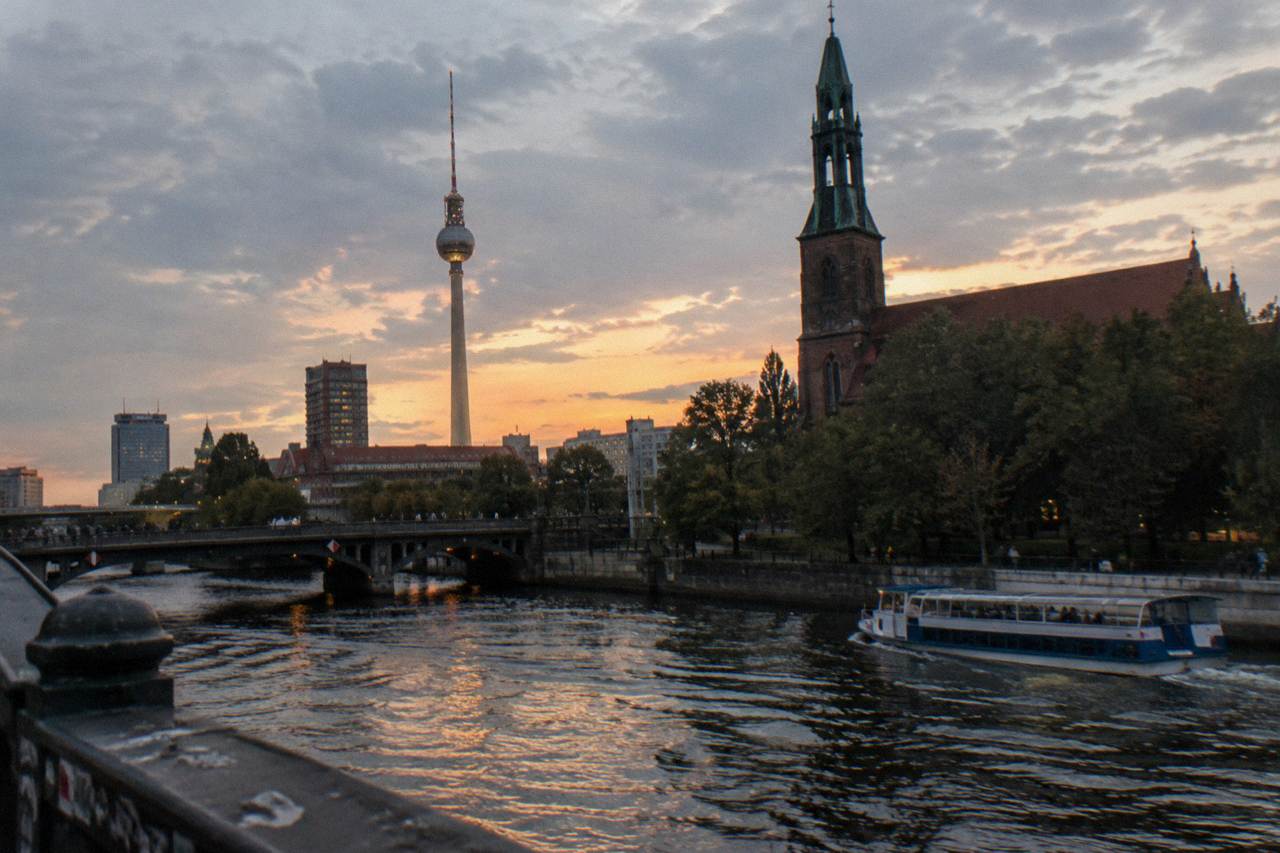
Mitte is the best area to stay in Berlin for most tourists. It sits between Museum Island and Alexanderplatz, puts the classical sights within a short walk, and hosts the largest concentration of the city's classic food stops, including the currywurst stands and old bakeries a first visit is built around. Kreuzberg suits street food fans, Prenzlauer Berg suits families, Neukölln suits budget travelers.
The honest answer is that Berlin rewards picking a base by appetite rather than by sightseeing distance, because the city is wide, spread across former East and West halves, and stitched together by a transport network that makes almost any district reachable in twenty to thirty minutes. A single BVG AB ticket costs 4,00 EUR and is valid for 120 minutes, per BVG's single-ticket price table, so the penalty for sleeping one district further out is small. The penalty for sleeping in the wrong food neighborhood, on the other hand, is real: you end each night in a tourist restaurant instead of the street kitchens you came for.
Most of the walking food tours covered here start in central districts, Mitte chief among them. The Mitte District Food Tour with 7 Authentic Local Tastings runs about 3 hours from $90.01 per person and is rated 4.9 across 1,583 reviews, which makes it both the most reviewed option on the site and a natural anchor for a central stay. If you book only one food experience and want your hotel within a fifteen minute walk of the meeting point, Mitte or the western edge of Kreuzberg is the place to be. If you're weighing other neighborhoods against Mitte, the district-by-district guide to Berlin's food neighborhoods compares market days, transit fares, and the food walks that start on your doorstep.
For readers planning the whole trip around eating, the Berlin food by neighborhood guide breaks each district's food character down stop by stop, and this article builds on the same logic from the accommodation side: where you sleep decides where you end up eating at 22:00 when you do not want to travel.
Why Does Mitte Work Best For First-Time Visitors?
Mitte works because it compresses the classic Berlin visit into a walkable rectangle: Brandenburg Gate, Museum Island, Hackescher Markt and Alexanderplatz sit within roughly thirty minutes of each other on foot, and the district's food scene covers currywurst, old bakeries, doner and sit-down German classics in the same footprint. Most central food walks start here.
The district is the historical core of both Berlins, which is why the sightseeing clusters here and why the tourist infrastructure, from hotel density to English-language menus, is the deepest in the city. For food purposes Mitte divides into three useful zones. The Alexanderplatz and Nikolaiviertel corner carries the postcard version of German eating, currywurst stands and beer halls within sight of the TV tower. Hackescher Markt and the Scheunenviertel lanes north of it hold the newer wave, natural wine bars, specialty coffee and small modern kitchens. Around Gendarmenmarkt the tone turns formal, and the 2026 Michelin listings keep Rutz in Mitte among the city's starred restaurants, as reported at the June 2026 ceremony in Frankfurt.
A Mitte base also lines up with the site's featured walk. The Mitte District Food Tour with 7 Authentic Local Tastings visits seven local stops over about 3 hours, is rated 4.9 across 1,583 reviews and starts from $90.01 per person. There is also a cheaper central option: Berlin: Mitte Culinary Food Tour runs about 3 hours from $50 per person, rated 4.6 across 506 reviews. Meeting points for both are in the district itself, per the booking pages; the seven-tasting listing rules out hotel pickup and the cheaper walk does not mention it, so a Mitte or adjacent Kreuzberg hotel puts you a short walk or one U-Bahn ride from the start.
The trade-off is price and character. Mitte is the most expensive place to sleep and, on the main drags, the least Berlin-flavored in the evenings, when tour groups dominate. One street back from the axis, in the Scheunenviertel side lanes, the balance improves quickly.
Should You Stay In Kreuzberg For The Street Food?
Yes, if street food is the point of the trip. Kreuzberg holds the Türkenmarkt on Maybachufer, the doner and Turkish food scene around Kottbusser Tor, and enough evening kitchens that you can eat well without leaving the district. The trade-off is a longer trip to the classical sights and a louder, scruffier, more local atmosphere.
Kreuzberg is the district most food writers mean when they call Berlin a street food city. The Türkenmarkt at Maybachufer runs Tuesday and Friday 11:00 to 18:30, per local market reporting, and the district's doner shops are the reason the Berlin doner kebab guide exists as its own topic. Markthalle Neun sits on Kreuzberg's eastern edge, and its Street Food Thursday runs every Thursday from 17:00 to 22:00, confirmed on the Markthalle Neun market page, with listed November 2026 dates on the 5th, 19th and 26th.
Two site options fit a Kreuzberg stay directly. Berlin: Kreuzberg Food and Street Art runs about 3 hours 30 minutes from $172.20 per person, with the price varying by group size, and is rated 4.9 across 167 reviews. The Kreuzberg Culinary Food Tour, about 3 hours, is priced per group rather than per person, from $561 for the group, and the exact total depends on group size, so check the booking page. The Kreuzberg food walk guide maps the district in full for readers who want to walk it without a guide first.
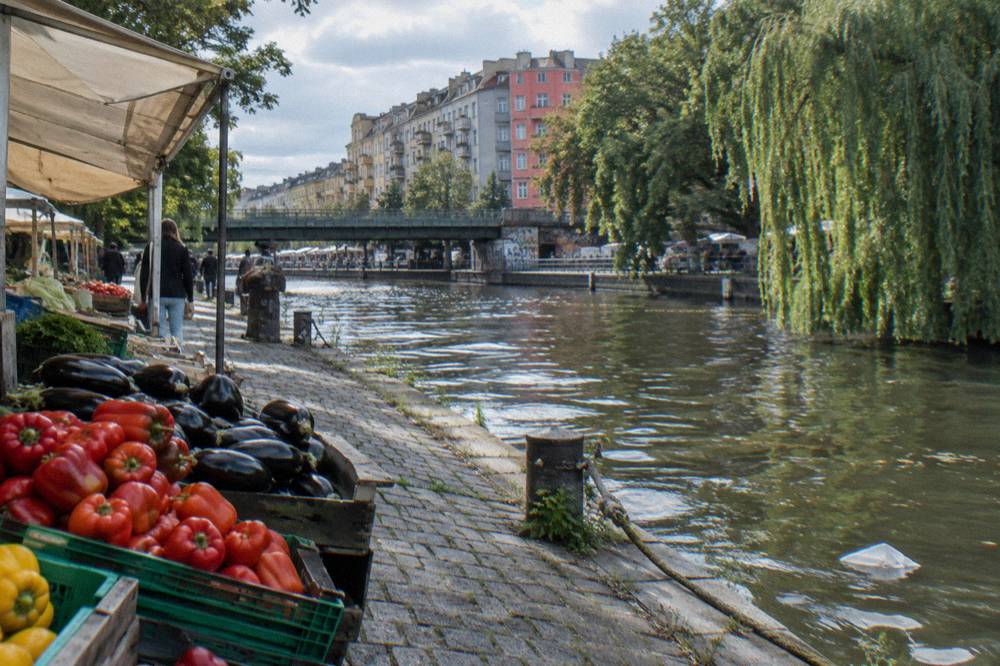
Kreuzberg hotels skew small and independent, and the district stays loud late, particularly around Kottbusser Tor and the Oranienstrasse nightlife strip. Families and light sleepers should look one district north, but travelers whose itinerary is built around markets, doner and late-night kitchens will be exactly where they want to be.
Is Neukölln A Good Budget Alternative To Kreuzberg?
Neukölln is the strongest budget alternative. It sits directly south of Kreuzberg, shares the same food culture, Vietnamese kitchens, doner shops, Spati snacks and late bars, and generally costs less to sleep in. The trade-offs are fewer hotels, longer walks to the sights, and a district that still feels residential rather than curated for visitors.
The food case for Neukölln is genuine, not just a price argument. The 2026 Michelin selections include CODA in Neukölln among the city's two-star restaurants, and the district's everyday eating, from the Vietnamese spots around Karl-Marx-Strasse to the doner stands of north Neukölln, is some of the cheapest good food in the city. The Neukölln food walk guide covers the Maybachufer-to-Karl-Marx-Strasse line in detail.
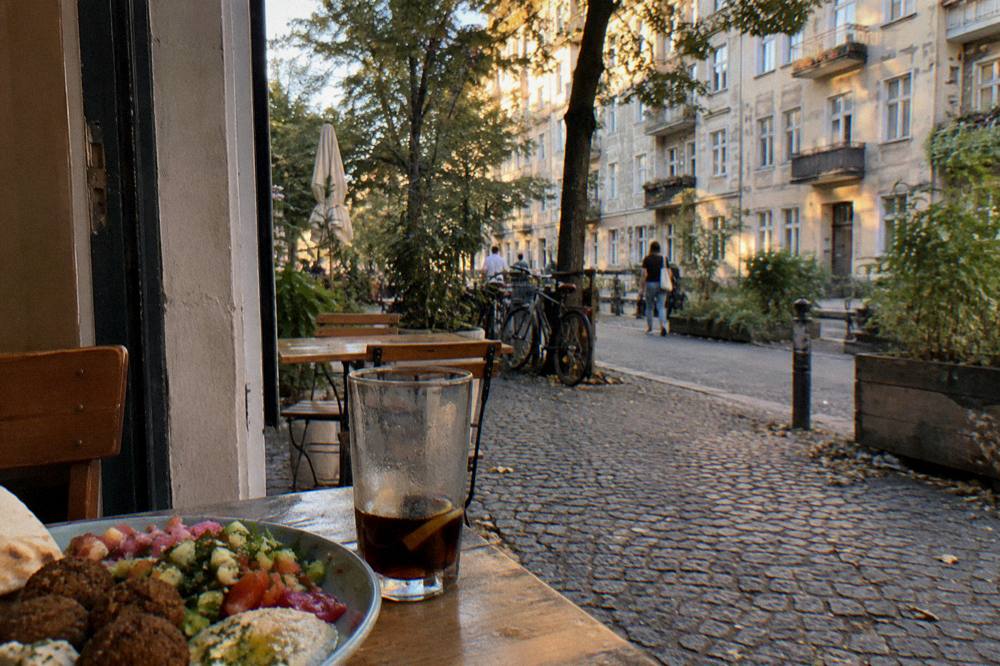
Accommodation is the weak point: the hotel stock is thinner than Mitte or Kreuzberg, and much of what is available is apartments and small guesthouses. Transport access is good, the U7 and U8 both cross the district, and a Deutschlandticket at 63 EUR per month, rising to 66,80 EUR from January 2027 per the official Deutschlandticket page, covers regional transport citywide for a longer stay. One option covers both districts: Berlin: Hidden Flavors of Kreuzberg & Neukölln runs about 3 hours from $118 per person, starting at Kottbusser Tor, with 9 reviews so far.
Is Prenzlauer Berg Better For Families And Quiet Mornings?
Prenzlauer Berg is the calm choice. It has the city's densest concentration of bakeries and brunch cafes, wide pre-war streets with playgrounds, and a family reputation that is well earned. The trade-off is distance: it sits northeast of Mitte, and a trip to Kreuzberg's markets takes twenty to thirty minutes by U-Bahn.
The district's food character runs to the gentle side of Berlin eating: bakeries, coffee roasters, weekend markets and the kind of restaurants where breakfast lasts until early afternoon. Kollwitzplatz anchors the district's cafe life, and the wider Berlin market calendar, with days and hours for each venue, is laid out in the Berlin food markets guide. The site also carries a dedicated Prenzlauer Berg Culinary food tour, about 3 hours, priced per group from $505 for the group, with the total depending on group size, and rated 4.9 across 20 reviews. The Prenzlauer Berg food walk guide covers the district stop by stop.
One planning note that catches Sunday arrivals: Berlin shops close on Sundays in principle under the Berliner Ladenöffnungsgesetz, with supermarkets shut except at stations, while bakeries and confectioners may open 07:00 to 16:00, per the Senatsverwaltung shop opening hours page. A Prenzlauer Berg Sunday morning with an open bakery is a real Berlin pleasure, but do not count on a supermarket run.
Which District Is Closest To The Evening Food Walks?
Mitte and its borders are closest to the evening food walks. The Berlin Evening Culinary Tour, an award-winning run of about 4 hours from $218.13 per person, rated 4.8 across 122 reviews, starts centrally, and the Berlin's Greatest Hits: Food, Beer & History Tour, about 2 hours from $79.21 per person, rated 4.9 across 84 reviews, is built around the central sightseeing strip, so a Mitte or Kreuzberg hotel means a short trip home afterward.
Evening tours finish late, and the district you sleep in decides whether that finish is a ten minute stroll or a night bus ride. This is the practical argument for Mitte that guidebooks underplay: it is not that the food is better there, it is that every tour, morning or evening, is reachable without planning. The evening food walk guide walks through what to expect after dark in detail.
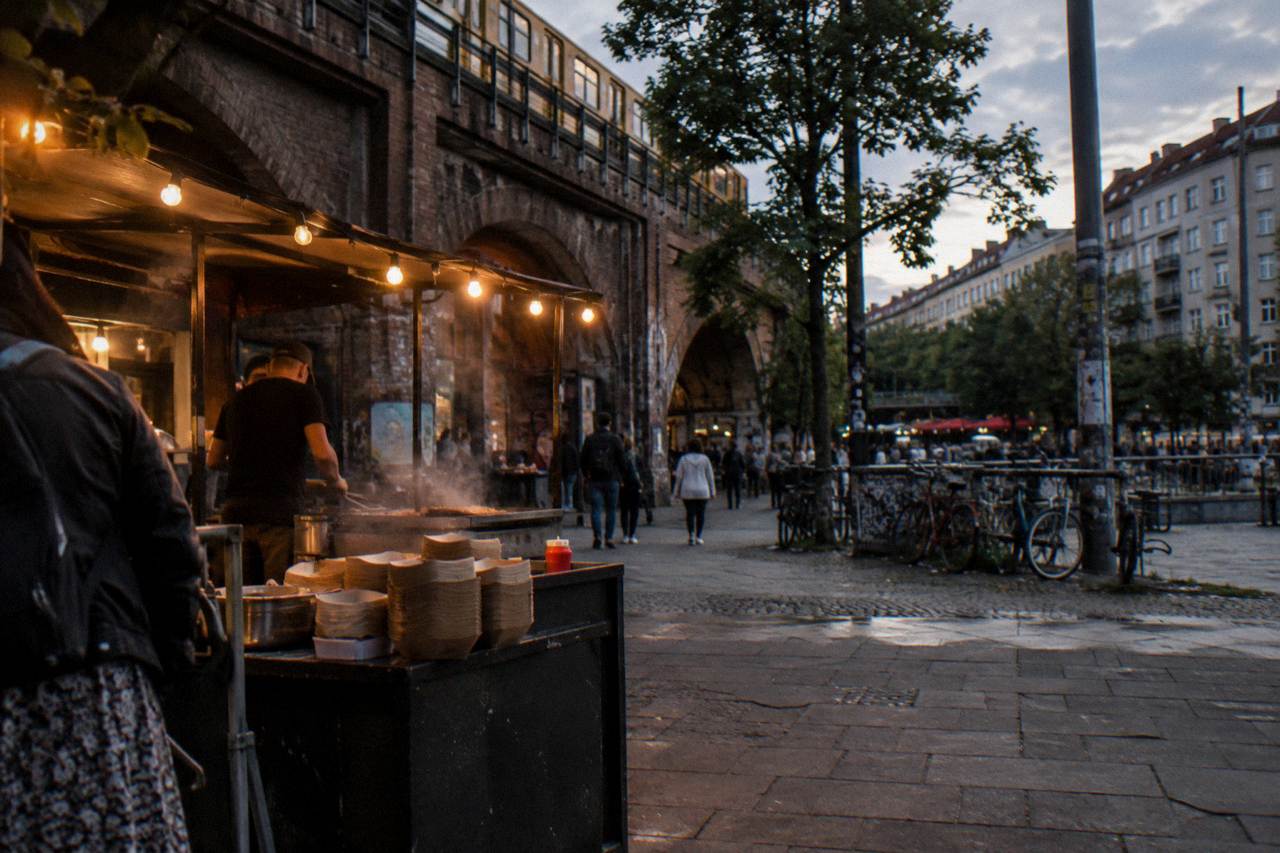
The distance question matters most in winter, when a late finish means cold pavement. The Deutscher Wetterdienst 1991 to 2020 normals for Alexanderplatz put December's mean temperature at 2.5 C with 46.5 mm of precipitation, and January at 1.5 C, so a short walk to a hotel is worth real money from November through February. Seasonal readers can extend the evening with the Berlin Christmas market food guide, since the Alexanderplatz market runs 23 November to 26 December 2026 with free admission, daily 11:00 to 22:00, per the official visitBerlin page.
How Do The Districts Compare For A Food-First Trip?
Mitte offers the widest choice and central access, Kreuzberg the strongest street food, Neukölln the lowest costs, Prenzlauer Berg the calmest mornings, and Charlottenburg, around the Kurfürstendamm, the most traditional hotel scene with an improving restaurant strip on Kantstrasse. The right pick depends on whether you value proximity, price or food character most.
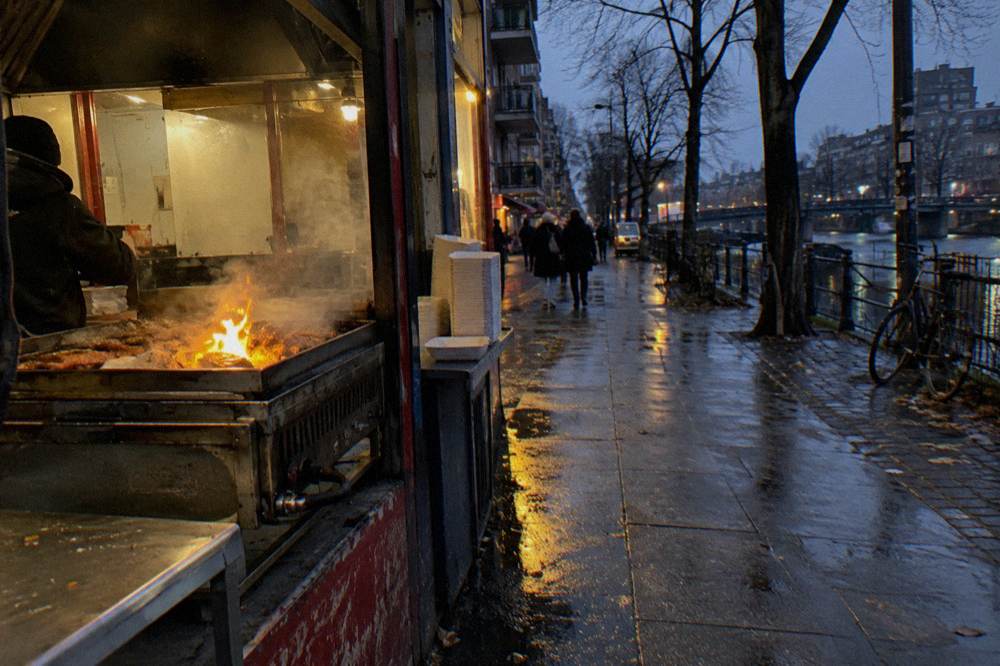
The table below compresses the comparison into the factors that actually change a booking decision: food character, transport reality and the site tour that starts nearest.
| District | Food character | Best fit for | Nearest site tour (from, per person) |
|---|---|---|---|
| Mitte | Currywurst stands, bakeries, doner, modern kitchens | First-time visitors, sightseeing plus food | Mitte District Food Tour, 7 tastings, from $90.01 |
| Kreuzberg | Türkenmarkt, doner, Markthalle Neun, late kitchens | Street food focus, nightlife | Kreuzberg Food and Street Art, from $172.20 |
| Neukölln | Vietnamese kitchens, doner, budget eating | Budget travelers, longer stays | Hidden Flavors of Kreuzberg & Neukölln, from $118 |
| Prenzlauer Berg | Bakeries, brunch, weekend markets | Families, quiet mornings | Prenzlauer Berg Culinary (per group, from $505) |
| Charlottenburg | Classic hotel dining, Kantstrasse restaurants | Traditional hotel stays, City West | Berlin Wine Tour with Sommelier, from $170 |
Charlottenburg deserves a short defense, because the food press has rediscovered it: Berliner Zeitung reported in early November 2026 that five new restaurants and cafes have opened around the Kurfürstendamm since September 2026, with more slated. For travelers who want a classic grand hotel within reach of a genuinely improving food street, it is a reasonable fourth choice, though the street food action stays east.
Can You Skip The District Question With A Day Pass?
Largely, yes. Berlin's transport makes any district viable for a food-first trip: the AB single ticket costs 4,00 EUR and stays at 4,00 EUR into 2027, while the four-trip AB ticket rises from 12,40 EUR to 13,20 EUR from 1 January 2027. If you sleep anywhere on the U-Bahn network, each tour meeting point stays an easy transit ride away.
This is the liberating fact for indecisive planners. The city's fare structure, per Berlin.de's report on the 2027 VBB price changes, keeps the core AB single flat through the coming increase, so district choice is about atmosphere and walking distance, not access. Children 6 to 14 pay a reduced AB fare of 2,50 EUR.
The practical recommendation stands despite that: book Mitte for a first visit of two or three nights, book Kreuzberg if the trip is built around markets and doner, and book Prenzlauer Berg or Charlottenburg only when calm, space or a classic hotel outranks food proximity. Then pick the food walk that starts where you sleep. The Berlin: Downtown Food Tour with 8 Authentic Local Tastings, about 3 hours from $115 per person and rated 4.9 across 407 reviews, is the strongest all-round fit for a central stay after Mitte's own seven-tasting walk.
Common Questions About Where To Stay In Berlin
What Is The Best Area To Stay In Berlin For Tourists?
Mitte, for most first-time visitors. It combines the classical sights, the widest hotel choice and the city's densest cluster of classic food stops, and most central walking food tours start in or near the district.
Is Kreuzberg Or Mitte Better For Food?
Kreuzberg has the stronger street food scene, centered on the Maybachufer market, doner shops and Markthalle Neun's Street Food Thursday. Mitte has the broader spread, from currywurst stands to starred dining, and better access to everything else.
Is Neukölln Safe And Cheap To Stay In?
North Neukölln around Weserstrasse and Karl-Marx-Strasse is a normal, busy residential district with a young nightlife scene, and it is generally cheaper for accommodation than Kreuzberg. Standard city caution applies late at night, as anywhere in Berlin.
How Far Is Prenzlauer Berg From Mitte?
Roughly fifteen to twenty minutes by U-Bahn from Alexanderplatz, depending on the exact stop. It is a comfortable commute for sightseeing while keeping the calmer, bakery-heavy district as your base.
Do Berlin Food Tours Pick You Up At Your Hotel?
Seven listings rule out hotel pickup and the rest do not mention it, so plan to reach the meeting point yourself. Each starts at a meeting point given on its booking page, which is one reason a central base in or near Mitte shortens every travel day.
Can You Get Around Berlin Without Buying Individual Tickets?
Yes. The Deutschlandticket costs 63 EUR per month and covers regional and local transport citywide, rising to 66,80 EUR from 1 January 2027. For shorter stays, single AB tickets at 4,00 EUR are valid for 120 minutes.