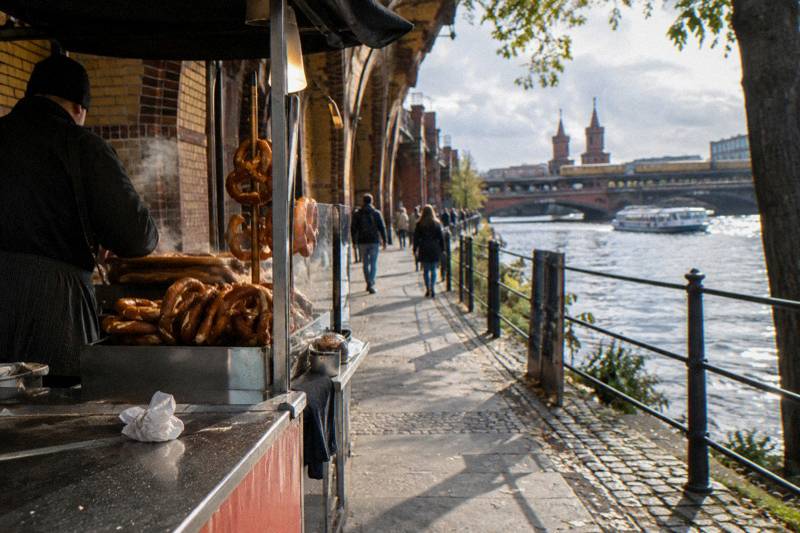
Is Berlin A Walkable City?
A direct answer to whether Berlin is a walkable city, which districts reward walking, where public transport helps, and how to pair a walkable visit with a Berlin food walk.
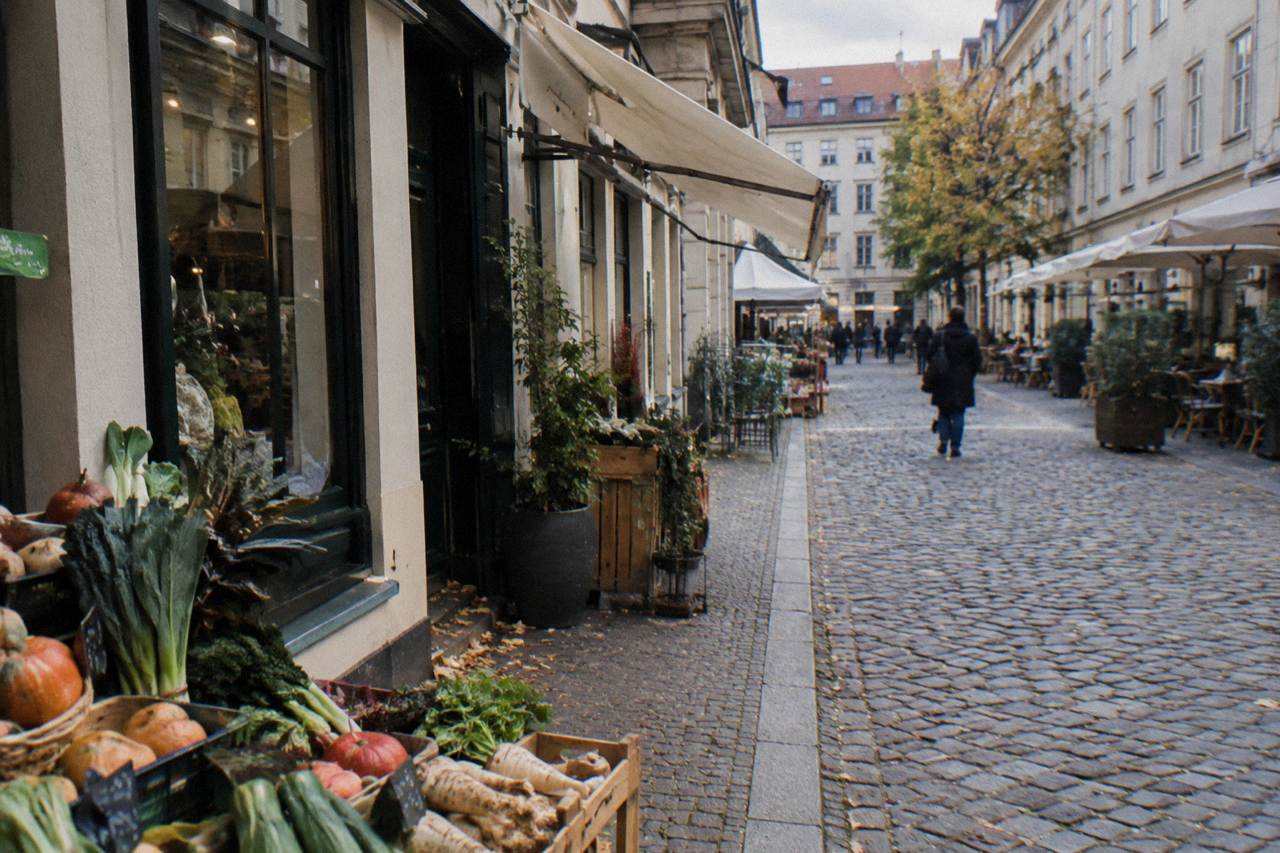
Berlin is a walkable city in the way that matters for visitors: each of its central districts is compact, flat and interesting on foot, with Mitte, Kreuzberg, Prenzlauer Berg and Neukölln all readable in a few hours of strolling. The catch is scale. The districts sit far apart, so a day of walking works best when anchored to one neighborhood, with short U-Bahn hops between anchors. A single ticket for zones AB costs 4,00 EUR and stays valid for 120 minutes.
That combination, a walkable core plus cheap rail links, is exactly why walking food tours work so well here. A guided route such as the Mitte District Food Tour with 7 Authentic Local Tastings leans on the fact that a century of cafes, currywurst stands and bakeries sits inside an easy stroll of one meeting point. The tour meets in the heart of the district, so the walking is spread across streets worth strolling from the first step.
Yes, Berlin is a walkable city, but only district by district. Within Mitte, Prenzlauer Berg, Kreuzberg or Neukölln, distances between cafes, markets and landmarks are short and the terrain is flat. Between districts, the gaps stretch to several kilometers, so most visitors walk intensively inside one neighborhood and ride the U-Bahn between them, a pattern locals repeat daily.
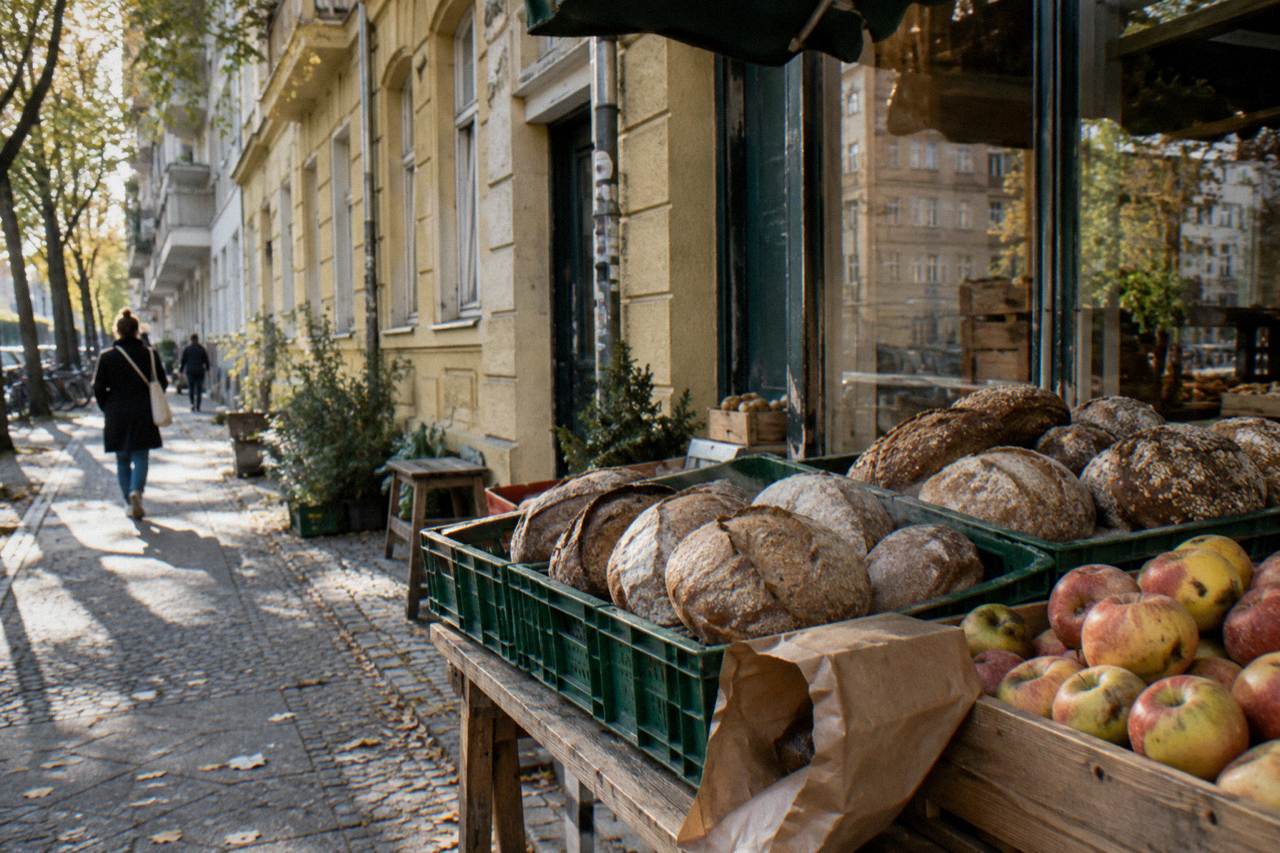
Berlin grew as a patchwork of separate towns, and that history still shapes the streets. Each district has its own high street, market square and cluster of food stops, so a walk never feels like a commute through dead space. Instead of one enormous center surrounded by suburbs, the city offers a dozen smaller centers, each with its own bakery hierarchy and its own favorite wurst stand. That structure rewards the walker who commits to one district at a time and punishes the walker who tries to see everything on foot in a single day. If those district food stops are a big part of why you walk, the case for which German city eats best weighs Berlin against Munich, Hamburg and Cologne.
The city is also notably level. There are almost no hills worth mentioning between, say, Alexanderplatz and the Landwehr Canal, which keeps a three hour stroll comfortable even for visitors who do not walk much at home. Sidewalks are broad, crossings are frequent, and the main food streets are lit and busy into the evening, which matters for anyone booking a tour that finishes after dark.
The pattern to copy is the one Berliners use. Pick one district per half day, walk it thoroughly, then hop on the U-Bahn to the next. A single journey in zones AB costs 4,00 EUR per BVG's single-ticket price table, with children aged 6 to 14 paying a reduced 2,50 EUR, and the ticket allows changes and interruptions for 120 minutes after validation. Dogs travel free, children under six travel free, and hand luggage and prams are carried at no charge, which removes the usual friction for families.
For readers planning a food-first visit, the same logic applies with tastings attached. The overview in how many days in Berlin, a food-first itinerary breaks the city into walkable daily chunks, and the walkability of each chunk is the reason that plan works at all. Two or three days is enough to cover the four central districts properly, one anchor at a time, without ever spending a whole afternoon on dead blocks.
Which Berlin Districts Are Best For Walking?
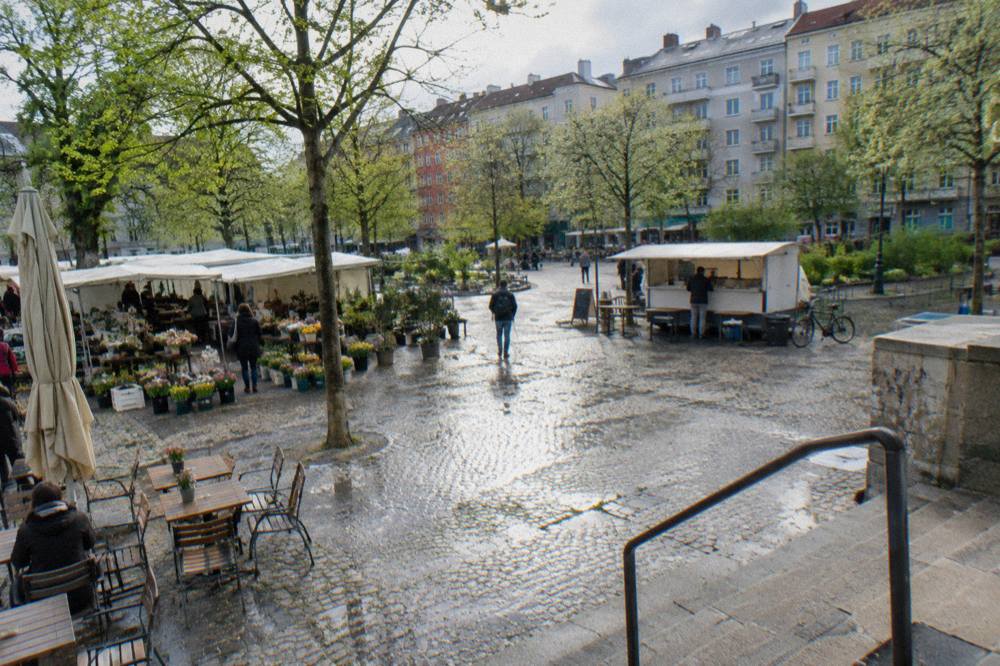
Mitte, Prenzlauer Berg, Kreuzberg and Neukölln are the four districts that reward walking most. Mitte packs historic squares, Museum Island and dense food streets into the smallest space. Prenzlauer Berg runs on calm boulevards and bakery corners. Kreuzberg and Neukölln line their streets with doner shops, markets and canal-side stalls. All four are flat, safe and dense with stops.
Mitte is the natural starting point because almost everything a first timer wants sits within a thirty minute walk: Alexanderplatz, Hackescher Markt, Gendarmenmarkt and a dense band of cafes and wurst stands between them. The district also carries the deepest history, so a food walk here doubles as a sightseeing walk without any extra effort. Prenzlauer Berg, a short U-Bahn ride north, trades big sights for a softer rhythm of weekly markets and brunch tables, mapped in the Prenzlauer Berg food walk guide. Its streets are quieter and greener, which makes it the best district for a slow morning.
Kreuzberg is the strongest walking district for street food, because its landmarks are edible: the Turkish market at Maybachufer on Tuesdays and Fridays, the doner stands around Kottbusser Tor and Markthalle Neun's Street Food Thursday, held every Thursday from 17:00 to 22:00. The full route is laid out in the Kreuzberg food walk guide. Neukölln, immediately south, extends the same fabric with fewer tourists, and the stretch from the canal to Karl-Marx-Strasse is covered in the Neukölln food walk guide.
A note on timing: Berlin's Sunday closing rules mean ordinary supermarkets shut on Sundays except at stations, while bakeries and confectioners may open 07:00 to 16:00 under the shop opening rules published by the Berlin senate. Walkers planning a Sunday morning route should aim at markets and bakeries rather than grocery stops. Tourist-need shops, the ones selling souvenirs and food for immediate consumption, may open 13:00 to 20:00 on Sundays, so a Sunday afternoon walk still finds open doors.
Do You Need Public Transport In Berlin?
Most visitors need public transport in Berlin, but only between districts, not inside them. The U-Bahn and S-Bahn connect Mitte, Kreuzberg and Prenzlauer Berg in ten to twenty minutes, and a single zone AB ticket costs 4,00 EUR. Frequent riders can consider the Deutschlandticket at 63 EUR per month, rising to 66,80 EUR from January 2027.
Trying to walk between all the districts is the classic first visit mistake. The distance from Alexanderplatz to the western edge of Kreuzberg is several kilometers of unremarkable blocks, pleasant in dry weather but a poor use of eating time. The efficient pattern is rail between anchors and foot everywhere else, and once that pattern clicks, Berlin stops feeling enormous and starts feeling like a set of small towns connected by a fast train.
The fare details are stable and worth knowing before arrival. The zone AB single stays at 4,00 EUR into 2027 even as the wider VBB price rise averages 3.72 percent from 1 January 2027, while the four-trip AB ticket climbs from 12,40 EUR to 13,20 EUR. Visitors making several hops a day will feel that difference less than commuters do, but anyone staying a week and riding daily might notice it.
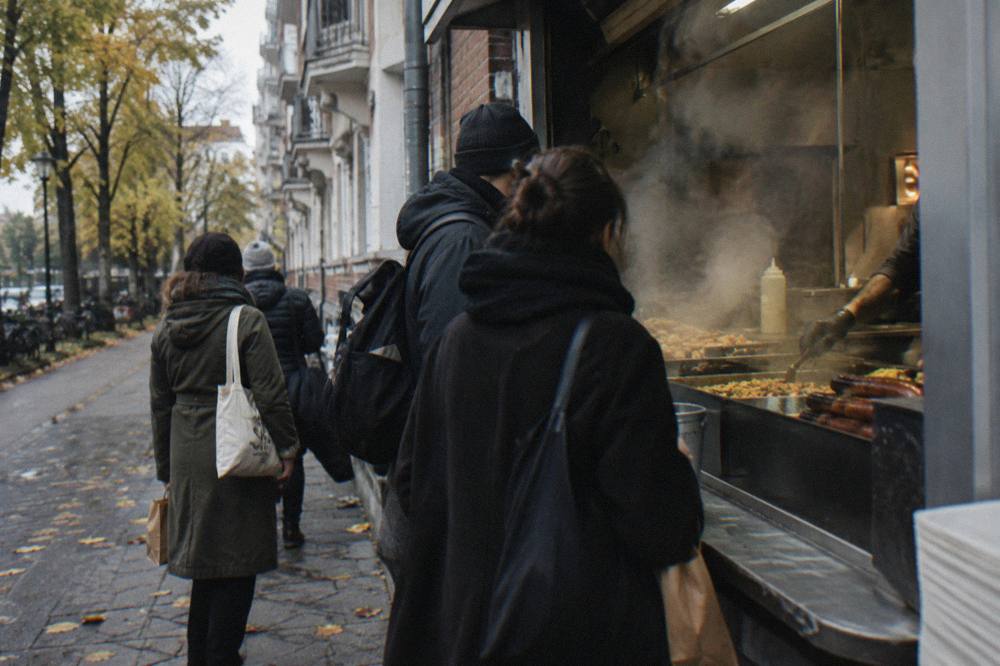
Tickets are easy to buy even for first timers. The BVG sells singles at vending machines in every station, at sales points, on buses and inside the BVG Ticket app, the Fahrinfo app and the Jelbi app, so there is no need to plan ahead. Validate before boarding where required, keep the ticket for the full 120 minute validity window, and remember that return and round trips are excluded from a single fare.
| Ticket | Price | Validity and notes |
|---|---|---|
| BVG single, zone AB | 4,00 EUR | 120 minutes, changes allowed, one adult |
| BVG single, zone ABC | 5,00 EUR | Covers Berlin plus surrounding region, 120 minutes |
| Reduced single, zone AB | 2,50 EUR | Children 6 to 14 |
| Deutschlandticket | 63 EUR per month | 66,80 EUR from 1 January 2027, see the official ticket page |
For a food walk specifically, transport matters at only two moments: getting to the meeting point and getting home after the last tasting. Tours that finish in the evening, after a glass of wine or a beer flight, are easier when a U-Bahn station sits near the endpoint rather than a long walk away. The booking page for each tour names its meeting point, and central districts like Mitte make both ends of the journey simple.
How Walkable Is Berlin For A Food Lover?
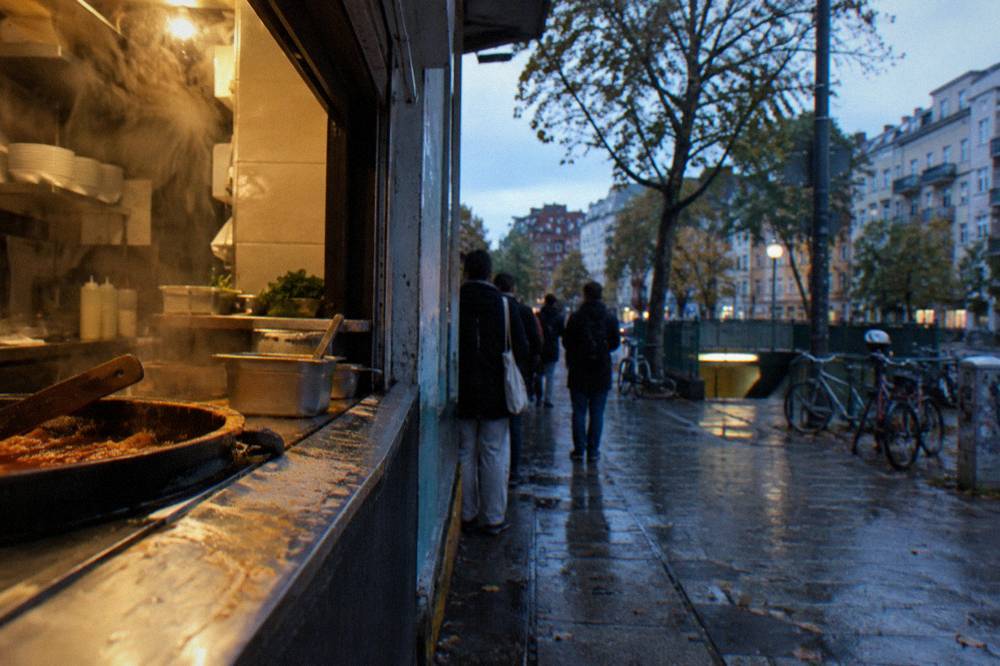
For a food lover Berlin is exceptionally walkable, because its eating culture clusters: doner around Kottbusser Tor, currywurst stands across Mitte, bakeries filling Prenzlauer Berg, and market halls anchoring Kreuzberg. A three hour tasting route rarely strays far, since the stops sit shoulder to shoulder on the same few streets.
That clustering is not an accident. Berlin's food history is a street food history: the doner sandwich is widely credited to Berlin, currywurst was built to be eaten standing at a counter, and the Turkish market at Maybachufer serves shoppers who arrive on foot with wheeled trolleys rather than by car. The stories behind those dishes are traced in the doner kebab history guide. When food is designed to be eaten while moving, the city around it grows up to be walked.
The walkable density also explains why guided tasting routes cluster where they do. The Mitte District Food Tour with 7 Authentic Local Tastings, about 3 hours and from $90.01 per person, rated 4.9 across 1,583 reviews, works because Mitte's classic stops sit within one connected stroll. The Downtown Food Tour with 8 Authentic Local Tastings, from $115 and rated 4.9 across 407 reviews, applies the same logic with one more stop in the package. Neither route asks for athletic effort; the walking is simply the connective tissue between plates.
Visitors who prefer to walk independently can copy the structure of a guided route: choose one district, pick four to six stops within a kilometer, and let a market act as the anchor at one end. The Markthalle Neun guide does exactly this for Kreuzberg around the Thursday evening market. A market anchor has a second benefit, since it gives the route a fixed start time and a natural place to sit down if the weather turns.
There is one seasonal wrinkle worth knowing. Weekly markets keep strict days, so a walker's plan should match the calendar rather than fight it. The Türkenmarkt at Maybachufer trades only Tuesdays and Fridays, Winterfeldtmarkt runs Wednesday mornings and Saturdays until 16:00, and Street Food Thursday fills Markthalle Neun on Thursday evenings. Arrive on the right day and the district is at its best on foot; arrive on the wrong one and the anchor stop is missing.
When Is Walking In Berlin Uncomfortable?
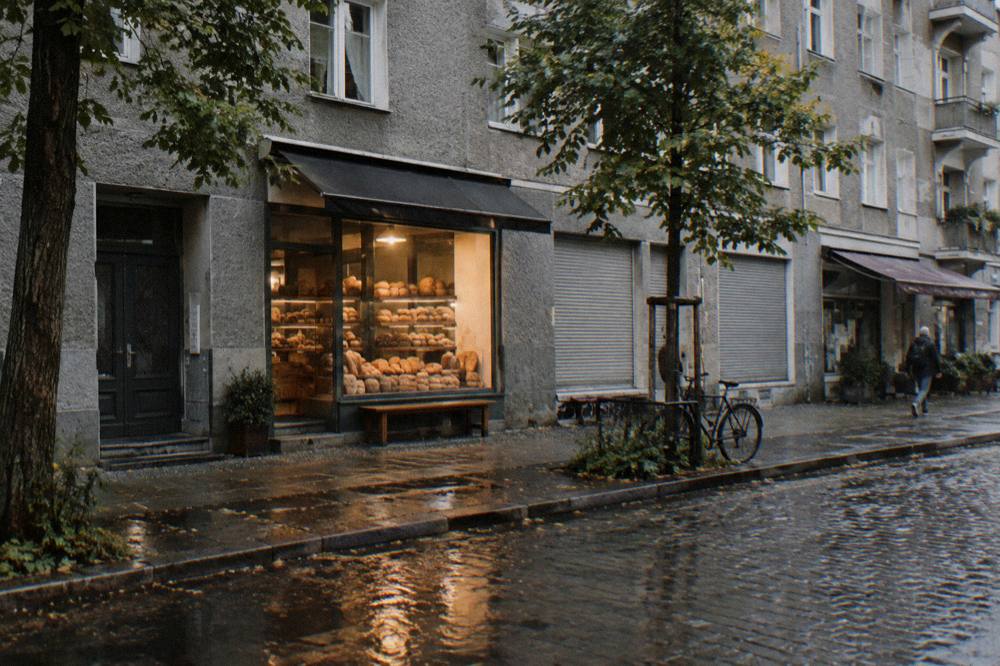
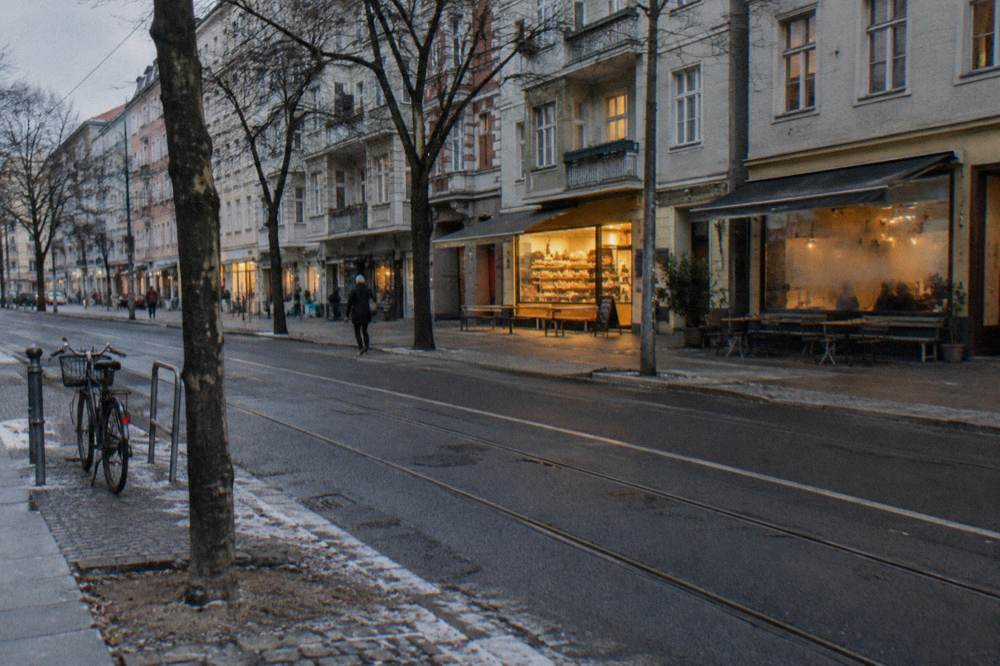
Walking in Berlin gets uncomfortable mainly from late November to February, when mean temperatures sit between 1.5 and 5.6 C and daylight is short, and from occasional heavy summer rain in July, the wettest month at 78.2 mm. The city itself never becomes unwalkable: terrain stays flat and sidewalks are broad year round.
The numbers come from the Deutscher Wetterdienst 1991 to 2020 normals for Alexanderplatz. Winter is cold but manageable, with January averaging 1.5 C and roughly 17 frost days at Tempelhof. Rain is spread evenly through the year rather than concentrated in a monsoon season, so the practical difference between months is temperature, not downpours. Late spring and early autumn hit the sweet spot, with April averaging 10.7 C and May 15.1 C, and October still holding at 10.4 C with over 115 hours of sunshine.
| Month | Mean temp | Precipitation | Sunshine |
|---|---|---|---|
| January | 1.5 C | 48.8 mm | 51.7 h |
| April | 10.7 C | 30.1 mm | 195.4 h |
| July | 20.4 C | 78.2 mm | 238.2 h |
| October | 10.4 C | 43.4 mm | 115.5 h |
For walkers, two seasonal notes matter more than raw averages. In December, Christmas markets add warm food stops every few hundred meters, with the Alexanderplatz market running 23 November to 26 December 2026 with free entry, so a cold walk always ends near Gluhwein. The Lucia market at Kulturbrauerei in Prenzlauer Berg runs the same season until 22 December 2026, giving northern walkers a second warm anchor. Because shops close on public holidays including 25 and 26 December, holiday walkers should plan around markets and bakeries rather than regular retail.
One more planning detail: winter walkers arriving in January can pair a food walk with Grüne Woche, the international food fair running 15 to 24 January 2027, which adds a large indoor anchor to an otherwise cold walking day. A short morning walk through a frosty district, followed by hours of indoor tasting, is a respectable January plan in this city.
Which Walking Food Tour Fits A Walkable City?
The best fit is a tour that matches your walking energy: the 2 hour Greatest Hits tour from $79.21 covers the shortest route, the 3 hour Mitte tour from $90.01 is the balanced default, and the 4 hour Evening Culinary tour from $218.13 suits walkers who want a long route with restaurant pacing. All three lean on Berlin's walkability rather than fighting it.
Comparing the walking formats side by side makes the choice straightforward. Shorter tours concentrate stops; longer ones space them with seated breaks. Group size and pacing details live on each booking page, and the tours compared here start at a meeting point.
| Tour | Duration | Price basis | Rating |
|---|---|---|---|
| Berlin's Greatest Hits: Food, Beer & History Tour | ~2 hours | from $79.21 | 4.9 across 84 reviews |
| Mitte Walk, 7 Tastings | ~3 hours | from $90.01 | 4.9 across 1,583 reviews |
| Downtown Walk, 8 Tastings | ~3 hours | from $115 | 4.9 across 407 reviews |
| Award-Winning 4-Hour Evening Walk | ~4 hours | from $218.13 | 4.8 across 122 reviews |
The evening format deserves a special mention for walkers. The Berlin Evening Culinary Tour, Award Winning runs about 4 hours from $218.13 per person and is rated 4.8 across 122 reviews, turning the after-dark city into a slow route where walking between courses is part of the pleasure. The booking page describes an award-winning format with full pacing details, and evening tours also sidestep the midday summer heat. Four hours on foot sounds long, but the route threads seated stops, so the total distance stays modest.
The Mitte tour remains the reference point for most visitors, and not only because it is the most reviewed tasting walk covered here at 1,583 reviews. Its about 3 hour format and from $90.01 price sit in the middle of every axis: long enough for seven tastings, short enough for a first day, central enough to reach by U-Bahn from anywhere in the AB zone. For a deeper look at the options, which Berlin food walk should you book lays out the full decision tree.
Visitors weighing a guided walk against exploring solo will find the honest comparison in free walking tour or food walk in Berlin, which to choose. The short version: the city is walkable enough that either works, and a guided tasting route mainly buys you the stops you would never find alone.
Common Questions About Walking In Berlin
Is Berlin A Walkable City?
Yes, district by district. Mitte, Prenzlauer Berg, Kreuzberg and Neukölln are each comfortably walkable on flat terrain, with food stops clustered close together. Between districts the distances grow to several kilometers, so visitors typically walk one neighborhood thoroughly and ride the U-Bahn between anchors, paying 4,00 EUR for a zone AB single.
Can You Walk Everywhere In Berlin Without Transport?
You can walk everywhere, but you should not plan to. The districts that matter to visitors sit far apart, and the blocks between them hold little of interest for a first time eater. A single U-Bahn hop saves thirty to forty minutes of walking and costs 4,00 EUR in zones AB.
Which Berlin District Is Easiest To Walk For Food?
Kreuzberg is the easiest district to walk for food, because its doner stands, the Maybachufer Turkish market and Markthalle Neun all sit inside one compact area. Mitte is a close second for classic stops, and Prenzlauer Berg is the best pick for bakery and brunch walkers.
Is Berlin Flat Or Hilly For Walking?
Berlin is flat. Between the central districts there are no climbs worth planning around, and sidewalks are wide and in good repair. Walking fatigue in Berlin comes from distance, not elevation, which is another reason the district-at-a-time approach works well.
What Is The Best Time Of Year To Walk In Berlin?
May through September offers the best walking weather, with July the warmest month at a 20.4 C mean, though also the wettest at 78.2 mm of rain. December works too if the route ends at a Christmas market, and January walkers can anchor a cold day indoors at Grüne Woche, running 15 to 24 January 2027.